Places to Visit in Rajasthan: Forts, Palaces, Lakes and Markets, and Who Each Suits
The best places to visit in Rajasthan, city by city: forts, palaces, lakes, markets and food, with honest notes on who each stop suits.
Rajasthan is not one place. It is a dozen different cities, each with its own fort, its own food and its own pace. That is why a list of "places to visit in Rajasthan" can feel overwhelming.
This guide is built to cut through that. We go city by city, in the order most journeys travel. For each stop you get what it is, who it suits, and what to look for. After the cities come the markets worth your time and the dishes worth ordering.
Use it two ways. Read it end to end if you are choosing a route. Or jump to the city you already know you want. Each major stop will get its own detailed guide in this Journal over the coming weeks, and we link them here as they appear.
How to use this guide
Every stop carries a short Best for note. It is a guide, not a rule.
First-time visitors want the big, unmistakable sights, ideally with a guide who can explain what they are looking at.
Couples and honeymooners do best with lakes, sunsets and slow evenings.
Families need shorter days, shade, and sights children can touch and climb.
Photographers should plan around first and last light, not midday.
History readers will want time, a good guide and fewer stops.
Wildlife and active travellers should build the trip around the safari parks and the Aravalli hills.
If you are still deciding how many cities to include and in what order, start with our guide to choosing your Rajasthan city order. Then come back here to decide what to do in each one. If Rajasthan is the second half of a longer trip, our Golden Triangle highlights guide covers Delhi and Agra.
Jaipur: the Pink City
Jaipur is the usual way in. It is the capital, it is well connected, and it hands you the classic Rajasthan picture in one go: a hill fort, a palace, a bazaar, a city painted pink.
Amber Fort
Amber Fort sits on a ridge above Maota Lake. Sandstone ramparts climb the hillside, and four courtyards open one into the next. The part people remember is the Sheesh Mahal, where thousands of mirror pieces cover the walls and ceiling. Light a single candle and the whole room answers.
The fort faces east, so morning is when the stone turns gold. Go early, before the tour buses.
You may be offered an elephant ride up the ramp. We would skip it. The walk up, or a jeep, is better for you and for the animals.
Best for: first-time visitors, photographers, families with older children.
Hawa Mahal
Hawa Mahal is a facade more than a palace. It has five storeys of pink sandstone and 953 small windows. Royal women watched the street from behind the lattice without being seen. The openings also funnel air through the rooms behind, which keeps them cool even in May.
Stand across the road at sunrise for the photograph everyone wants. Most visitors need only twenty minutes here.
Best for: photographers, short stops.
City Palace and Jantar Mantar
The City Palace is still partly a royal residence, with museum rooms, courtyards and gateways to walk through. Next door is Jantar Mantar, an open-air observatory of enormous stone instruments built in the early 1700s by Maharaja Sawai Jai Singh II, who also founded Jaipur. It is a UNESCO World Heritage Site. It is easy to walk past without understanding it, so this is a place where a guide earns their fee.
Best for: history readers, curious families, anyone who likes to know how things work.
Nahargarh, Jaigarh and the quieter corners
Two hill forts above the city give you the view back across Jaipur at sunset. Lower down, Jal Mahal floats in its lake, a good stop for a photo rather than a visit. Galta Ji, a temple complex in a gorge, is livelier and a little wilder.
Best for: couples at dusk, photographers, travellers on a second visit.
Jodhpur: the Blue City
Jodhpur is where Rajasthan's scale really lands. The fort is bigger, the old city is denser, and the light is different.
Mehrangarh Fort
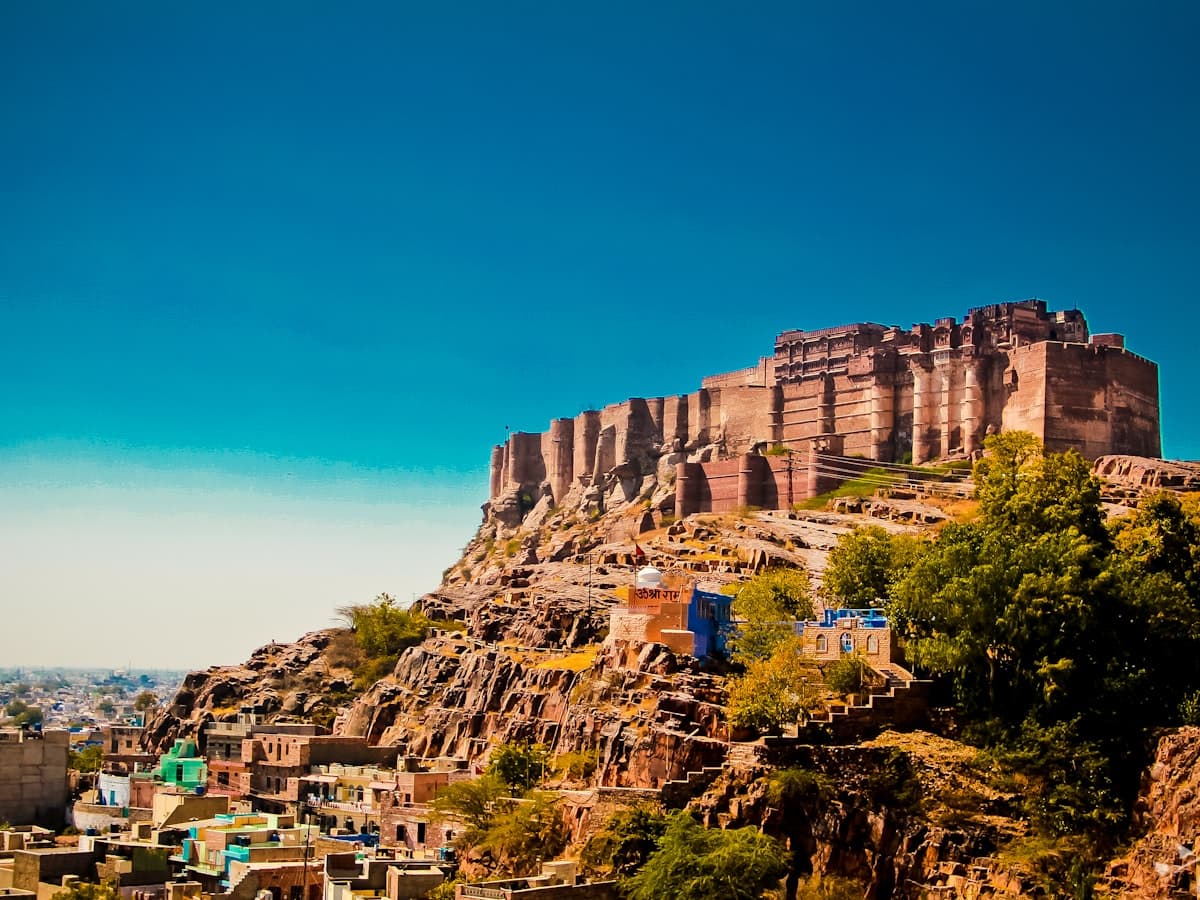
Mehrangarh does not sit on a hill so much as grow out of one. The walls rise 120 metres straight off the rock. Seven gates lead up through the approach, and one still carries cannon scars. Inside, the museum holds palanquins, howdahs and miniature paintings.
But the reason to climb is the parapet. From there the old city spreads out below in flat blue rectangles. Take the audio guide, and allow at least three hours.

Best for: everyone. It is the single most rewarding fort in the state for many travellers.
Jaswant Thada and Umaid Bhawan Palace
Jaswant Thada is a white marble memorial just below the fort, quiet and carved. Umaid Bhawan Palace, finished in the 1940s, is part hotel, part royal home and part museum. A visit to the museum is an easy way to see inside it.
Best for: history readers, couples, anyone wanting a calm hour after the fort.
Sardar Market and the clock tower
Sardar Market is not arranged for visitors. It is where Jodhpur shops. The clock tower in the middle still keeps time. Around it you find vegetables, tin trunks, bangles and spice by the sack. Ask for makhaniya lassi and you will be pointed to the right stall. Go in the late afternoon, when the light drops behind the buildings and the noise picks up.
Best for: photographers, food lovers, anyone who prefers a real market to a showroom.
Udaipur: the City of Lakes
Udaipur is where most trips slow down. After the forts, it is a relief.
City Palace Udaipur
The City Palace runs along the eastern shore of Lake Pichola. It is not one building but eleven, added by successive maharanas over four centuries. There is marble, mirrorwork and coloured glass, and the peacock mosaics of Mor Chowk are the showpiece. Part is a museum and part is still a family home. From the upper terraces you look straight over the water to the Aravalli hills.
Best for: first-time visitors, couples, history readers.
Lake Pichola
Lake Pichola was dug in 1362 and it still sets the shape of the city. Ghats step down to the water on three sides, and two island palaces sit in the middle. The hills close the view to the west, which is why sunset here is worth planning around. Boats leave from Rameshwar Ghat through the afternoon. Take the last one back.
Best for: couples, honeymooners, photographers.
Beyond the palace
A few more stops are worth the time if you have it. Saheliyon-ki-Bari is a small formal garden built for the women of the court. Jagdish Temple is a working Vishnu temple in the old town. Bagore ki Haveli holds an evening folk dance show. Sajjangarh, the Monsoon Palace, looks over the city from a hilltop.
Our guide to three slow days in Udaipur puts these together into a sensible route.
Best for: couples, families, slow travellers.
Jaisalmer and the Thar Desert
Jaisalmer sits near the Pakistan border, and it feels like the end of the road. That is most of its charm.
Jaisalmer Fort
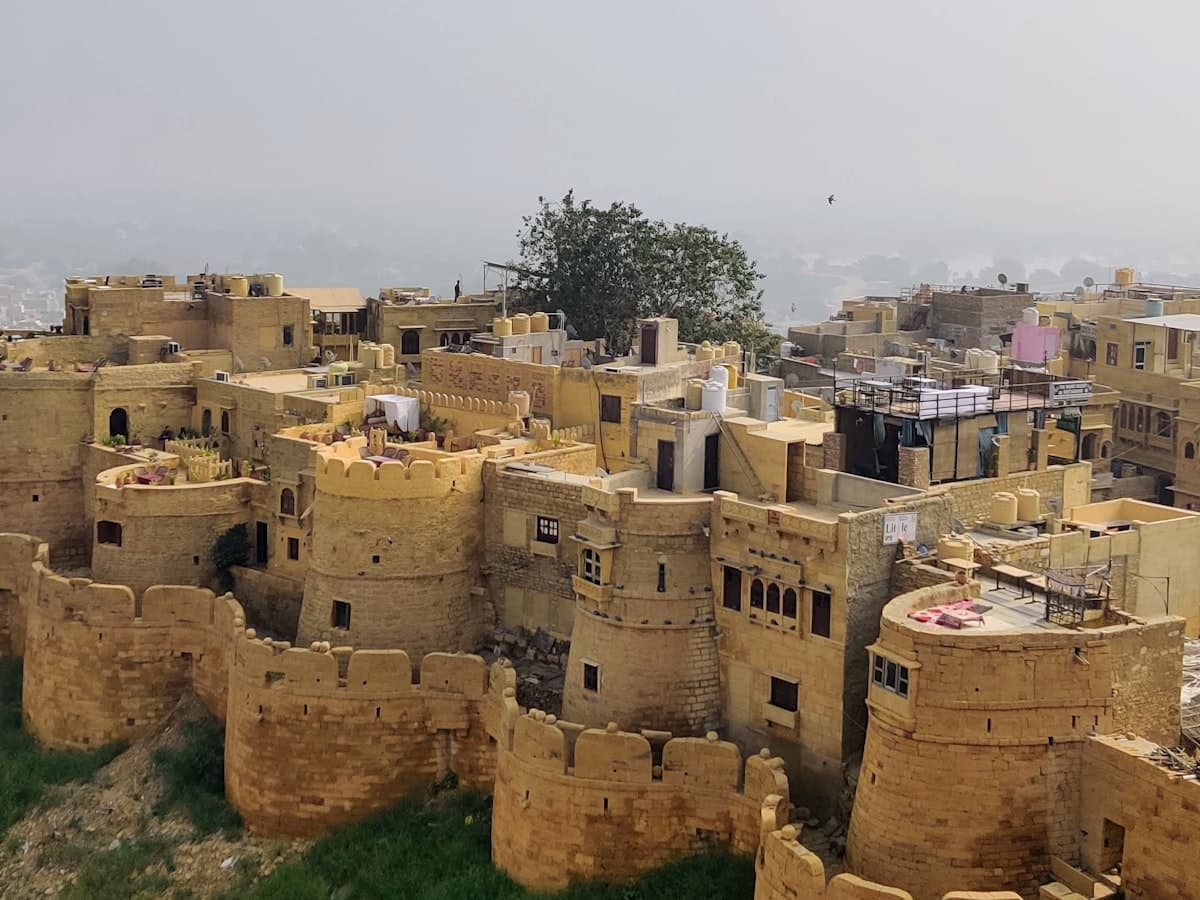
Jaisalmer Fort is one of very few forts anywhere that people still live in. Around a quarter of the town does. Ninety-nine bastions ring the walls, all cut from the same yellow sandstone as the desert beneath. At midday the whole thing looks bleached. At sunset it turns the colour of honey, which is where the name Sonar Quila, the Golden Fort, comes from. The streets inside are narrow and steep.
Best for: photographers, history readers, anyone who likes a place that still works.
Gadisar Lake and the havelis
Gadisar was the town's water supply, dug in the 1360s. Small shrines and chhatris stand in the water on stone plinths. Come at dawn, when the sandstone catches the first light and the surface is flat. In town, the carved havelis, such as Patwon ki Haveli, show what Jaisalmer's merchants spent their money on.
Best for: photographers, early risers.
The dunes and a night in the desert
The Sam dunes are roughly 40 kilometres out of town. This is where the camel ride and the desert camp happen. A good camp is the difference between a memorable night and a tourist trap, so choose carefully. Our guide to Jaisalmer and the desert camp explains what to look for.
Best for: couples, families, first-time visitors who want one wild night.
Pushkar and Kumbhalgarh: sacred and remote
Two very different stops fit between the big cities.
Pushkar Lake and the Brahma Temple
Pushkar Lake is small and very old. Fifty-two ghats surround it, each built by a different ruler or family. Pilgrims bathe here to wash away wrongdoing. At dusk, lamps go onto the water and the sound drops.
The Brahma Temple is one of very few temples anywhere dedicated to Brahma. The present building dates from the 14th century, though the site is far older. Leave shoes and phones outside. Photography is not allowed in the inner shrine.
This is a working religious site, not a viewpoint. Walk the ghats barefoot, keep your camera low, and step back if a ceremony starts near you. Read our fuller Pushkar travel guide before you go.
Best for: spiritual travellers, culture-minded visitors, anyone wanting a slower day.
Kumbhalgarh Fort
Kumbhalgarh's wall is the point. It runs 36 kilometres along the ridgeline, and in places it is broad enough for eight horses side by side. Rana Kumbha built it in the 15th century, and Mewar sent its rulers here when Chittorgarh fell. Inside are palaces, step-wells and around 360 temples. Walk out along the ramparts. The forest drops away on both sides and nothing modern is in view.
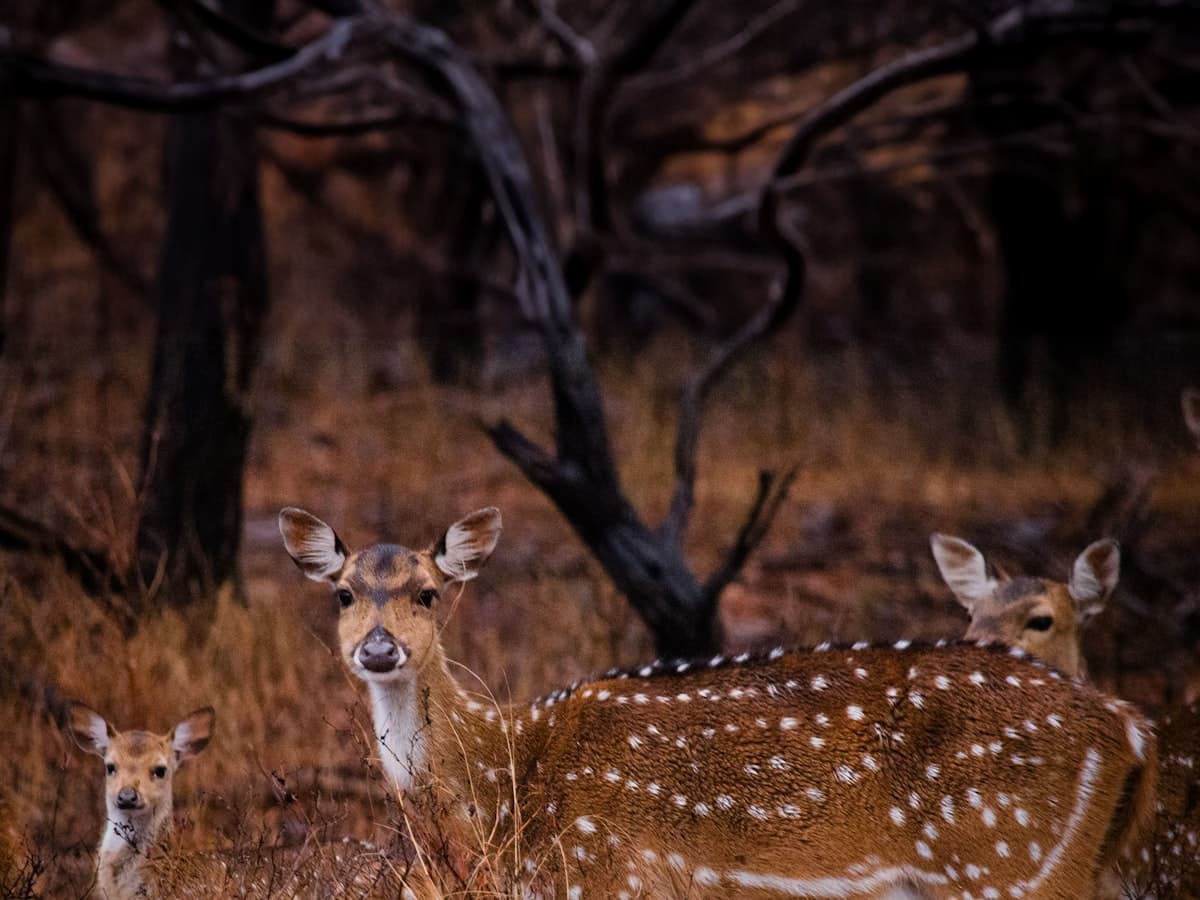
The wildlife sanctuary wraps around the fort. It covers nearly 600 square kilometres of dry forest, and holds leopard, sloth bear and the Indian grey wolf. Sightings take patience and an early start.
Nearby, the white marble Jain temple at Ranakpur is worth a stop for its carved pillars, a forest of stone that rewards a slow walk.
Best for: active travellers, history readers, anyone tired of crowds.
Ranthambore: tigers and a ruined fort
Ranthambore National Park protects about 275 square kilometres of core forest, with a wider buffer beyond. It was among the first reserves brought under Project Tiger in 1974. Besides tigers, the park holds leopard, sloth bear, sambar, chital and marsh crocodile. Three lakes pull wildlife into the open, especially in the dry months. Game drives run at dawn and late afternoon.
Be honest with yourself about tigers. They are likely, not guaranteed. Treat every sighting as a gift and the forest as the real attraction. Our Ranthambore safari first-timer guide covers zones, timings and what to expect.
Best for: wildlife lovers, families with older children, photographers.
Lesser-known stops worth knowing
If you have time beyond the big five cities, these reward a visit.
Chittorgarh has one of the largest forts in Asia, with a long, hard history that guides tell well.
Bundi is a small, quiet town of painted palaces and a deep stepwell, with a fraction of Jaipur's crowds.
Bikaner has Junagarh Fort, never conquered, and the famous Karni Mata temple.
Shekhawati is a region of painted merchant havelis, best seen in Mandawa.
Mount Abu is Rajasthan's only hill station, home to the marble Dilwara Jain temples.
Ajmer holds the Ajmer Sharif dargah, a major Sufi shrine. Dress modestly and expect crowds.
Where to shop
Rajasthan's markets are best visited with a plan. A few that repay the effort:
Johari Bazaar, Jaipur is the old gem and jewellery market, known for kundan and meenakari work. Buy gemstones only against a certificate.
Bapu Bazaar, Jaipur is the place for block-printed textiles, quilts and mojari, the traditional leather shoes.
Tripolia Bazaar, Jaipur is known for lac bangles and brassware.
Sardar Market, Jodhpur is a working bazaar, strong on spices and textiles.
The old city lanes of Udaipur are good for miniature paintings and silver.
Pushkar's main bazaar leans towards leather and bohemian clothing.
For the crafts behind these stalls, and how to buy them well, read our Rajasthan crafts and textiles trail.
What to eat
Rajasthani food was shaped by desert, heat and long journeys. A lot of it keeps without refrigeration. A lot of it is vegetarian by tradition, and the meat dishes are bold.
Dal baati churma is the state's signature dish: baked wheat balls dipped in ghee, with a five-lentil dal and a sweet crumble called churma.
Laal maas is a fiery mutton curry coloured and heated by Mathania chillies.
Gatte ki sabzi is gram-flour dumplings in a tangy yoghurt gravy.
Ker sangri is a desert dish of dried berries and beans, especially good in Jaisalmer.
Pyaaz kachori is a crisp pastry stuffed with spiced onion, a Jaipur favourite. Rawat Mishthan Bhandar is the name most people mention.
Mirchi bada is a big green chilli stuffed with potato and fried in gram-flour batter. It is Jodhpur's classic street snack, with makhaniya lassi to cool it down.
Ghevar is a honeycomb-style sweet made around the monsoon festivals.
In Jaipur, Laxmi Misthan Bhandar (LMB) in Johari Bazaar is an old name for sweets and thali. In Udaipur, lakeside heritage hotels such as Ambrai and Jagat Niwas serve good Rajasthani menus with a view. These are long-standing names that come up again and again. Hours and quality change, so confirm before you go. Your trip designer will check the current favourites when we plan your route.
Eat well and stay well: our guide to eating in India without getting ill has the practical rules.
When to go
October to March is the comfortable season, with warm days and cool nights. December and January can be cold at night in the desert, so pack a jacket. April to June is very hot, and sightseeing is best kept to early mornings. Monsoon, from July to September, turns the landscape green and quiets the crowds, but it is hot and humid.
How to put it together
A few routes that work:
Four to five days: Jaipur, then Udaipur. A fast but satisfying first look.
Six to eight days: Jaipur, Jodhpur, Udaipur. The classic first-timer loop.
Eight to ten days: Add Jaisalmer and Pushkar for the desert and the sacred lake.
Ten days or more: Add Kumbhalgarh and Ranthambore, and slow every stop down.
Distances in Rajasthan are long and roads vary. A private driver and guide changes the experience, because they remove the logistics and open the stories. Our guide to staying in a Rajasthan palace shows how to choose where you sleep along the way.
To see how these stops fit together, look at Rajasthan Golden Cities, Rajasthan Desert Forts or Rajasthan Palaces and Lakes.
Frequently asked questions
What are the top places to visit in Rajasthan?
Jaipur's Amber Fort and City Palace, Jodhpur's Mehrangarh Fort, Udaipur's lakes and City Palace, and Jaisalmer's golden fort are the core. Pushkar, Kumbhalgarh and Ranthambore add a sacred lake, a vast wall and tigers.
How many days do I need in Rajasthan?
Seven to ten days gives a comfortable first trip across three or four cities. Five days works if you limit yourself to Jaipur and Udaipur. Two weeks lets you add the desert and the wildlife without rushing.
Which city should I see first?
Most travellers start in Jaipur because of flight connections and its mix of sights. Many end in Udaipur, which is calm and romantic after the busier forts.
Is Rajasthan good for families?
Yes, with the right pace. Choose shorter days, forts with space to explore, and a jeep safari at Ranthambore for older children. Heritage hotels with gardens and pools help break up sightseeing.
Is Rajasthan good for vegetarians?
Very. The cuisine has a long vegetarian tradition, and dishes such as dal baati churma and gatte ki sabzi are meat-free. Always say so clearly when ordering, as some dishes use meat stock.
Should I ride an elephant at Amber Fort?
We recommend against it. Walk up or take a jeep instead.
Plan your Rajasthan journey
Start with the Rajasthan destination page for routes and stays. If you want a ready-made route, the Rajasthan Royal Heritage and Rajasthan Golden Cities packages are good starting points. Or talk to a trip designer and we will build the journey around the stops that matter to you.
Read Next
All Stories →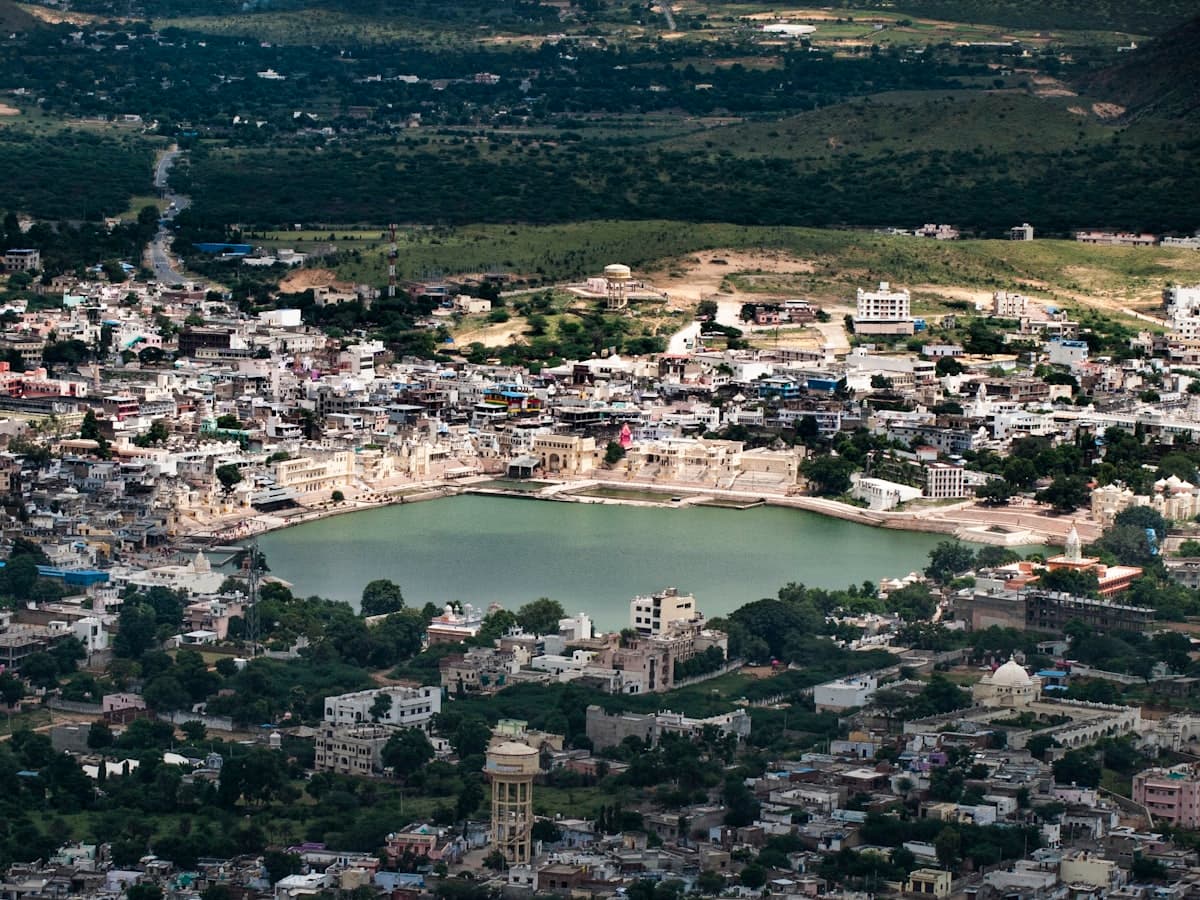
Pushkar: A Traveller's Guide to Rajasthan's Sacred Lake Town
Jaisalmer and the Thar Desert: Fort, Dunes and a Night Under Stars