Sleeping in a Palace: A Guide to Rajasthan's Heritage Hotels
Lake palaces, fort hotels and desert tents. What a Rajasthan heritage stay is really like, and how to choose the right one for each city.
In most countries, a grand hotel is a building. In Rajasthan, it can be a home. Many of the state's finest places to stay were built as royal residences, hunting lodges and summer retreats, and some are still lived in by the families who owned them.
That is the appeal. You are not visiting a museum. You are sleeping in the story. But the range is wide, and not every heritage hotel is the same experience. Here is how to understand the types, and how to choose.
What "heritage hotel" really means
The term covers three quite different things.
A former palace or royal residence, restored and run as a hotel. The building is the point.
A restored haveli or fort, often smaller and more intimate, set inside an old city.
A new hotel built in a heritage style, with modern comfort and traditional design.
None is better in the abstract. The question is what you want from the stay. Grandeur, intimacy, or a sense of place.
Udaipur: the palace on the water
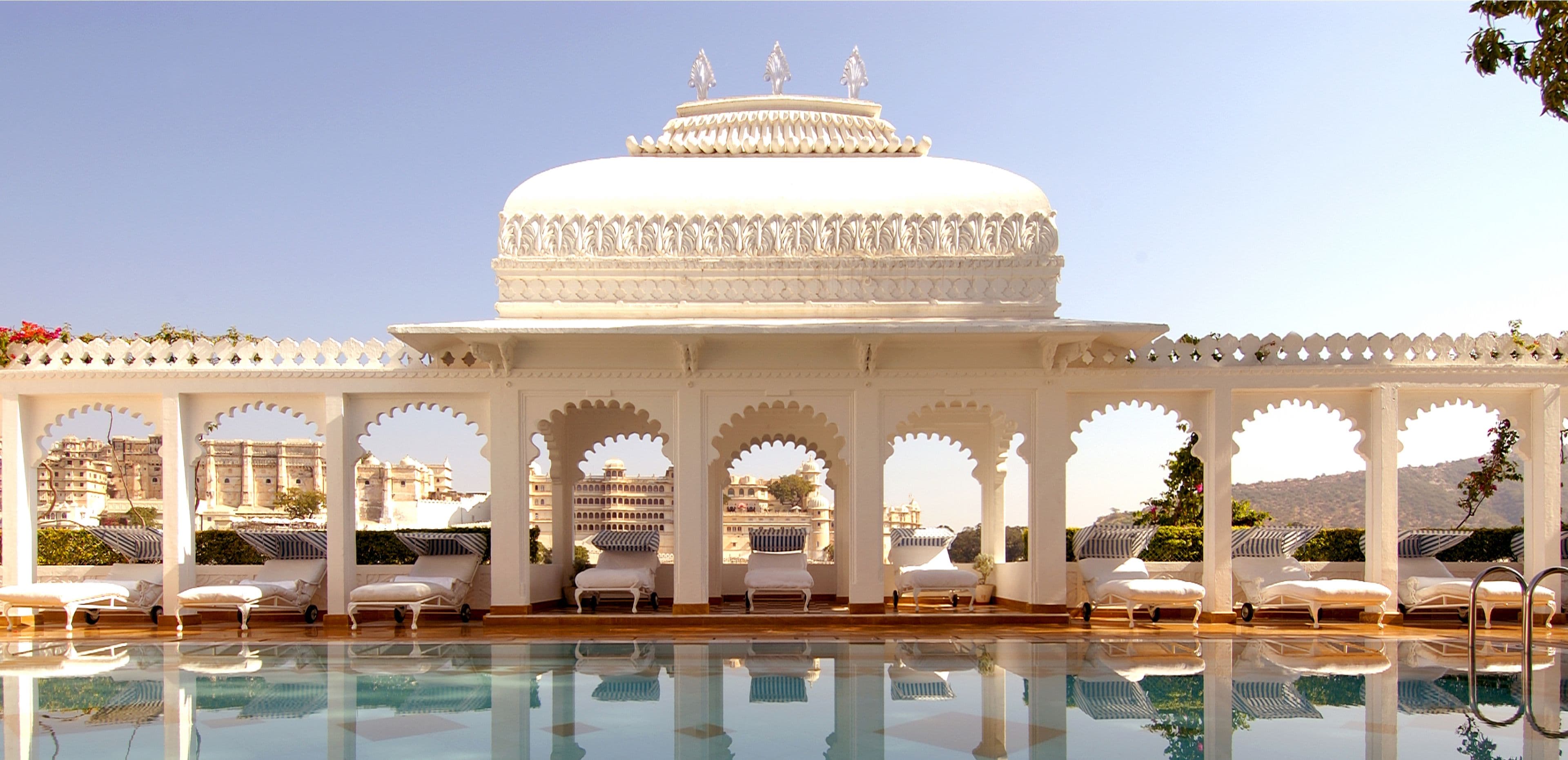
The most famous example is [Taj Lake Palace](/hotels/taj-lake-palace-udaipur). It was built in 1746 as a royal summer retreat, and it covers a four-acre island in Lake Pichola. There is no road to it. Guests arrive by the hotel's own boat, and that short crossing sets the tone.
The palace is carved from white marble and seems to float. Courtyards open onto lily ponds, and corridors are inlaid with coloured glass and mirrorwork. It is romantic almost to excess, which is why it is so loved for honeymoons and anniversaries.
If you want the water without the island, Jagat Niwas Palace is a 17th-century haveli on the Lal Ghat waterfront, converted room by room rather than gutted, with a more intimate scale.
Jaipur: a maharaja's home
[Rambagh Palace](/hotels/rambagh-palace-jaipur) began life in 1835 as a garden house. It became a hunting lodge, then the residence of the Maharaja of Jaipur. Today it is a Taj hotel that still reads as a private home rather than a property.
It sits on 47 acres of walled garden, inside the city. Peacocks cross the lawns at dusk. Marble corridors run past hand-carved sandstone screens and family portraits. It is the calm centre of a busy city, and a good place to recover after a day at Amber Fort.
For something smaller, Alsisar Haveli was built in 1892 as a family mansion and still belongs to the same family. Nothing about it feels leased or rebranded.
Jodhpur: beneath the fort
[RAAS Jodhpur](/hotels/raas-jodhpur) sits inside the old walled city, just beneath Mehrangarh Fort. Few luxury hotels in Jodhpur place guests this close to the fort's sandstone ramparts. Blue-washed houses line the narrow streets outside its gates.
The design is restrained. Contemporary architecture sits beside restored heritage havelis, with locally quarried stone and clean lines. It suits guests who like heritage without the drama of decoration.

For a more classic heritage feel, Ajit Bhawan has a real claim to being India's first heritage hotel. It was built in 1927 as a royal family residence, opened to guests in the 1970s, and is still run by the family.
Jaisalmer: a fort in the desert
[Suryagarh](/hotels/suryagarh-jaisalmer) rises from the desert like a fortress reborn. Built from local golden sandstone, it stands on the Sam road outside Jaisalmer city, facing the dunes of the Thar. Its turrets, jharokhas and courtyards recall Rajasthan's royal past.
It is a heritage hotel in spirit, and it is a member of Small Luxury Hotels of the World. If you want the desert at your door, this is the choice. The trade-off is that you are outside the old fort, so you will drive in for sightseeing.
Ranthambore: tents on the edge of a tiger park
Not every luxury stay is a palace. [The Oberoi Vanyavilas](/hotels/the-oberoi-vanyavilas-ranthambore) is a tented resort on the edge of Ranthambore National Park, about ten minutes by road from the park gates. Twenty-eight air-conditioned tents sit across twenty acres of planted gardens, each with a canopied bed, a teak floor and a walled private garden.
The design borrows from the travelling camps of Rajput royalty. It is a different kind of heritage, and a memorable one. Guests are driven into the park for their safaris, which the resort arranges.
How to choose
Ask three questions.
Do you want the building or the location? A lake palace is a destination in itself. A haveli inside an old city puts you closer to the streets.
How much time will you spend at the hotel? If you are out all day, location and comfort matter more than grounds. If you are staying in, gardens and a pool matter more.
How much ceremony do you like? Grand palaces come with butlers, dress codes for dinner and a formal tone. Boutique havelis are more relaxed.
What to expect, honestly
Heritage hotels have real character, and a few quirks.
Rooms differ a lot within one hotel. In a palace, a room in the original wing feels very different from one in a newer block. If the historic rooms matter to you, ask for them when you book.
Old buildings have old layouts. Expect thick walls, uneven floors, and staircases. Access can be harder for guests with limited mobility.
Service is a big part of the experience. In the best of them, staff know the building's stories and will share them.
Location trade-offs are real. A palace with large gardens is often on the edge of the city. A fort hotel in the old city can be near narrow lanes.
Best time to stay
October to March brings the coolest weather and the best light. Terraces and courtyards are the heart of these hotels, and you want to use them. Book early for December and January, when the best rooms sell out.
Palace stays on a wider route
A heritage hotel is best as part of a route, not in isolation. Our Palace & Heritage Tour moves through the state's finest properties. For a special occasion, look at the Anniversary Celebration, and for the most complete version, the Ultra Luxury Journey.
If you are still deciding the order of cities, read our guide to ordering Jaipur, Jodhpur and Udaipur.
Frequently asked questions
Is it worth staying in a palace hotel?
For at least one or two nights, yes. It is one of the things that makes Rajasthan different. Balance grand nights with more relaxed ones.
Are palace hotels suitable for children?
Many are. Gardens, pools and boat rides suit families. Check each hotel's policies for younger children.
Do I need to dress up?
Some palaces expect smart dress at dinner. Most are relaxed during the day.
Which is the best palace hotel in Rajasthan?
There is no single answer. Taj Lake Palace is the most romantic, Rambagh Palace the most residential, and Suryagarh the most desert-like.
Let us match the stay to the trip
With so many good hotels, the right choice depends on your route, dates and mood. Browse the full Rajasthan destination page, or tell us about your trip and we will suggest the hotels that suit it.
Read Next
All Stories →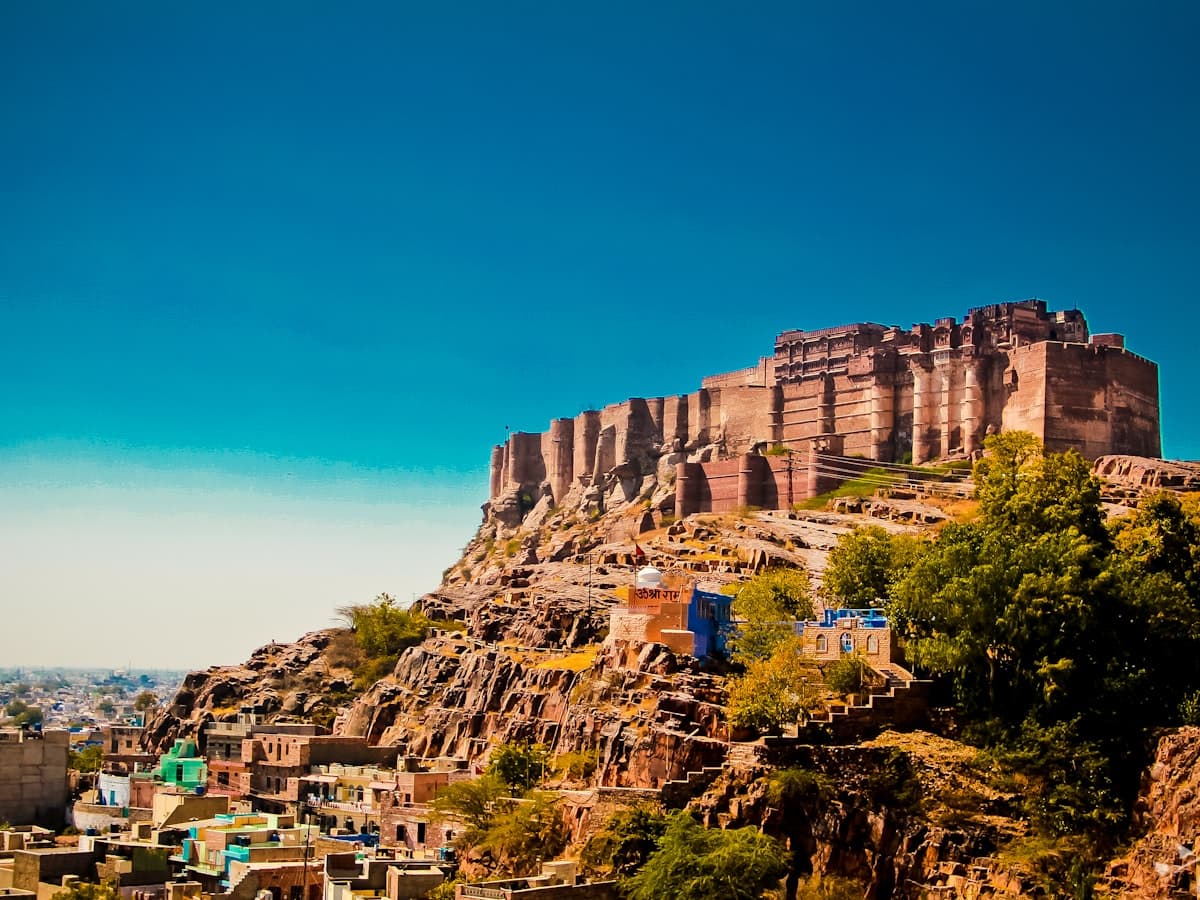
Jaipur, Jodhpur or Udaipur First? How to Order Your First Rajasthan Trip
A Night on a Kerala Houseboat: What It Is Really Like