Pushkar: A Traveller's Guide to Rajasthan's Sacred Lake Town
A Pushkar travel guide: the sacred lake and ghats, the rare Brahma temple, the camel fair, etiquette and where to stay for a calm visit.
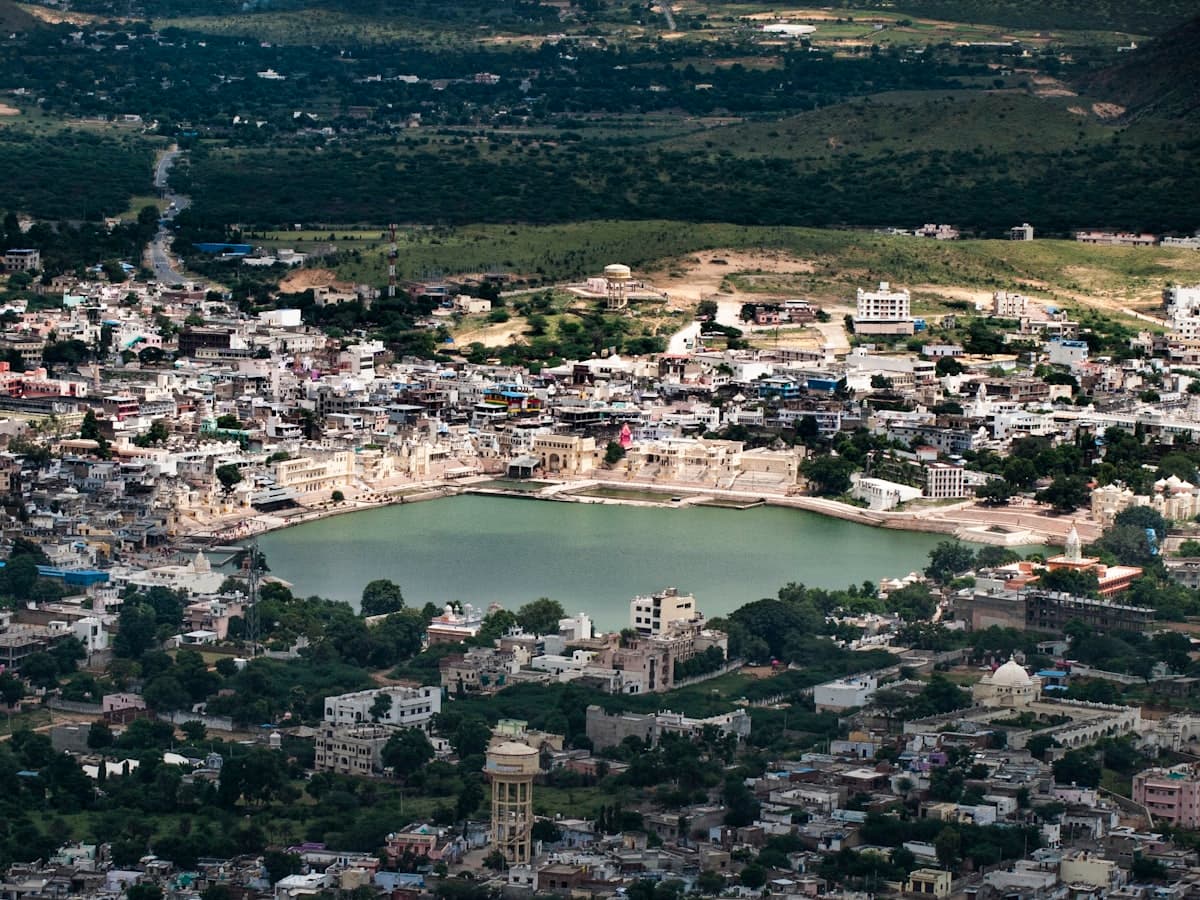
Any honest Pushkar travel guide starts with a warning and a promise. The warning: this is a small, holy, sometimes chaotic town, and a rushed visit can feel overwhelming. The promise: given a night and a slow morning, it becomes one of the most atmospheric places in Rajasthan. A sacred lake, white ghats, temple bells and a market of silver and spices pack into a few square kilometres.
Pushkar sits about 15 kilometres from Ajmer, on the edge of the Thar Desert. It is easy to add to a route between Jaipur and the western cities. Our guide to ordering your first Rajasthan trip shows where it fits.
Why Pushkar matters
Pushkar Lake is one of the holiest sites in Hindu tradition. According to legend, it formed where the god Brahma dropped a lotus flower. Pilgrims bathe in its waters, and the town is ringed by around fifty bathing ghats, stepped platforms that lead down to the lake.
The town has a strict religious character. Meat, eggs and alcohol are not served in most of the old town, and visitors are expected to respect that. The result is a quiet, vegetarian, incense-scented place, unlike the rest of the state.
The lake and the ghats
The lake is the heart of the town. Go at dawn, when the light is soft and priests conduct morning rituals. Later in the day, life at the ghats is busy but gentle, with pilgrims bathing, families praying and boys splashing.
A few rules matter here: - Remove your shoes before stepping onto the ghats. - Dress modestly. Cover shoulders and knees. - Don't photograph people bathing without permission. - Avoid leather items at the water's edge, which is considered disrespectful.
Priests may approach you and offer to perform a blessing, called a puja, in exchange for a donation. It can be a meaningful experience, but the amounts requested vary, and some approaches are pushy. It's wise to accept one only through your guide or hotel, and to agree the arrangement first.
The Brahma Temple
Pushkar's most famous shrine is dedicated to Brahma, the creator, one of the few temples devoted to him in India. It stands on a raised platform, with a red spire and a silver turtle set in the floor of the sanctum. It is small and unpretentious, but the tradition behind it is rich.
Queues can build in the morning, so go early or in the late afternoon. Phones and cameras are usually not permitted inside, so leave them with your guide or hotel.
The hill temple and sunset
Above the town, on a hill, stands the Savitri Temple, reached by a climb or a ropeway. The reward is a wide view over the lake, the town and the desert beyond. Sunset is the best time to go. It is one of the loveliest views in Rajasthan.
The bazaar
Pushkar's main street is a lively bazaar. You'll find silver jewellery, block-printed cottons, leather goods, spices and small handicrafts. Prices are open to negotiation. Browse slowly, compare before buying and take your guide's advice on quality. Our guide to Rajasthan's crafts and textiles explains what to look for.
The camel fair
Every year around October or November, Pushkar hosts one of the world's largest camel and livestock fairs. Tens of thousands of animals gather, along with traders, musicians and pilgrims, and the town swells enormously. It coincides with a major religious full moon festival.
It's a vivid, remarkable spectacle. It's also very crowded, and hotels book out far ahead. If you want to go, plan many months in advance. If you'd rather avoid the crush, choose any other week of the cool season.
How long to stay
One night is the minimum, and two lets you go slowly. A same-day visit from Jaipur or Udaipur is possible, but it rushes the best hours, dawn and dusk.
A good rhythm: arrive in the afternoon, walk the ghats at sunset, sleep, then see the lake at first light before the crowds. Visit the temple before breakfast, and leave by mid-morning.
Where to stay
Choose comfort outside the busiest lanes. The Westin Pushkar Resort & Spa offers a quiet, spacious retreat with a spa, a short drive from the lake. Ananta Spa & Resorts sits in landscaped grounds with a calm, wellness-minded feel. Both let you retreat after the intensity of the old town.
When to go
The cool season, October to March, is the best time. Days are pleasant and nights are cool. April to June is hot, and the monsoon months bring less crowd and greener hills. For a fuller picture of the state's seasons, read the guide to palace stays across Rajasthan.
Building it into a trip
Pushkar sits on the classic route between Jaipur and Jodhpur or Udaipur. Our Rajasthan spiritual sojourn journey builds a route around temples, ghats and quiet places, and the Rajasthan golden cities itinerary covers the main cities at an easier pace.
What to eat, and where
Pushkar is entirely vegetarian in its old town, and the food is better than you might expect. Rooftop cafés serve thalis, fresh paneer dishes, falafel, pasta and breakfasts with fruit and curd. Look for the sweet shops, which fry fresh malpua, a syrup-soaked pancake that is the town's famous dessert.
A cold glass of rose milk, made from fragrant local roses, is another local speciality. Pushkar's rose fields supply flowers for offerings and for perfume, and the scent is part of the town's identity.
Eat where the food is fresh and the turnover is high. Our guide to eating well in India covers simple habits that keep you healthy on the road.
Best times of day
Pushkar has three good hours, and they are not the middle of the day.
Dawn: the lake is still, priests chant, and the light is beautiful. This is the best time for photographs, from a respectful distance.
Late afternoon: the town cools, the bazaar comes alive and the hill temple is at its best.
Early evening: the ghats hold a soft evening ceremony with lamps floating on the water. It is quiet and moving.
Midday is hot, busy and best spent at your hotel.
A quiet detail: the town's sense of humour
For all its solemnity, Pushkar is also a backpackers' haven with a relaxed international edge. You'll find yoga studios, small bookshops and cafés serving travellers from around the world. The mix of pilgrim and visitor gives the town a warmth that surprises many first-timers. It's worth stopping in a café to watch the street go by.
Getting there and moving on
Pushkar is reached by road from Jaipur in roughly three to four hours, from Jodhpur in a similar time, and from Udaipur in around five. Most guests arrive by private car and drive onwards after one or two nights. Our guide to getting around India explains why a private driver suits routes like this.
Frequently asked questions
Is Pushkar worth visiting?
Yes, if you're interested in spirituality, atmosphere and a slower town. If you prefer palaces and forts, it's optional.
Can I drink alcohol in Pushkar?
Not in most of the old town. Some hotels outside the centre are more relaxed. Ask your guide.
Is Pushkar safe for women travelling alone?
Generally yes, with the usual care. Dress modestly and be firm with unwanted offers. See our solo female travel guide.
How crowded is the camel fair?
Extremely. It's memorable but tiring, so plan well ahead.
Start planning
Read about Rajasthan, or talk to a trip designer about adding Pushkar at the right pace.
Read Next
All Stories →
Jaisalmer and the Thar Desert: Fort, Dunes and a Night Under Stars
Ranthambore Safari: A First-Timer's Guide