City Palace Jaipur: Tickets, Timings and What to See
City Palace Jaipur: tickets, timings, a route through the courtyards, what the premium ticket adds and sunrise times by month for every season.
City Palace Jaipur is the working heart of the old Pink City, a royal residence and museum that has been home to Jaipur's rulers since the city was founded. It mixes Rajput and Mughal styles, with gateways, courtyards and a seven-storey palace. Part of it is still a private home. The rest is open to visitors, and the fee structure is confusing enough to cost people money.
This guide gives you the tickets and timings, a route through the courtyards, and a plain answer on which ticket is worth buying. It also covers what to see first, and how to avoid the crowd at the most photographed gate.
Figures were checked in October 2026. Fees change often and sources disagree, so confirm at the ticket window.
City Palace Jaipur at a glance
What to know | |
|---|---|
Where | Old city, near Tripolia Bazaar, Jaipur |
Hours | About 9:30 am to 5:00 pm, daily |
Time to allow | 2 to 3 hours |
Best hour | Opening time, or the last two hours |
Best season | October to March |
Built | From 1727, mostly complete by about 1732 |
Built by | Maharaja Sawai Jai Singh II |
Run by | The Maharaja Sawai Man Singh II Museum Trust |
Still in use | The royal family lives in part of the Chandra Mahal |
Nearest metro | Badi Chaupar |
A short history
Jai Singh II founded Jaipur in 1727, moving his capital from Amer as the population grew and water became scarce. The City Palace was one of the first buildings, laid out as a grid inside the new walled city. Much of it was finished by about 1732.
Later rulers added to it. Mubarak Mahal, the reception building, was built in the late nineteenth century by Madho Singh II. The palace stayed the seat of the Jaipur state until 1949, when Jaipur became the capital of Rajasthan. Today the royal family still lives in the Chandra Mahal, and the trust that runs the museum manages the rest.
Opening hours
Experience | Timing | Notes |
|---|---|---|
Main palace and museum | About 9:30 am to 5:00 pm | Daily. Some sources say 5:30 pm |
Ticket sales | Stop about 30 minutes before closing | Arrive by 4:30 pm |
Guided evening visit | Varies | A night tour of the private rooms exists. Confirm |
Chandra Mahal upper floors | Guided, timed | Only with a premium ticket |
The palace is open every day according to most sources.
Tickets
Ticket | Indian visitors | Foreign visitors |
|---|---|---|
Standard entry | Confirm at the window | About ₹700 in 2024 |
Premium guided tour, upper Chandra Mahal | Confirm at the window | About ₹3,500 in one source, higher in others |
Camera fee | About ₹50 | About ₹50 |
Video fee | About ₹150 | About ₹150 |
Audio guide | About ₹200 | About ₹200 |
Sources differ widely on the premium ticket, and some list separate royal-experience tours. The trust sets the price, and it changes. A standard ticket does not include the upper floors of the Chandra Mahal.
What the standard ticket covers
Area | What you see | Included |
|---|---|---|
Mubarak Mahal | Textiles and royal costumes | Yes |
Sileh Khana | The armoury | Yes |
Diwan-e-Khas | The hall of private audience and silver urns | Yes |
Pritam Niwas Chowk | The Peacock Gate courtyard | Yes, from outside |
Chandra Mahal, ground floor | A museum of royal objects | Yes |
Chandra Mahal, upper floors | Blue room and mirror rooms | No. Premium only |
The route through the palace
Stop | What it is | Allow in minutes |
|---|---|---|
Virendra Pol | The main entrance gate | 10 |
Mubarak Mahal | Textile and costume museum | 30 |
Rajendra Pol and Diwan-e-Khas | Marble gate and audience hall | 30 |
Pritam Niwas Chowk | Courtyard of the four gates | 20 |
Chandra Mahal museum | Weapons, carpets, manuscripts | 30 |
Sileh Khana | The armoury | 20 |
Mubarak Mahal and the first courtyard
Enter by the Virendra Pol and you reach the first courtyard. Mubarak Mahal, the Welcome Palace, now holds the textile museum. Look for the royal costumes, including the huge clothing of Sawai Madho Singh I, said to be exceptionally large. Photography is not allowed inside the museum.

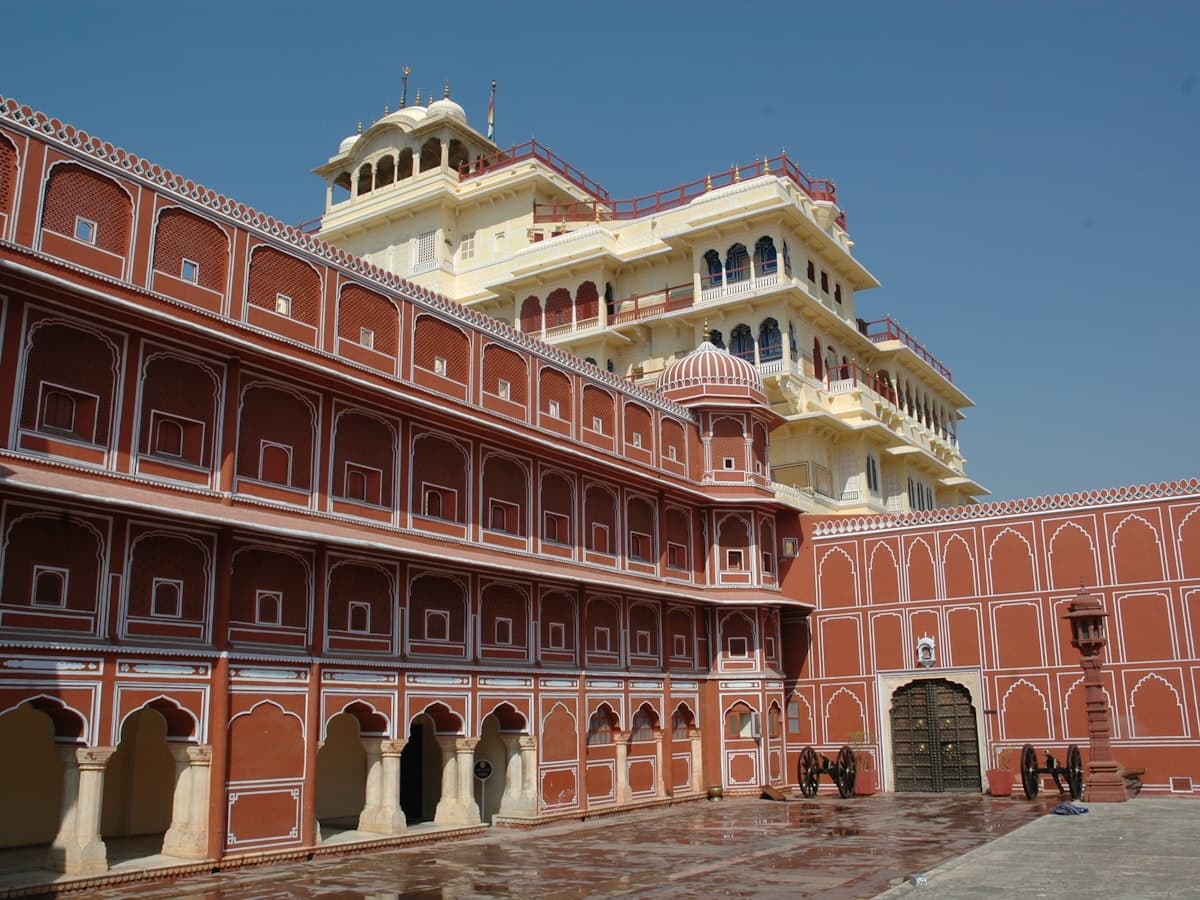
The City Palace facade, seen from its courtyard.
Diwan-e-Khas and the silver urns
Rajendra Pol, a marble gateway guarded by two elephants, leads to the Diwan-e-Khas. This open hall held private audiences. Two enormous silver urns stand in it. They were made for Madho Singh II to carry Ganga water to England in 1902, and the Guinness book lists them as the largest silver objects in the world.
Pritam Niwas Chowk: the four gates
The Peacock Gate courtyard is the most photographed corner of the palace. Four brass gates represent the seasons, with a lotus for summer, a peacock for autumn, a rose for winter and a leheriya pattern for spring. The courtyard was once used for dance and music during festivals. Visit early or late, because it fills up by mid-morning. Do not touch the doors.

Govind Dev Ji Temple, in the palace gardens, is still an active place of worship.
Chandra Mahal
The seven-storey Chandra Mahal is both museum and home. The ground floor holds weapons, manuscripts and carpets. The upper floors, including the Sukh Niwas blue room and the mirrored Rang Mandir, can be seen only with the premium ticket and a guide. If you only have time for one thing, the courtyard and the Diwan-e-Khas matter more than the upper floors.
City Palace or Hawa Mahal first?
The City Palace is the main visit, and Hawa Mahal is a short walk away. Do the palace first, because it opens at 9:30 am and takes longer. Walk to Hawa Mahal in the afternoon, when the facade catches the light. Our Hawa Mahal guide tells you where to stand, and Jantar Mantar is also next door.

Jantar Mantar, the observatory beside the palace, has its own ticket.
Best timing by month
Sunrise and sunset are calculated for Jaipur on the 15th of each month, in Indian Standard Time.
Month | Sunrise | Sunset | Visiting advice |
|---|---|---|---|
January | 7:17 am | 5:54 pm | Cold mornings, fog. Go late morning |
February | 7:03 am | 6:18 pm | Pleasant and clear. A very good month |
March | 6:36 am | 6:35 pm | Warm and bright. Good |
April | 6:03 am | 6:50 pm | Hot. Arrive at opening |
May | 5:39 am | 7:07 pm | Very hot. Visit at opening only |
June | 5:32 am | 7:21 pm | Extreme heat. Avoid midday |
July | 5:42 am | 7:22 pm | Humid, with showers |
August | 5:58 am | 7:03 pm | Monsoon. Bring an umbrella |
September | 6:12 am | 6:31 pm | Humid, easing |
October | 6:26 am | 5:58 pm | Clear and warm. Busy |
November | 6:46 am | 5:35 pm | Cool and clear. Peak season |
December | 7:08 am | 5:35 pm | Peak season, cold nights. See our Rajasthan in December guide |
Choosing your time of day
Time | What you get | Best for |
|---|---|---|
9:30 to 10:30 am | Empty courtyards, soft light | Photographers, first-timers |
11:00 am to 2:00 pm | Crowds, tour groups | Skip if you can |
2:00 to 3:30 pm | Thinner crowds | Families, slow walkers |
Last 90 minutes | Gold light, quieter rooms | Couples, history readers |
Who City Palace suits
Traveller | Why it works | Tip |
|---|---|---|
First-timers | The easiest introduction to Rajput palace life | Hire a guide for the first hour |
History readers | Costumes, weapons and manuscripts | Read the labels in the armoury |
Photographers | Gates, courtyards and light | Early morning, Peacock Gate first |
Families | Short distances and varied displays | Keep the premium tour for older children |
Couples | A courtyard to linger in | Late afternoon, then the old city |
What to pair it with
Our Jaipur 2-day itinerary, which puts the palace at the centre.
Our Govind Dev Ji Temple guide, for the active temple in the gardens.
Amber Fort, the earlier capital, in the morning of the next day.
How to plan your visit
Arrive at opening, about 9:30 am.
Decide whether to buy the premium ticket before you reach the window.
Start with Mubarak Mahal, then the Diwan-e-Khas.
Go to Pritam Niwas Chowk before the crowds.
Visit the Chandra Mahal museum and the armoury.
Walk to Hawa Mahal and Jantar Mantar in the afternoon.
Dress for walking on stone, and keep small change for camera fees.
Where it fits in Rajasthan
The palace is the centrepiece of a day in Jaipur. Our Rajasthan destination page shows how Jaipur sits among the other cities. Rambagh Palace is a former royal residence turned hotel, and Alsisar Haveli is a family-owned heritage hotel in central Jaipur. Our Rajasthan Golden Cities itinerary places the palace on day two.
Frequently asked questions
What are the City Palace Jaipur timings?
The palace is open from about 9:30 am to 5:00 pm every day. Ticket sales stop about 30 minutes before closing, so arrive by 4:30 pm.
What is the ticket price for City Palace Jaipur?
Standard entry for foreign visitors was about ₹700 in 2024. Indian fees and premium tour prices vary by source, so confirm at the window.
How long does City Palace take to visit?
Allow two to three hours. Add an hour if you take the premium guided tour of the upper Chandra Mahal.
Is the premium ticket worth it?
Only if you want to see the blue room and the mirrored rooms. The courtyards, museums and armoury are included in the standard ticket and are the better value.
Who built City Palace Jaipur?
Maharaja Sawai Jai Singh II began it in 1727, as part of founding Jaipur. Later rulers added to it, including Madho Singh II.
Can you see the royal family at City Palace?
The royal family still lives in part of the Chandra Mahal, but that area is private. Visitors do not see the family.
Is City Palace open every day?
Most sources say yes. Confirm on public holidays and special event days, when parts may close.
Plan your Jaipur visit with us
We pair the City Palace with a guide, a quiet start and a slow lunch. Start with our Rajasthan destination page, or talk to a trip designer about your dates.
Journeys for this trip
Plan your Rajasthan trip
Read Next
All Stories →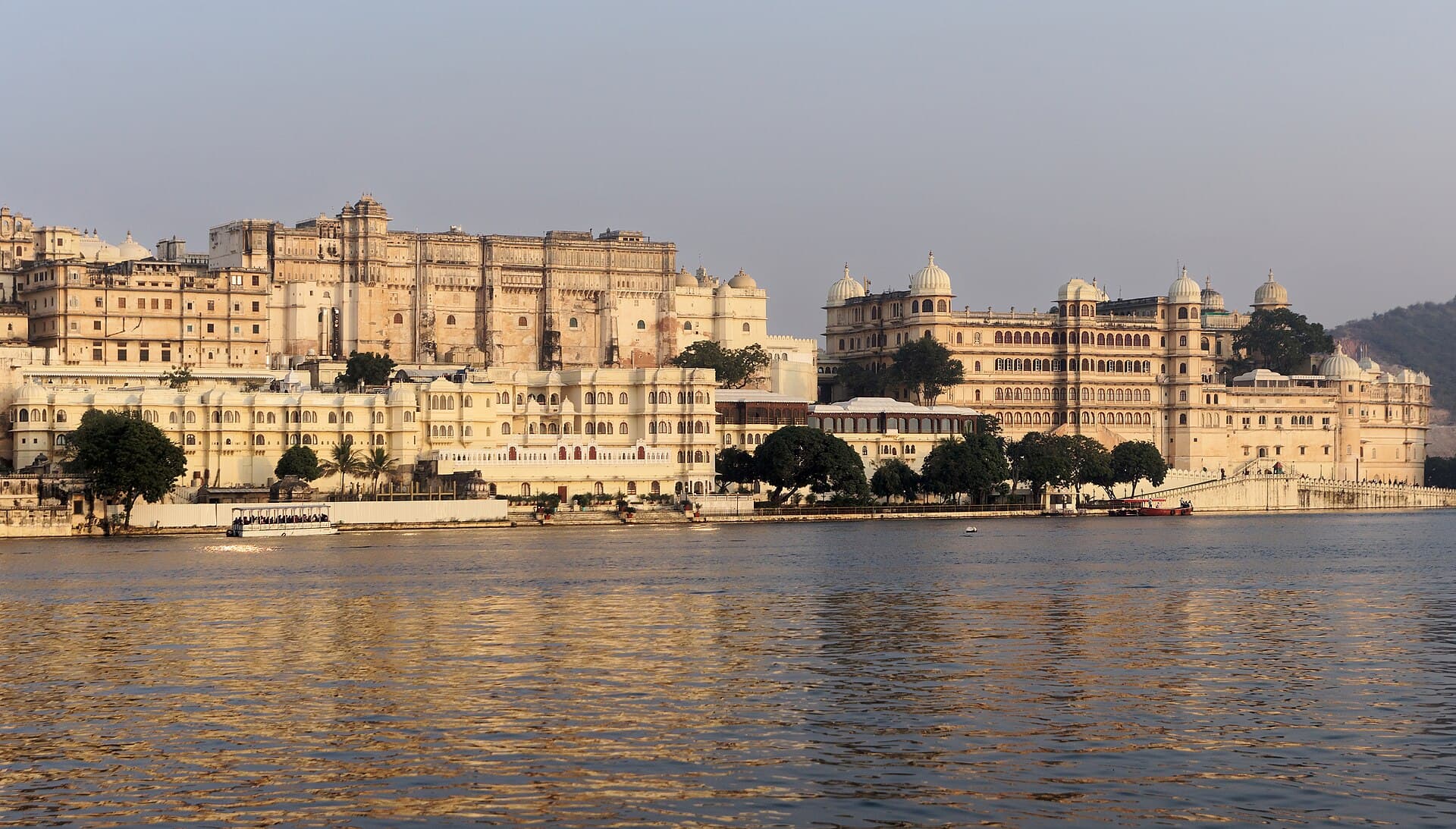
Rajasthan in December: Weather, Fog and Desert Nights
Rajasthan Trip for Couples: Romantic Stays and Sunset Spots