
Kerala
Kerala trades forts for backwaters — palm-lined canals, spice-scented hill air, and a houseboat cruise that turns travel itself into the quietest part of the trip.
Plan My Kerala TripWhere To Go
Kerala
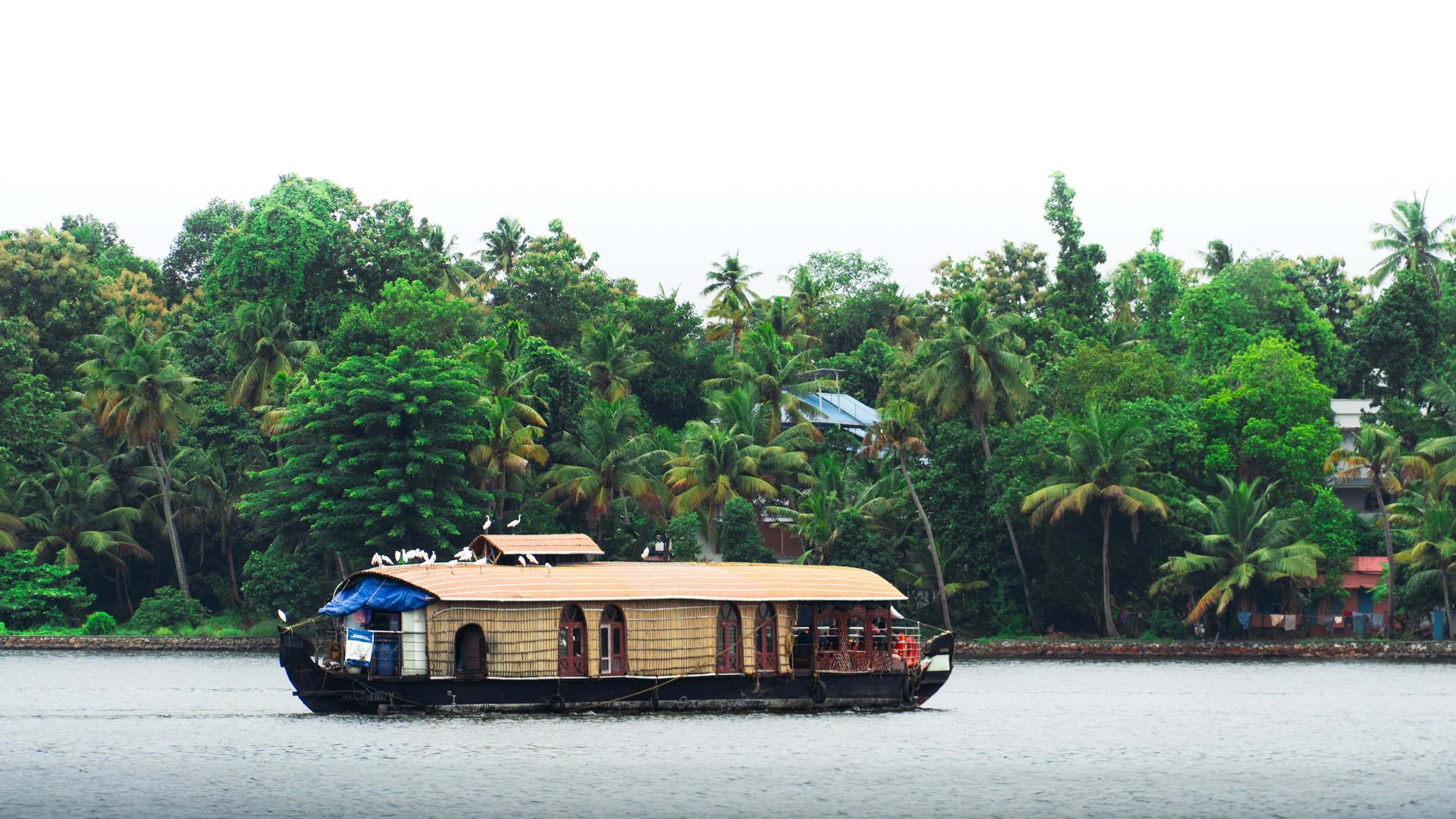
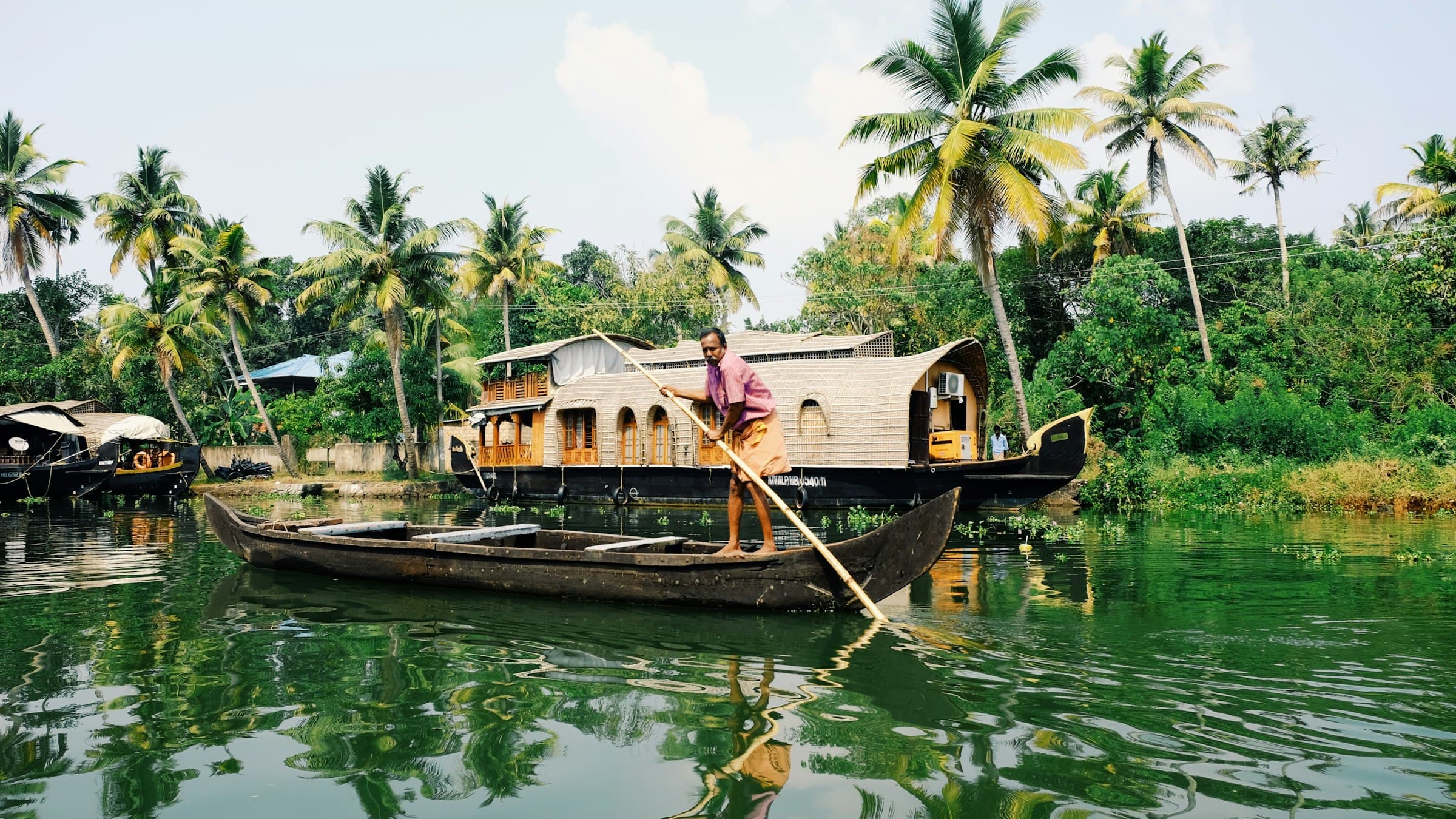
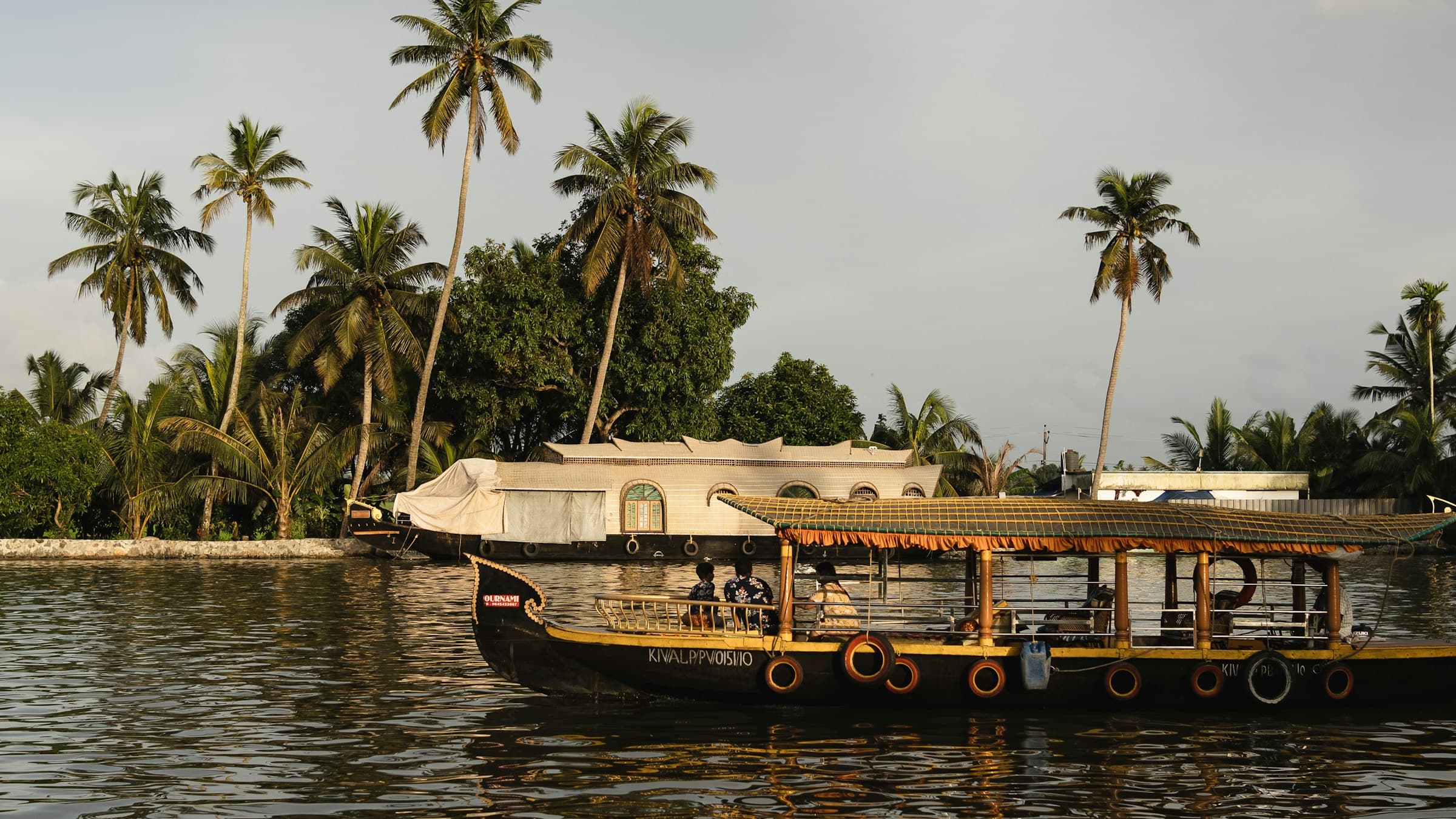
Kerala moves at water speed. Fort Kochi's Chinese fishing nets and colonial-era streets give way, a short drive south, to the Alleppey backwaters — a network of canals and paddy fields best explored from a private houseboat, where the itinerary for the day is simply to drift. It's a deliberate contrast to Rajasthan's forts and palaces, and pairs well as a second leg on a longer India journey, or stands on its own as a slower, water-led escape.
Alleppey
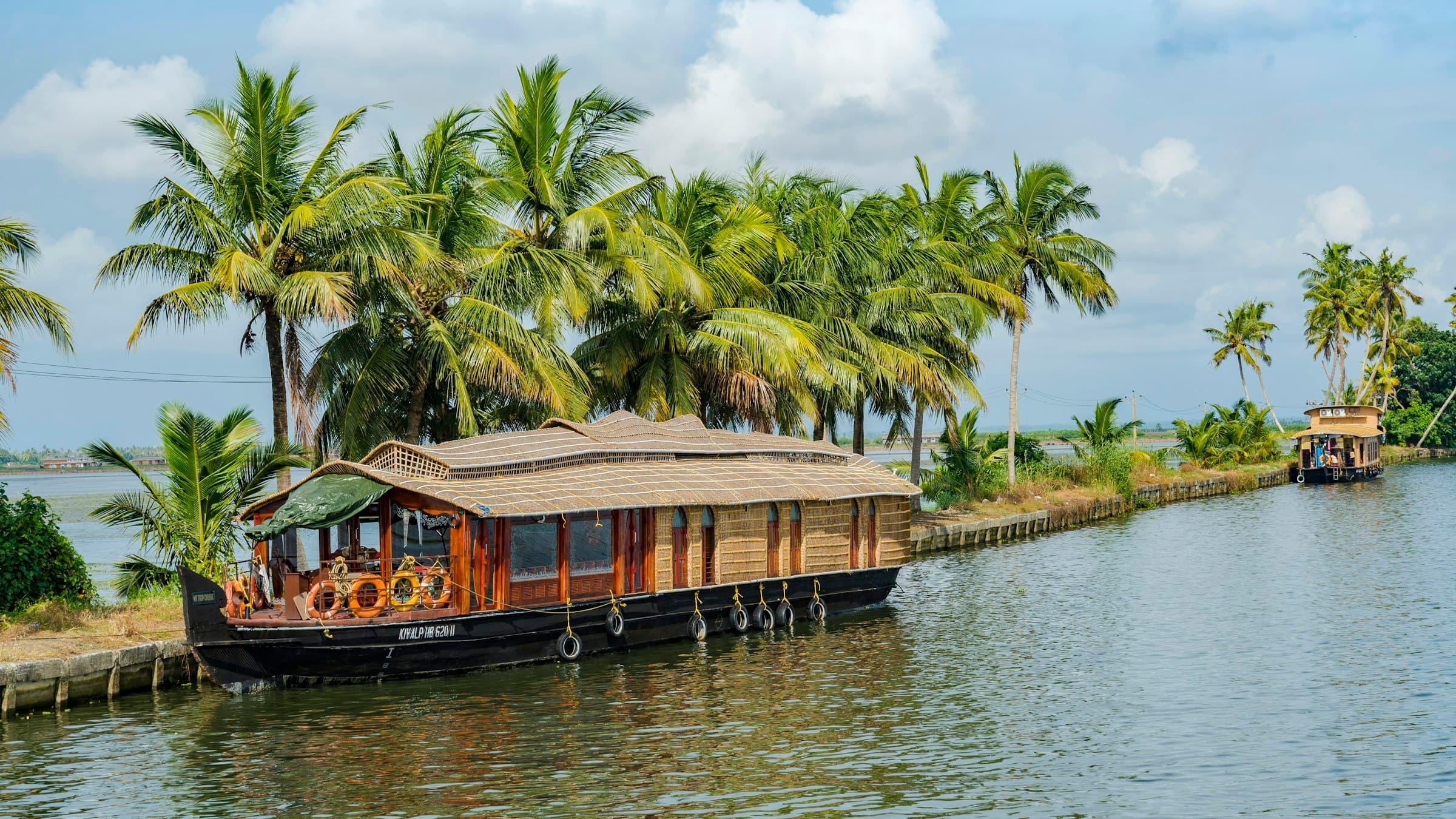
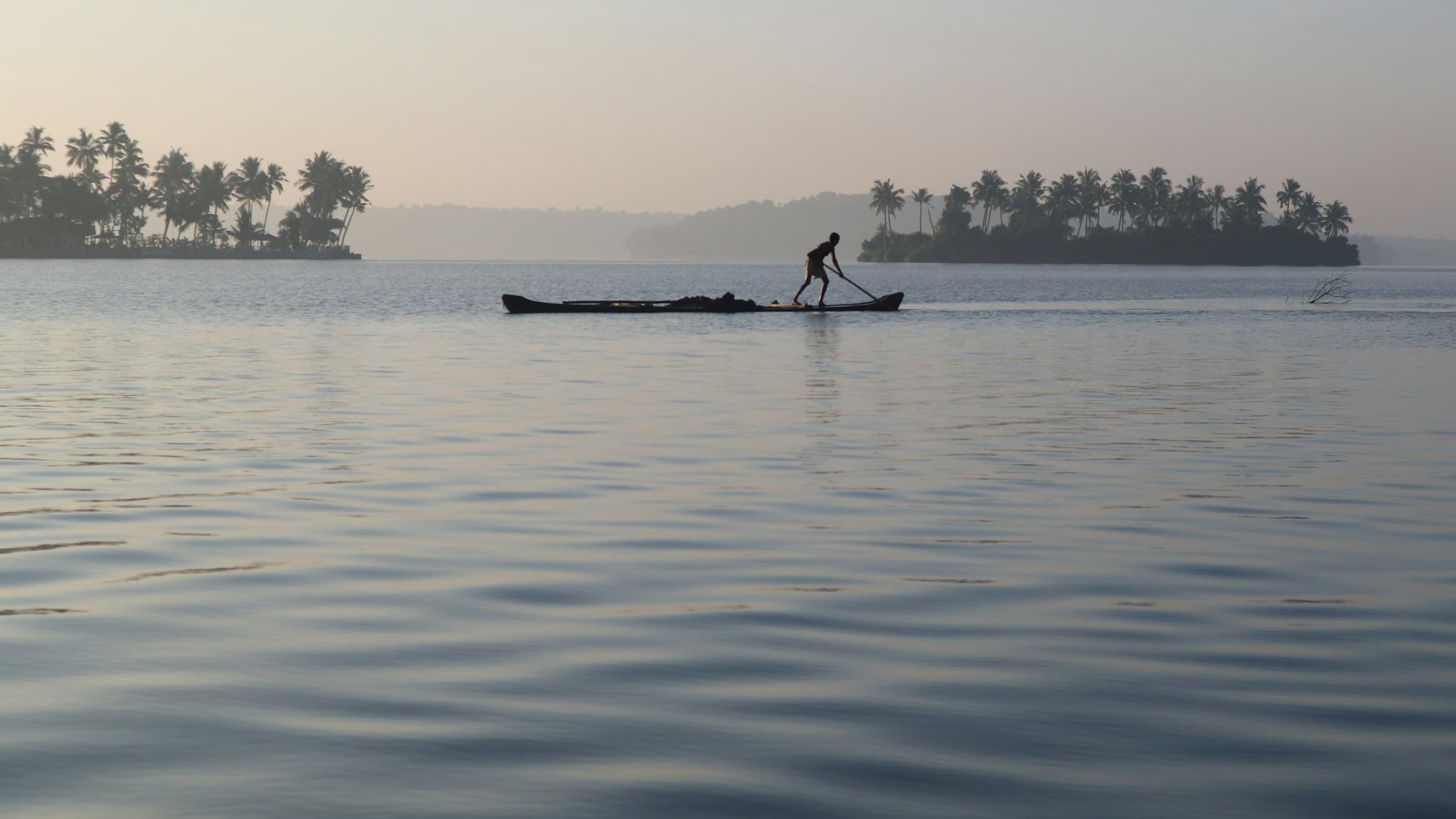
Canals, paddy fields below sea level and the wide water of Vembanad Lake, in the town most travellers mean by Kerala's backwaters.
Kochi
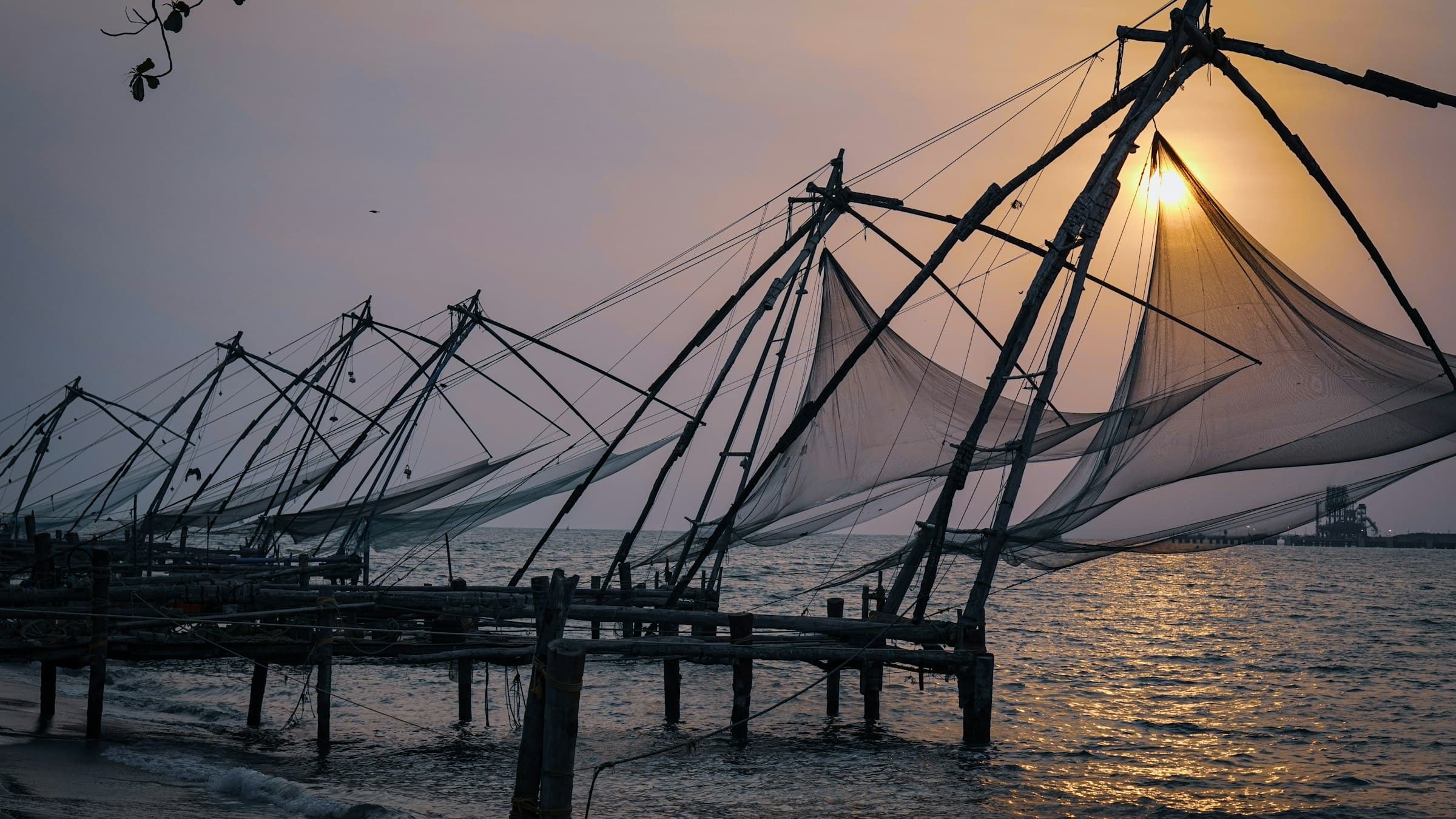
Chinese fishing nets, a 1503 church, spice lanes and Jew Town, all within a few kilometres of Kerala's old Fort Kochi waterfront.
Kovalam
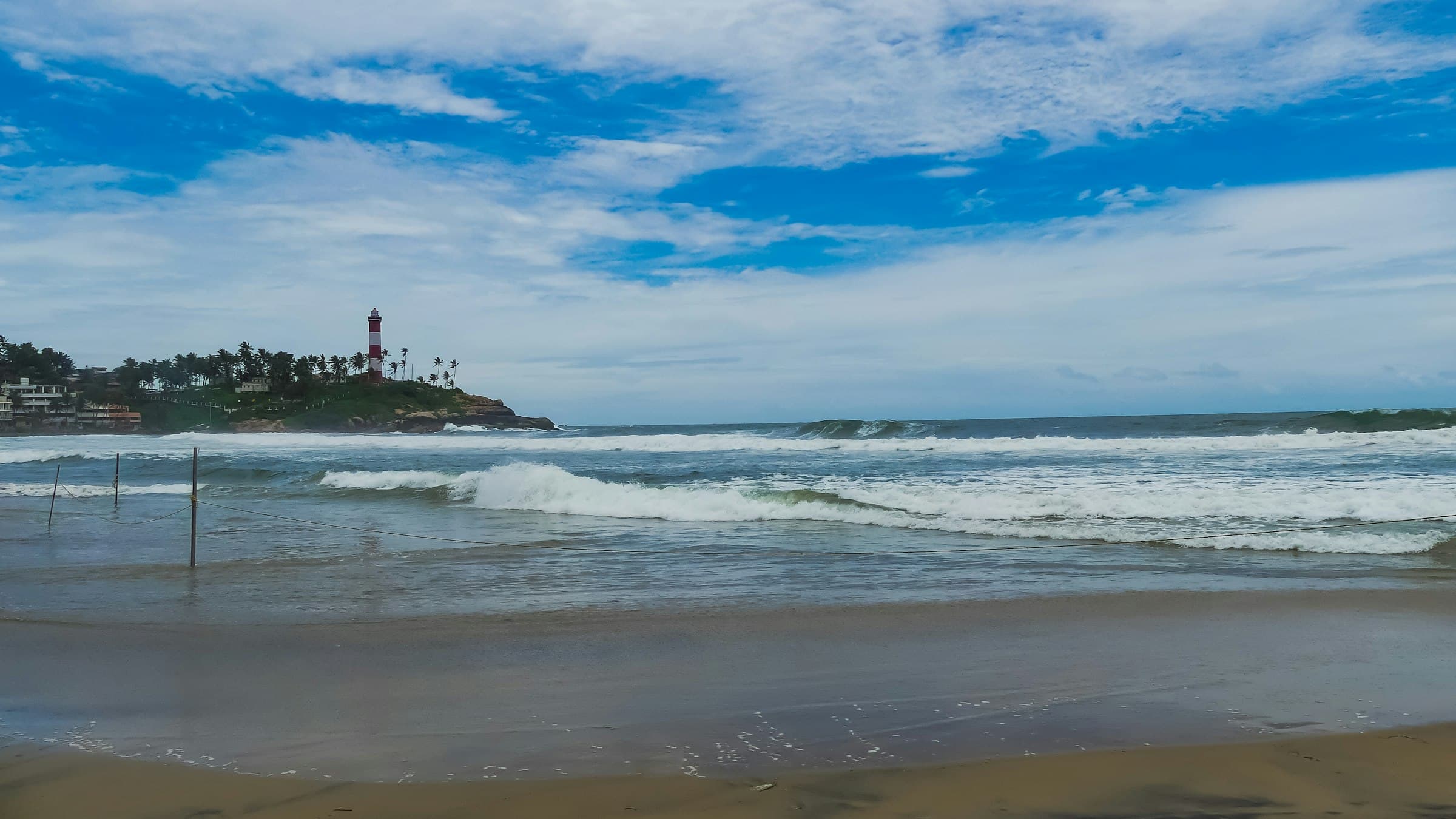
Three crescent bays on Kerala's Arabian Sea coast, with the red-and-white Vizhinjam Lighthouse above the sand and Thiruvananthapuram close by.
Kumarakom
A cluster of backwater islands on the eastern shore of Vembanad Lake, with a small bird sanctuary, village canals and quiet resorts on the water.
What To See
What A Private Guide Actually Shows You
Kerala's highlights trade forts for water and trade — a working fishery older than European contact with India, and a spice district that's run on the same trade for centuries.
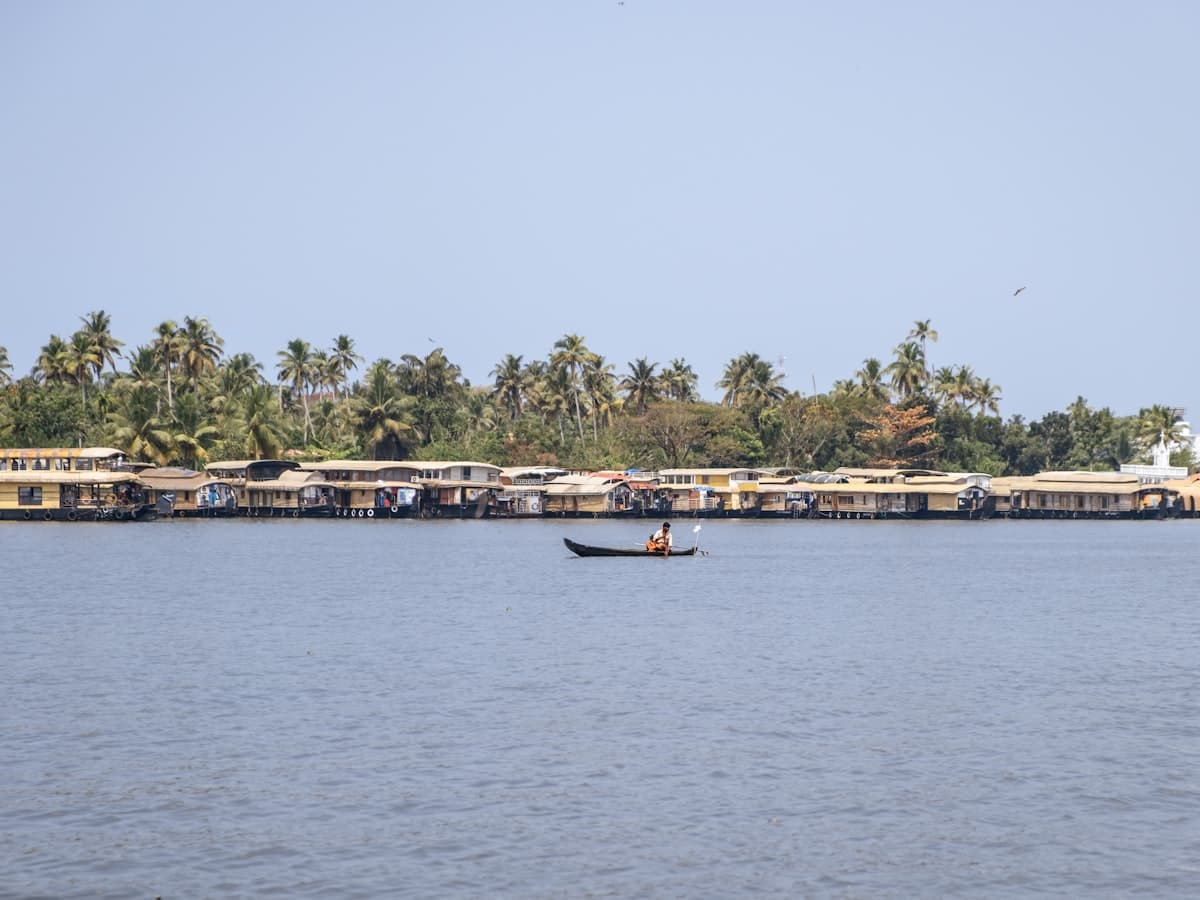
Vembanad Lake
India's longest lake, and the water every Alleppey backwater canal drains into.
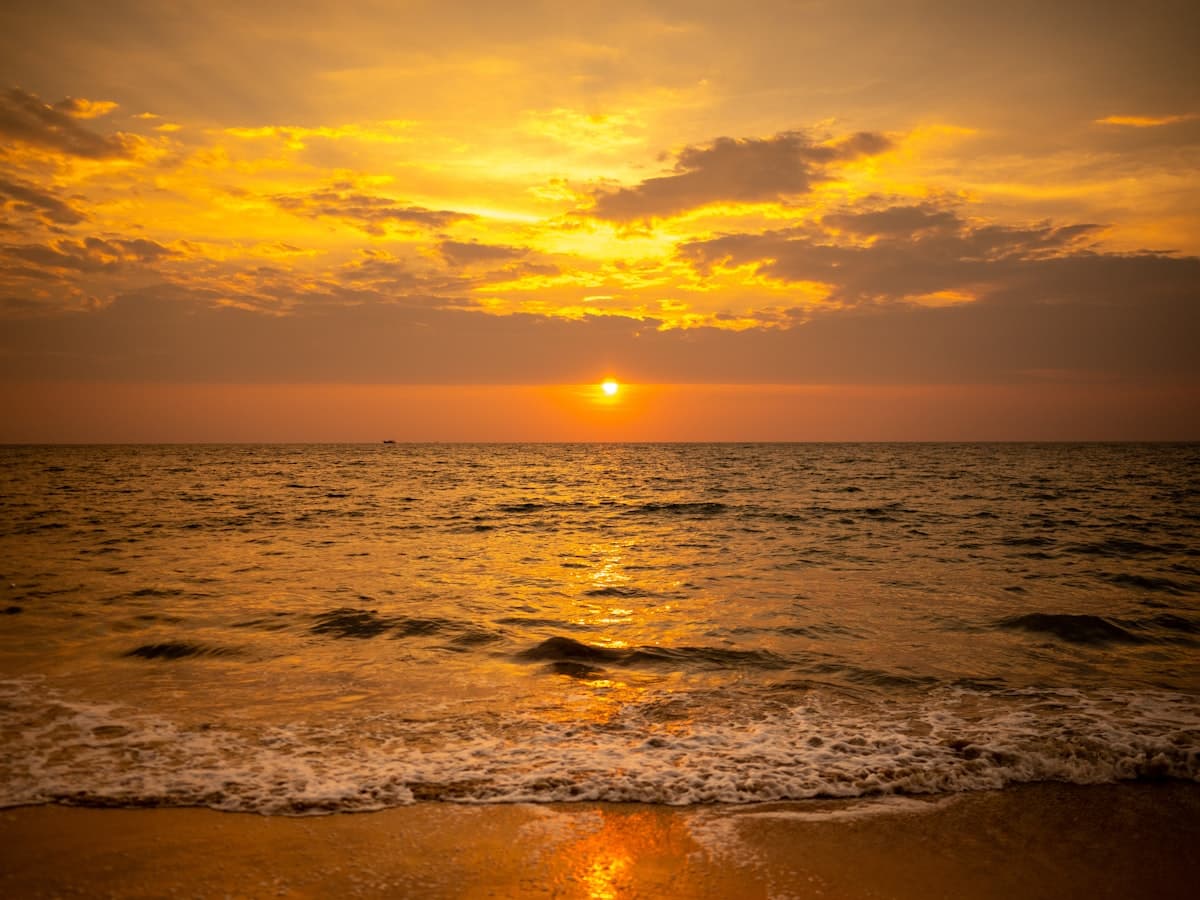
Alappuzha Beach
A wide town beach with a 150-year-old pier running out into the Arabian Sea.
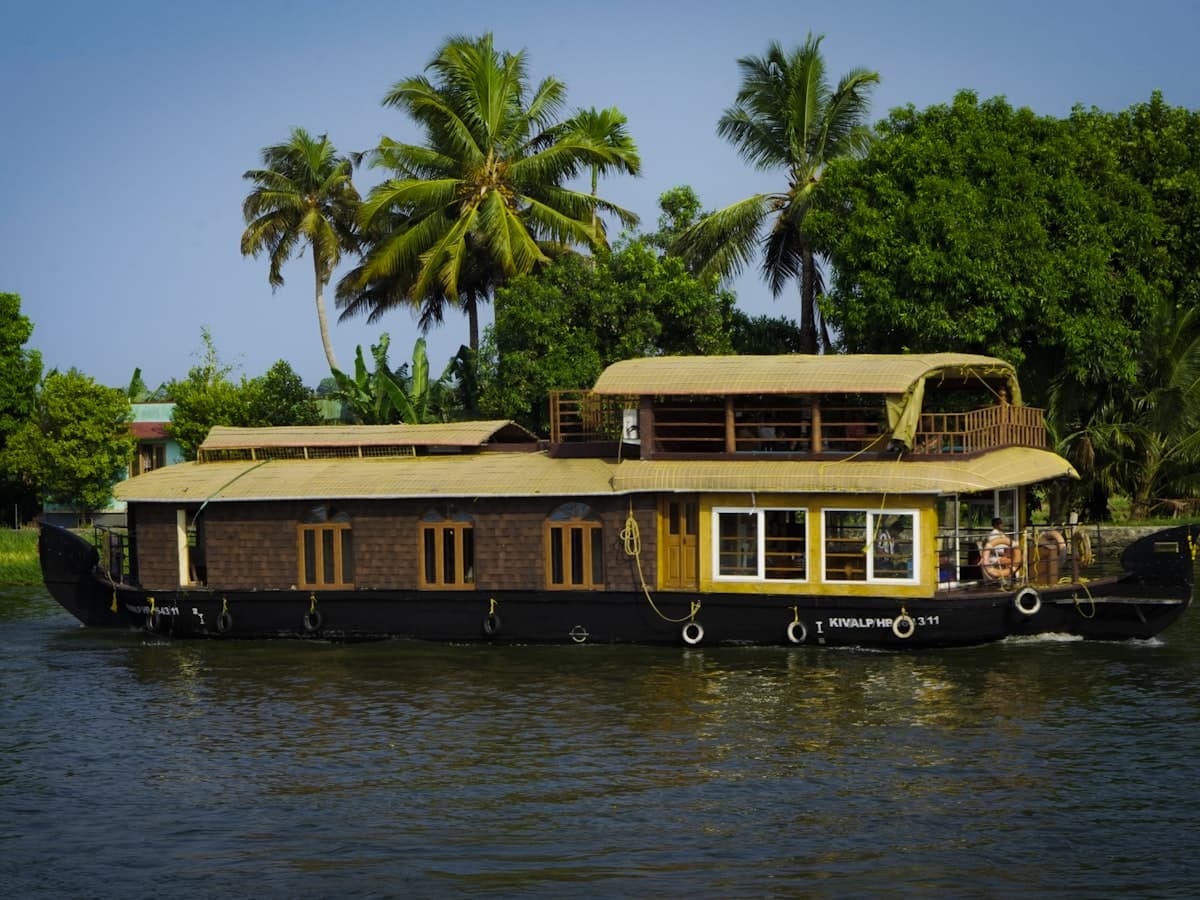
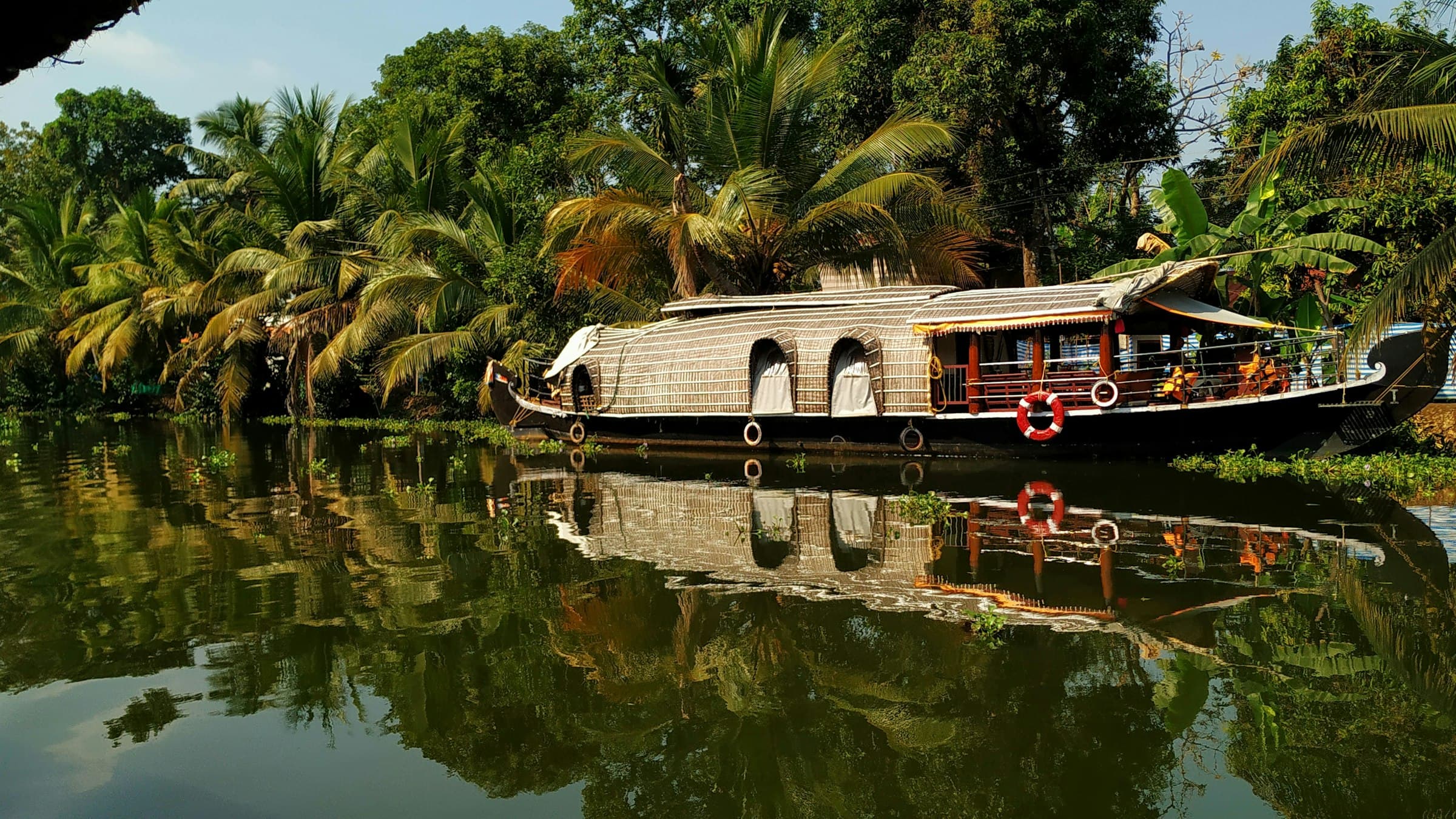
Overnight Houseboat
A converted rice barge with a crew of three, moored overnight in the canals.
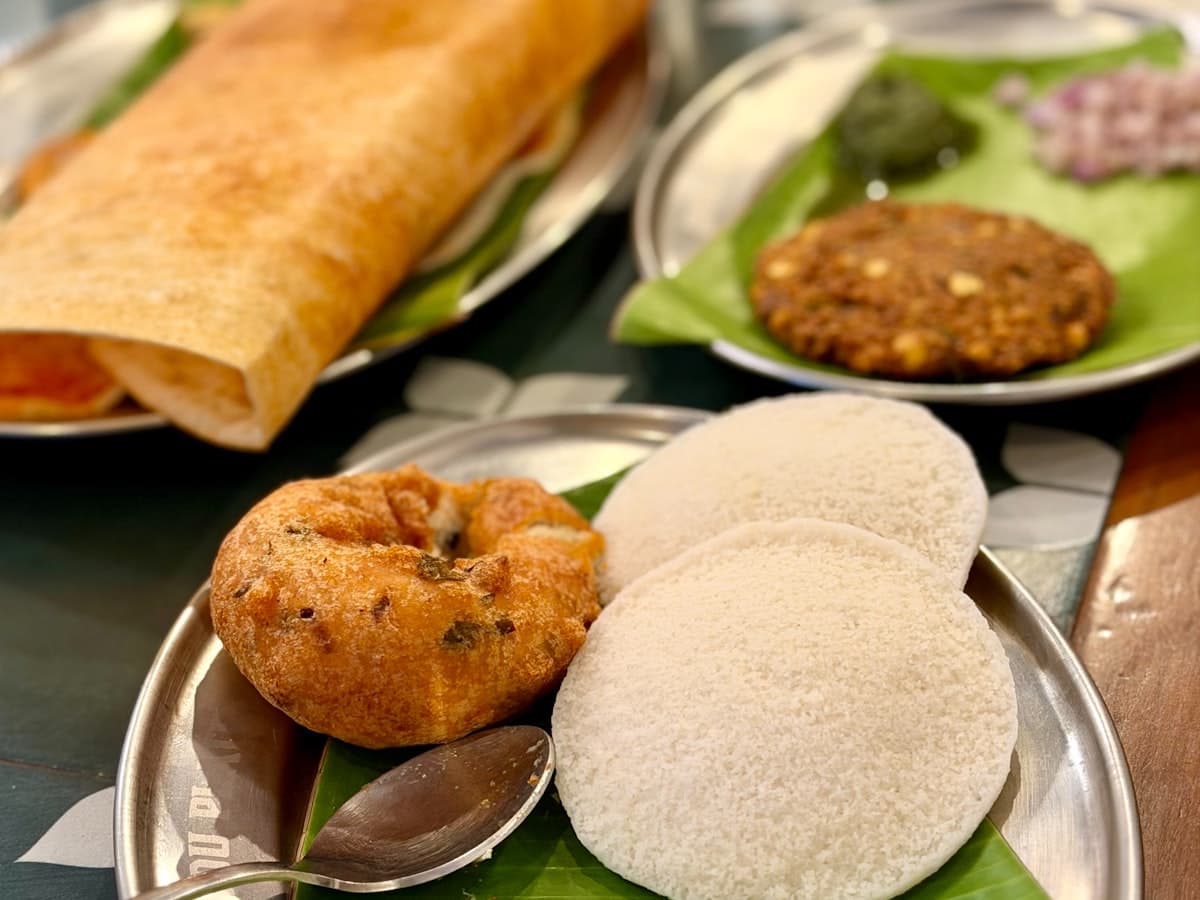
Kuttanad Toddy Shop Food Trail
Eat where the boatmen eat — canal-side toddy shops serving Kuttanad's hottest cooking.
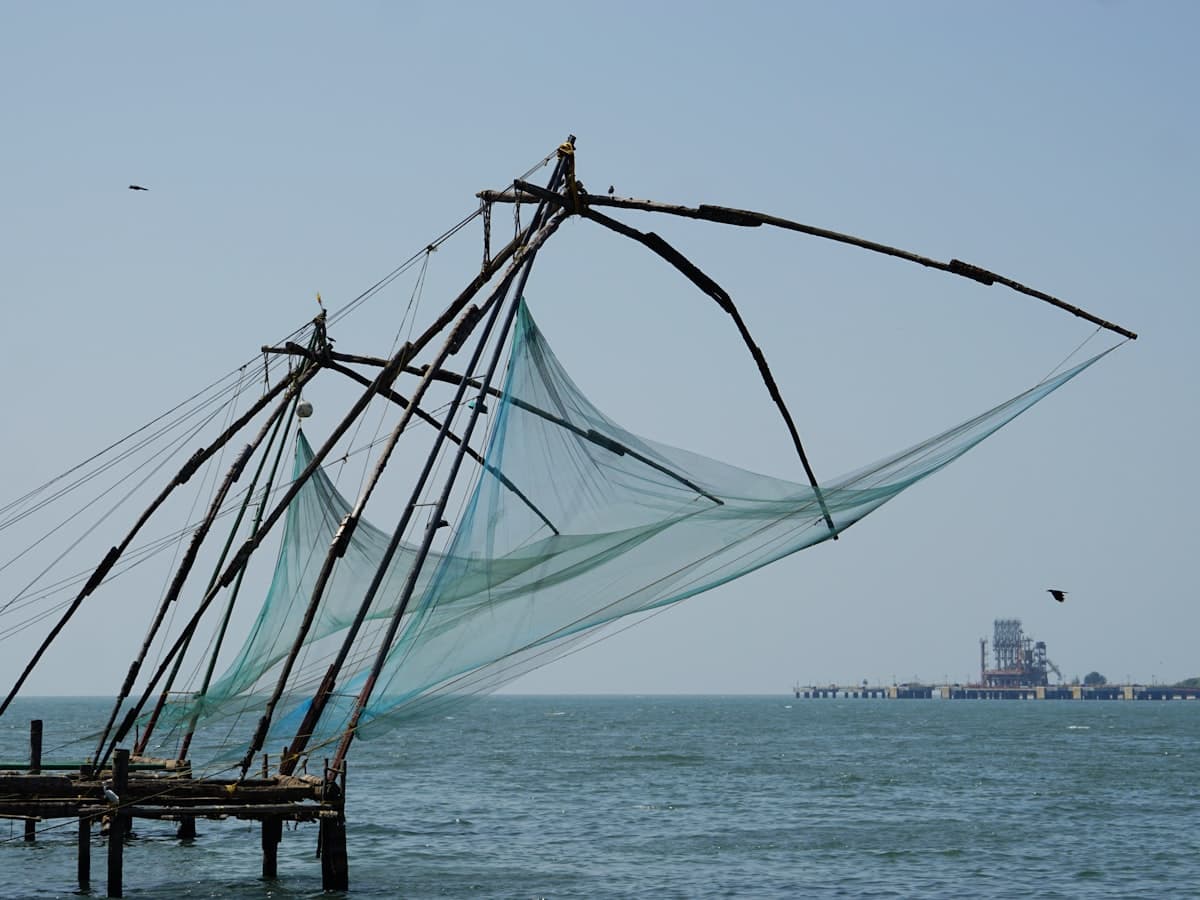
Chinese Fishing Nets, Fort Kochi
Cantilevered shore nets on Fort Kochi's waterfront, worked by hand for centuries.
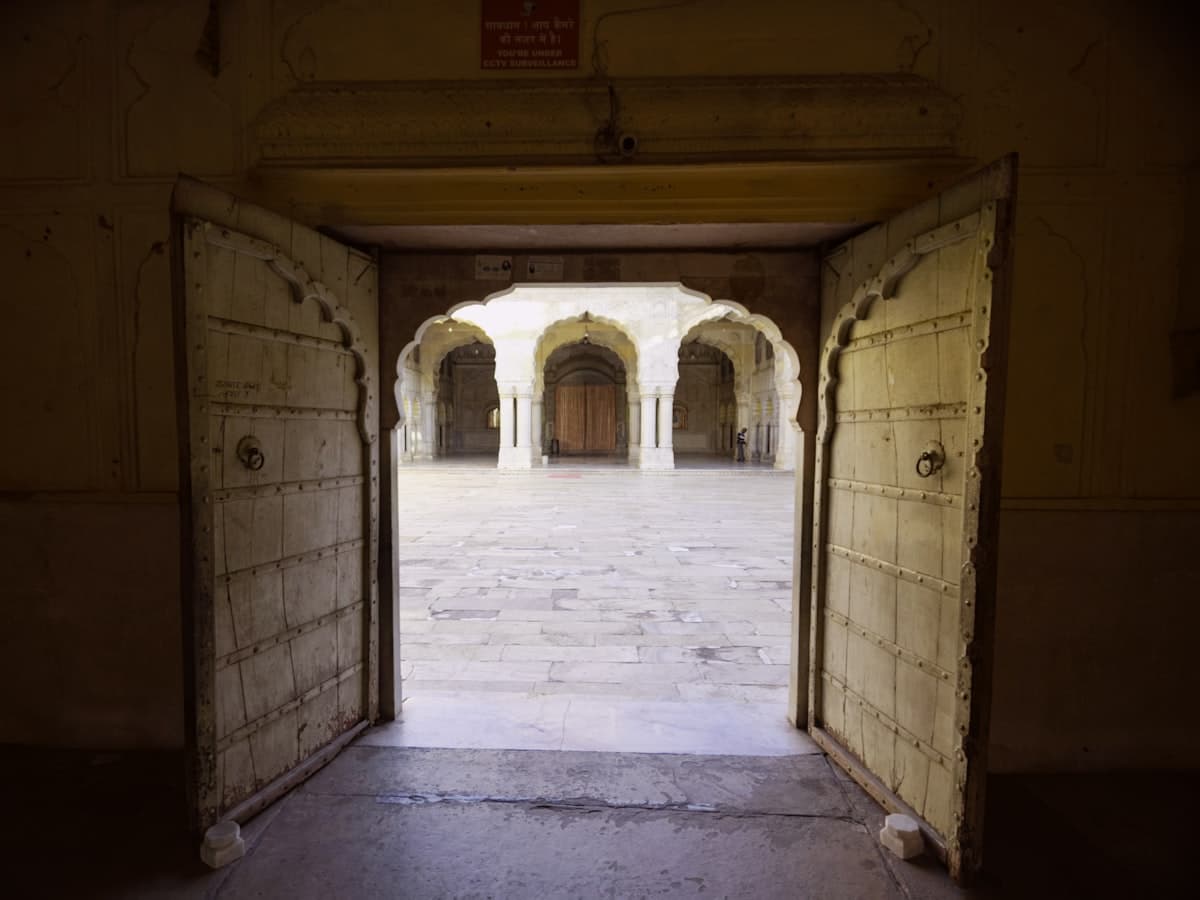
Mattancherry Palace
A Portuguese-built palace holding Kerala's finest surviving murals.
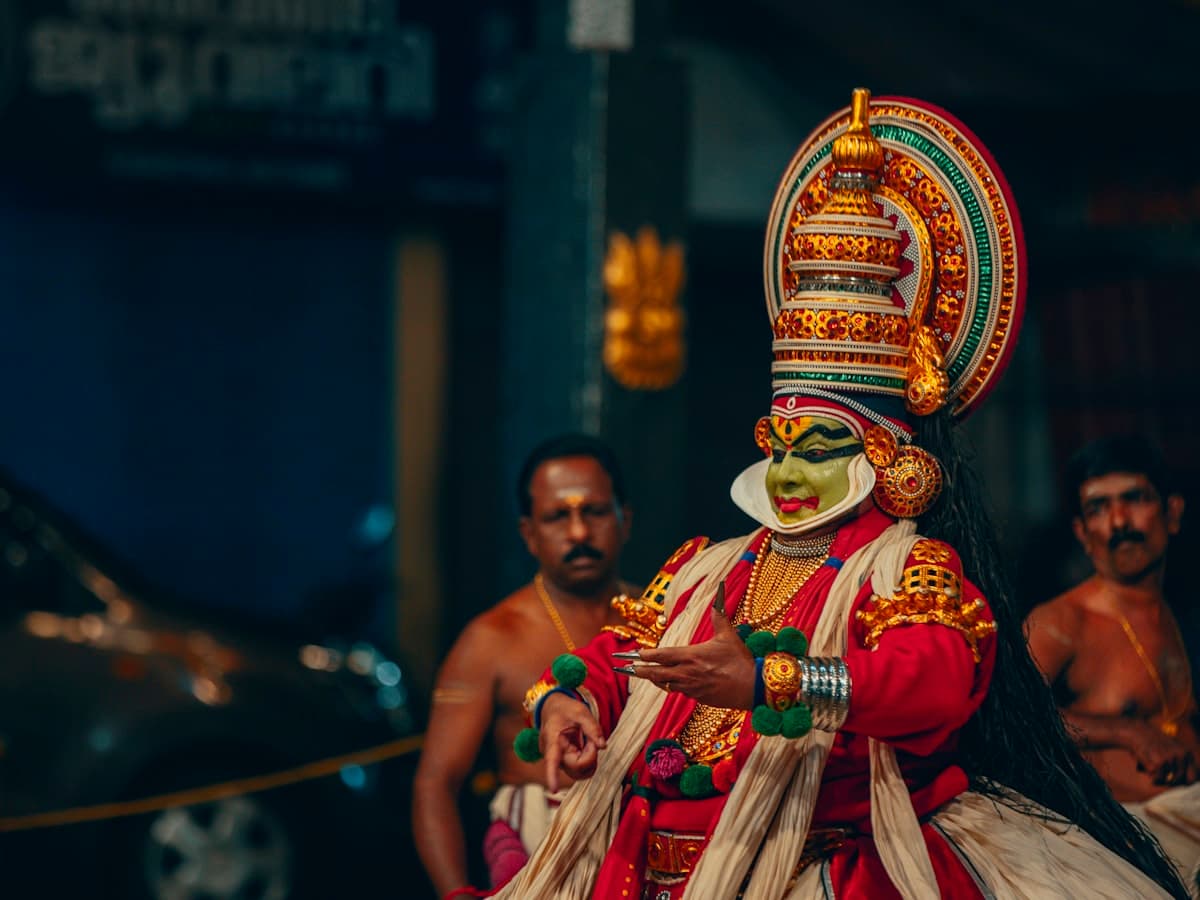
Kathakali Performance
Kerala's classical dance-drama, with the make-up applied in front of you first.
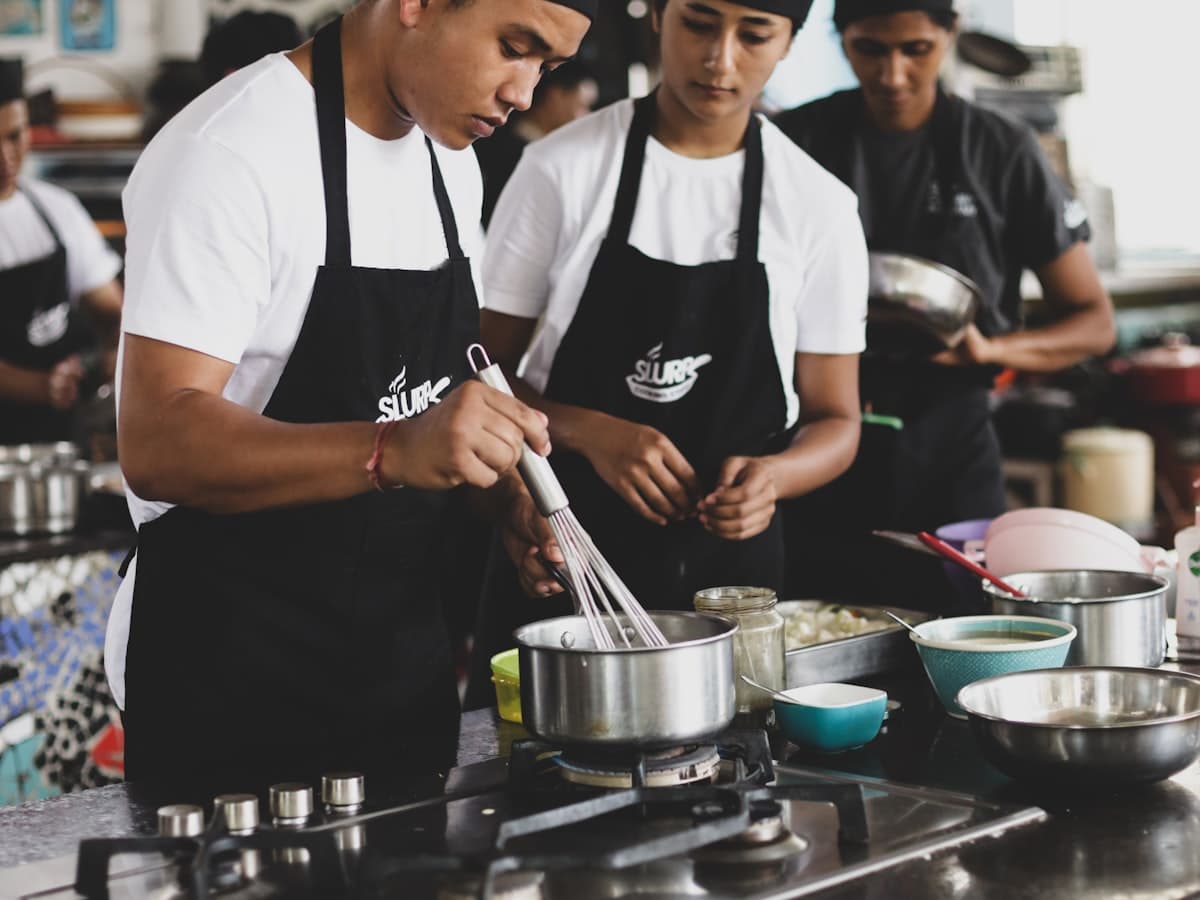
Spice Market Cooking Class
Shop the Mattancherry spice lanes, then cook what you bought in a home kitchen.
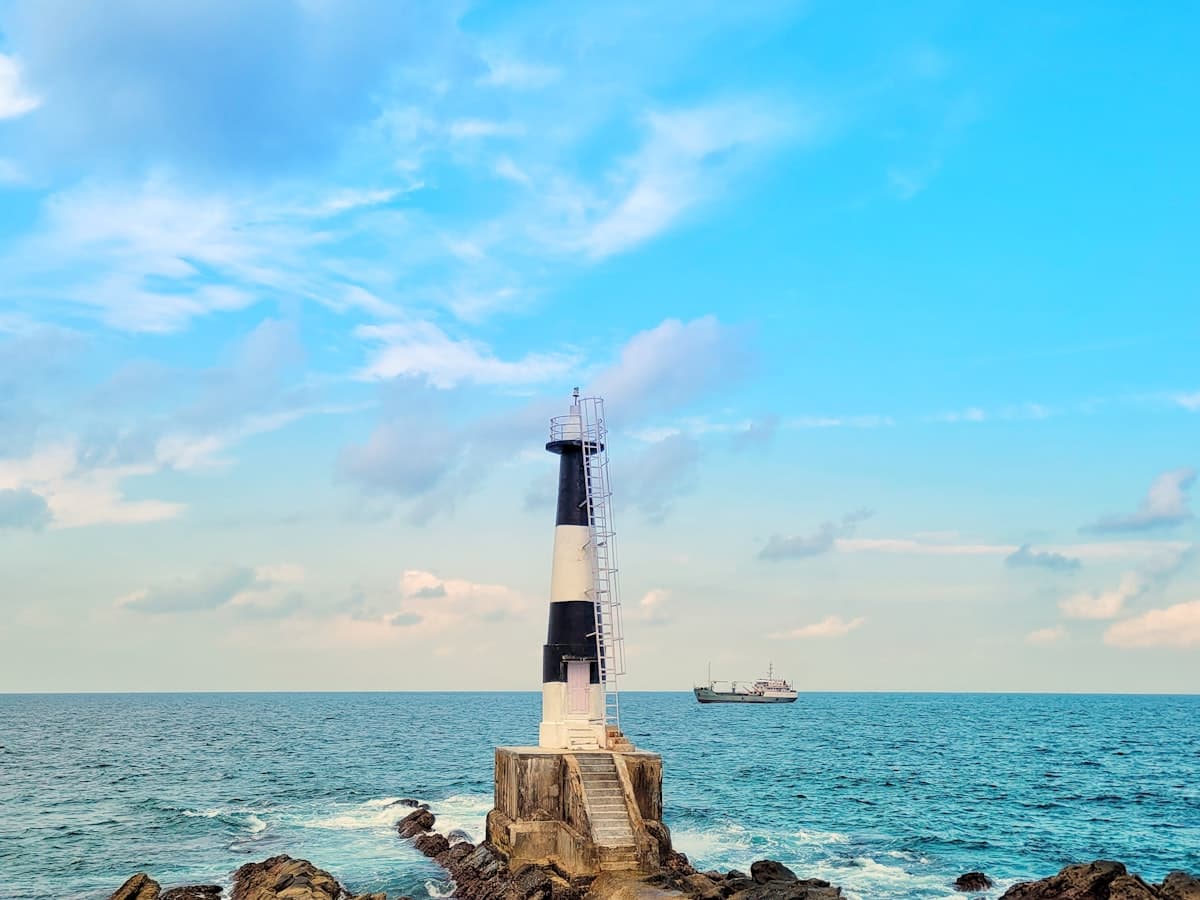
Lighthouse Beach, Kovalam
Kovalam's main crescent, under the red-and-white striped Vizhinjam lighthouse.
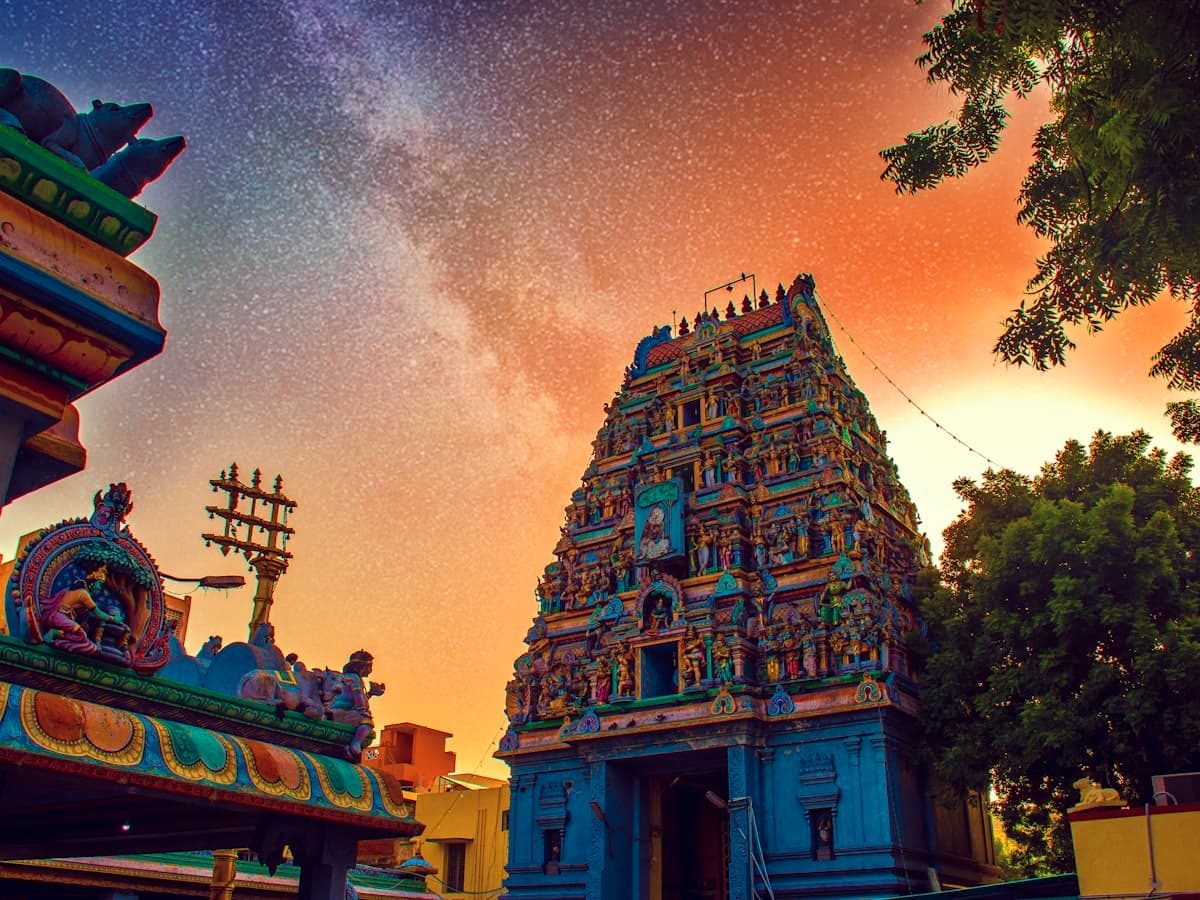
Vizhinjam Rock Cut Cave Temple
An 8th-century shrine cut straight into a granite boulder, just inland from Kovalam.
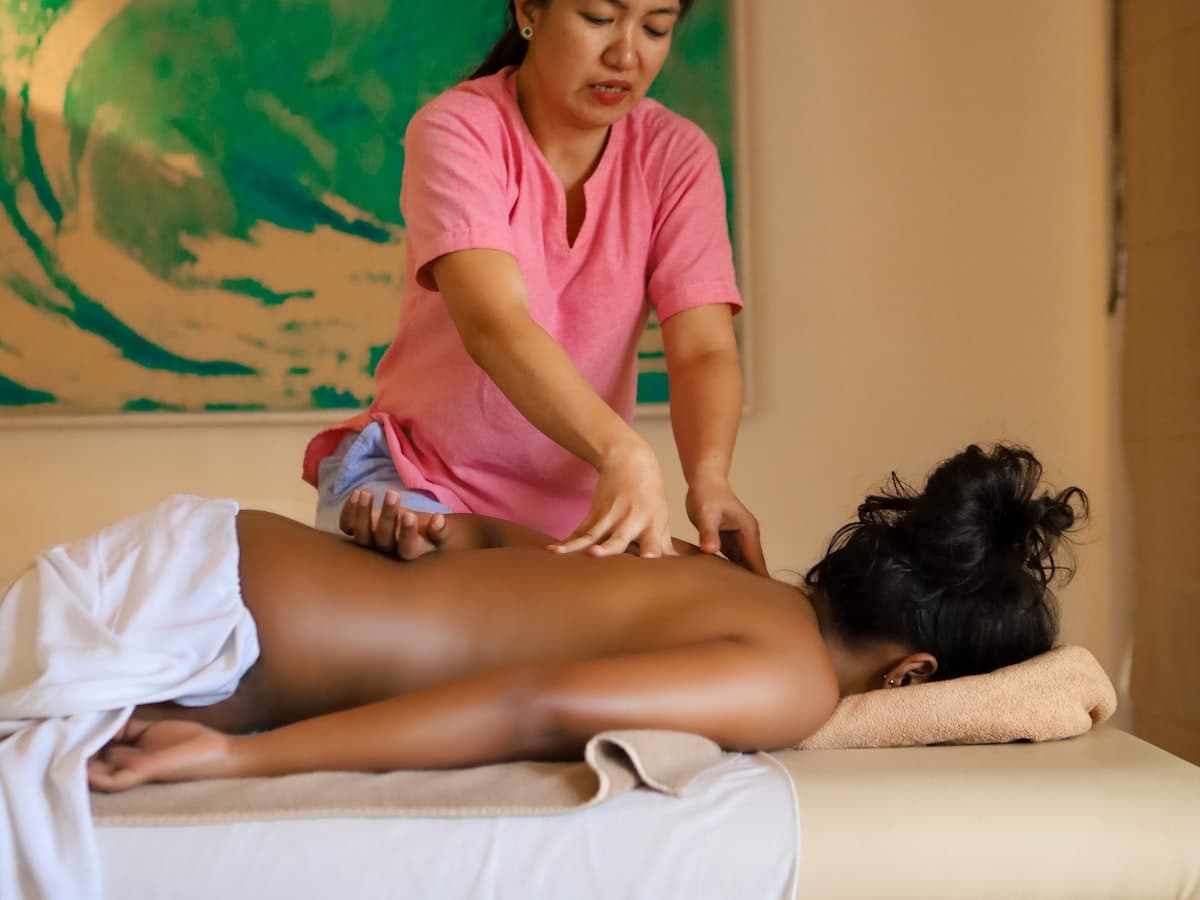
Ayurvedic Spa Ritual
A proper oil treatment — abhyanga or shirodhara — at a licensed Kovalam centre.
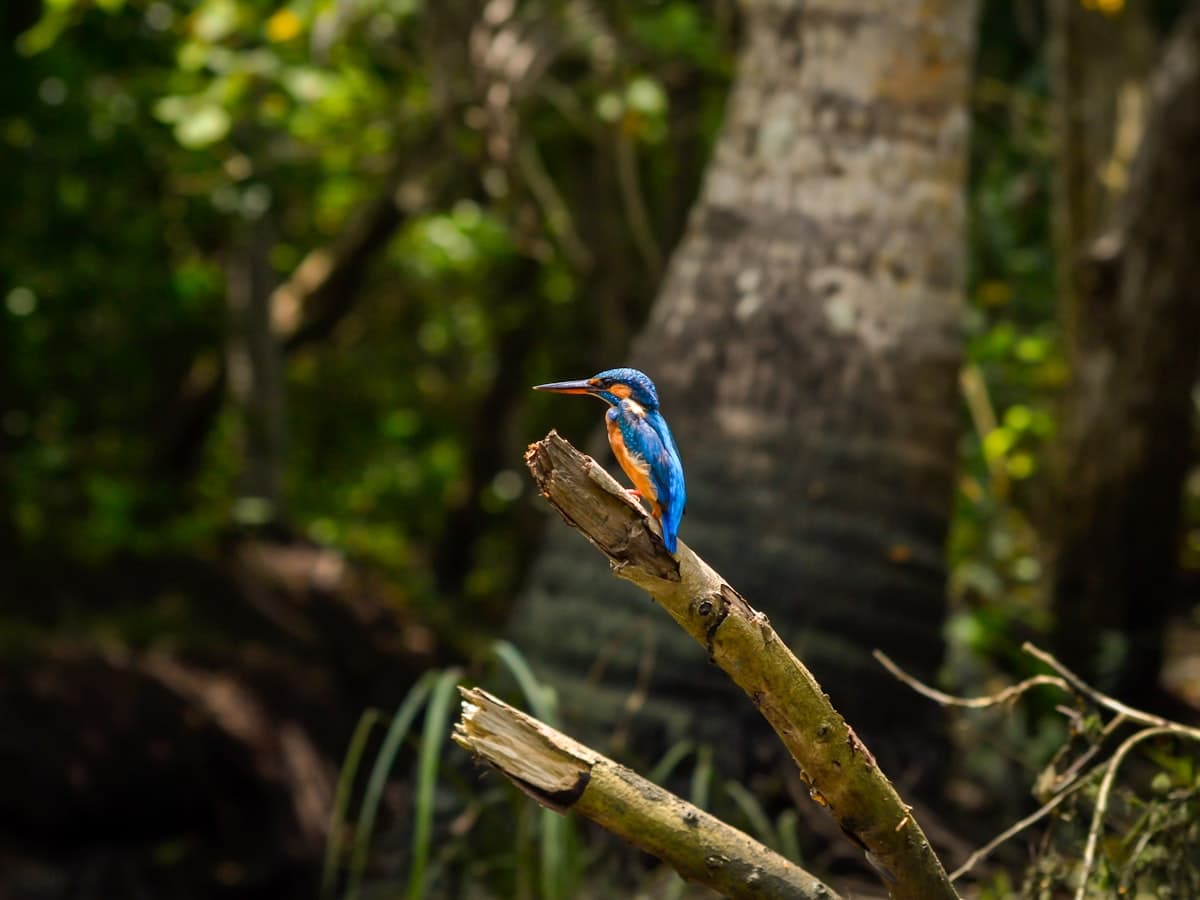
Kumarakom Bird Sanctuary
A fourteen-acre former rubber estate on Lake Vembanad, now a nesting site for herons, egrets and darters.
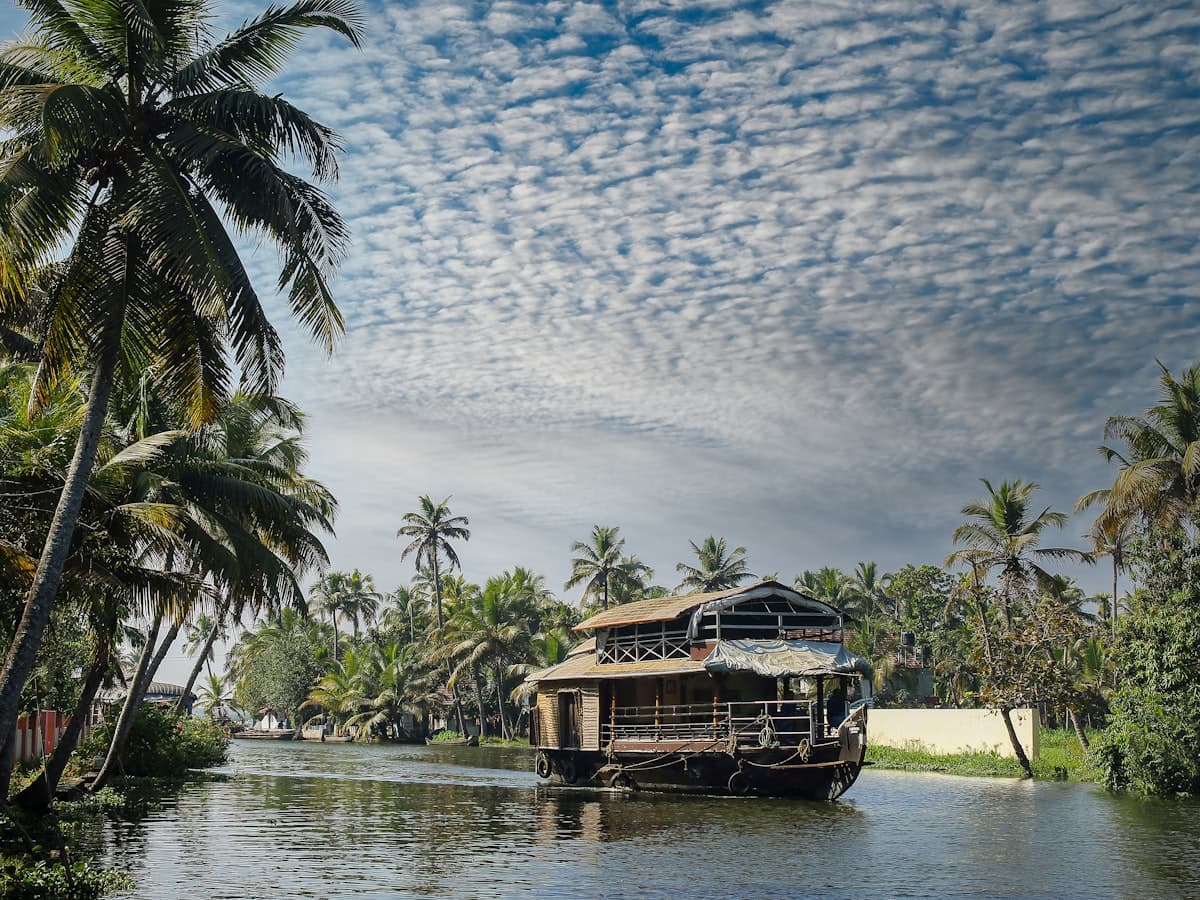
Kumarakom Village Canoe Trail
A paddled country canoe through the narrow canals a houseboat can't enter, past homes, paddy and coir work.
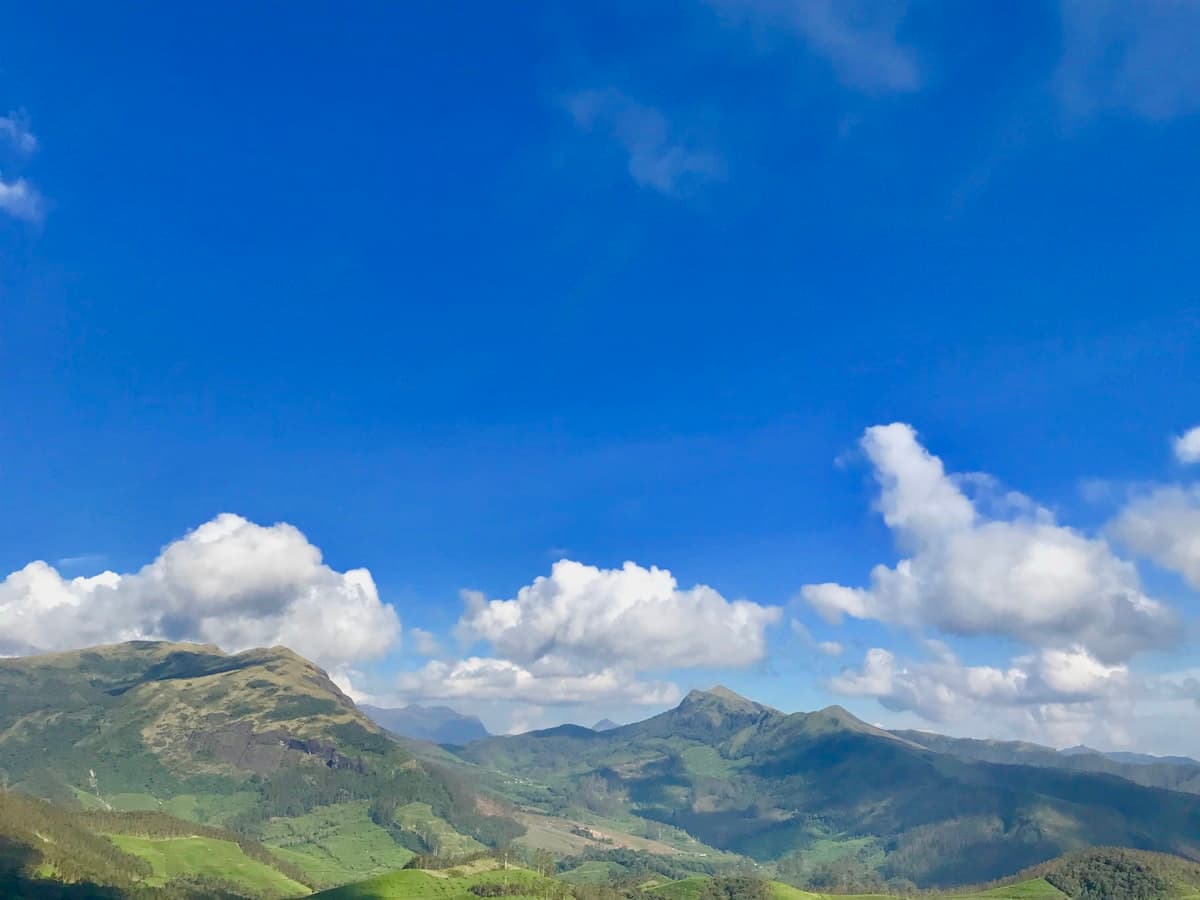
Eravikulam National Park
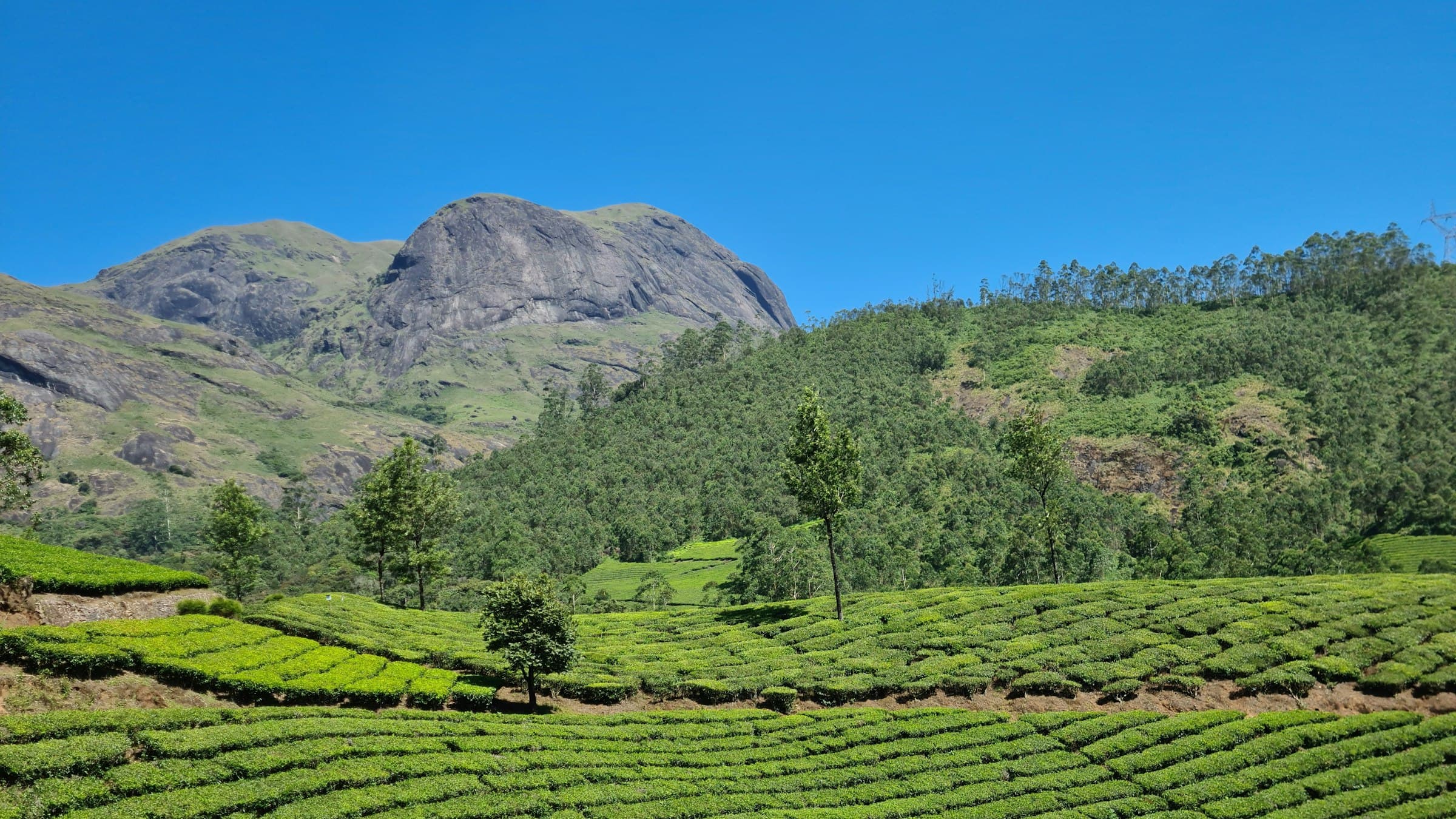
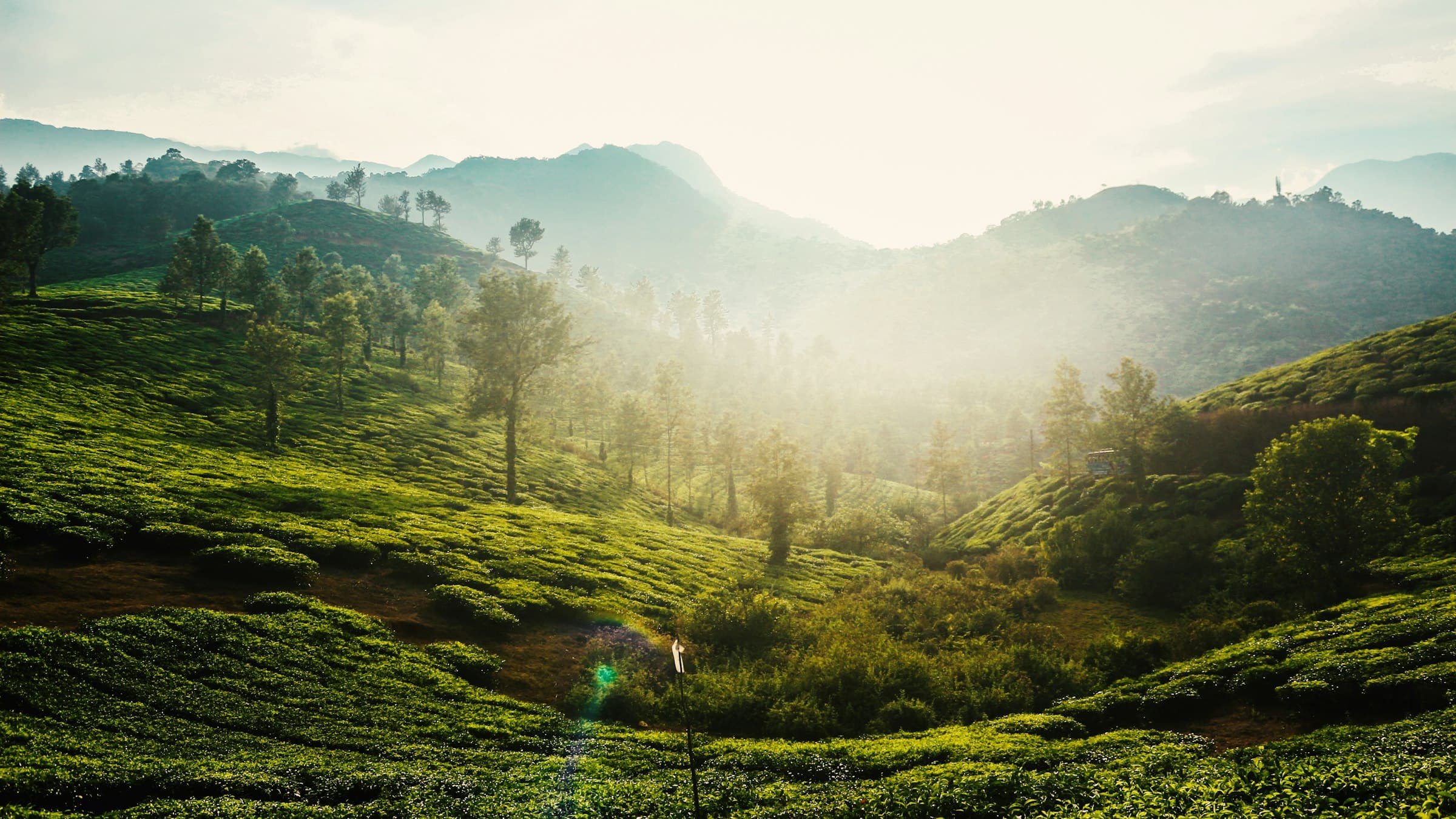
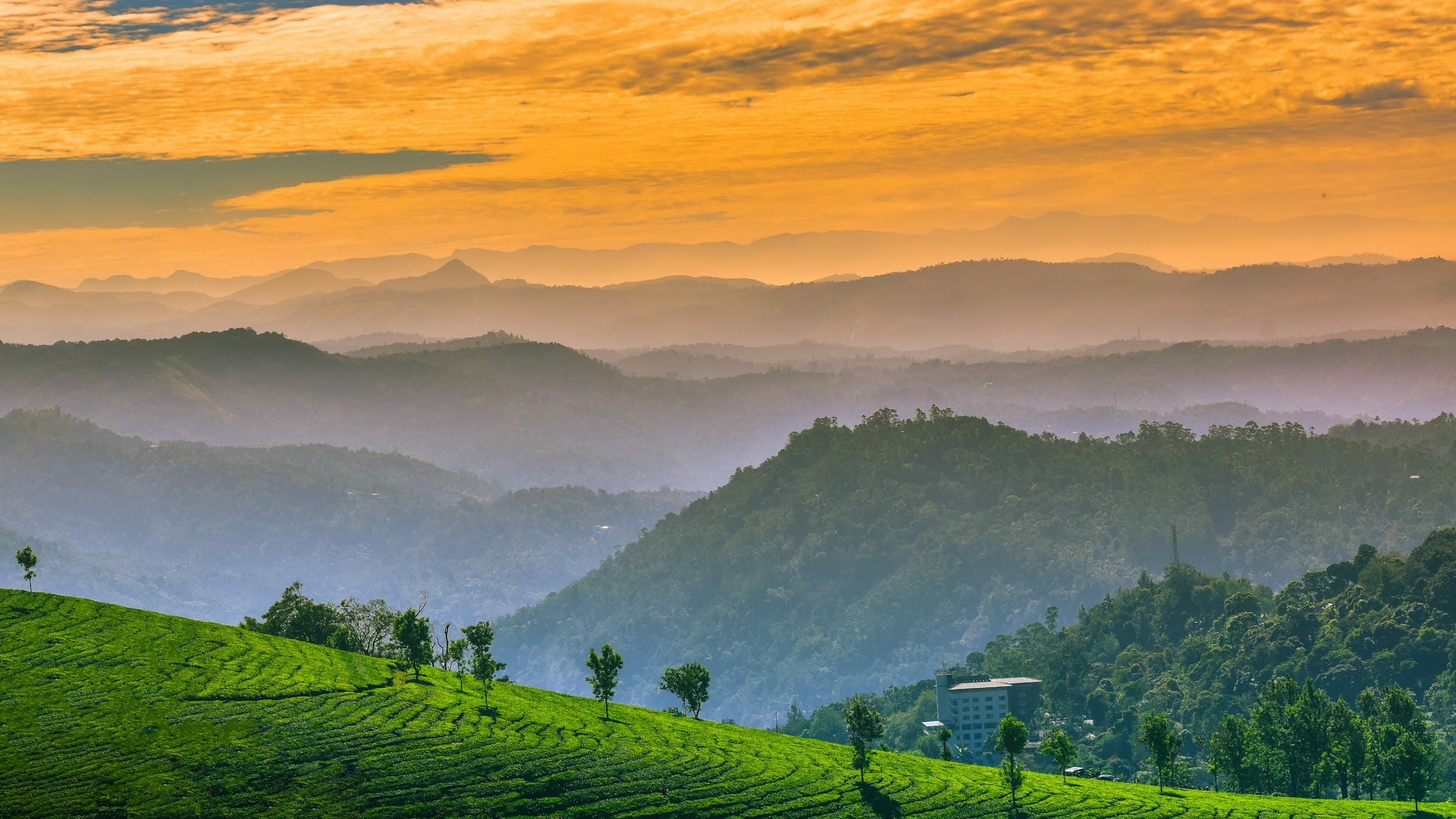
High grassland above Munnar, home to the largest surviving population of Nilgiri tahr.
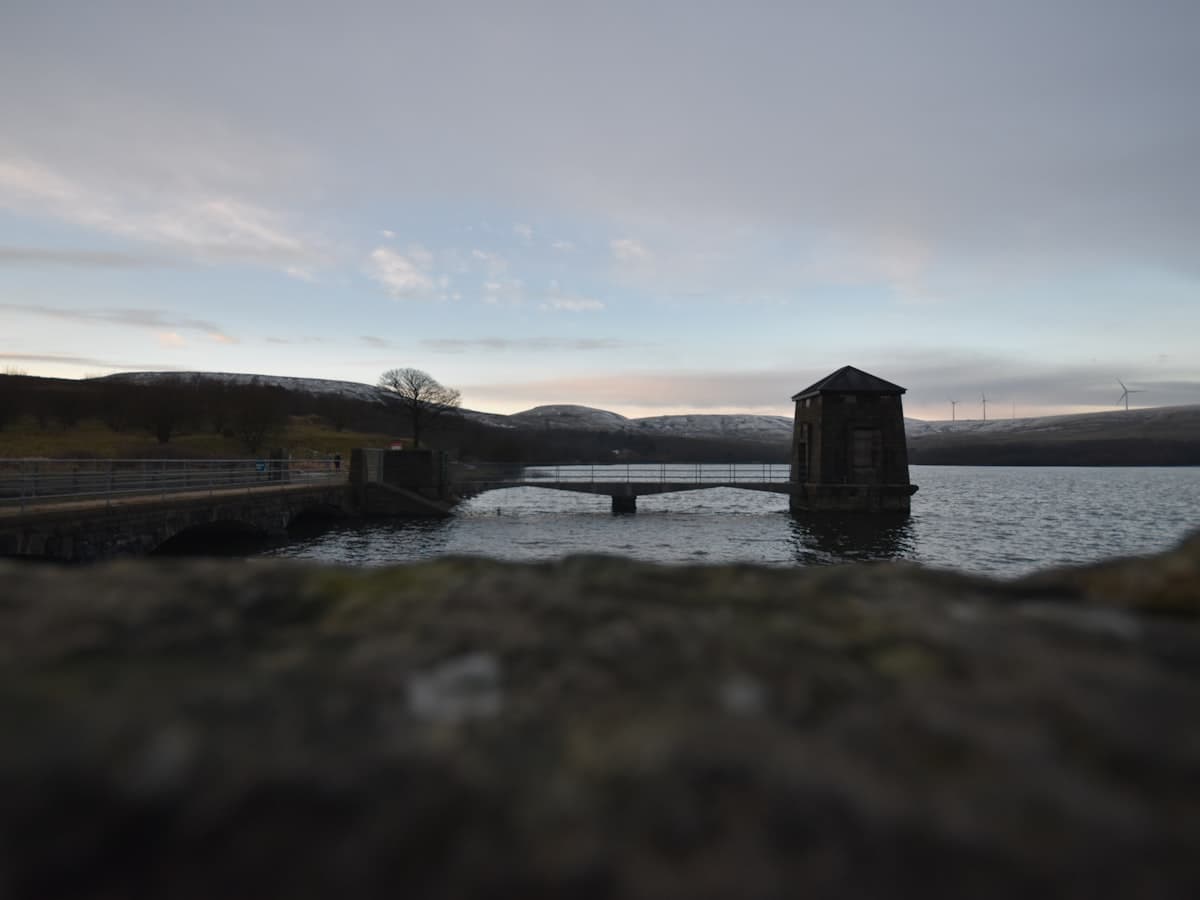
Mattupetty Dam
A reservoir ringed by tea slopes and shola forest, ten kilometres above Munnar.
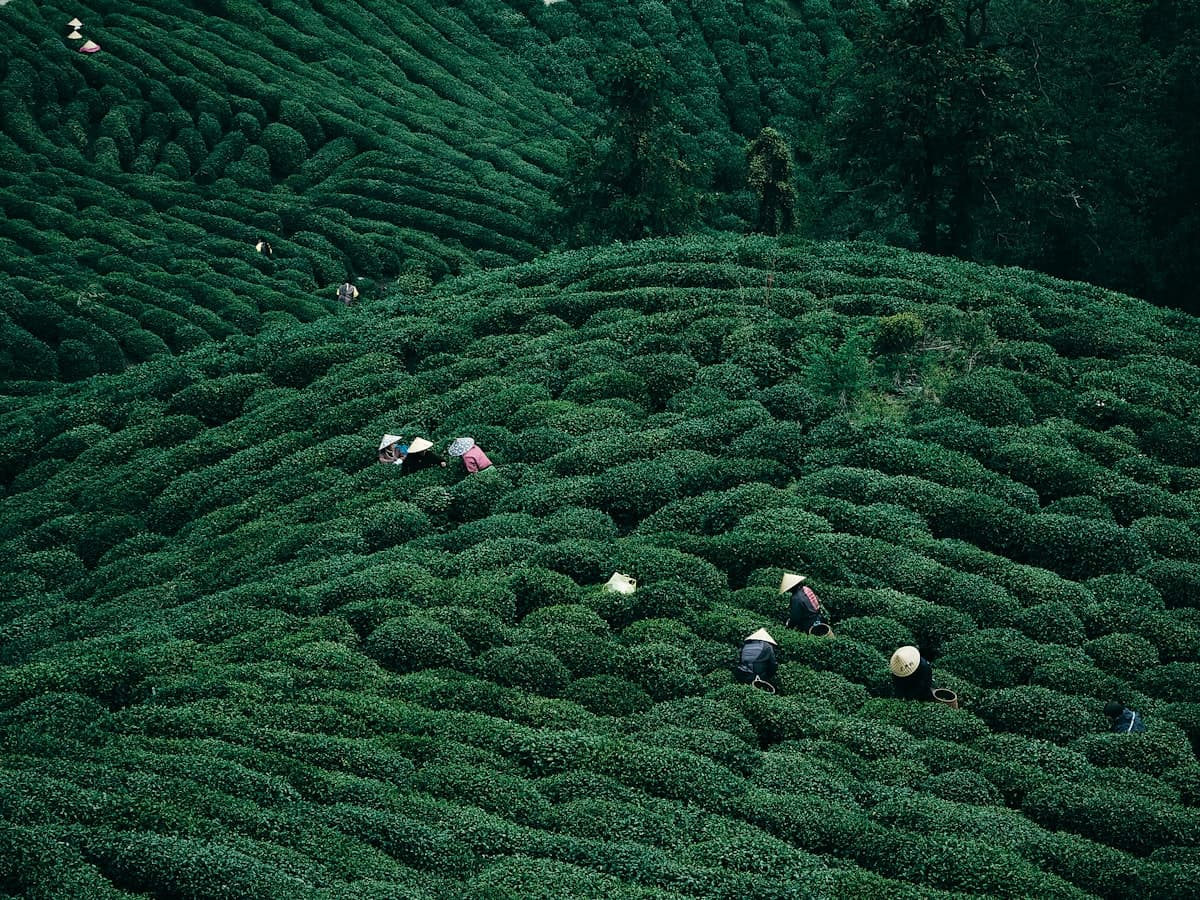
Tea Estate Walk and Tasting
Walk the rows with a picker, then taste the grades side by side at the factory.
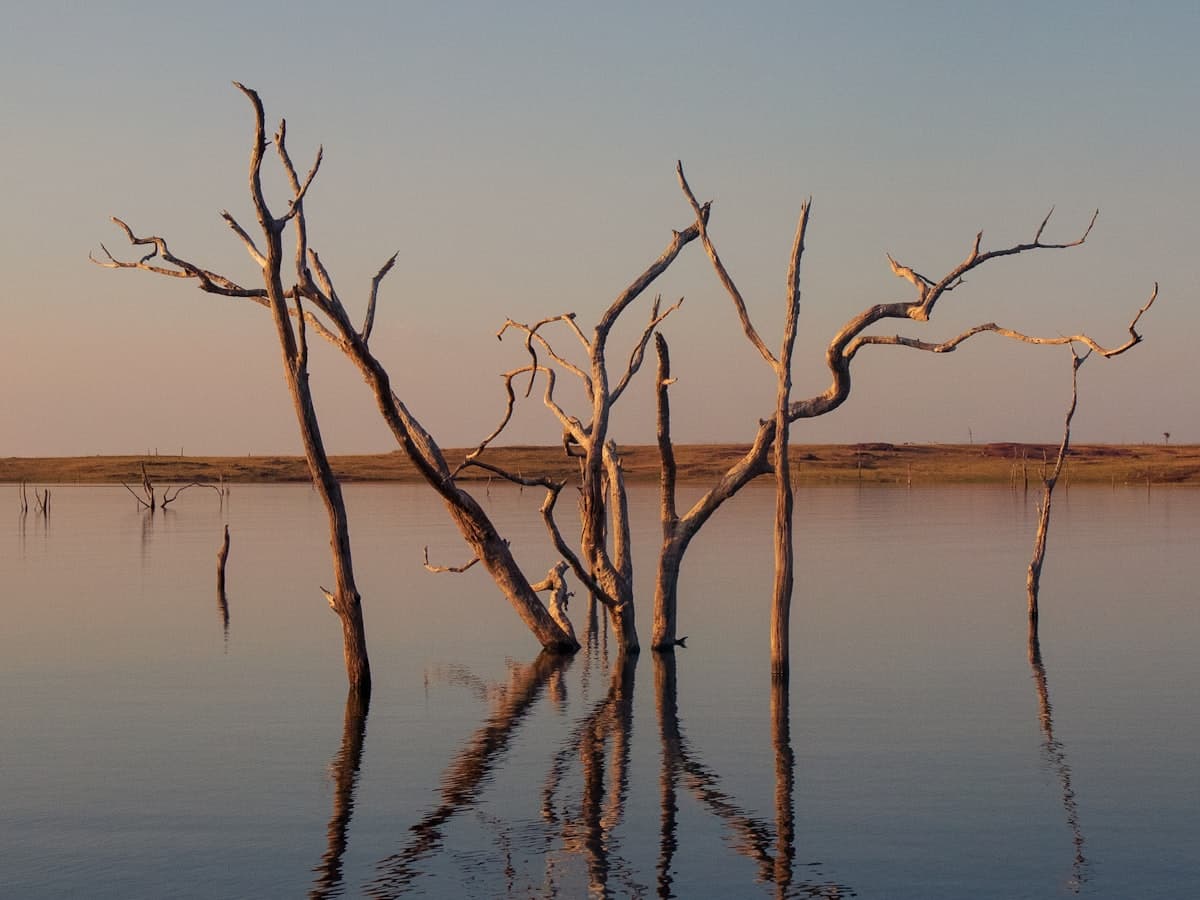
Periyar Tiger Reserve
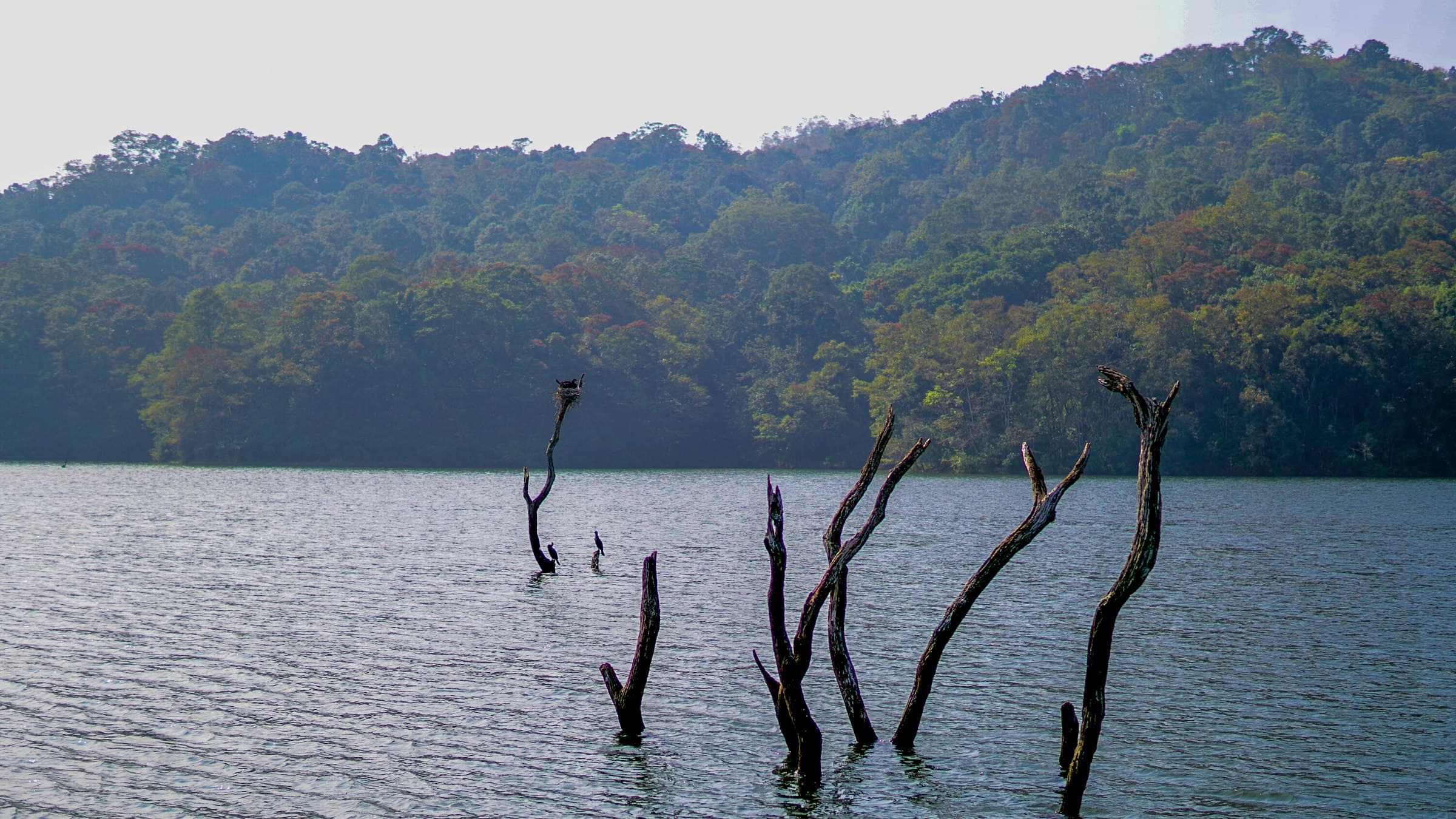
Western Ghats forest wrapped around a flooded lake full of drowned tree stumps.
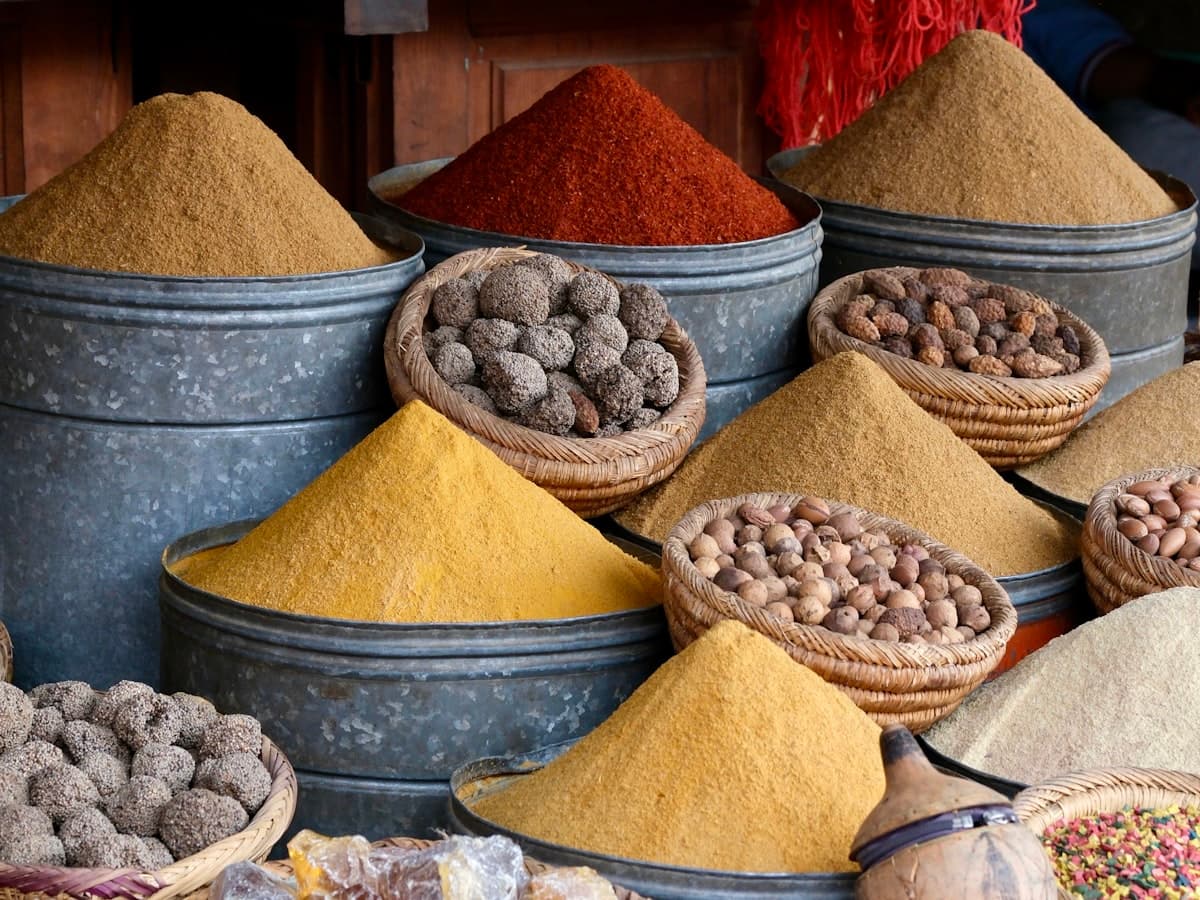
Kumily Spice Market
The trading town at Periyar's gate, where the Cardamom Hills sell what they grow.
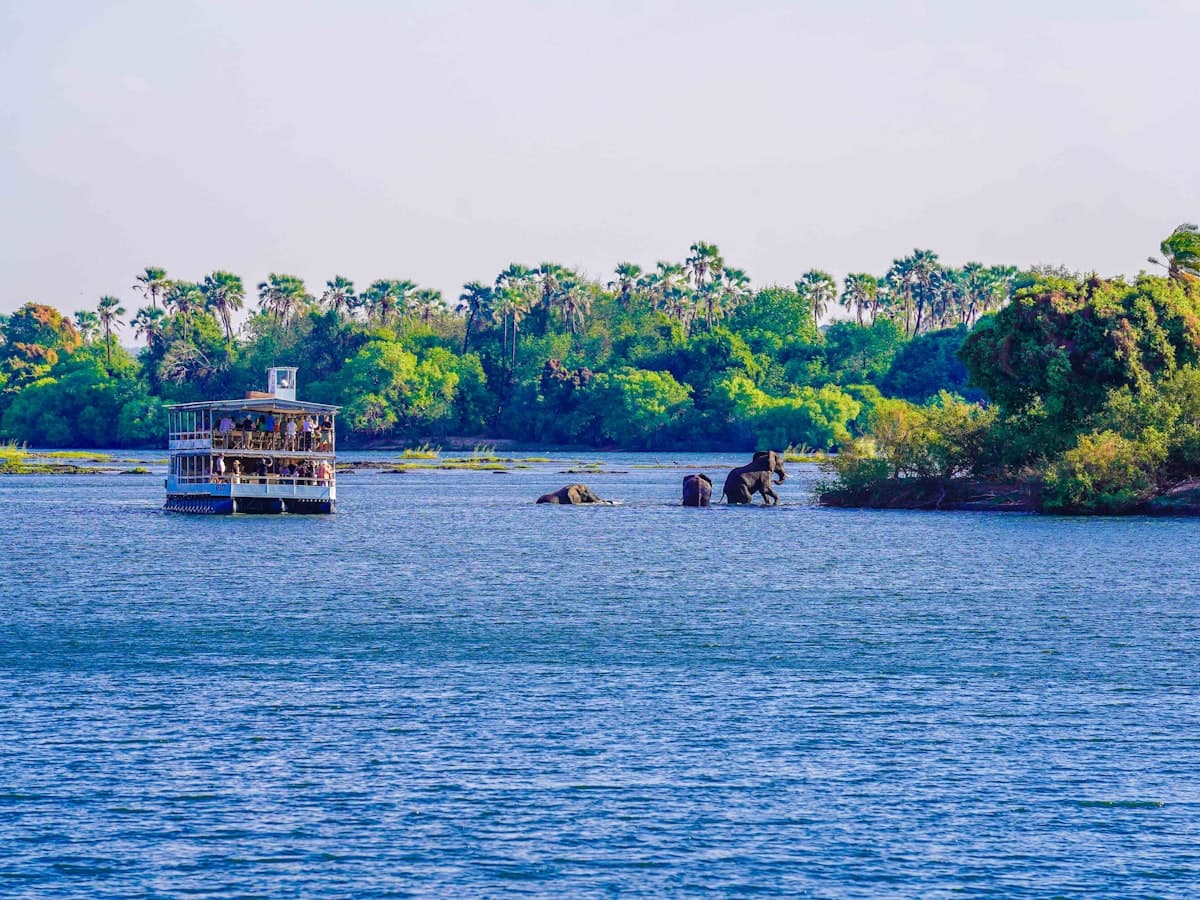
Periyar Boat Safari
A slow launch across Periyar's lake, past drowned trees and animals on the bank.
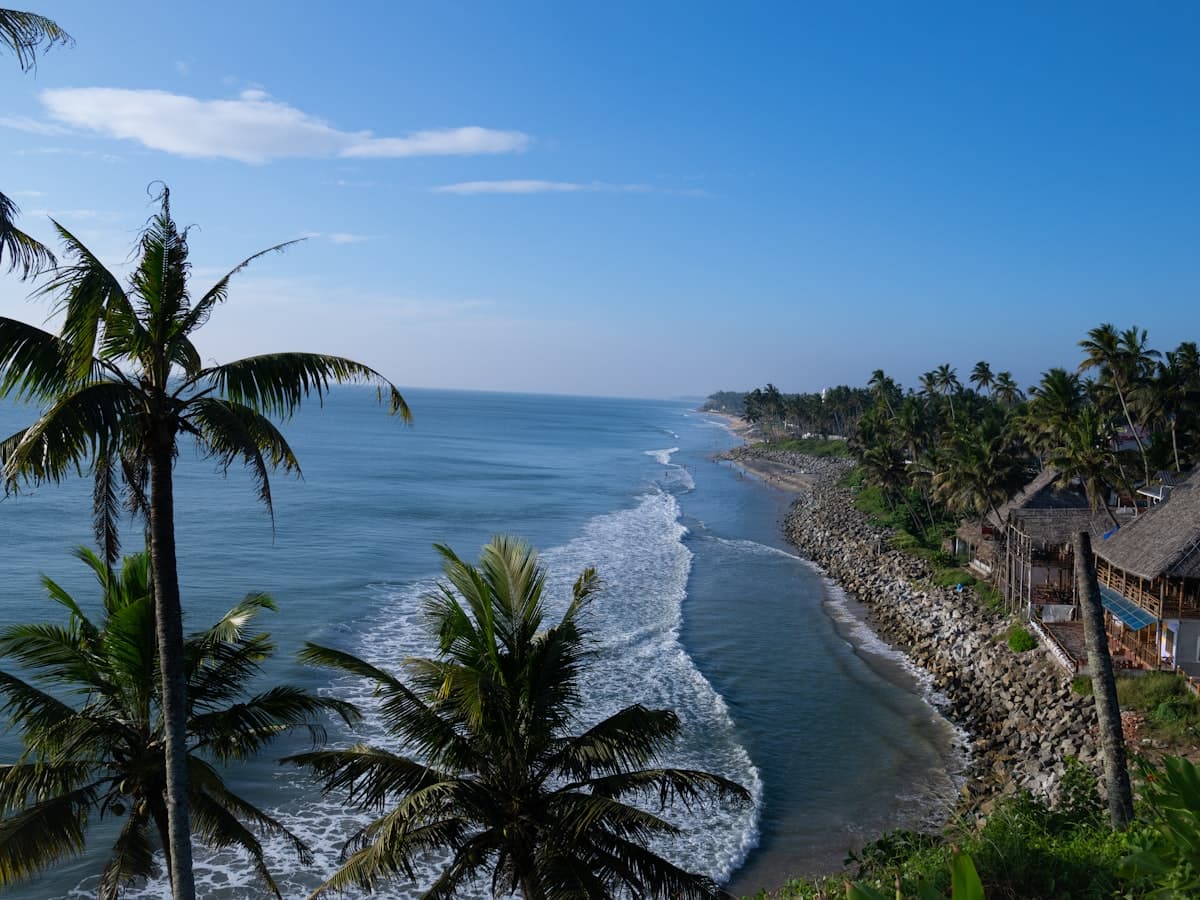
Varkala Cliff
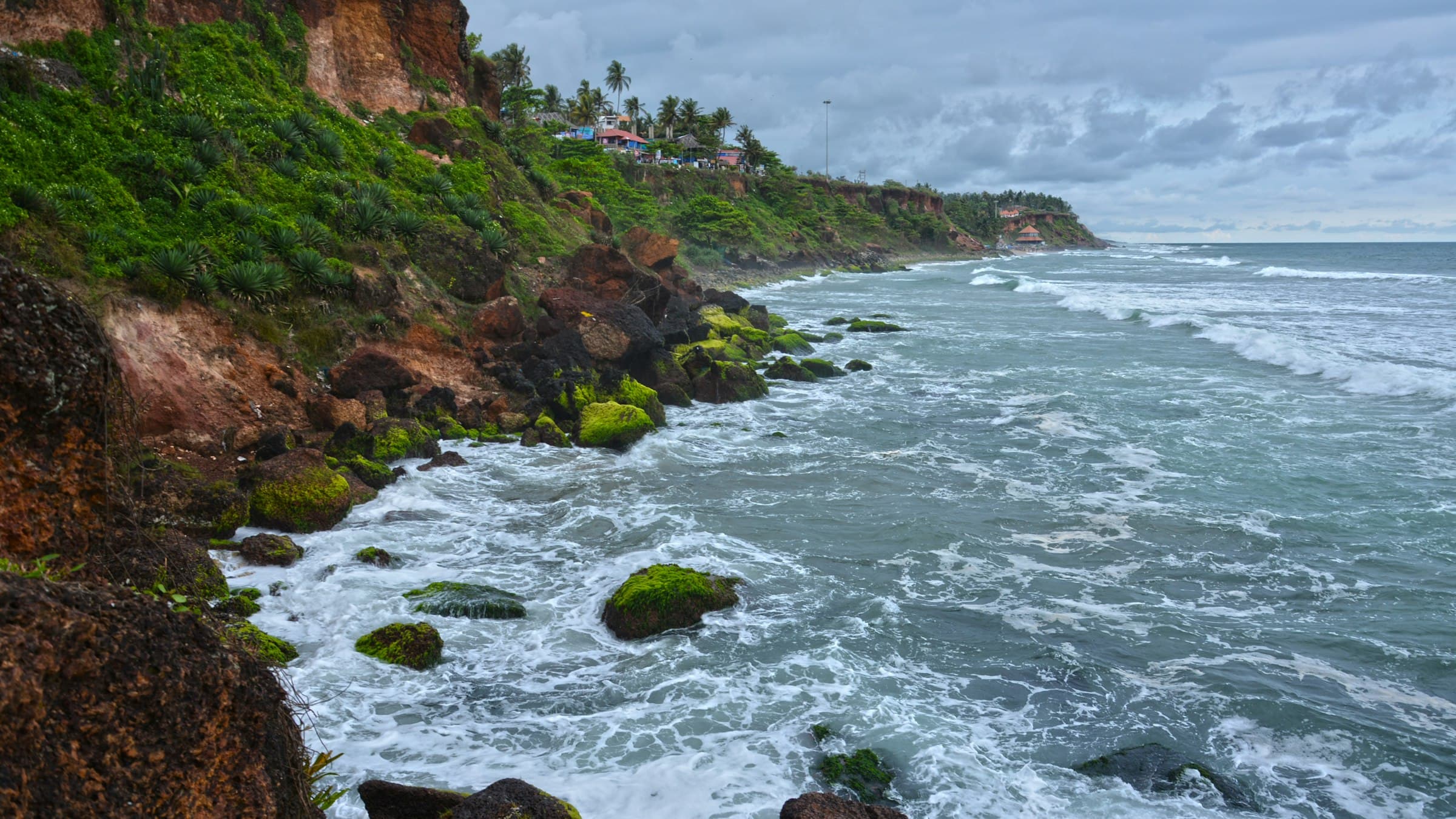
A wall of red laterite rising straight from Papanasam Beach — a protected geological site with springs in its face.
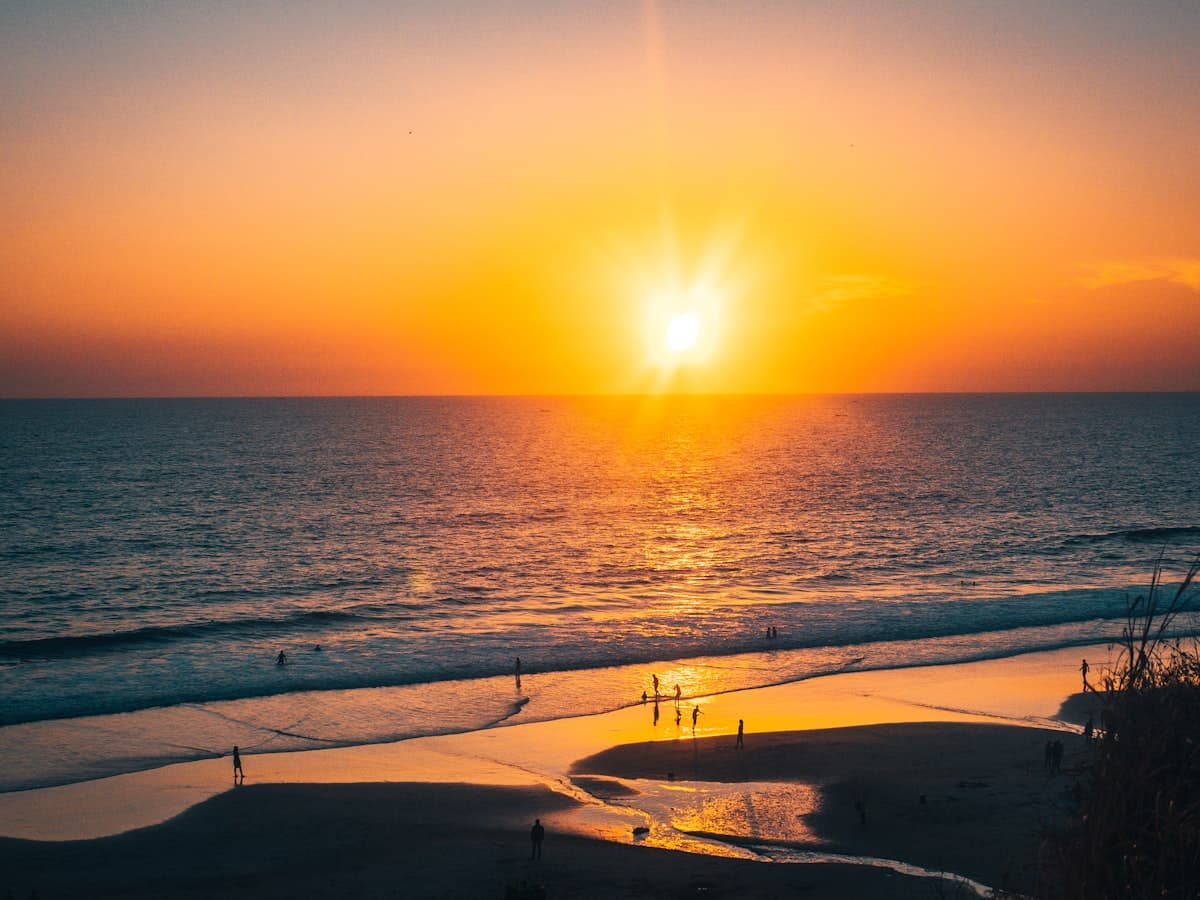
Varkala Cliff Sunset Walk
An unhurried walk along the clifftop path as the light goes, ending on the beach for the sunset.
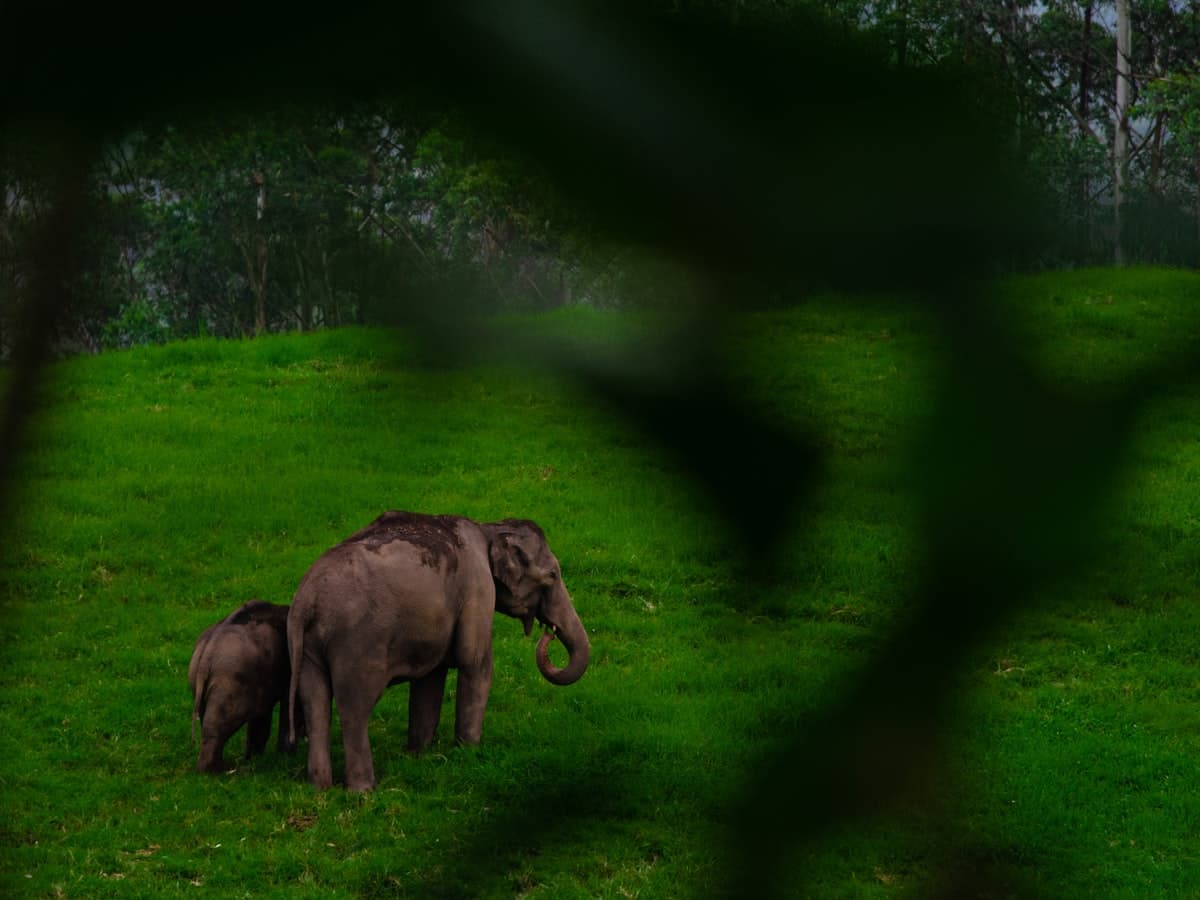
Wayanad Wildlife Sanctuary
A 344-square-kilometre forest that joins the Nagarhole and Bandipur reserves across the state line.
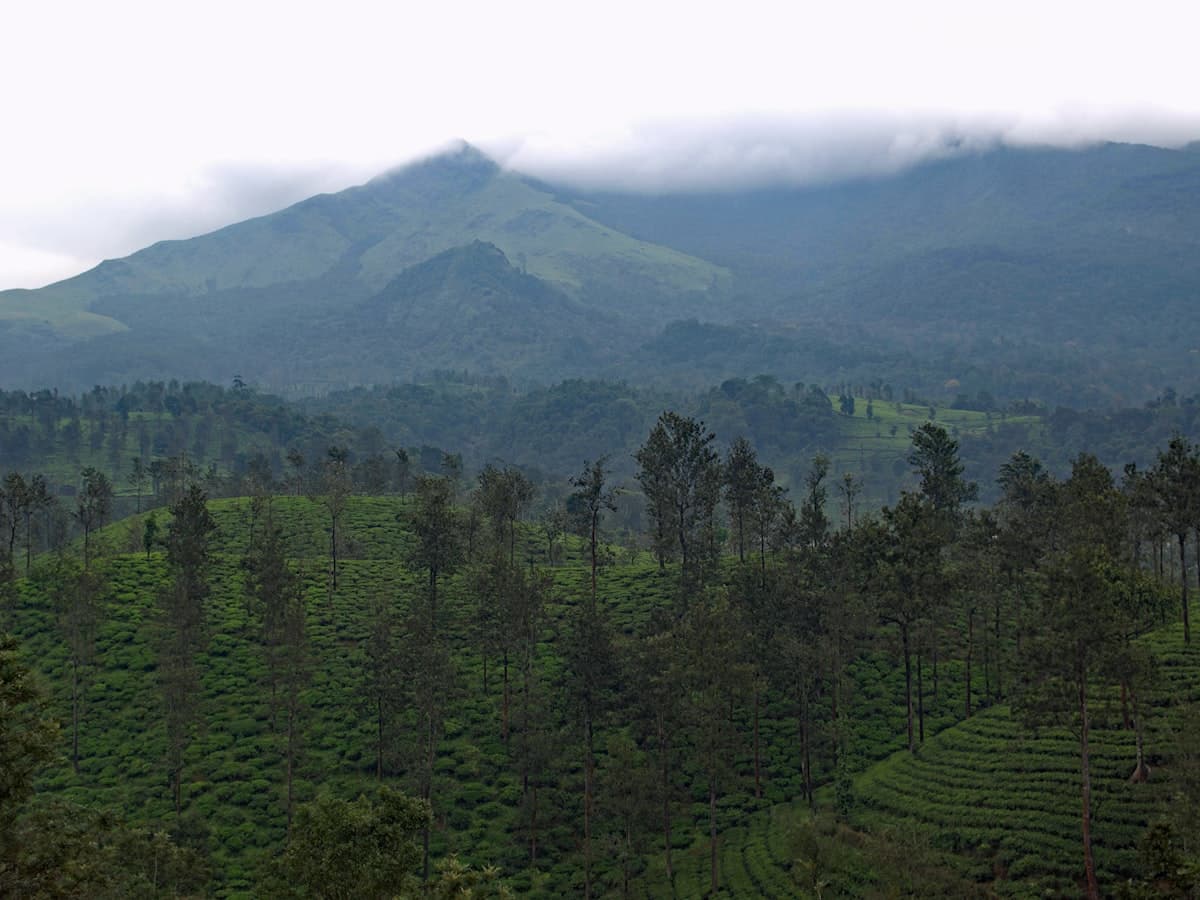
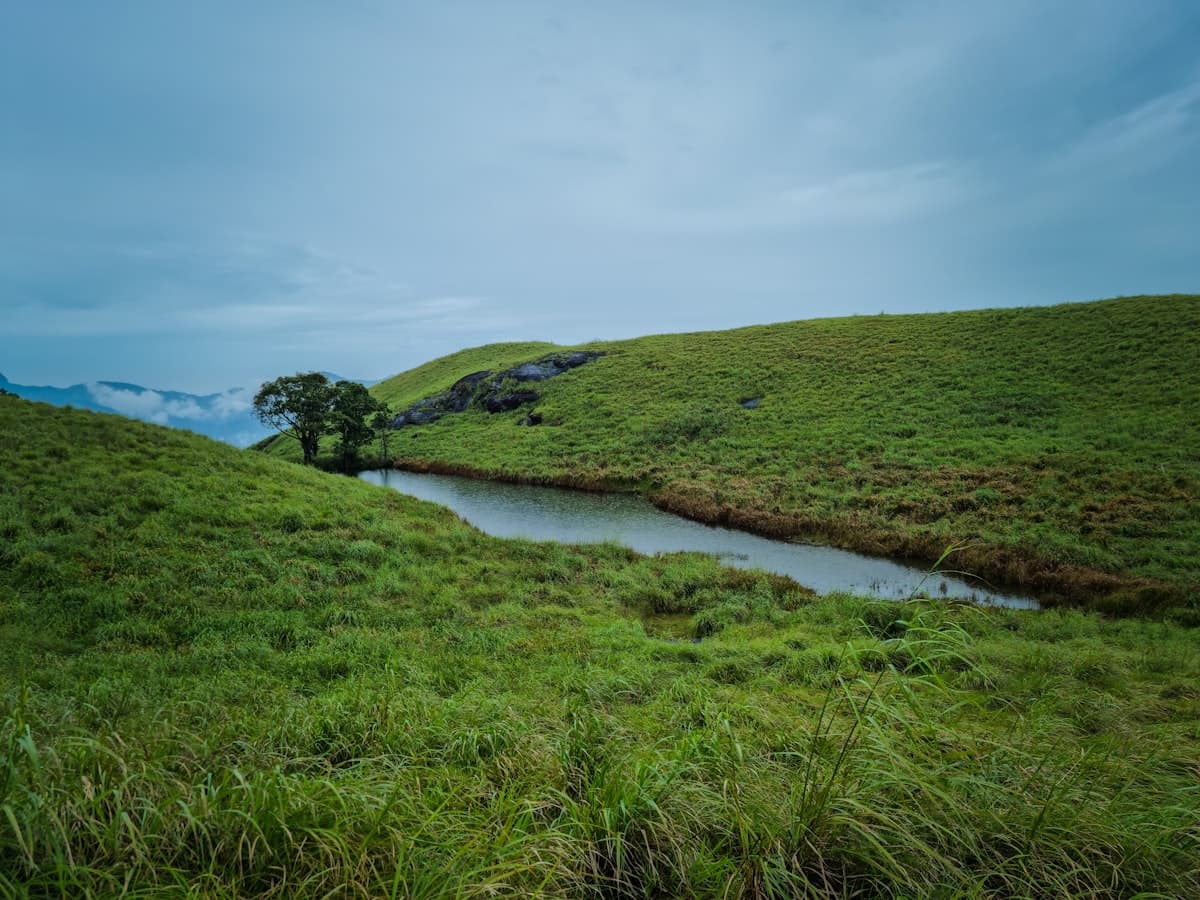
Chembra Peak
Wayanad's highest hill at about 2,100 metres, with a small heart-shaped lake on the climb.
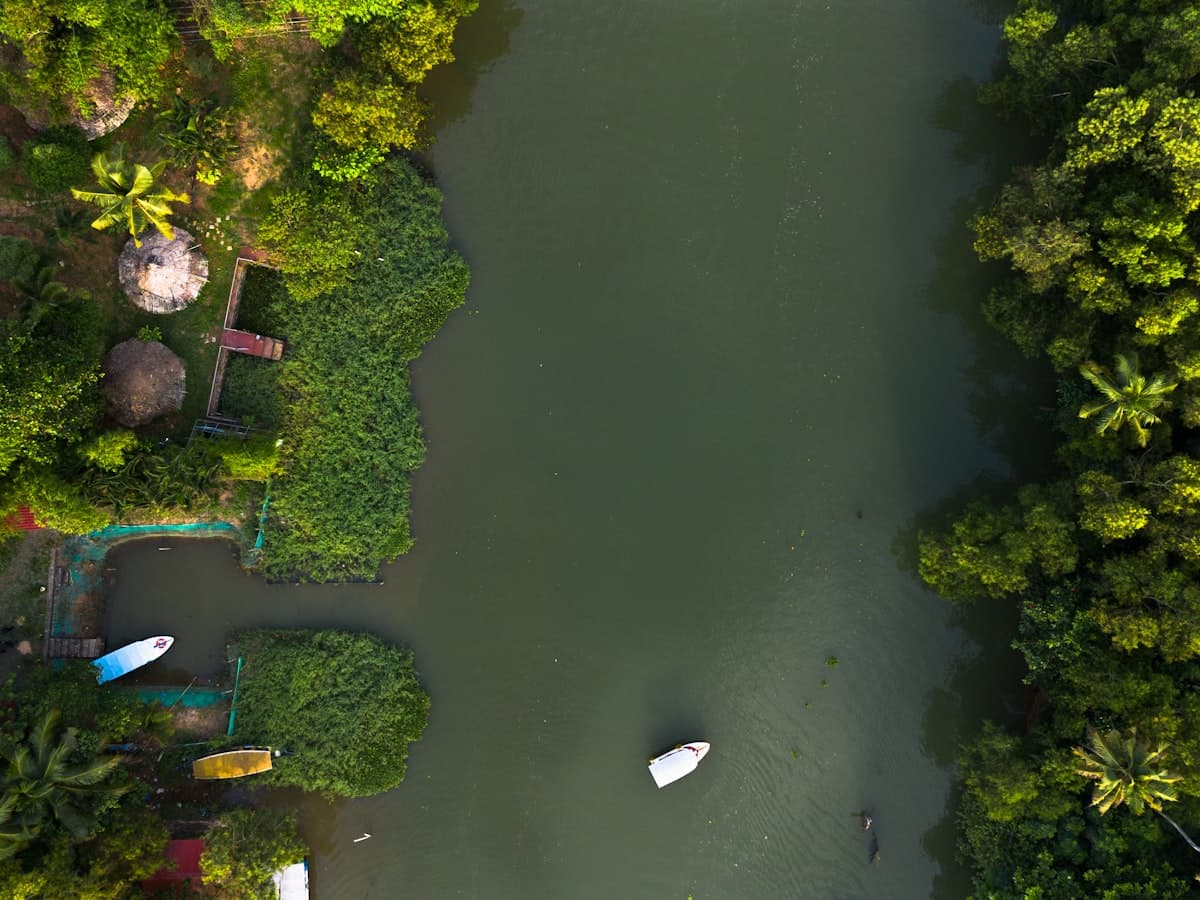
Banasura Sagar Dam
The largest earthen dam in India, its reservoir flooding the low hills into a scatter of islands.
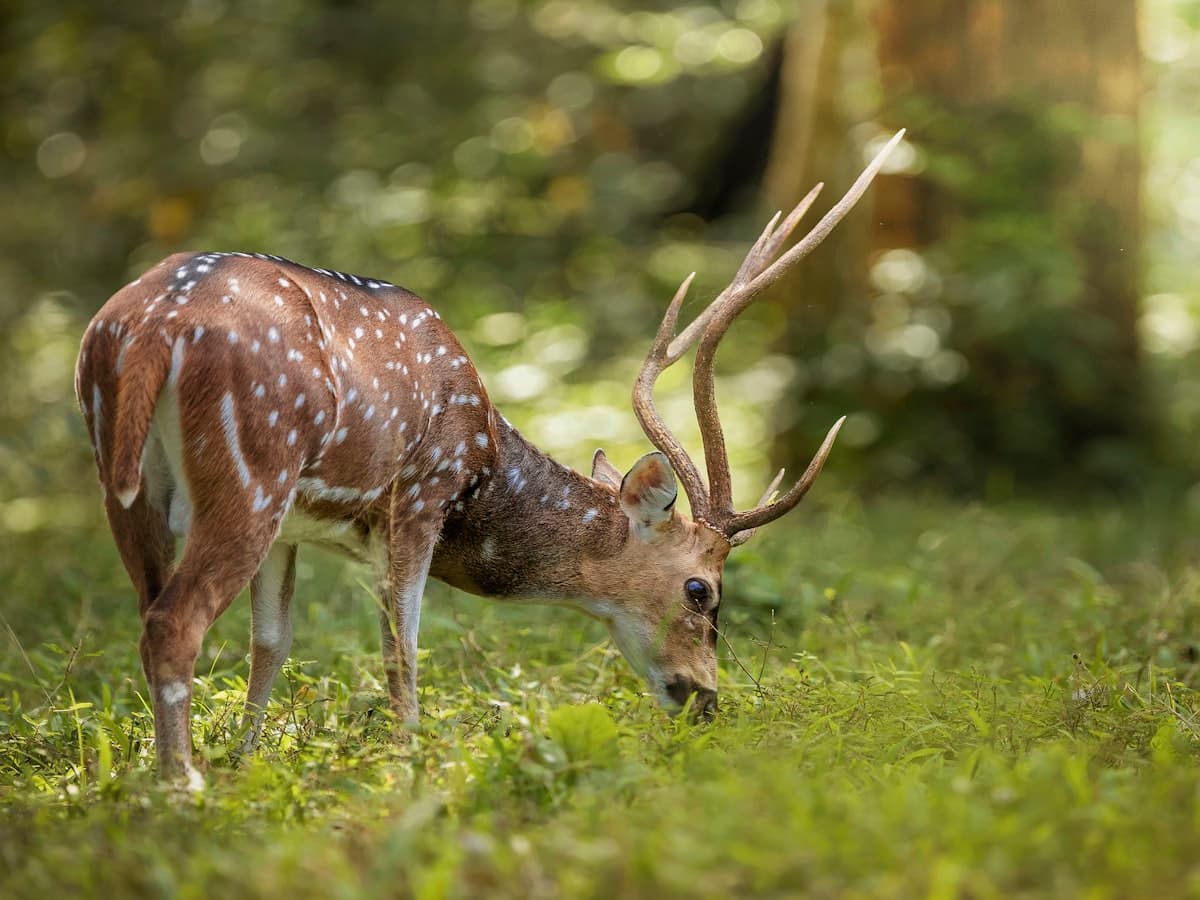
Wayanad Jeep Safari
A forest-department jeep run through Muthanga or Tholpetty for elephant, gaur and deer.
Bamboo Rafting at Kuruva Island
A bamboo raft across the Kabini channels onto Kuruva, an uninhabited river island of evergreen forest.
How To Travel
Journeys Through Kerala
Every journey here comes with a private guide and driver for each day on the road — full pricing lives on each journey's own page.
Grand Kerala — Complete — Luxury
Arrival in Kochi — Fort Kochi & the Spice Quarter — Kochi to Munnar — Into the Western Ghats
Grand Kerala — Complete — Premium
Arrival in Kochi — Fort Kochi & the Spice Quarter — Kochi to Munnar — Into the Western Ghats
Kerala Ayurveda & Wellness Retreat — Luxury
Arrival in Kochi — Fort Kochi & the Spice Quarter — Kochi to Kumarakom — Onto Lake Vembanad
Kerala Ayurveda & Wellness Retreat — Premium
Arrival in Kochi — Fort Kochi & the Spice Quarter — Kochi to Kumarakom — Onto Lake Vembanad
Grand Kerala — Extended — Luxury
Arrival in Kochi — Fort Kochi & the Spice Quarter — Kochi to Munnar — Into the Western Ghats
Grand Kerala — Extended — Premium
Arrival in Kochi — Fort Kochi & the Spice Quarter — Kochi to Munnar — Into the Western Ghats
Kerala Backwater Houseboat Journey — Luxury
Arrival in Kochi — Fort Kochi & the Spice Quarter — Kochi to Munnar — Into the Western Ghats
Kerala Backwater Houseboat Journey — Premium
Arrival in Kochi — Fort Kochi & the Spice Quarter — Kochi to Munnar — Into the Western Ghats
Kerala Backwaters & Beaches — Extended — Luxury
Arrival in Kochi — Fort Kochi & the Spice Quarter — Kochi — Chinese Fishing Nets & Mattancherry
Kerala Backwaters & Beaches — Extended — Premium
Arrival in Kochi — Fort Kochi & the Spice Quarter — Kochi — Chinese Fishing Nets & Mattancherry
Grand Kerala — Luxury
Arrival in Kochi — Fort Kochi & the Spice Quarter — Kochi to Munnar — Into the Western Ghats
Grand Kerala — Premium
Arrival in Kochi — Fort Kochi & the Spice Quarter — Kochi to Munnar — Into the Western Ghats
Where To Stay
Real Stays, Chosen City By City
A private itinerary through Kerala is anchored by real, handpicked stays — heritage palaces and boutique properties chosen city by city, not a single hotel chain repeated everywhere.
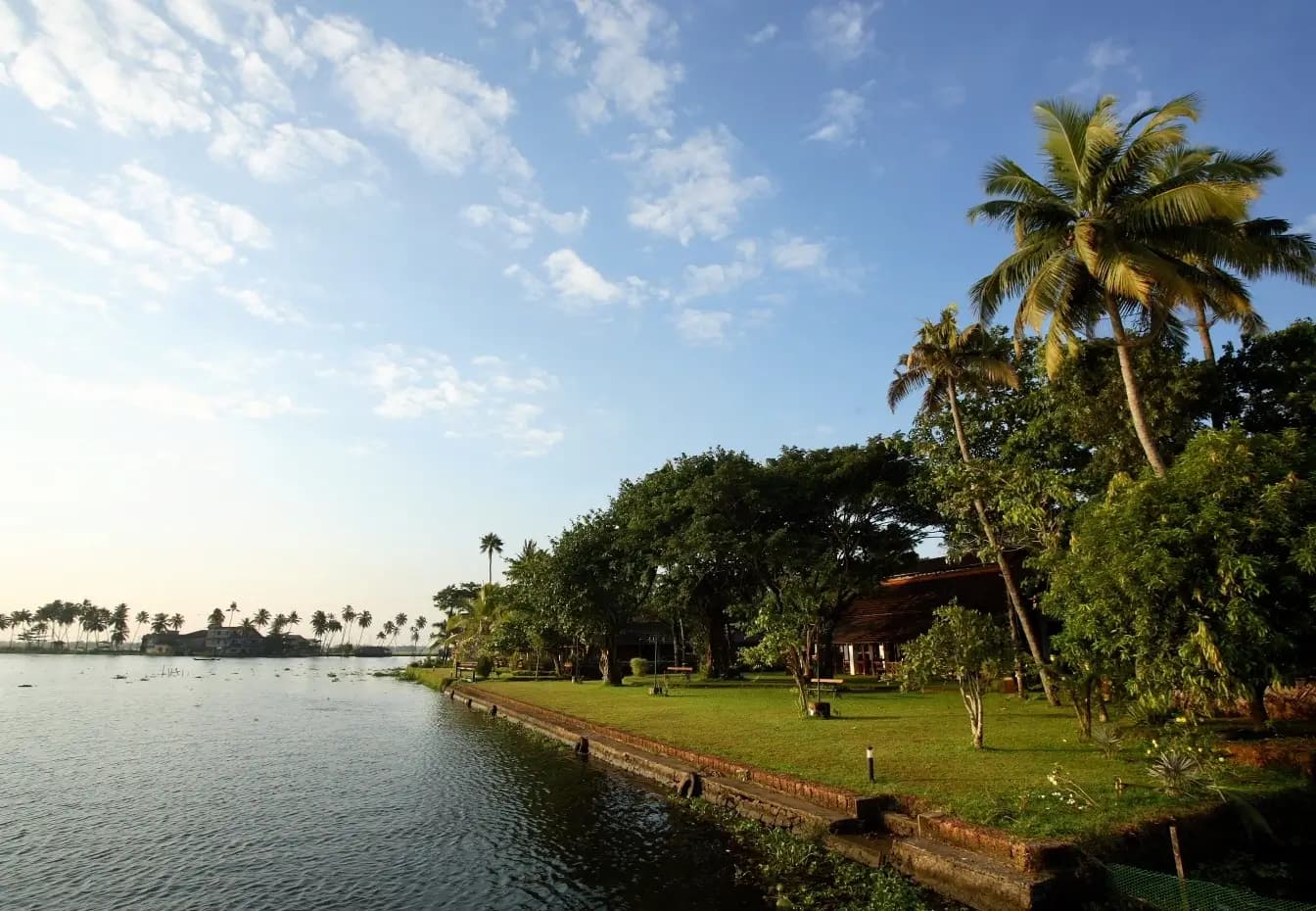
Punnamada Resort
Punnamada Resort sits on the edge of Punnamada Lake, which is the stretch of water the Nehru Trophy Boat Race is rowed on every August. For most of the year it is quiet. Fishing canoes cross it in the morning and houseboats drift out in the afternoon. The resort is laid out low and wide across the waterfront. Accommodation is in Kerala-style blocks and cottages with tiled roofs and wooden detail, set among coconut palms and lawns that run down to the water. Rooms face either the lake or the gardens. The lake-facing ones are worth asking for. Interiors keep to local materials — wood, stone, woven cane — without tipping into theme. There is a pool, an ayurvedic treatment centre and a restaurant that leans on Kerala backwater cooking: karimeen from the lake, coconut, curry leaf, kokum. The practical advantage is the jetty. Houseboat cruises leave from the water in front of the resort, so a backwater day does not begin with a transfer. Alleppey town, the beach and the canal network are all close by.
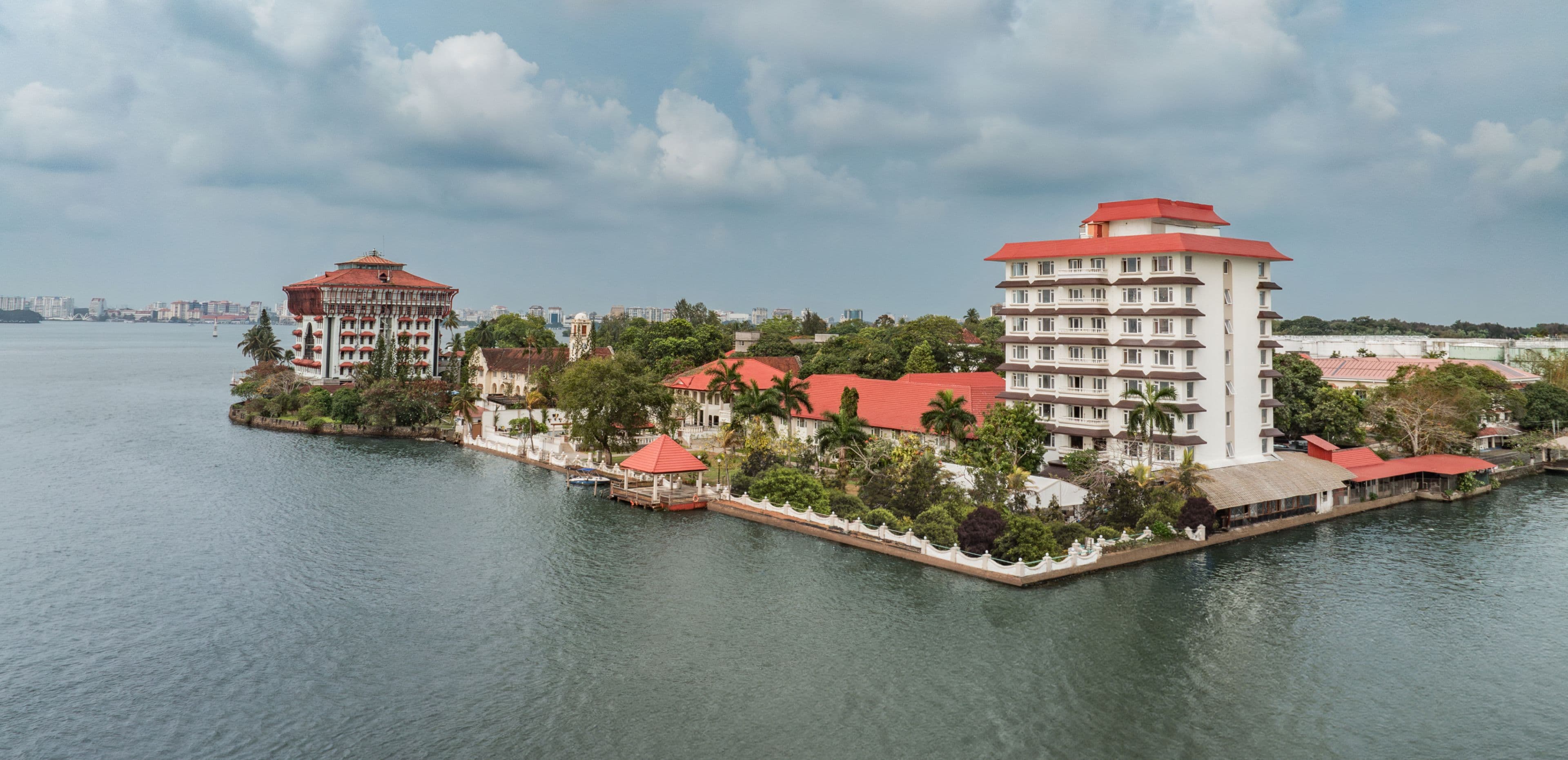
Taj Malabar Resort & Spa, Cochin
Taj Malabar sits at the tip of Willingdon Island, right where the Kochi backwaters meet the Arabian Sea. The original wing opened in 1935. It was designed for passengers arriving by ship, and the building still faces the water as though expecting them. The location is the reason to stay. Cargo ships and Chinese fishing nets pass in the same frame. Fort Kochi is a short ferry ride across the harbour. Ernakulam and the mainland city are about the same distance in the other direction. Heritage rooms occupy the 1935 wing and keep their teak floors and colonial proportions. The newer tower rooms trade that character for wider harbour views and larger bathrooms. Both look at water from almost every angle. Rice Boat is the signature restaurant, built to resemble a Kerala houseboat, and it serves seafood chosen from the day's catch. There is also an all-day dining room and a bar on the waterfront lawn. Sunset from that lawn is the property's best hour. Jiva Spa runs Ayurvedic treatments with resident therapists, and the pool sits at the water's edge. Staff arrange harbour cruises, Kathakali performances and guided walks through the spice markets of Mattancherry.
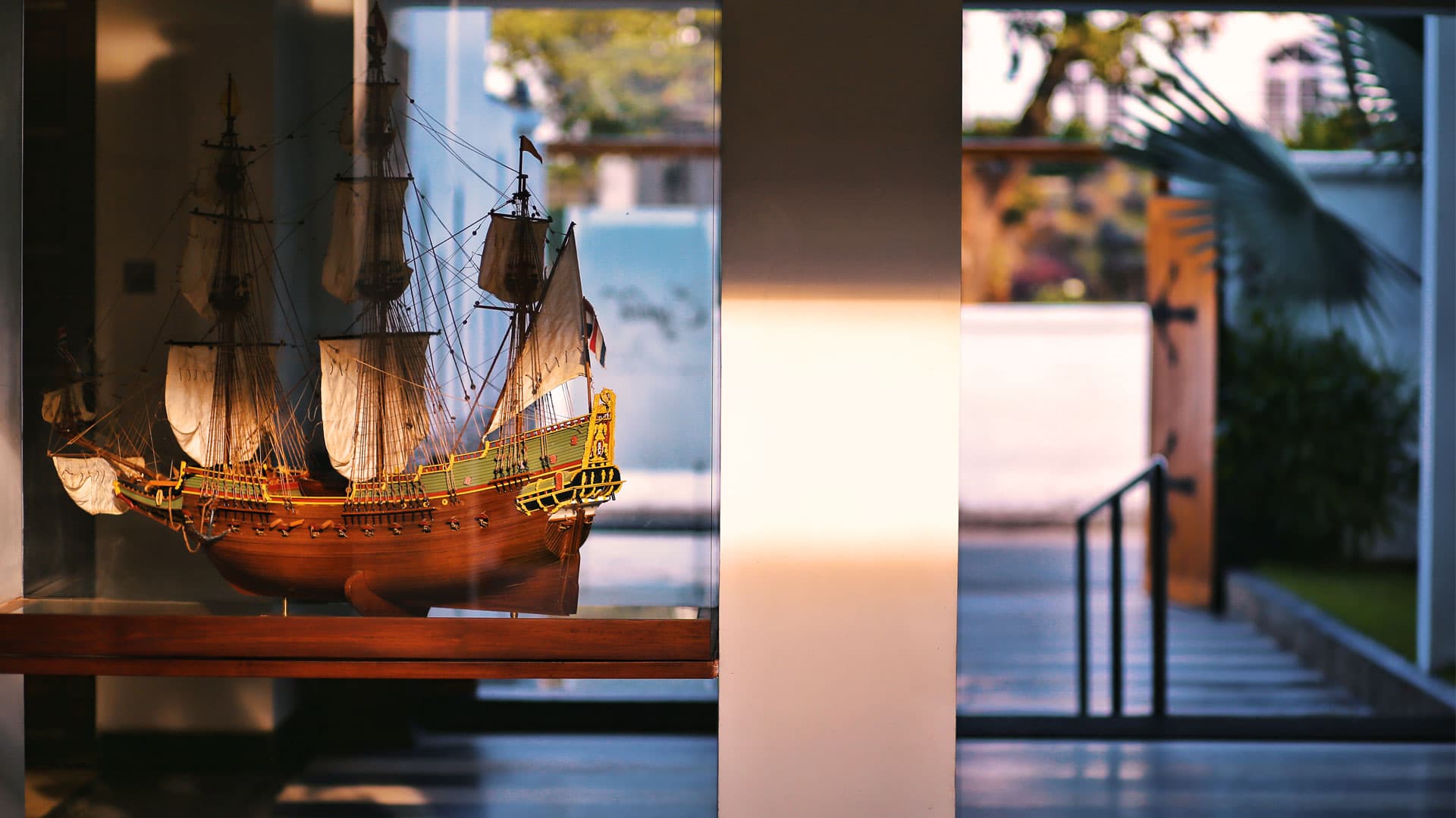
Eighth Bastion
Eighth Bastion takes its name from the old Portuguese fort that once ringed this shoreline. Fort Immanuel had bastions along its wall, and the eighth of them stood near this spot. The hotel is built on that history rather than around it. The property belongs to CGH Earth, a Kerala group that has spent decades running small, place-specific hotels instead of large ones. It shows in the scale here. This is a compact hotel on a Fort Kochi street, not a resort behind a gate. The architecture reads Dutch and Portuguese from outside — tiled roofs, deep verandas, shuttered windows. Inside, the rooms are calm and contemporary, with dark wood against white walls. The two periods are allowed to sit next to each other. There is a pool in the courtyard and a restaurant that cooks Kerala coastal food, including the day's catch from the harbour a few streets away. Fort Kochi is a walking neighbourhood, and that is the real reason to stay here. The Chinese fishing nets, St Francis Church, the Dutch Cemetery, Jew Town and the Mattancherry spice godowns are all reachable on foot or by a short auto ride.
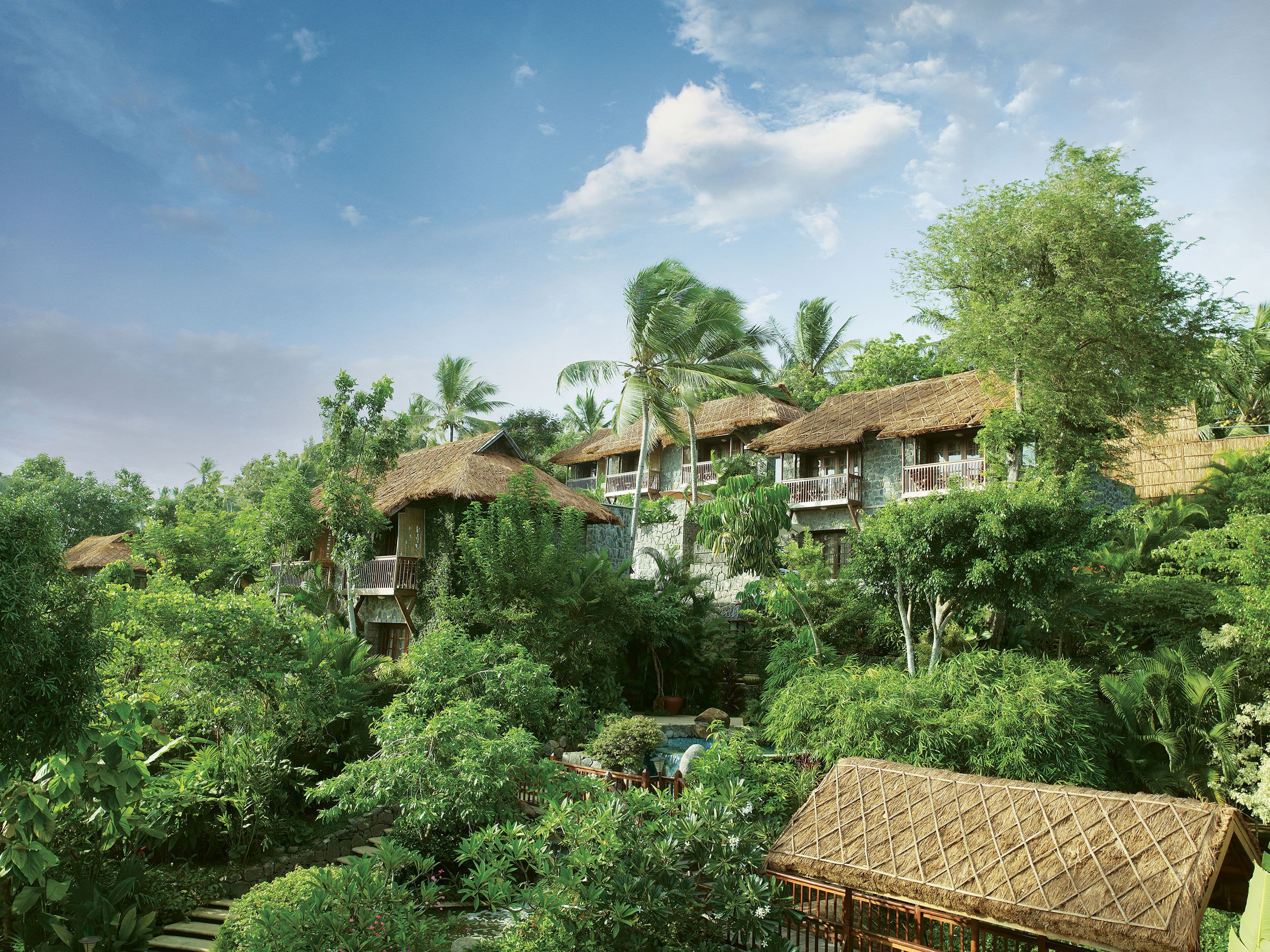
Taj Green Cove Resort & Spa, Kovalam
Taj Green Cove Resort & Spa sits above Samudra Beach in Kovalam, a short walk from the town's famous lighthouse. The resort takes its design cues from Bali. Wooden furniture, heritage motifs, and French windows appear throughout the property. Fifty-nine rooms and suites are set among tropical gardens that slope toward the Arabian Sea. Some suites open onto a private plunge pool. Wellness sits at the heart of a stay here. The resort runs an Ayurveda and wellness centre, led by a naturopathy doctor. Guests can book personalised spa therapies or simply unwind by the infinity pool. A fully equipped fitness centre and daily yoga sessions round out the health offering. Three restaurants serve local Keralan dishes alongside international menus, with 24-hour in-room dining also available. Families are well looked after too, with a supervised kids' club and outdoor play areas. For couples and families exploring Kovalam's beaches, Taj Green Cove Resort & Spa offers a genuinely restful base. The garden, library, and hair salon add quiet comfort between excursions. It remains one of Kovalam's most established luxury addresses, prized for its Balinese-style architecture and sea-facing gardens.
Kumarakom Lake Resort
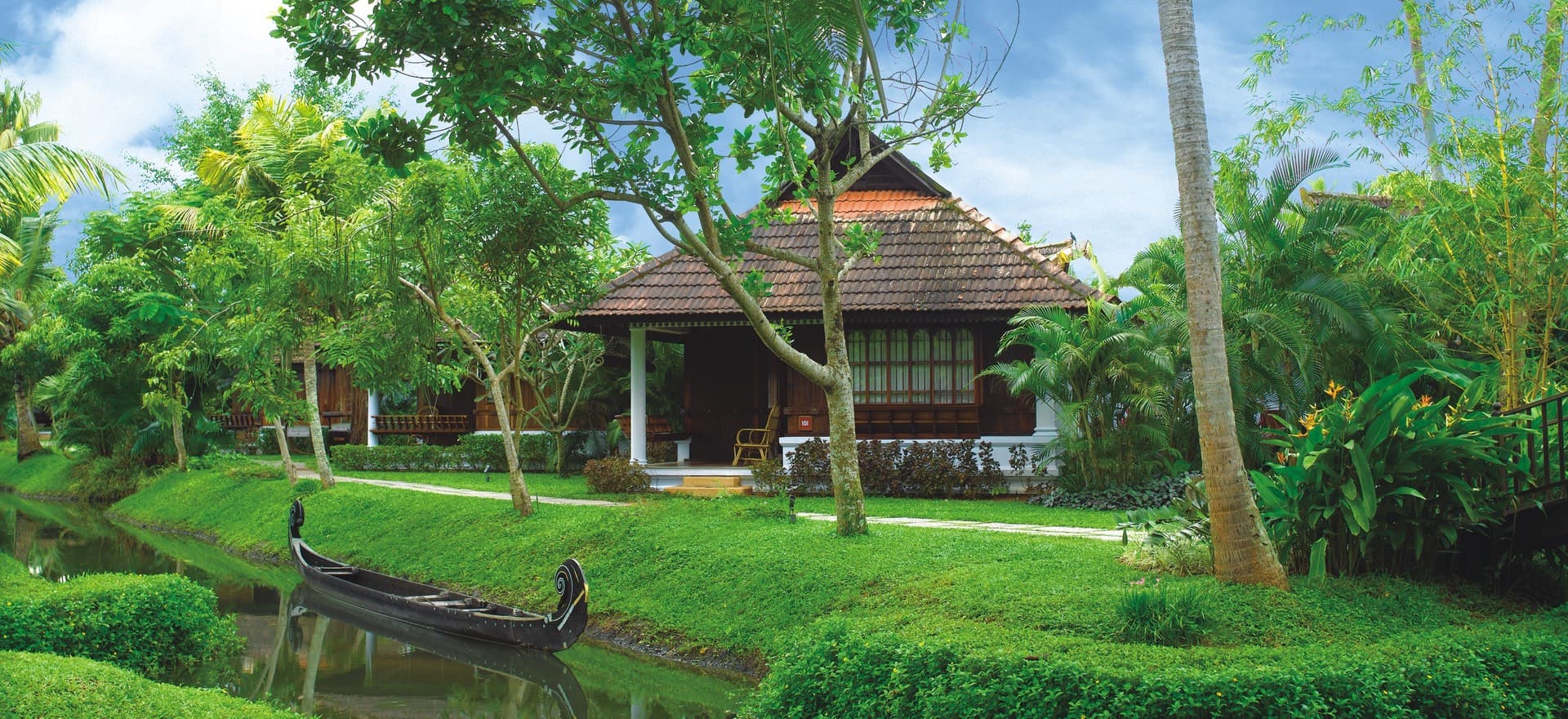
Kumarakom Lake Resort spreads over twenty-five acres on the shore of Lake Vembanad. It is built as a Kerala village. Tiled roofs, carved wood, open courtyards, a canal running through the grounds. The signature accommodation is the meandering-pool villa, where a single shared pool winds past the back door of each villa in a row. The heritage villas are reassembled from old Kerala houses and each has its own courtyard and private plunge pool. The resort has won the World Travel Award as India's leading resort several times over. Ayurmana, its Ayurveda centre, is housed in a separate heritage building and runs full treatment courses as well as single sessions. Meals lean hard into Kerala cooking, including a toddy-shop menu and a seafood grill by the water. The lake sunset, seen from the resort's own jetty or from a sunset cruise, is the fixed point of the day here.
Taj Kumarakom Resort & Spa, Kerala
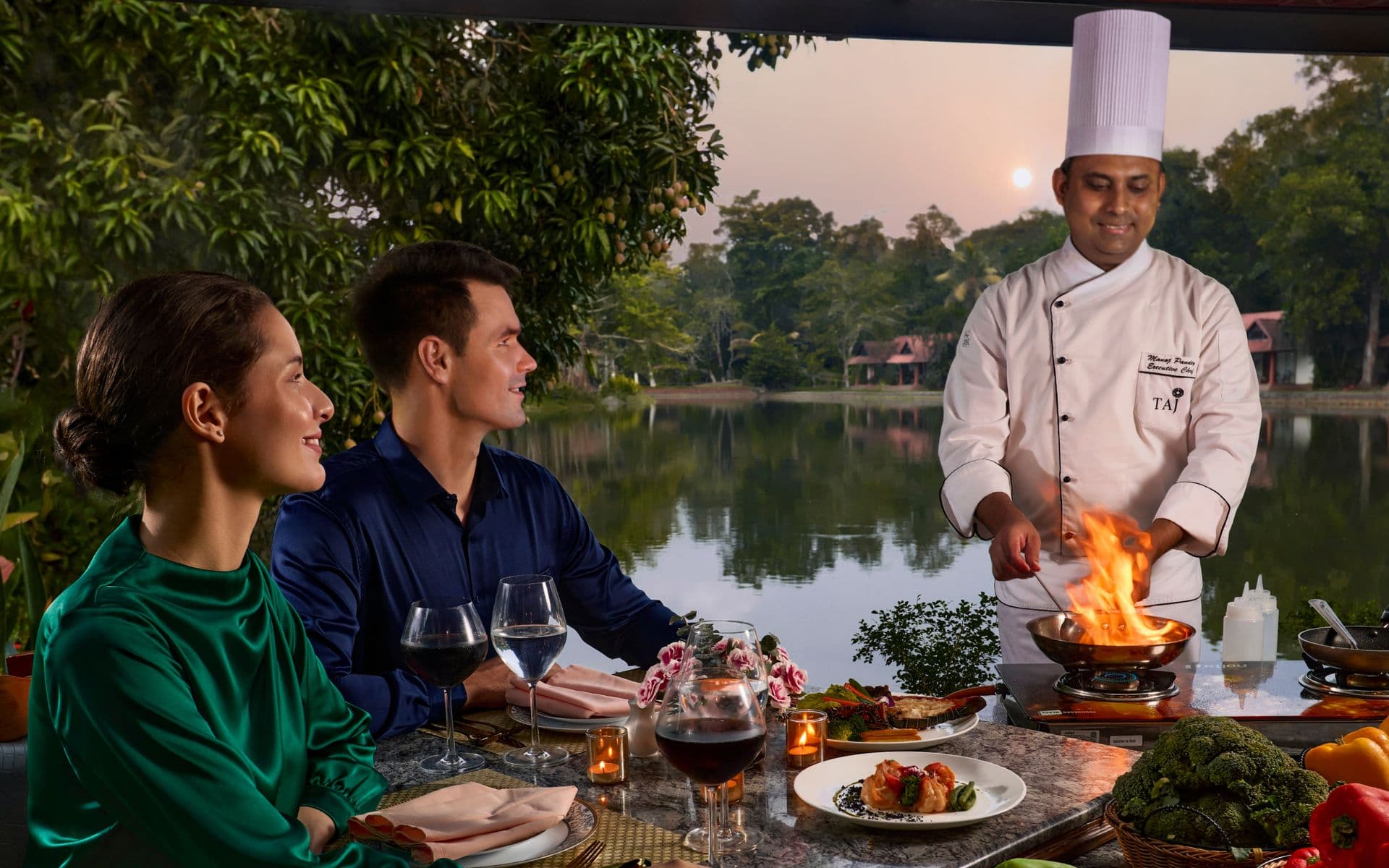
Taj Kumarakom is built around a bungalow put up in 1881 by an English missionary, Henry Baker. The estate he planted has grown into a small resort next to the Kumarakom Bird Sanctuary, on the edge of Lake Vembanad. There are twenty-eight rooms, cottages and villas, set among old rain trees and a lotus lagoon. The original bungalow is now a suite and a restaurant. Some villas have a private plunge pool. Because the resort shares a boundary with the bird sanctuary, the dawn chorus here is loud and genuine. The J Wellness Circle spa runs Ayurveda alongside the usual treatments. This is the value tier for Kumarakom against the heritage resorts nearby, and it is still a full Taj property on a rare piece of ground.
Scenic, Munnar - IHCL SeleQtions
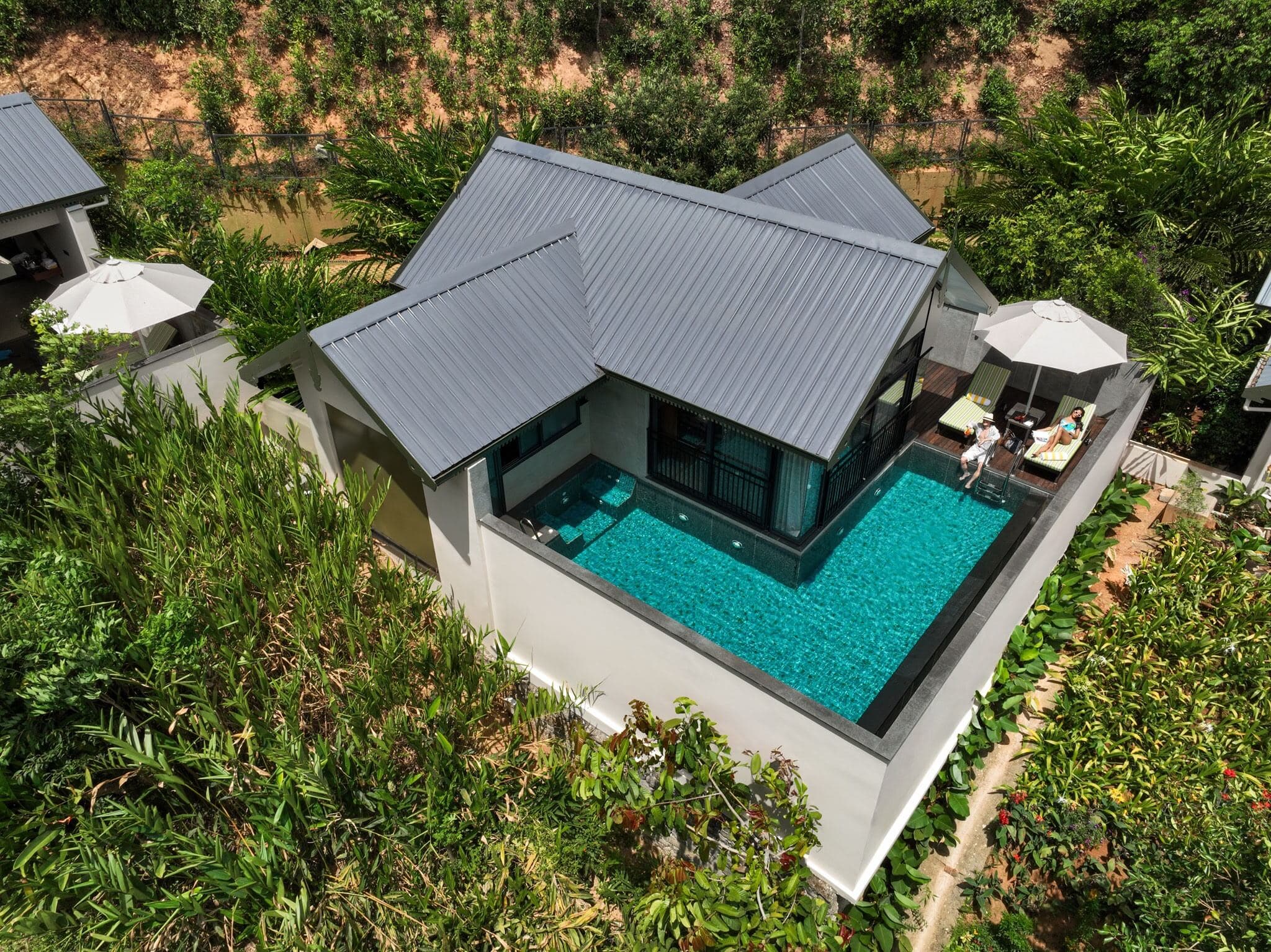
Scenic sits above Chithirapuram, on a slope of the Munnar tea country. It belongs to IHCL's SeleQtions collection, which is the Taj group's label for hotels with a distinct character of their own. Here that character comes almost entirely from the landscape. The hotel is built in tiers down the hillside. Nearly every room opens onto a balcony, and nearly every balcony looks over tea gardens falling away towards the valley. Cloud moves through at this altitude, so the same view changes several times before breakfast. Room categories climb from Superior through Deluxe and Premium, and the top villas add private plunge pools. Interiors keep to warm wood and clean lines rather than competing with what is outside the window. The Pawcations rooms are set aside for guests travelling with a dog. Food leans on the region. Cardamom, pepper and local produce come from the plantations nearby, and the kitchen will also cook a straightforward Kerala meal on request. Meals can be served on the terrace when the weather holds. Munnar's tea museum, Eravikulam National Park and the Mattupetty and Kundala lakes are all within easy reach. The hotel arranges plantation walks, and staff know which viewpoints are worth the early start.
Windermere Estate
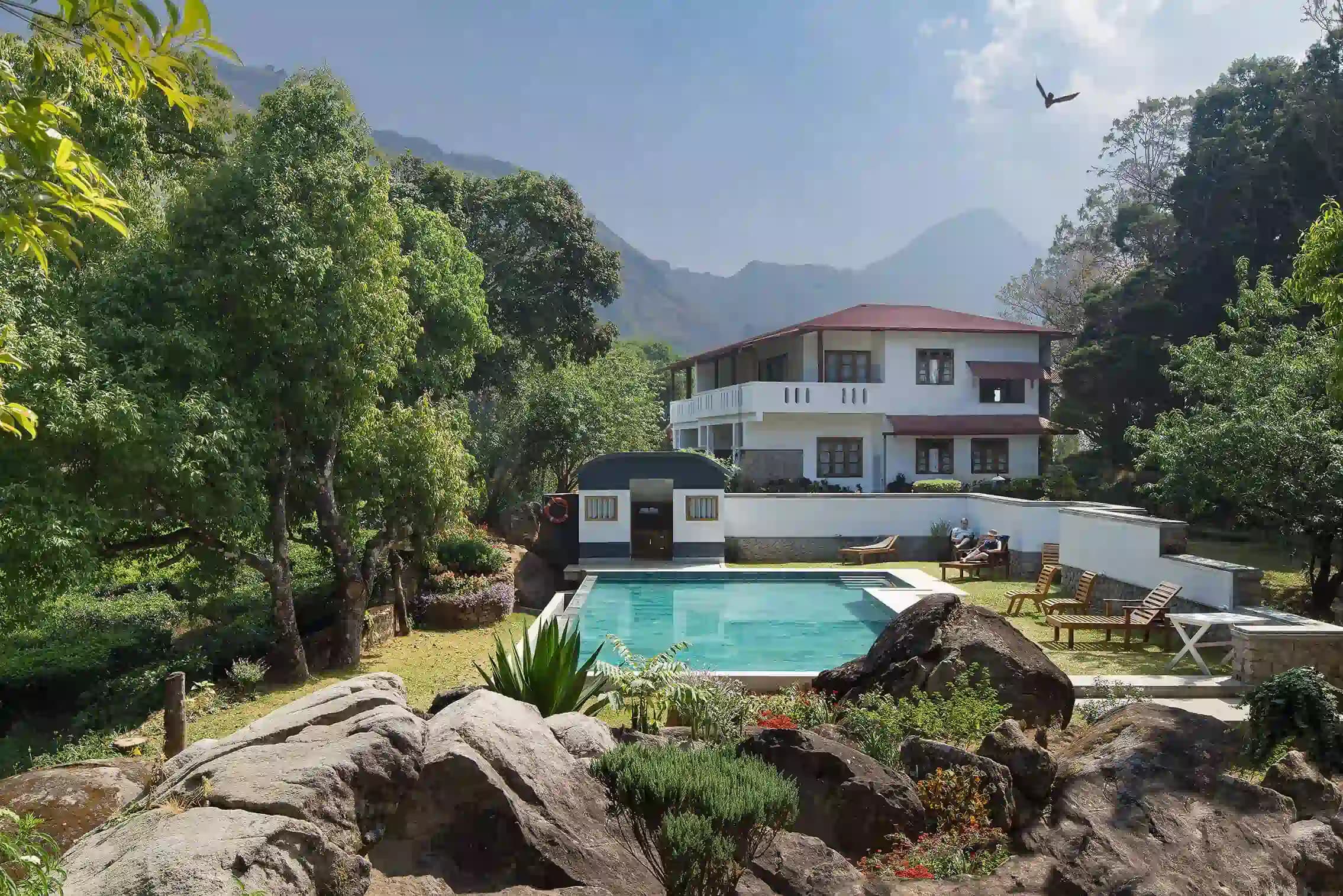
Windermere Estate is a family-run resort set on a working cardamom and coffee plantation in Pallivasal, just outside Munnar. Just eighteen rooms are spread across plantation villas, cottages, and garden rooms. Red cedar accents and simple, tasteful furnishings run through every category. Many rooms open onto private sit-outs facing the estate's terraced hills. Daily life here follows the rhythm of the plantation. A guided walk each afternoon takes guests through the cardamom fields and up to caves on the property. From Windermere's viewpoint, the 360-degree outlook takes in tea gardens, misty hills, and the estate below. Food is served across a handful of characterful spaces. Pine Top handles everyday meals, The Barn hosts fine dining, and Boulder Garden is reserved for outdoor barbecues. The Hut offers snacks and tea through the day. Fire pits and hammocks are dotted through the gardens for quieter evenings. For travellers who want Munnar's tea-estate scenery without a large hotel footprint, Windermere Estate delivers exactly that. Its plantation setting, family ownership, and genuinely local rhythm make it one of the hill station's most distinctive stays.
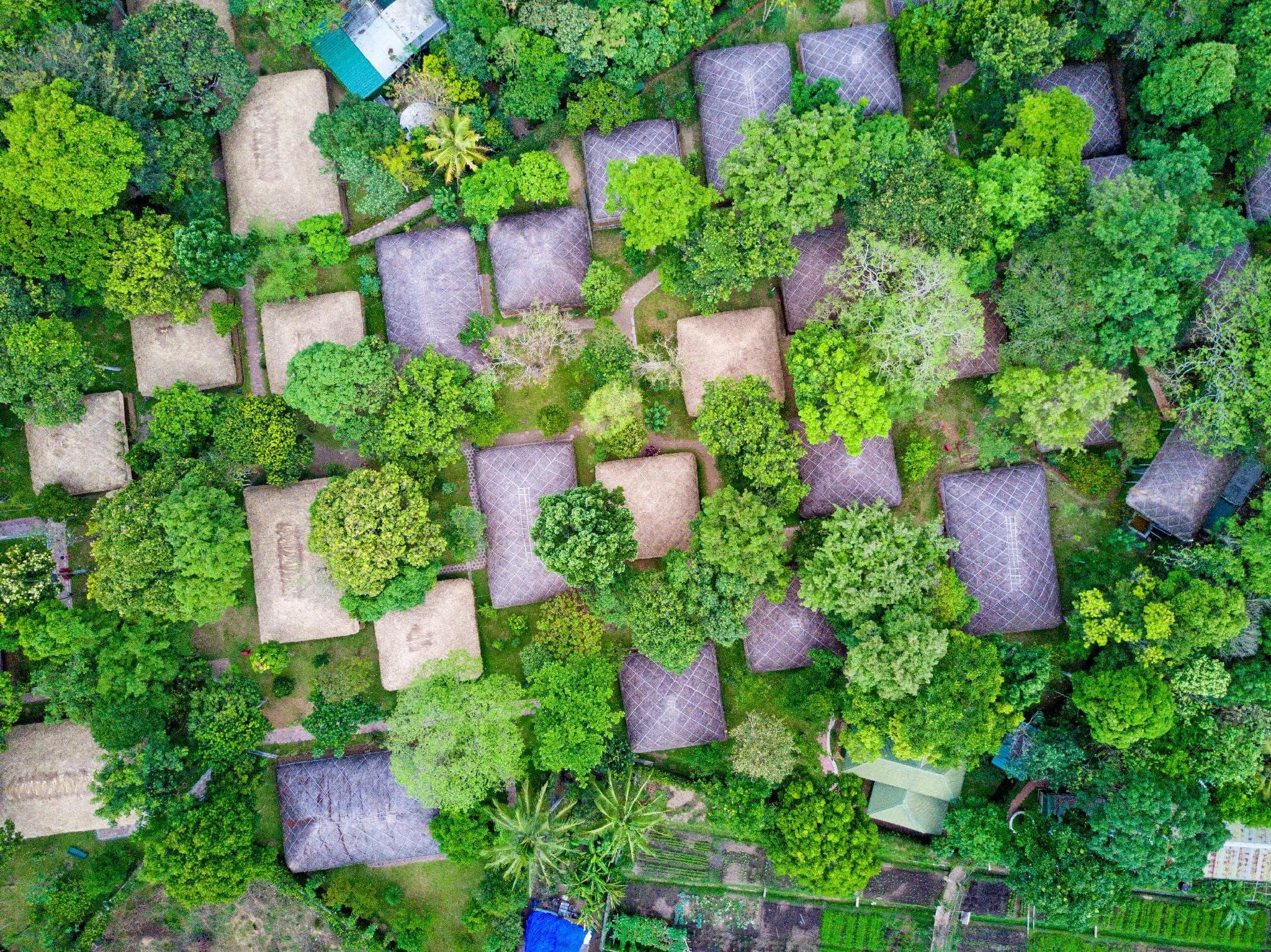
Spice Village – A CGH Earth Experience
Spice Village is a CGH Earth resort built as a recreation of a Kerala spice-growing village, on the edge of Periyar Tiger Reserve in Thekkady. Fifty-two cottages sit among real spice gardens, built from coir matting, thatch, and other natural materials. Each cottage keeps a separate sitting area and en-suite bathroom, with organic toiletries in keeping with the resort's sustainability focus. The resort's own paper-making centre shows guests how it turns plantation waste into handmade paper. Two restaurants serve Keralan and international dishes, largely using produce grown on site. An outdoor pool, a children's pool, and a spa tub sit within the gardens, alongside massage and Ayurveda treatment rooms. Thekkady itself is best known for wildlife. Spice Village puts guests within easy reach of Periyar's boat safaris and forest walks, as well as working spice and cardamom plantations nearby. An indoor tennis court and business centre round out the facilities for longer or working stays. Spice Village suits travellers who want Thekkady's forest and plantation setting matched by a resort that takes sustainability seriously. Its village-style layout and spice-garden grounds set it apart from a standard hotel stay.
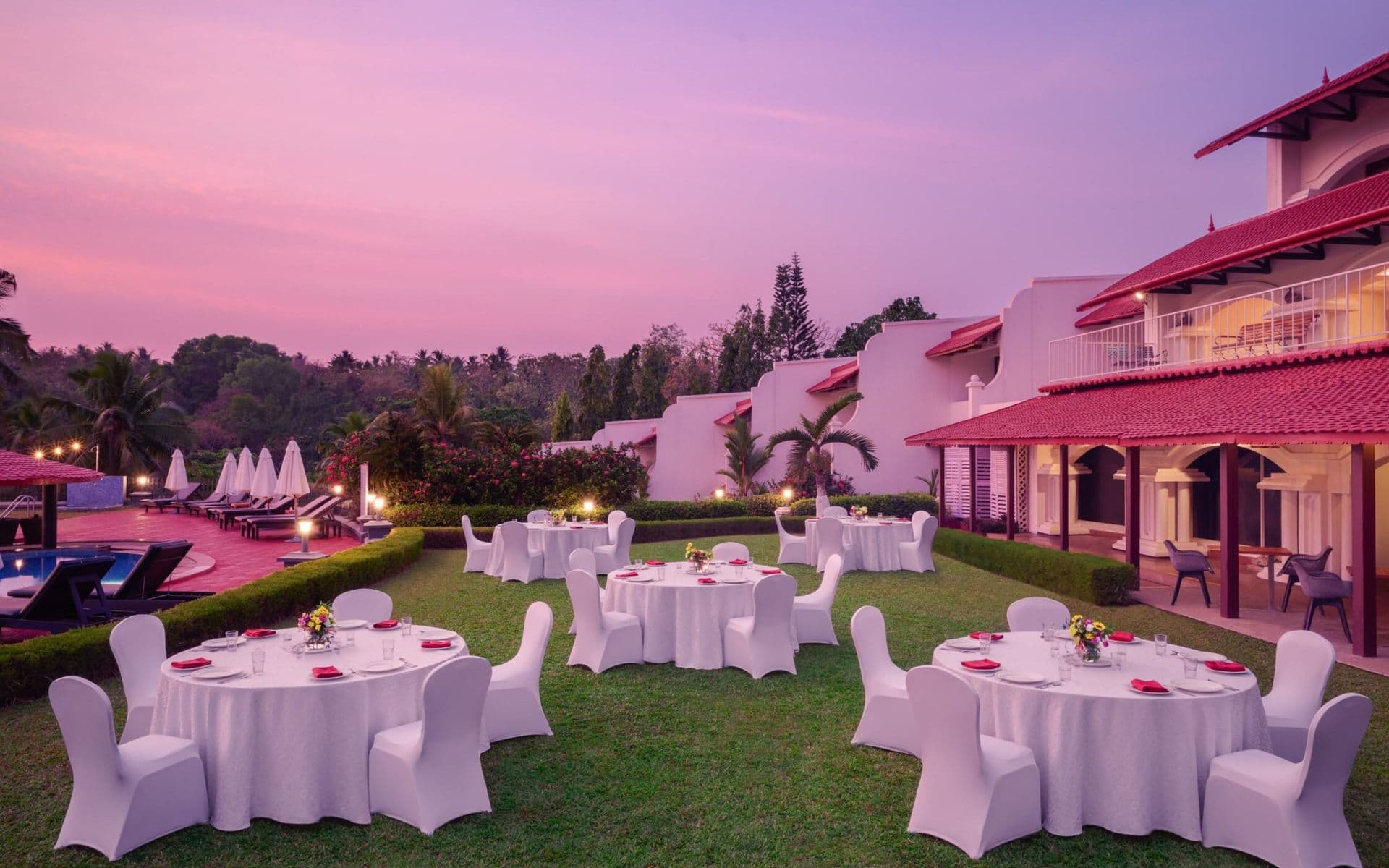
Gateway Varkala – IHCL SeleQtions
Gateway Varkala stands on the cliff at the north end of the beach, an IHCL property with about thirty rooms. Every room and suite has a balcony, and the best of them look straight down the Arabian Sea. The grounds are small but well planted, built around a swimming pool with a sunken bar. The clifftop path, with its cafes and shops, starts at the gate, and the stairs to the beach are a few minutes' walk. The Ayurveda centre is Green Leaf certified, the Kerala government's mark for a serious treatment facility. Coastal Kitchen, the main restaurant, has run since 1995 and leans on Malabar seafood. It is a ten-minute drive from Varkala railway station and about an hour from Thiruvananthapuram airport.
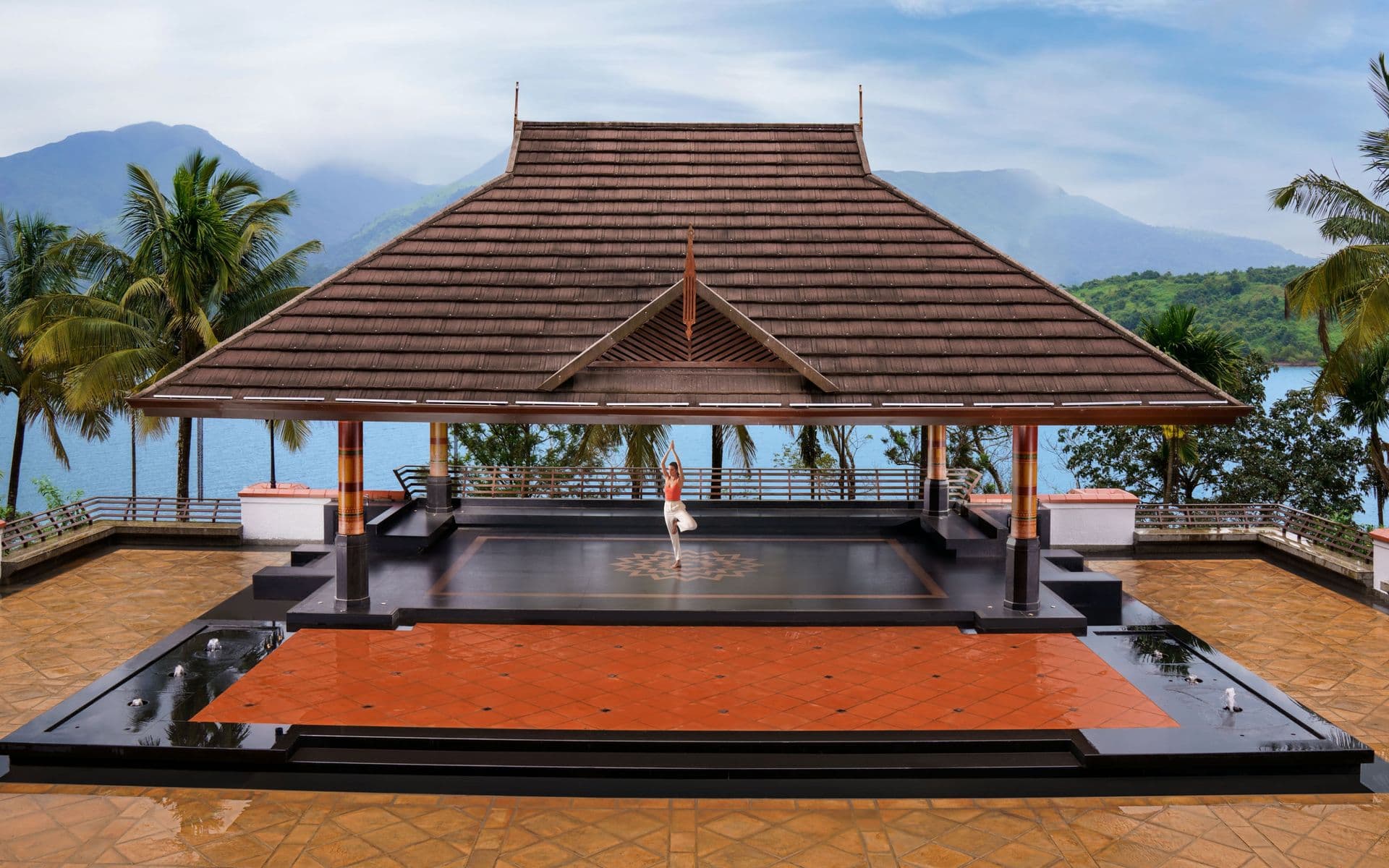
Taj Wayanad Resort & Spa, Kerala
Taj Wayanad opened in 2023 on a small rise above Banasura Lake, near Padinjarathara. It has 270-degree views of the Banasura hills and the water, and it was built to sit lightly on ten acres of hillside. There are sixty-one keys. Forty-three are waterfront cottages stepped down the slope; five are pool villas with plunge pools. The materials and the roof lines borrow from the building tradition of northern Kerala. Wellness is the running theme. The J Wellness Circle spa leads with Ayurveda, and the layout keeps quiet corners and forest edges close to every room. Dining is two restaurants and two bars, with a south-Indian room and a poolside grill. The resort is a two-hour drive from Kozhikode and its airport.
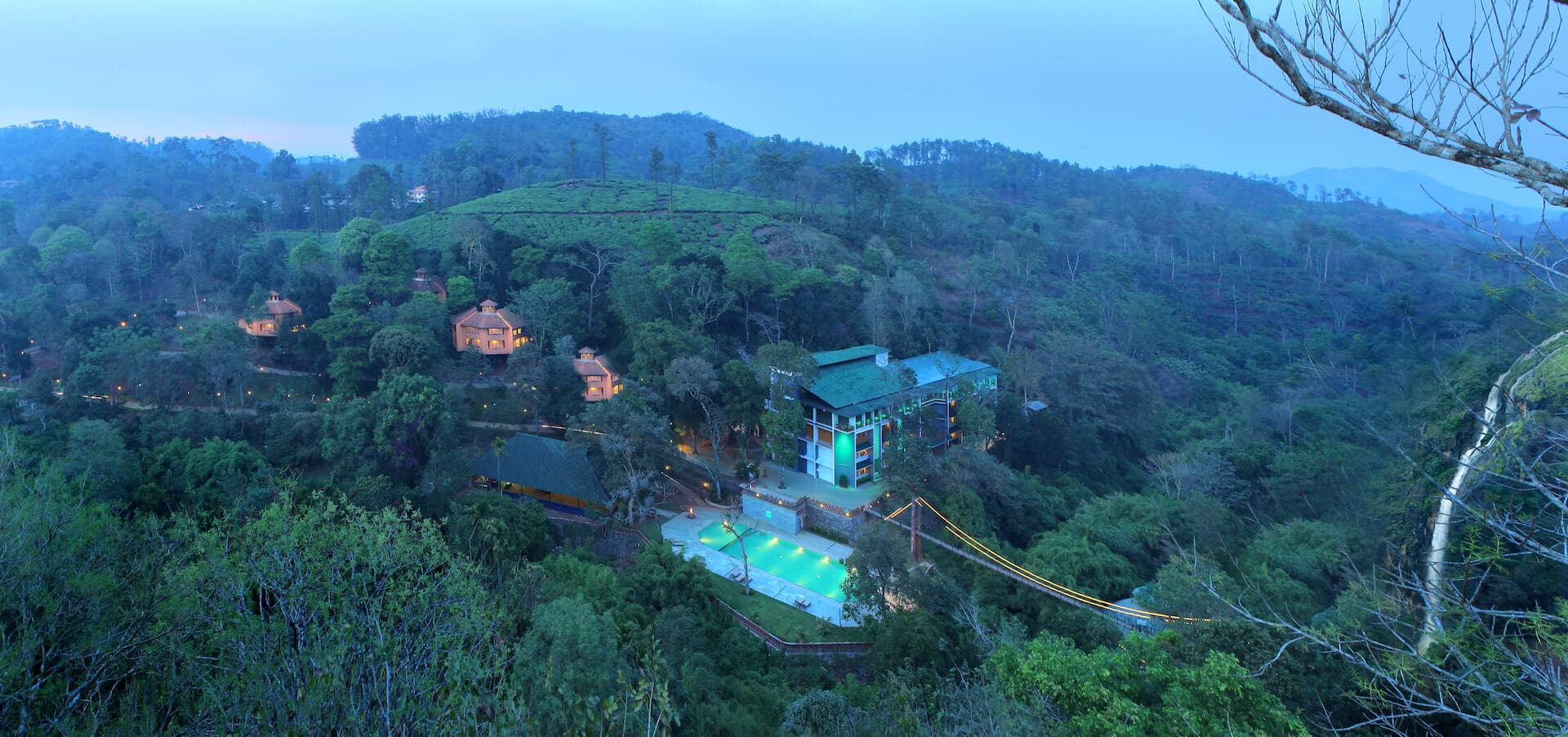
Vythiri Village Resort, Wayanad
Vythiri Village sits in thirty acres of rainforest near Vythiri town, at about 2,600 feet. A mountain stream runs through the grounds and more than 150 bird species have been recorded here. Rooms range from garden rooms up to cottages in traditional Kerala style and pool villas with an eight-metre infinity pool. The forest is dense enough that the villas feel well separated. The resort runs an activity list most days: a canopy zip-line, a rope bridge sixty feet up, guided nature walks, cycling, archery and a fish spa. The Nawa spa handles Ayurveda. It markets itself as five-star. We seed it as the premium tier for Wayanad, the value option against Taj Wayanad, and it earns that on setting alone.
Why Travel With Us
Sixteen Years, One Philosophy
Thirteen years in, my job is knowing which side gate skips the queue at every fort on the route. That's the whole job — being the person who already knows.
Brijesh Sharma · Bespoke Itinerary ExpertFrom the Journal
Kerala travel guides
Places to Visit in Kerala: Backwaters, Hills, Coast and the Food Between
Wayanad Travel Guide: Edakkal Caves, Chembra Peak, Banasura Sagar and When to Go
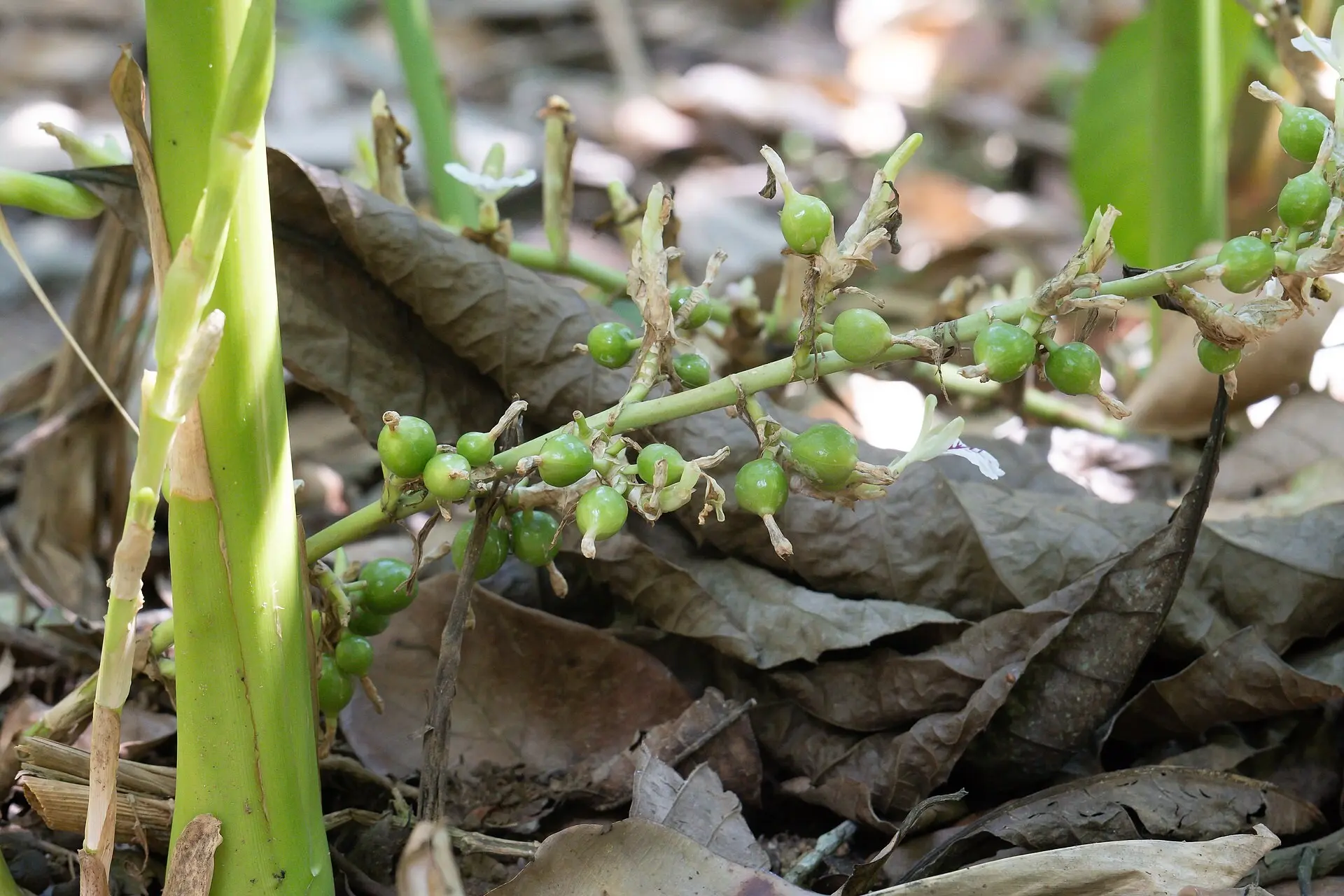
Thekkady Spice Plantation Visit: What to See, Buy and Avoid
Continue Your Journey

Kerala & Tamil Nadu
South India's two headline states on one route — Kerala's coast and hills, then over the Ghats to Tamil Nadu's great temple city.

Tamil Nadu
Dravidian temple towns and colonial hill stations, toured at a private, unhurried pace.

Karnataka
Royal palaces, coffee hills, and a lost imperial city. We explore Karnataka with a private guide.

Goa
Goa pairs sunlit beaches with Portuguese-era churches and villas, so a private guide can carry you from a quiet cove to a UNESCO basilica in the same afternoon.

Andaman & Nicobar
Private luxury tours through the Andaman Islands' coral reefs, colonial history, and beach coastline.
Frequently Asked
Planning Kerala
How many days should we plan for Kerala?
Most private Kerala itineraries run 5–7 days — enough for Fort Kochi's old town, an overnight houseboat cruise through the Alleppey backwaters, and a slower day either side of the water.
Is the houseboat cruise private, or shared with other guests?
Private, always — your own kettuvallam and crew, not a shared day-boat. The onboard crew cooks meals as you drift and moors away from the day-tour traffic overnight.
When's the best time to visit Kerala?
October through March, same as most of India — outside the June–September monsoon, when the backwaters run fullest but travel is far less comfortable.
Can Kerala be combined with Rajasthan on the same trip?
Yes — Kerala pairs naturally with Rajasthan as a second leg, trading forts and palaces for a slower, water-led backwaters finish.

Kashmir to Kanyakumari
Get In Touch
Start Planning Your Kerala Journey
Tell us a little about who's coming and when — a private itinerary comes back built around your answer.