Taj Mahal Visitor Guide: Tickets, Gates and What to See Inside
Taj Mahal visitor guide: official ticket prices, Friday closure, which gate to use, the garden, mosque and mausoleum, night viewing and sunrise by month.
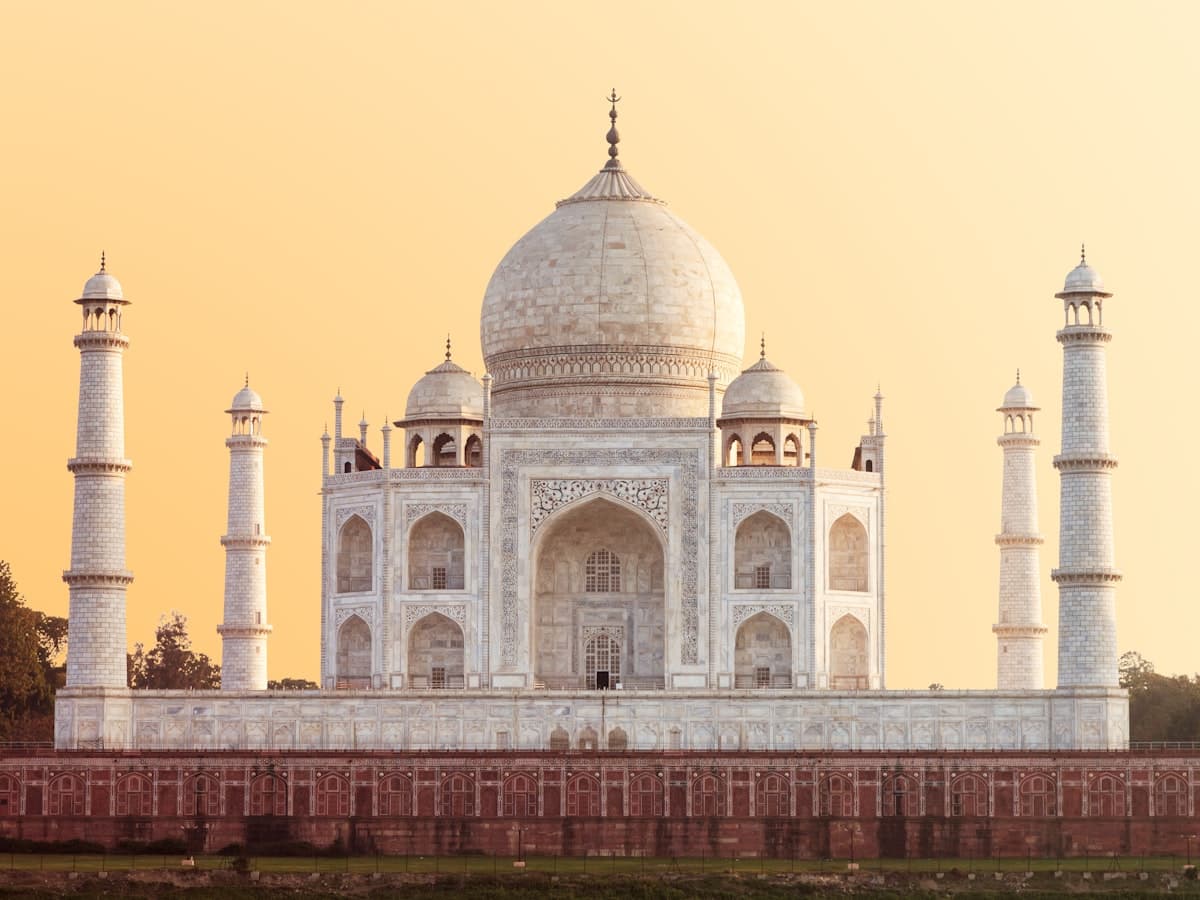
You already know what the Taj Mahal looks like. What most visitors do not know is how the visit works. There are three gates, two ticket tiers, a closing day and a list of things you cannot carry in. Getting those right is the difference between a calm morning and a queue in the sun.
This guide covers the practical side. For the question of sunrise or sunset, read our Taj Mahal sunrise or sunset guide. This one tells you how to get in, what to see once you are inside and how to organise two hours.
Figures were checked in October 2026 against the official Taj Mahal site. Fees are set by the Archaeological Survey of India and can change, so confirm before you pay.
The Taj Mahal at a glance
What to know | |
|---|---|
Where | Agra, on the south bank of the Yamuna |
Built | About 1632 to 1653, by Shah Jahan, for his wife Mumtaz Mahal |
Status | UNESCO World Heritage Site since 1983 |
Hours | Opens 30 minutes before sunrise and closes 30 minutes before sunset |
Closed | Fridays, for general viewing. The mosque is open for prayer |
Time to allow | 2 to 3 hours, plus queue time |
Best hour | At opening, for soft light and fewer people |
Best season | October to March |
Run by | The Archaeological Survey of India |
Tickets: what you pay
The official site lists a two-part price. The first amount is entry to the grounds. The second is an optional add-on for the main mausoleum, the tomb building itself.
Visitor | Entry to the grounds | Main mausoleum (optional) |
|---|---|---|
Foreign visitor | ₹1,100 | ₹200 |
SAARC and BIMSTEC citizens | ₹540 | ₹200 |
Indian citizen or OCI cardholder | ₹50 | ₹200 |
Children under 15 | Free | Free |
Those figures include the ASI and Agra Development Authority fees. Booking online gives a small discount, listed at ₹5 for Indian tickets and ₹50 for foreign tickets. Some third-party sites quote slightly different foreign prices, such as ₹1,050, so rely on the official site and check before you go.
Should you buy the mausoleum ticket?
Most visitors should. The mausoleum is the building you came to see, and without the add-on you stay on the platform outside. The inside holds the cenotaphs of Mumtaz Mahal and Shah Jahan under the dome, in a room of carved screens and inlaid marble. It is quiet, dim and small, and it is worth seeing once.
The gates
Gate | What to know |
|---|---|
West Gate | Ticket counters near Saheli Burj. The main entrance for many visitors |
East Gate | Ticket counters here too. Often a good choice when the west queue is long |
South Gate | Exit only at present |
There are separate queues for foreign and domestic visitors. Ticket counters open an hour before sunrise and close about 45 minutes before sunset, according to the official site.
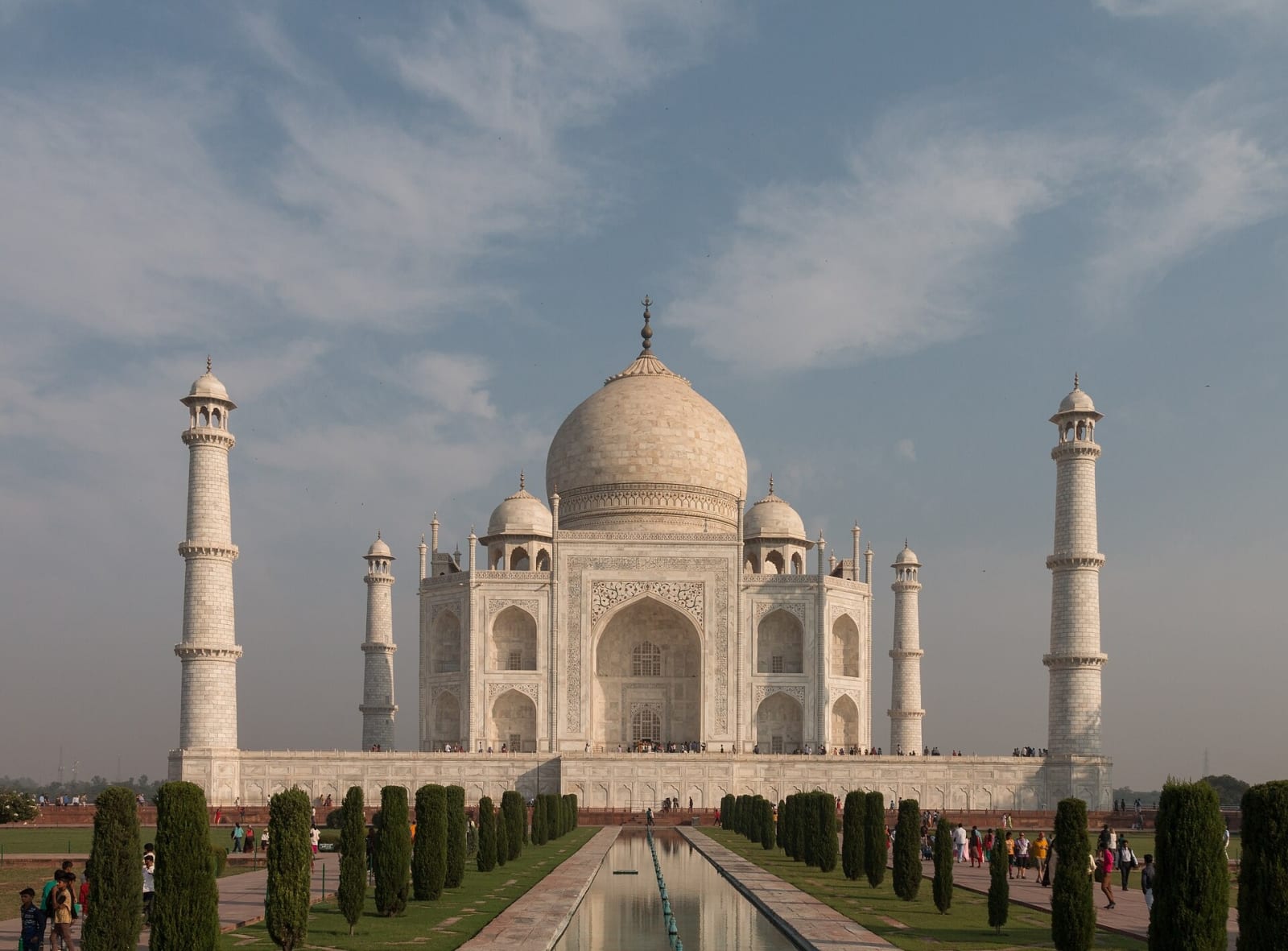
The tomb from the garden in soft light.
What you will see
Stop | What it is | Allow |
|---|---|---|
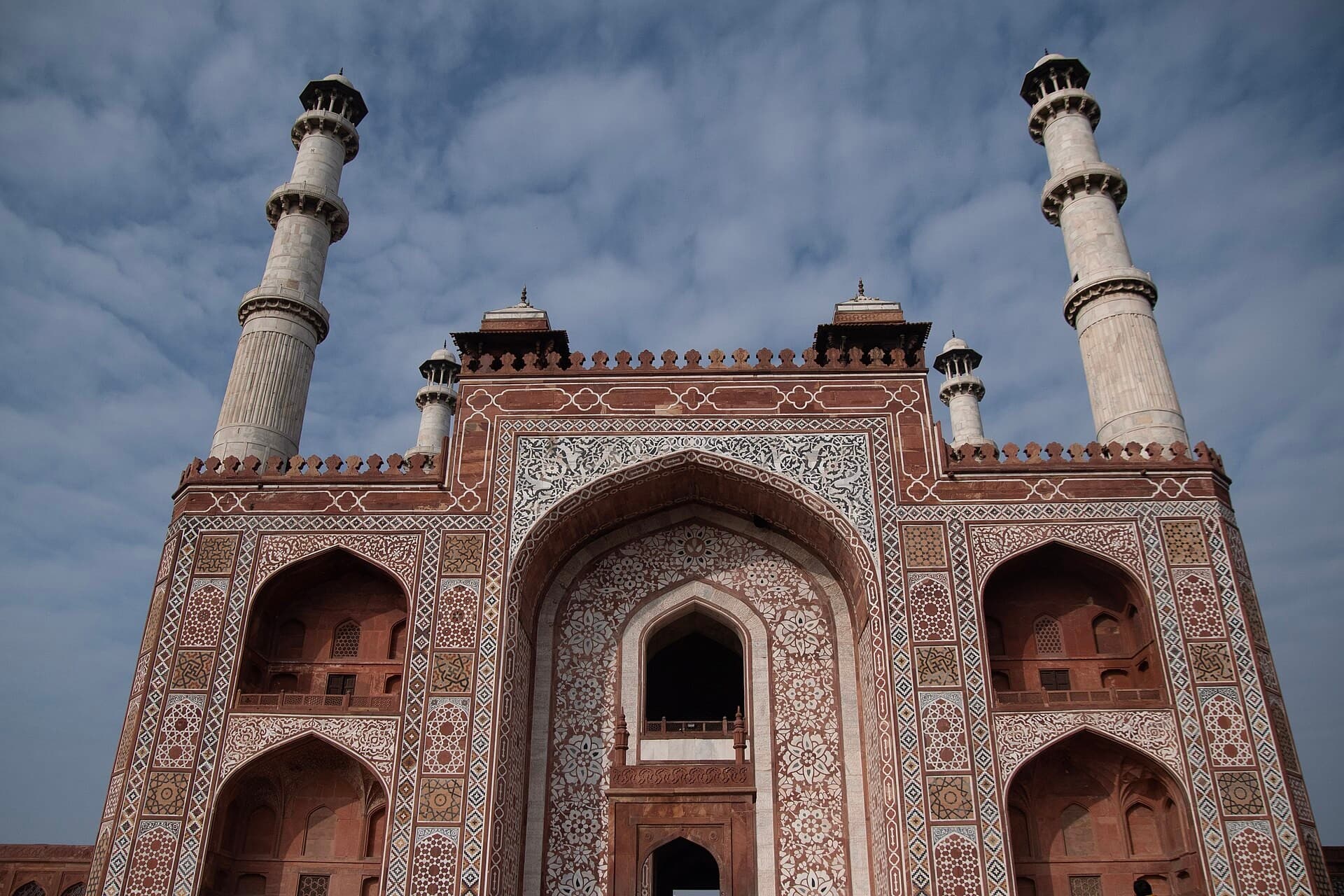
Entrance gateway | The great red sandstone gate, with the first view | 15 min |
The garden | A four-part Mughal garden with a long water channel | 20 min |
The plinth | The raised marble terrace under the dome | 15 min |
The mausoleum interior | The cenotaphs under the dome | 15 min |
The mosque | A red sandstone mosque on the west side | 15 min |
The riverfront terrace | The back of the tomb, with the Yamuna beyond | 20 min |
The gateway and the first view
You do not see the tomb until you pass through the gateway. The great gate frames it in an arch. Pause here, because the first view is the one most visitors photograph. Move to one side to let others pass.
The garden
The garden follows the Mughal four-part plan, with channels and paths meeting at the centre. The long water channel is the famous reflecting pool. It is the best place to stand for the view along the axis.
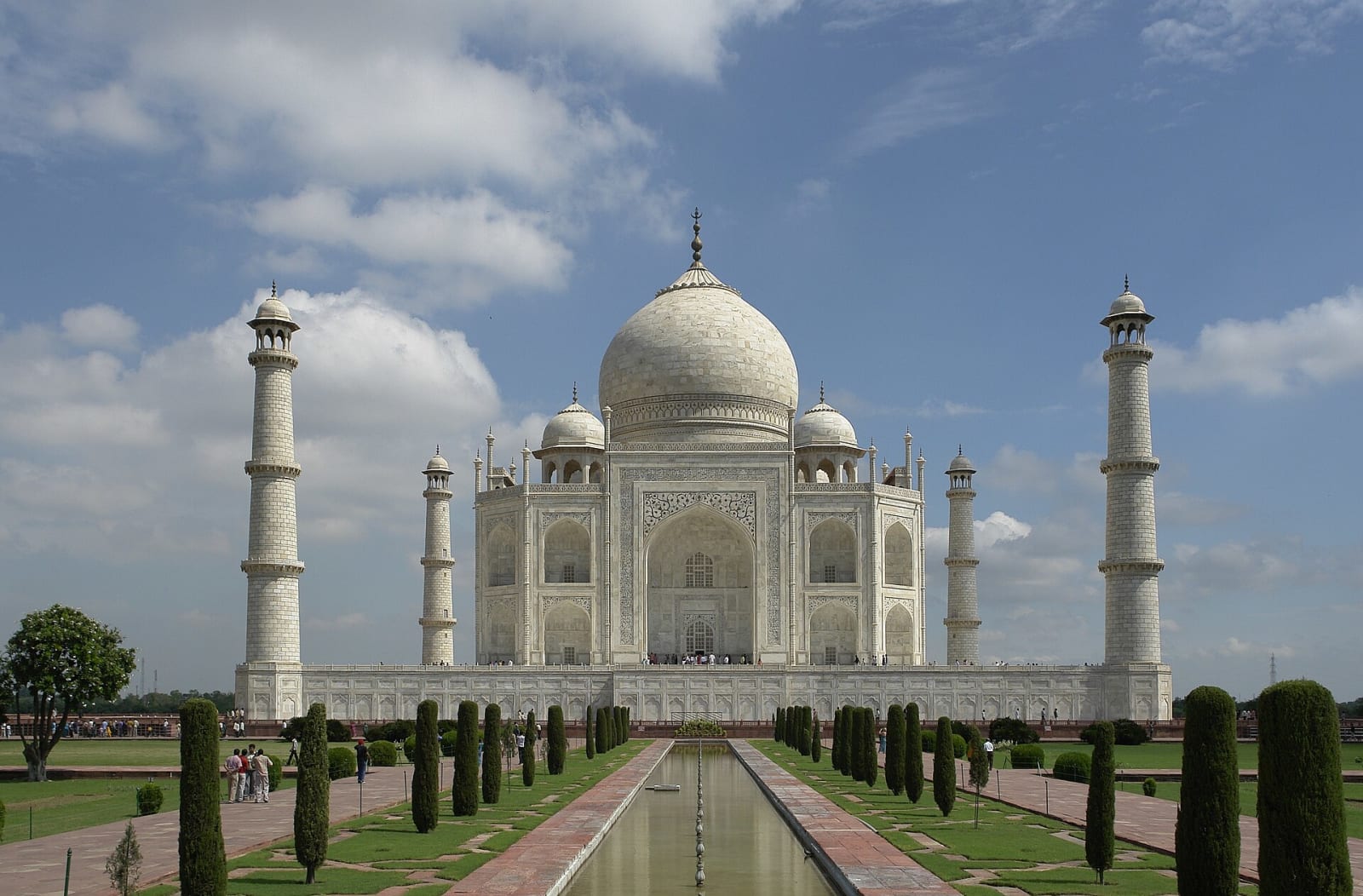
The charbagh garden and the main tomb.
The mausoleum and its inlay
The tomb stands on a raised plinth with a minaret at each corner. The white marble is carved with flowers and inlaid with semi-precious stones in a technique called pietra dura. Look closely at the lower panels, where the detail is finest.

A corner of the tomb and a minaret.
The cenotaphs inside are not the real tombs. The graves are in a chamber below, which is not open to visitors.
The mosque
On the west side of the tomb stands a mosque in red sandstone with white domes. It is a working mosque and is open on Fridays for prayer. A matching building stands on the east side. Both frame the white tomb with colour.
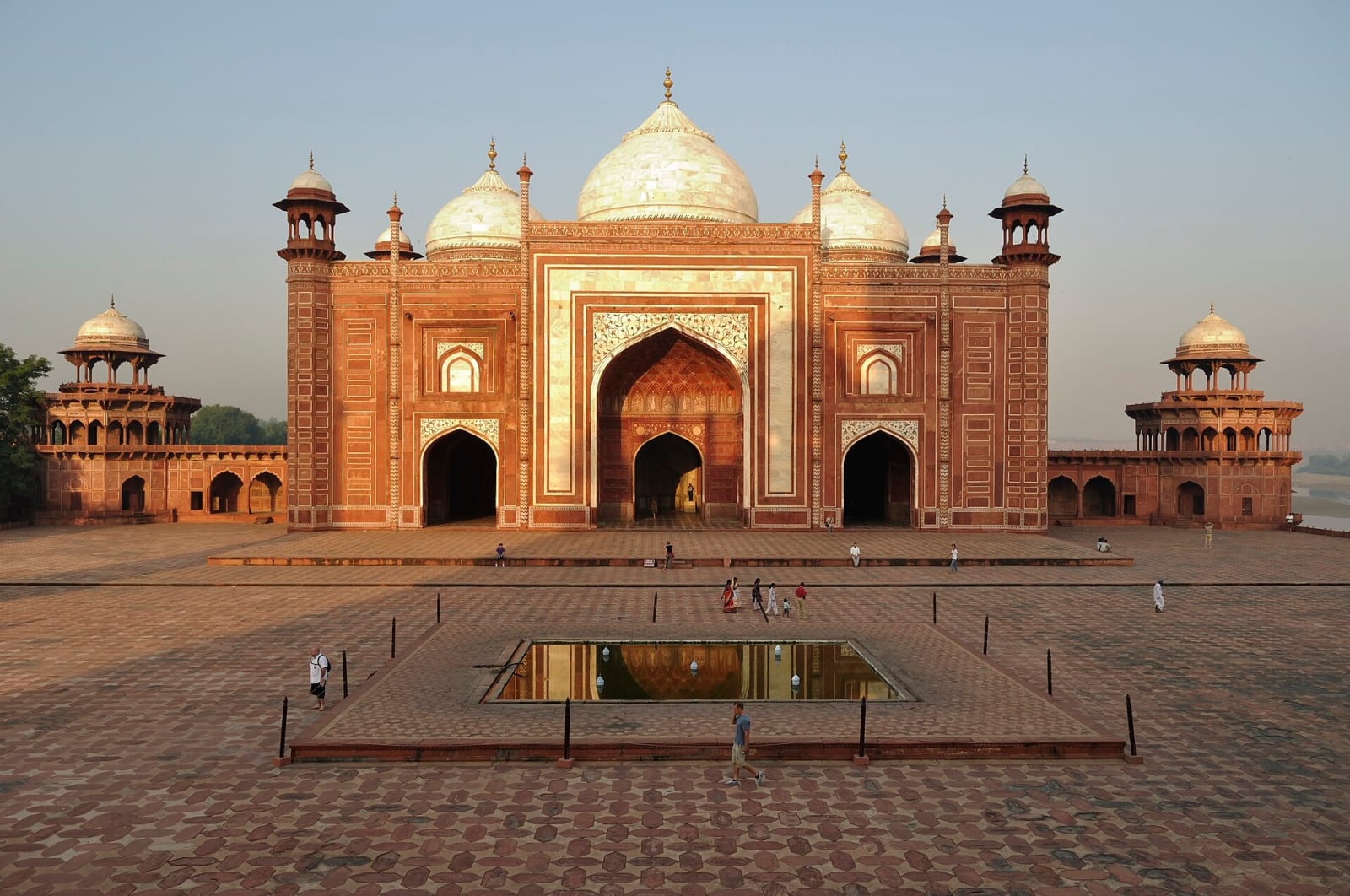
The red sandstone mosque beside the tomb.
Rules and what to carry
The official site links to a do's and don'ts list. The common limits are these, and you should confirm them at the gate.
Allowed | Not normally allowed |
|---|---|
Water, a small bag, a camera | Large bags (a cloakroom is usually offered) |
Phones for photographs | Photography inside the main mausoleum |
Modest, comfortable clothes and shoes | Tripods, food and drinks, other than water |
Photo ID | Anything on the prohibited list posted at the entrance |
Security screening takes time. Travel light and leave the large bag at your hotel.
Night viewing
The Taj can be seen at night on full-moon nights and for two days either side, except Fridays and the month of Ramzan, according to the Agra district site. Sessions run from about 8:30 pm to 12:30 am. A separate ticket is required, and the numbers are small.
Because the dates depend on the moon and the rules change, ask your hotel to check and book several days ahead.
Best time by month
The gates are tied to sunrise and sunset, so the clock times shift through the year. Sunrise and sunset times below are calculated for Agra on the 15th of each month, in Indian Standard Time.
Month | Sunrise | Sunset | Visiting advice |
|---|---|---|---|
January | 7:09 am | 5:46 pm | Fog and haze. Go mid-morning |
February | 6:55 am | 6:10 pm | Clear and cool. Excellent |
March | 6:28 am | 6:26 pm | Warming. Go at opening |
April | 5:54 am | 6:42 pm | Hot. First hour only |
May | 5:30 am | 6:59 pm | Very hot. Opening only |
June | 5:23 am | 7:14 pm | Hot. Pre-monsoon dust |
July | 5:33 am | 7:15 pm | Monsoon. Humid, fewer crowds |
August | 5:49 am | 6:55 pm | Monsoon. Showers, green gardens |
September | 6:03 am | 6:23 pm | Humid. Clearing late in the month |
October | 6:17 am | 5:50 pm | Clear. Season begins |
November | 6:38 am | 5:27 pm | Excellent. Crowds build |
December | 7:00 am | 5:26 pm | Peak season and morning fog |
Choosing your time of day
Time | What you get | Best for |
|---|---|---|
Opening | Soft light and thin crowds | First-timers and photographers |
Mid-morning | Strong light and rising crowds | Short visits |
Midday | Heat and glare | Avoid, except in winter |
Last hour | Warm light and a quieter garden | Second visits |
Full-moon night | The tomb in moonlight | Special occasions |
Who the Taj Mahal suits
Traveller | Why it works | Tip |
|---|---|---|
First-timers | The building everyone has in mind | Go at opening with a guide |
Photographers | Symmetry, reflections and detail | Walk the garden before the plinth |
Families | A big, open site with room to move | Set a two-hour limit |
Couples | A quiet walk in soft light | Go on a weekday |
Heritage readers | A study in Mughal design | Hire a guide for the inlay |
Travellers with limited mobility | Long walks and steps at the platform | Ask about assistance |
What to pair it with
Agra Fort is the other great Mughal site in Agra. Read our Agra Fort visitor guide.
Mehtab Bagh and Itimad-ud-Daulah give you a second angle. See Agra beyond the Taj.
Fatehpur Sikri fits on the way to Jaipur. Read the Fatehpur Sikri guide.
Delhi is usually the other end of the trip. See our guide to Delhi in two days.
How to plan your visit
Check the day. The Taj is closed on Fridays.
Book online if you can, and carry photo ID.
Arrive at the gate before opening, because the line forms early.
Use the East or West gate depending on the queues.
Buy the mausoleum add-on if you want to see inside.
Walk the garden slowly, then the plinth, then the mosque.
Where it fits in the Golden Triangle
The Taj is the anchor of the Golden Triangle. Our guide to how many days to spend on the Golden Triangle shows how to place it, and the field guide to places to visit on the Golden Triangle gives the wider picture.
The Oberoi Amarvilas and ITC Mughal are both within reach of the Taj. See how it fits a route in the Agra Taj overnight itinerary or the Delhi and Agra package.
Frequently asked questions
What are the Taj Mahal timings?
It opens 30 minutes before sunrise and closes 30 minutes before sunset, so the clock times shift through the year. Check the table above for your month.
Which day is the Taj Mahal closed?
Fridays, for general viewing. The mosque is open for prayer.
How much is the Taj Mahal ticket?
According to the official site, ₹1,100 plus ₹200 for the mausoleum for foreign visitors, ₹540 plus ₹200 for SAARC and BIMSTEC citizens, and ₹50 plus ₹200 for Indian citizens. Children under 15 enter free.
Which gate is best for the Taj Mahal?
The West Gate and East Gate both sell tickets and admit visitors. The South Gate is exit only at present. Choose whichever queue is shorter.
Do I need the main mausoleum ticket?
If you want to go inside the tomb building, yes. Without it you can visit the grounds and the plinth.
Can you take photos inside the Taj Mahal?
Standard visitor rules do not allow photography inside the main mausoleum, so confirm at the gate. Photographs in the garden and on the plinth are fine.
Can you see the Taj Mahal at night?
On full-moon nights and for two days either side, with a separate ticket. Fridays and the month of Ramzan are excluded.
Plan your Taj Mahal visit with us
We arrange the entry, the guide and the right gate for your date. Explore the Golden Triangle destination page or talk to a trip designer.
Photo credits
Garden avenue: Yann, CC BY-SA 4.0. Tomb in soft light: Almbauer, CC0. Tomb corner and minaret: Driftwithwind, CC BY-SA 3.0. Mosque: Dey.sandip, CC BY-SA 3.0. All via Wikimedia Commons.
Journeys for this trip
Plan your Golden Triangle trip
Read Next
All Stories →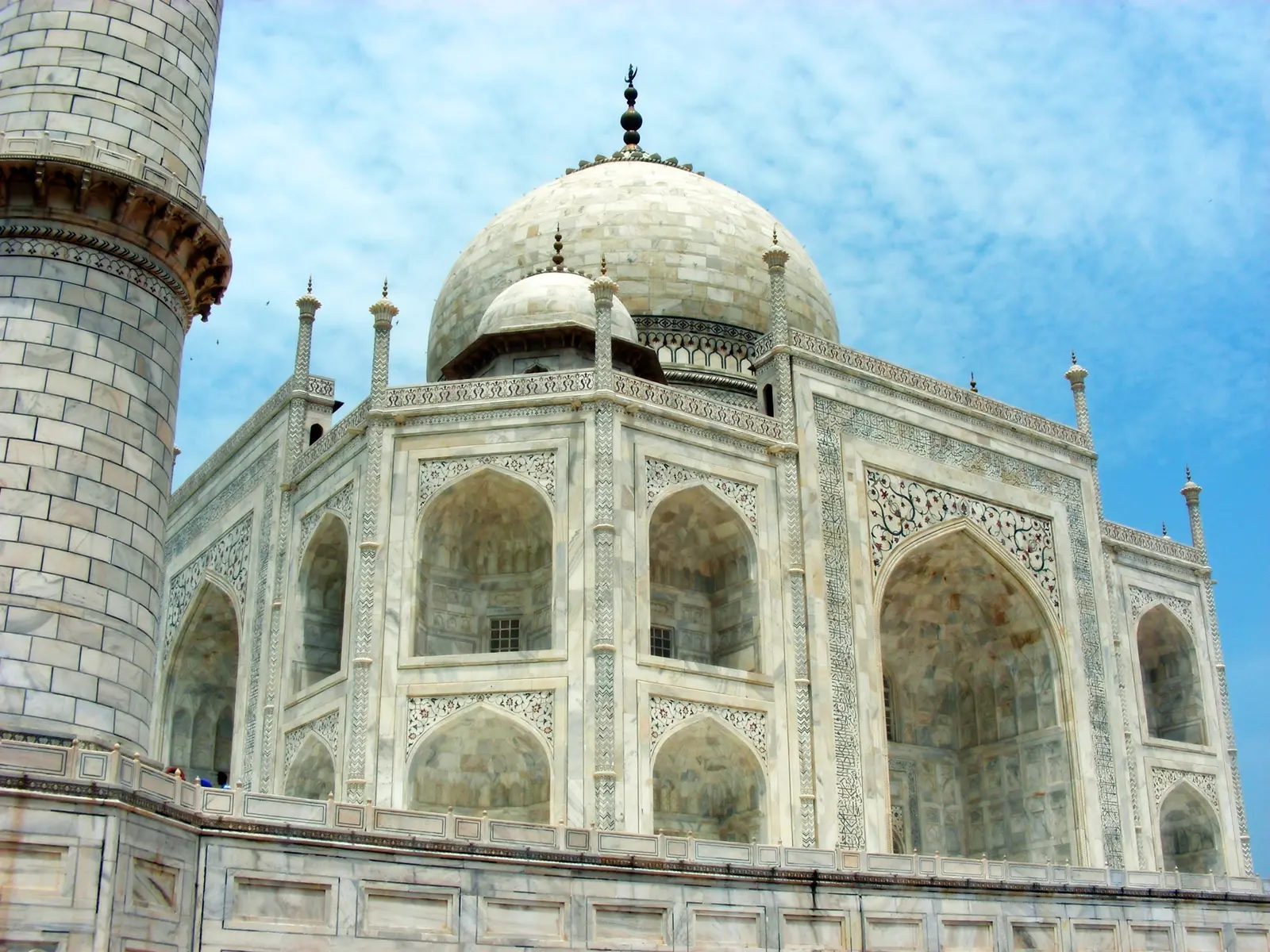
Where to Stay on the Golden Triangle: Delhi, Agra and Jaipur
Vrindavan and Mathura Day Trip from Delhi or Agra: Temples and Timings