Agra Beyond the Taj: The Fort, the Baby Taj and the Riverside View
The best things to do in Agra besides the Taj Mahal: Agra Fort, Itimad-ud-Daulah, Mehtab Bagh and Akbar's tomb, with a calm two-day plan.
The best things to do in Agra besides the Taj Mahal are not consolation prizes. Agra Fort is arguably as impressive as any fort in Rajasthan. Itimad-ud-Daulah is a jewel box of a tomb that many visitors prefer to the Taj for its intimacy. Mehtab Bagh gives the one view of the Taj you'll never get from inside its walls. Give Agra two days, not two hours, and it repays you.
Most Golden Triangle trips treat Agra as a quick stop. Our guide to how many days you need for the Golden Triangle explains why an extra night here changes the whole trip.
Agra Fort: the great red fortress
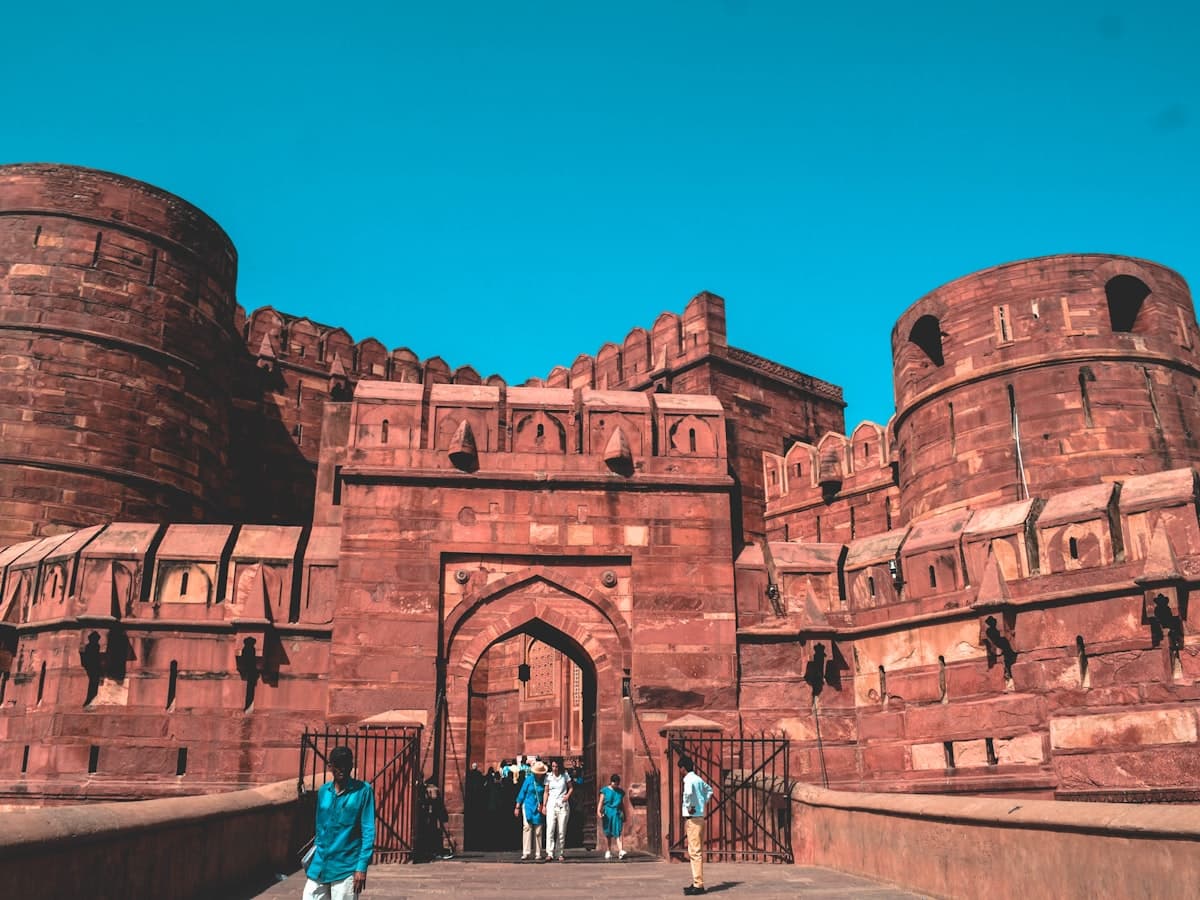
Agra Fort rises above the Yamuna river in a wall of red sandstone. The Mughal emperor Akbar began it in the 1500s, and his grandson Shah Jahan later added the white marble pavilions inside. It is a UNESCO World Heritage Site.
Inside, the fort is a small city. There are audience halls, private chambers, mosques, courtyards and terraces. The marble of Shah Jahan's buildings is fine as lace, and the views along the river are superb. A popular story holds that Shah Jahan spent his final years confined here, gazing across the water at the Taj Mahal he had built. Whether or not every detail is exact, the setting makes it feel true.
How to visit well: - Go in the morning, when the light is soft and the crowds thinner. - Allow two hours. The fort is large. - Hire a guide. The layout is confusing, and the stories bring it alive. - Wear comfortable shoes. There are ramps, steps and uneven stone.

Itimad-ud-Daulah: the "Baby Taj"
Across the river, in a garden on the east bank, stands one of Agra's most charming buildings. Itimad-ud-Daulah is a tomb built in the 1620s by the empress Nur Jahan for her father, a senior minister of the empire.
It is small, but exquisite. It was one of the first Mughal buildings to be made entirely of marble, and its walls are covered with inlaid stone in delicate patterns of flowers, vases and cypress trees. Many say it foreshadows the Taj. It is often called the Baby Taj, though it has its own character.
It's also blissfully quiet compared with the Taj. Allow an hour, and linger in the garden.
Mehtab Bagh: the view across the river
Mehtab Bagh is a garden on the opposite bank of the Yamuna, directly facing the Taj Mahal. From here, you see the monument from behind, across the water, with no crowd between you and it.
It's especially lovely at sunset, when the marble turns gold and pink. Our guide to the Taj Mahal at sunrise or sunset explains how the two views complement each other. Many guests visit the Taj itself at sunrise, then return to Mehtab Bagh at sunset for the second look.
Akbar's Tomb, Sikandra
On the northern edge of Agra stands the tomb of Akbar, the great Mughal emperor. It sits in a large garden, with a grand red sandstone gateway and a tiered tomb of sandstone and marble. Deer sometimes graze on the lawns.
It has a different feel from Shah Jahan's marble monuments: bolder, more geometric and less polished. Combined with Fatehpur Sikri, Akbar's abandoned capital, it tells the story of his reign. Our guide to Fatehpur Sikri on the road from Agra to Jaipur covers that stop in detail.
A calm two-day plan
Day one. Arrive in the morning. Visit Agra Fort while the light is soft, then rest at midday. In the late afternoon, cross the river to Itimad-ud-Daulah, and end at Mehtab Bagh for sunset.
Day two. Rise early for the Taj Mahal at opening, before the crowds. Return to your hotel for breakfast and a rest. Late morning, visit Akbar's Tomb at Sikandra, then depart for Fatehpur Sikri and Jaipur, or take a slower afternoon in the old market.
This rhythm avoids the worst heat and the biggest crowds. It also gives you time to notice things, which is what makes Agra memorable.
Where to stay
Book a hotel that lets you see the Taj from your room or terrace if you can. The Oberoi Amarvilas is famous for its views and its scale, and every room faces the monument. ITC Mughal is a large, garden-set hotel with Mughal-inspired design and a range of restaurants.
When to go
October to March is the pleasant season for sightseeing. Winter mornings can be foggy, which sometimes hides the Taj at sunrise, so allow flexibility. Summer is very hot in the middle of the day. Plan early starts and long midday rests if you travel then.
Building it into a journey
Agra fits naturally into the Golden Triangle. Our Agra and Fatehpur Sikri itinerary gives it three unhurried days, and the Agra and Fatehpur Sikri package wraps it with private guiding. Photographers may prefer the Agra for photographers journey, which is timed around the best light.
Reading the Mughal story in Agra
Agra rewards a little background. Three emperors shaped what you'll see. Akbar built the fort and the vision of an empire that mixed Persian, Indian and Central Asian ideas. Jahangir, his son, and his wife Nur Jahan brought a taste for refined decoration, of which Itimad-ud-Daulah is the best example. Shah Jahan gave the city its marble: the pavilions inside the fort and, of course, the Taj Mahal.
Seeing the monuments in that order tells you a story about how taste changed over a century, from red sandstone strength to white marble delicacy. A good guide will draw those threads together, which is one reason we do not recommend a rushed day.
The old city and the market
Agra is more than monuments. The old quarter, near the Jama Masjid, is a maze of small lanes, workshops and food stalls. Agra is known for its marble inlay work, in which craftsmen cut tiny pieces of coloured stone and set them into marble in the same technique used on the Taj. Some workshops are descendants of those who worked on the monument.
Visit one with a trusted guide, watch the work and compare pieces. Buy only what you love, and avoid places that pressure you. Agra is also known for its leather goods and for petha, a translucent sweet made from ash gourd, which makes an easy gift.
What to know before you go
Dress modestly at religious sites, and cover shoulders and knees.
Book your Taj slot in advance and check which weekday it closes. It is usually closed on Fridays for prayer.
Expect security checks at the Taj and some other monuments. Large bags may be restricted.
Carry water and sun protection. Agra gets very hot in summer.
Be firm and polite with touts around monuments. Your guide handles these.
Frequently asked questions
How many days do I need in Agra?
Two days is ideal. One day covers the Taj and the fort, but it's a rush.
Is Agra Fort worth visiting?
Yes. It's one of the most impressive forts in India and easily as rewarding as the Taj for many guests.
Which is better, Mehtab Bagh or the Taj at sunset?
They're different. The Taj is up close and detailed. Mehtab Bagh is a distant, peaceful view. Doing both is best.
Can I do Agra as a day trip from Delhi?
Yes, but a night in Agra is far more rewarding. Read our two-day Delhi guide to plan the start of your trip.
Start planning
Explore the Golden Triangle, or talk to a trip designer about giving Agra the time it deserves.
Read Next
All Stories →
Two Days in Delhi: Tombs, Monuments and Where to Slow Down
Old Delhi Through Its Food: A First-Timer's Walking Guide