Hawa Mahal, Jaipur: Timings, Tickets and Where to Stand for the Photograph
Hawa Mahal guide: opening hours, ticket prices, why the entrance is at the back, the five floors, the best morning light and how to pair it with City Palace.
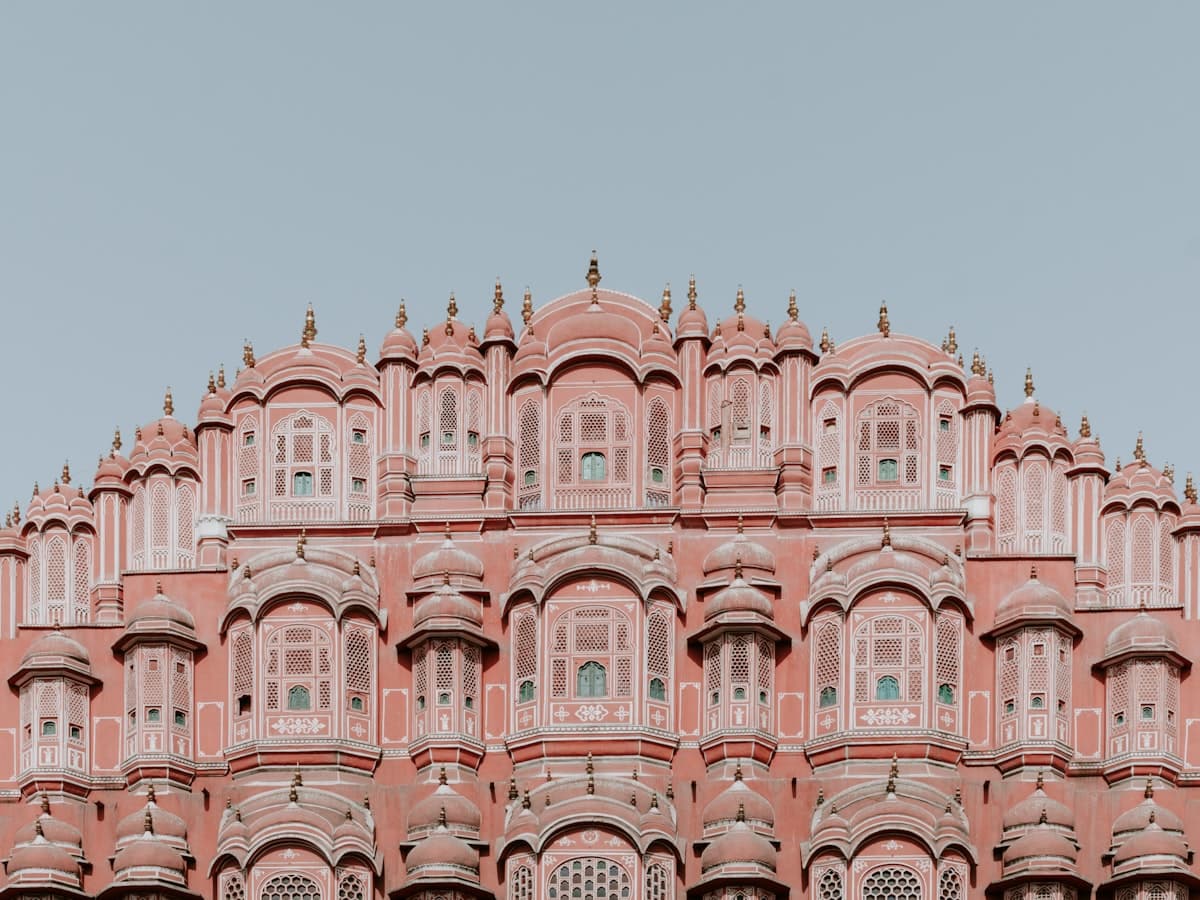
Hawa Mahal is the face of Jaipur. Five storeys of pink and red sandstone rise above a busy street, pierced by 953 small windows. Most people photograph it from the road and move on.
That is half the story. The building is a screen, not a palace, and the best part is behind it. This guide gives you the practical facts first, then a short walk through the five floors, then the best place to stand for the picture.
Figures were checked in October 2026. Sources disagree on ticket prices, so the tables show ranges where they do. Confirm at the counter.
Hawa Mahal at a glance
What to know | |
|---|---|
Where | Badi Chaupar, on the edge of Jaipur's old city, beside the City Palace |
Hours | Daily, about 9:00 am to 4:30 or 5:00 pm. Sources differ by 30 minutes |
Time to allow | 45 minutes to 1 hour inside. Add time for the street view |
Best hour | Early morning. The front faces east and the stone glows after sunrise |
Best season | October to March |
Built | 1799, under Maharaja Sawai Pratap Singh |
Architect | Lal Chand Ustad |
Windows | 953 small windows, called jharokhas |
Entrance | At the back, not on the main road |
A short history
Maharaja Sawai Pratap Singh built Hawa Mahal in 1799 as an extension of the City Palace. The architect was Lal Chand Ustad. The purpose was practical. Royal women kept purdah and could not appear in public. The screen of windows let them watch street festivals and processions without being seen.
The design is clever as well as pretty. Air passes through the many small openings and cools the rooms behind, which is how the Palace of Winds got its name. The style mixes Rajput domes and canopies with Mughal arches and lattice work.

The east facade from across the road.
Opening hours and tickets
Place | Hours | Notes |
|---|---|---|
Hawa Mahal interior | About 9:00 am to 4:30 or 5:00 pm | Open daily |
The street view from Badi Chaupar | Any time | Free. Best at sunrise |
Ticket | Indian visitors | Foreign visitors |
|---|---|---|
Hawa Mahal entry | About ₹50 | About ₹200 |
Composite ticket | About ₹100 | About ₹300 |
The composite ticket covers several Jaipur monuments over two days. Older websites quote much lower prices, and Rajasthan revised its rates in 2026, so treat the numbers as a guide. The Department of Archaeology and Museums, Rajasthan, sets them.
Finding the entrance
This is where most visitors get lost. There is no door on the main road. Facing the front, you walk round to the side and follow a lane to an archway that leads to the back of the building. Several sources describe the approach as coming from the City Palace side.
Tell your driver you want the ticket entrance at the back, or have your guide meet you at the ticket window. It saves ten minutes of wandering.
The five floors
Each floor is a small pavilion with its own name. Together they climb the facade.
Floor | Name | What to notice |
|---|---|---|
First | Sharad Mandir | A courtyard with a fountain |
Second | Ratan Mandir | Coloured glass and inlay |
Third | Vichitra Mandir | A small gallery of stone and light |
Fourth | Prakash Mandir | Open to the air and the street |
Fifth | Hawa Mandir | The top level, with the long view across the old city |
There are no grand rooms. The pleasure is in the ramps, the narrow stairs and the way the light falls through the lattice. A small museum holds miniatures and relics.
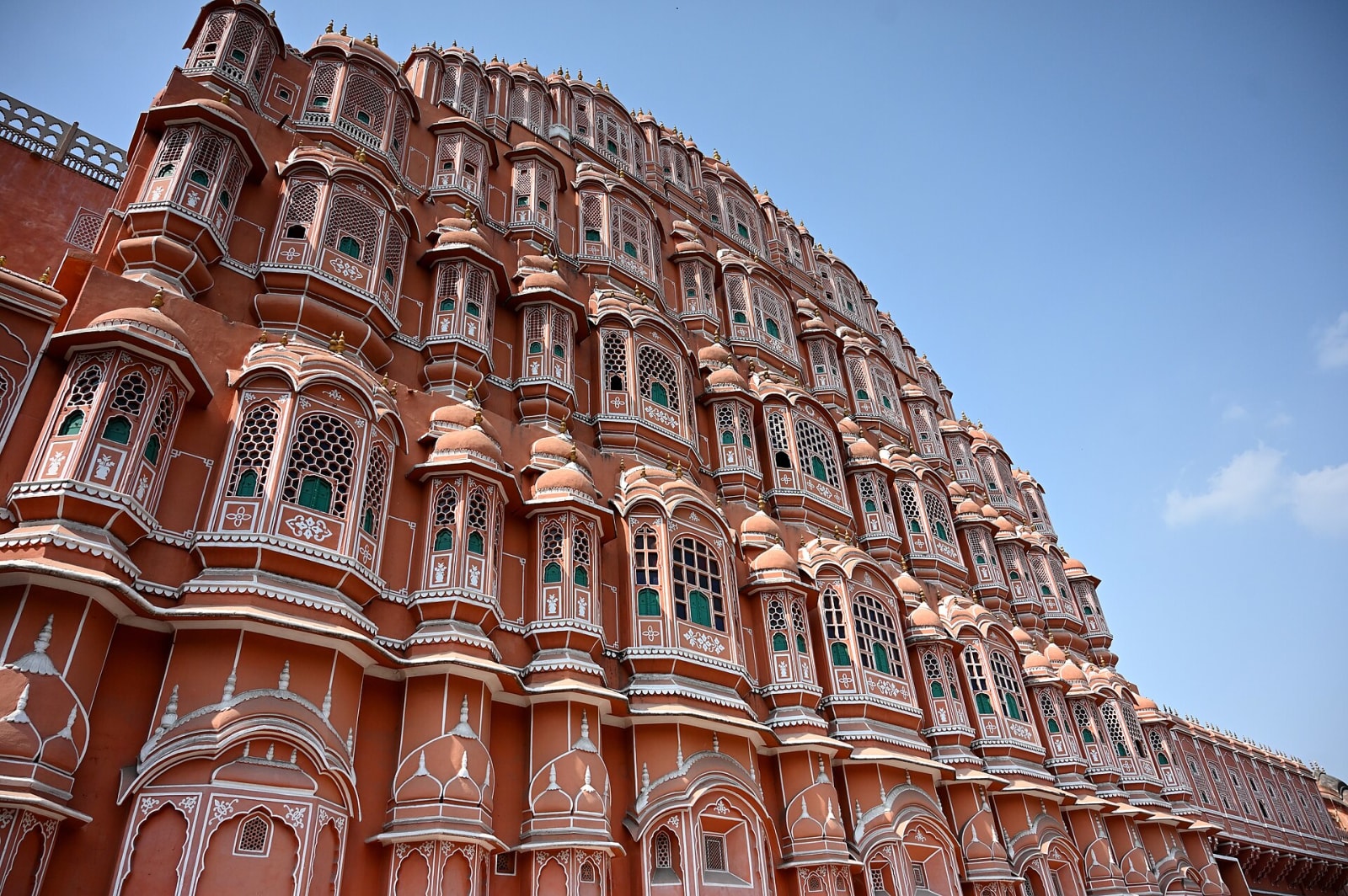
The jharokha windows, seen from close to the wall.
Where to stand for the photograph
The facade is best seen from across the road. Several cafes on the opposite side have rooftop tables with a straight view. Go for sunrise, order a coffee and wait for the first light to reach the top floor.
Photographers should note that the street fills with traffic by about 9:30 am. Arrive early, and shoot the building before you enter it.
Best timing by month
The facade faces east, so the light is best from sunrise to mid-morning. Sunrise and sunset below are calculated for Jaipur on the 15th of each month, in Indian Standard Time. The interior opens at about 9:00 am, well after sunrise, so the street view and the interior need separate plans.
Month | Sunrise | Sunset | Visiting advice |
|---|---|---|---|
January | 7:16 am | 5:53 pm | Cold, hazy dawns. Street view from 8:00 am, interior at opening |
February | 7:03 am | 6:18 pm | Excellent. Clear and mild |
March | 6:37 am | 6:35 pm | Very good. Warm by late morning |
April | 6:03 am | 6:50 pm | Hot. Photograph at sunrise, go in at 9:00 am, finish by 11:00 am |
May | 5:39 am | 7:06 pm | Very hot. Sunrise only |
June | 5:32 am | 7:21 pm | Hot and dry. Sunrise only |
July | 5:41 am | 7:23 pm | Monsoon. Dramatic skies, showers |
August | 5:57 am | 7:05 pm | Monsoon. Fewer visitors, damp stone |
September | 6:11 am | 6:32 pm | Warm, clearing |
October | 6:25 am | 5:59 pm | Festival season. Book rooftop tables early |
November | 6:46 am | 5:36 pm | Excellent. Clear light |
December | 7:07 am | 5:35 pm | Peak season. Cool, some haze |
Choosing your time of day
Time | What you get | Best for |
|---|---|---|
Sunrise to 8:30 am | Warm light on the facade, almost no traffic | Photographers |
9:00 am | Interior opens, short queues | First-timers |
Midday | Flat light, heat, tour groups | Skip, except in winter |
Late afternoon | The facade is in shade, but the street is lively | Atmosphere rather than pictures |
Who Hawa Mahal suits
Traveller | Why it works | Tip |
|---|---|---|
First-time visitors | The icon of Jaipur in under an hour | Go at opening |
Photographers | Warm stone in low light | Rooftop cafe at sunrise |
Families | Short, easy, interesting for children | Keep it to an hour |
History readers | A clear window onto life in the zenana | Add the City Palace |
Couples | A quiet cafe breakfast with a view | Book the rooftop table the evening before |
What to pair it with
Hawa Mahal sits in the old city, next to several of Jaipur's best stops.
City Palace is a short walk away. Part of it is still a royal residence.
Jantar Mantar, the eighteenth-century open-air observatory, is next door.
Amber Fort is the grand hill fort outside the city. Read our Amber Fort visitor guide to plan it.
Johari and Bapu Bazaars run close by, selling textiles, jewellery and mojari shoes. See our guide to the crafts and textiles trail.
How to plan your visit
Go for sunrise to see the facade at its best.
Have breakfast across the road and take your photographs first.
Walk round to the rear entrance for the interior at about 9:00 am.
Buy a composite ticket if you plan to see two or three more monuments.
Add the City Palace in the same morning, as it is close.
Keep the afternoon for the bazaars or a rest.
Where it fits in Rajasthan
Jaipur is usually the first Rajasthan stop. Our guide to the order of Jaipur, Jodhpur and Udaipur explains how to link the cities, and the Rajasthan highlights field guide puts Jaipur in context.
For a stay with a real sense of occasion, Rambagh Palace was once a maharaja's residence. See how Jaipur sits in a route in the Rajasthan Golden Cities, 4 days itinerary or the Rajasthan Royal Heritage package.
Frequently asked questions
What are the Hawa Mahal timings?
Daily, from about 9:00 am to 4:30 or 5:00 pm. Sources differ slightly, so confirm on the day.
How much is the Hawa Mahal ticket?
About ₹50 for Indian visitors and about ₹200 for foreign visitors. Older sources quote lower figures. A composite ticket covers several Jaipur monuments for two days.
Where is the entrance to Hawa Mahal?
At the back, reached by a lane and an archway from the City Palace side. There is no entry from the main road.
What is the best time to see Hawa Mahal?
Early morning. The front faces east, so the stone glows in the first hours after sunrise, and the street is quieter.
Why does it have 953 windows?
The windows let royal women watch the street without being seen, and they let air flow through the building to cool it.
How long does Hawa Mahal take?
About an hour inside. Allow more if you stop for breakfast or photographs across the road.
Can you go to the top?
Yes. The fifth floor, Hawa Mandir, is open and has a view across the old city.
Plan your Jaipur visit with us
We time Jaipur mornings around the light and the crowds. Explore the Rajasthan destination page or talk to a trip designer.
Photo credits
East facade: Chainwit., CC BY-SA 4.0. Jharokha windows: Wander-earth, CC BY-SA 4.0. Both via Wikimedia Commons.
Journeys for this trip
Plan your Rajasthan trip
Read Next
All Stories →
Udaipur with Kids: A Family Guide to the City of Lakes
Udaipur to Jodhpur: Distance, Time by Road and Train