
Govind Dev Ji Temple, Jaipur: Darshan Timings and Aarti Schedule
Govind Dev Ji Temple, Jaipur: darshan timings, the seven daily aartis, best time to go, what to wear, entry and how to combine it with the City Palace.
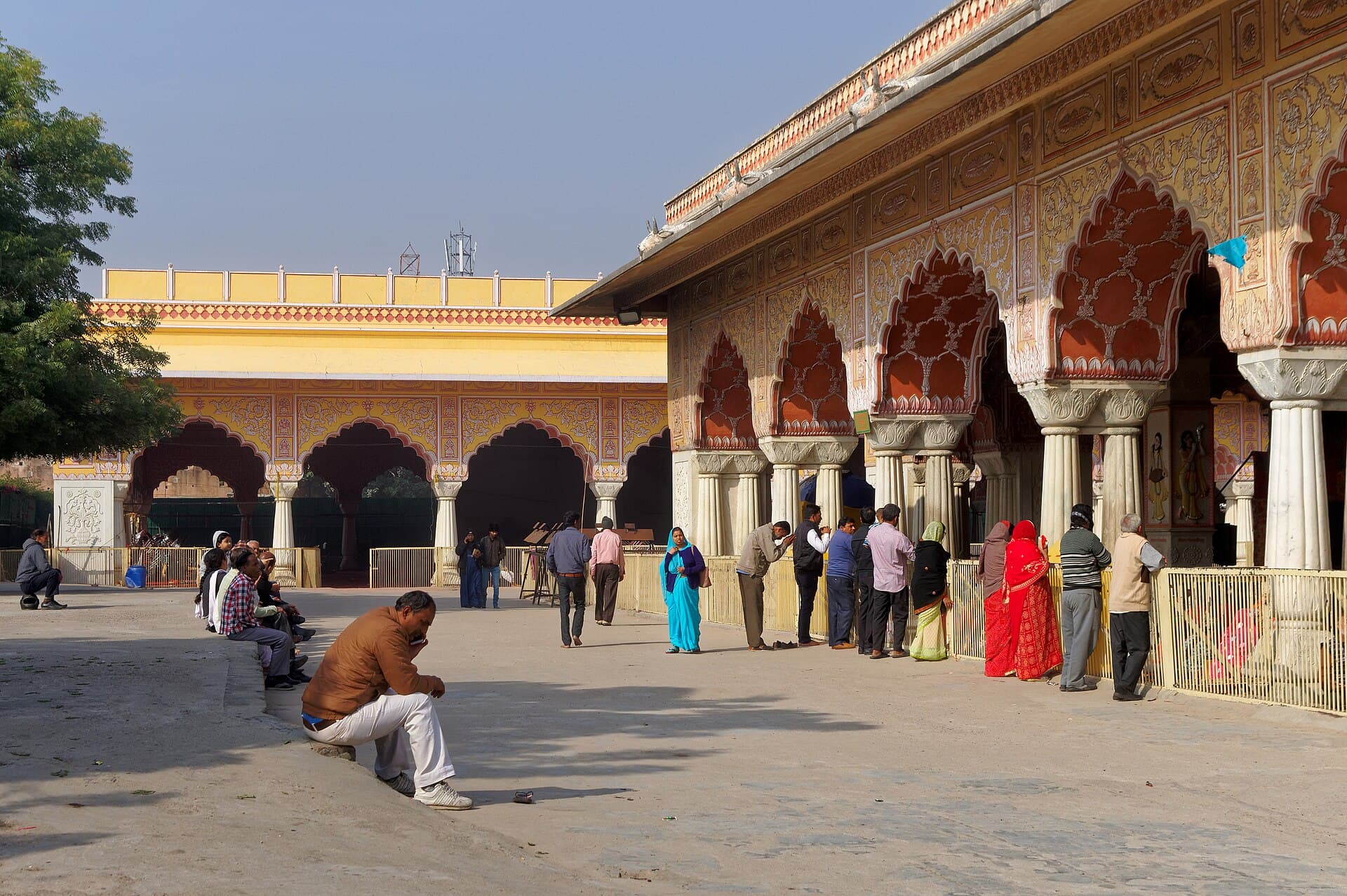
Govind Dev Ji is the temple Jaipur actually prays at. Hawa Mahal gets the photographs, but at dawn and again at dusk it is this temple, inside the City Palace grounds, that fills with people.
That is why the most common question about it is a practical one: when does it open, and when is the aarti? This guide answers that first, then explains what you are seeing and how to fit it into a Jaipur day.

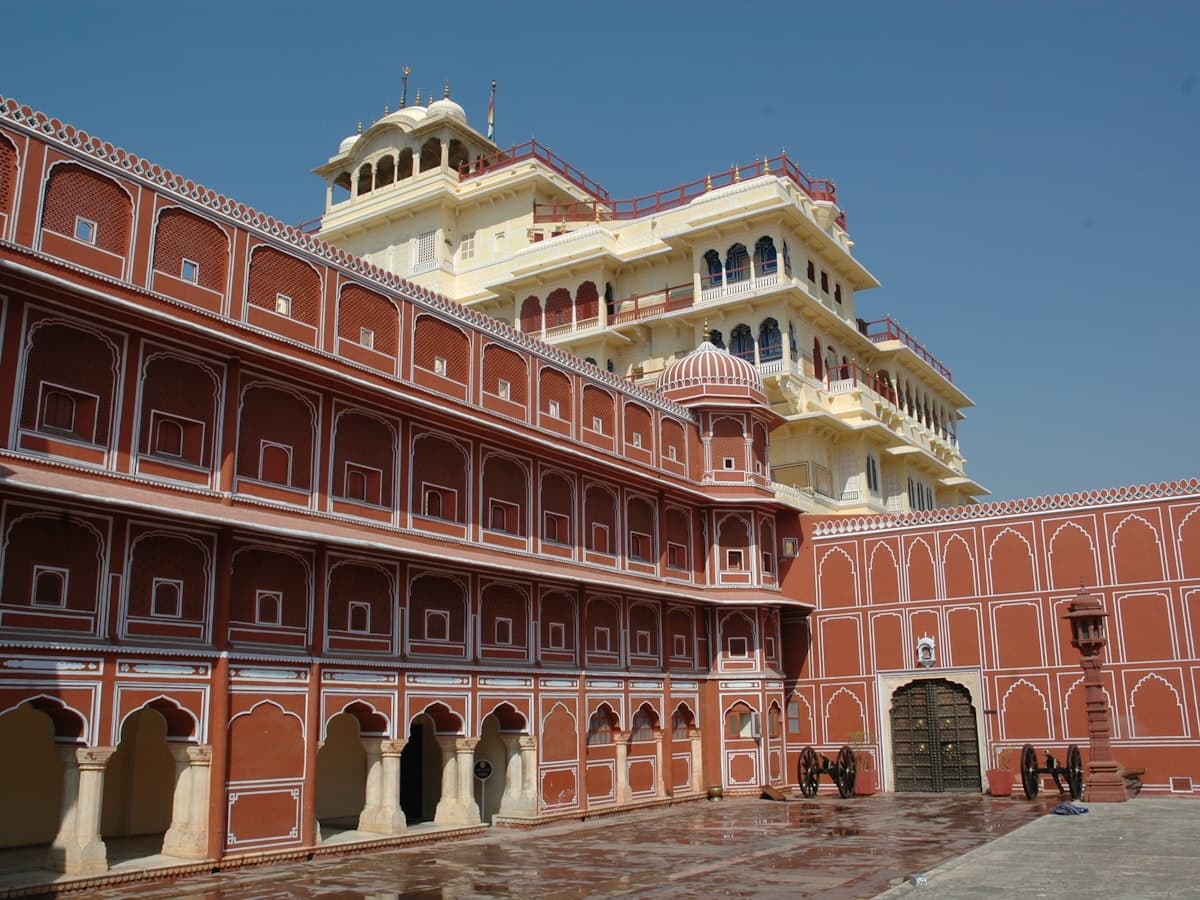
The arcaded front of the temple.
At a glance | |
|---|---|
Where | Inside the City Palace complex, in the Jai Niwas Garden, Jaipur |
Deity | Krishna, as Govind Dev Ji, with Radha |
Entry | Free |
Darshan | Roughly 4:30 am to noon and 5 pm to 9 pm; it changes by season |
Best time | Sandhya aarti in the evening, or the early morning aartis |
Time to allow | 45 minutes to 1 hour, longer on festival days |
Darshan timings and the seven aartis
Darshan here is not continuous. The deity is shown in seven short windows through the day, each with its own aarti and its own mood. Between them the curtain is drawn and the doors are closed.
The schedule is seasonal. In winter the first darshan is a little later and the last ends earlier. In summer the whole day shifts earlier. Sources do not agree on exact minutes, so treat the table as the usual pattern and confirm the day's timings at the temple or with your hotel.
Darshan | Name | Approximate time |
|---|---|---|
1 | Mangala | Around 4:30 to 5:00 am |
2 | Dhoop | Around 7:45 to 9:00 am |
3 | Shringar | Around 9:30 to 10:15 am |
4 | Rajbhog | Around 11:00 am to noon |
5 | Gwal | Around 5:30 to 6:00 pm |
6 | Sandhya | Around 6:30 to 7:30 pm |
7 | Shayan | Around 8:30 to 9:00 pm |
There is a long break in the afternoon, so if you arrive at 1 pm you will find the temple closed. Plan your visit around a window, not around "opening time".
What to see, and why it matters
The temple is a Krishna temple of the Vaishnava tradition, and its image has an unusual story. The deity is said to have been brought to Jaipur from Vrindavan in the early eighteenth century by Maharaja Sawai Jai Singh II, to keep it safe at a time when temples in the Braj region were under threat. Jai Singh then declared himself the deity's divan, or steward, and ran the state in its name. That claim of service, not kingship, is part of why the temple is so central to the city.
The temple sits where the royal family's private garden once was. The main hall is long and pillared, and it is built so that the deity can be seen from the open garden. Many worshippers stand outside in the garden rather than inside the hall.
The Sandhya aarti is the most atmospheric. The hall fills, the bells and conch begin, and the crowd presses forward to the open curtain. It is loud, warm and quite moving. The Mangala aarti before dawn is quieter and more devotional, and many Jaipur families start the day with it.
What to wear and how to behave
This is a working temple, not a monument, so dress as you would for one.
Cover shoulders and knees.
Remove footwear at the entrance. Cloth or socks are fine, and there is a shoe stand.
Photography and phones are restricted inside the sanctum hall. Carry only what you need.
Expect to stand. The hall is crowded at the main aartis.
Offerings of flowers and sweets are sold outside.
You do not need to be a devotee to go in. Visitors are welcome so long as they are respectful and quiet.
How to reach it
The temple is in the City Palace complex in the old city, on the north side of the palace, close to the City Palace museum and the Chandra Mahal. From most central hotels it is 10 to 20 minutes by car. Parking in the old city is difficult, so a driver or auto is easier than driving yourself.
You can walk in from the garden side without a City Palace ticket. The museum, in contrast, is ticketed and you have to pay if you want the palace itself.
Fitting it into a Jaipur day
The evening aarti is the natural close to a day in the old city.
Visit the Hawa Mahal in the morning light.
Spend the middle of the day at the City Palace and Jantar Mantar.
Drive up to Nahargarh for the view, or keep Govind Dev Ji for the end of the afternoon.
Arrive 30 to 40 minutes before the Sandhya aarti so you can find a place.
If you visit before dawn for the Mangala aarti, you can combine it with a quiet walk in the old city and breakfast, then the forts as the day warms.
For the fort side of the city, our Amber Fort guide and the Nahargarh sunset guide cover the ridge, and the Rajasthan destination page shows the wider circuit.
Frequently asked questions
What are the Govind Dev Ji temple timings?
The darshan windows run roughly from 4:30 am to noon and from 5 pm to 9 pm, with a long afternoon break. The exact minutes change by season, so confirm on the day.
What is the best aarti to attend?
The Sandhya aarti in the early evening is the most atmospheric and the most crowded. The Mangala aarti before dawn is the quietest.
Is there an entry fee?
No. Entry to the temple is free. The City Palace museum next door is ticketed.
How long does a visit take?
Plan 45 minutes to an hour for one darshan. Add time for queues on festival days.
Can foreigners enter the temple?
Visitors of all backgrounds are generally welcome in the temple hall and garden. Dress modestly and follow the rules about footwear and phones.
When is it busiest?
Festival days, above all Janmashtami and the weeks around Holi, bring very large crowds. Weekday mornings are the calmest.
Plan your Jaipur days with us
We schedule the old city around the aartis, with a driver who knows the lanes. Explore the Rajasthan destination page or talk to a trip designer.
Photo credits
Front of the temple: Jakub Hałun, CC BY-SA 4.0, via Wikimedia Commons.
Journeys for this trip
Plan your Rajasthan trip
Read Next
All Stories →
Rajasthan in December: Weather, Fog and Desert Nights
City Palace Jaipur: Tickets, Timings and What to See