Getting Around India: Trains, Flights or a Private Car?
How to travel around India: when to fly, when to take a train and when a private car with driver is best. Real trade-offs for first-time visitors.
How to travel around India is a question with three honest answers: fly, take a train, or hire a car with a driver. Each one works well in the right place and badly in the wrong one. India is large, distances are deceptive, and roads can be slow. Choosing the right mode for each leg of your trip does more for comfort than choosing the right hotel.
This guide sets out how each option really works, and which we recommend for which kind of journey.
First, a reality check on distances
A map of India can mislead. A 300-kilometre journey may take five hours on a good road and eight on a poor one. Traffic, level crossings, cattle and road works all add time. As a rough rule, plan for an average speed of well under 60 kilometres an hour on most roads, and less in hills.
This is why the choice of transport shapes how much you can enjoy. A route that looks easy on paper can eat a whole day.
Flying: best for long distances
Internal flights are fast, and India has a broad domestic network with many daily services between major cities. For journeys of more than about six hours by road, flying often makes sense.
Good for: - Long hops between regions, such as Delhi to Kerala or Mumbai to the Andamans - Reaching remote places, such as Leh - Saving days on a tight schedule
Watch for: - Baggage limits. Domestic airlines often have tighter weight limits than international ones. - Delays. Fog in winter can disrupt flights in the north. Build in slack. - Airport time. Add check-in and transfers to the flight time.
Book early for popular routes, and allow generous connection times.
Trains: an experience, in the right place
India's railway network is one of the largest in the world, and a train journey is a memorable slice of life. Modern express and premium services on busy corridors are comfortable and quick.
Good for: - Short and medium journeys on well-served routes, such as parts of the Golden Triangle - Travellers who enjoy the experience of a railway journey - Scenic lines, such as heritage mountain railways
Watch for: - Booking. Popular services sell out well ahead, and booking systems can be confusing for visitors. - Station logistics. Stations are busy, and luggage handling takes patience. - Comfort varies. Class and service differ widely, so choose premium classes for long trips. - Delays. Some services run late, especially in winter fog.
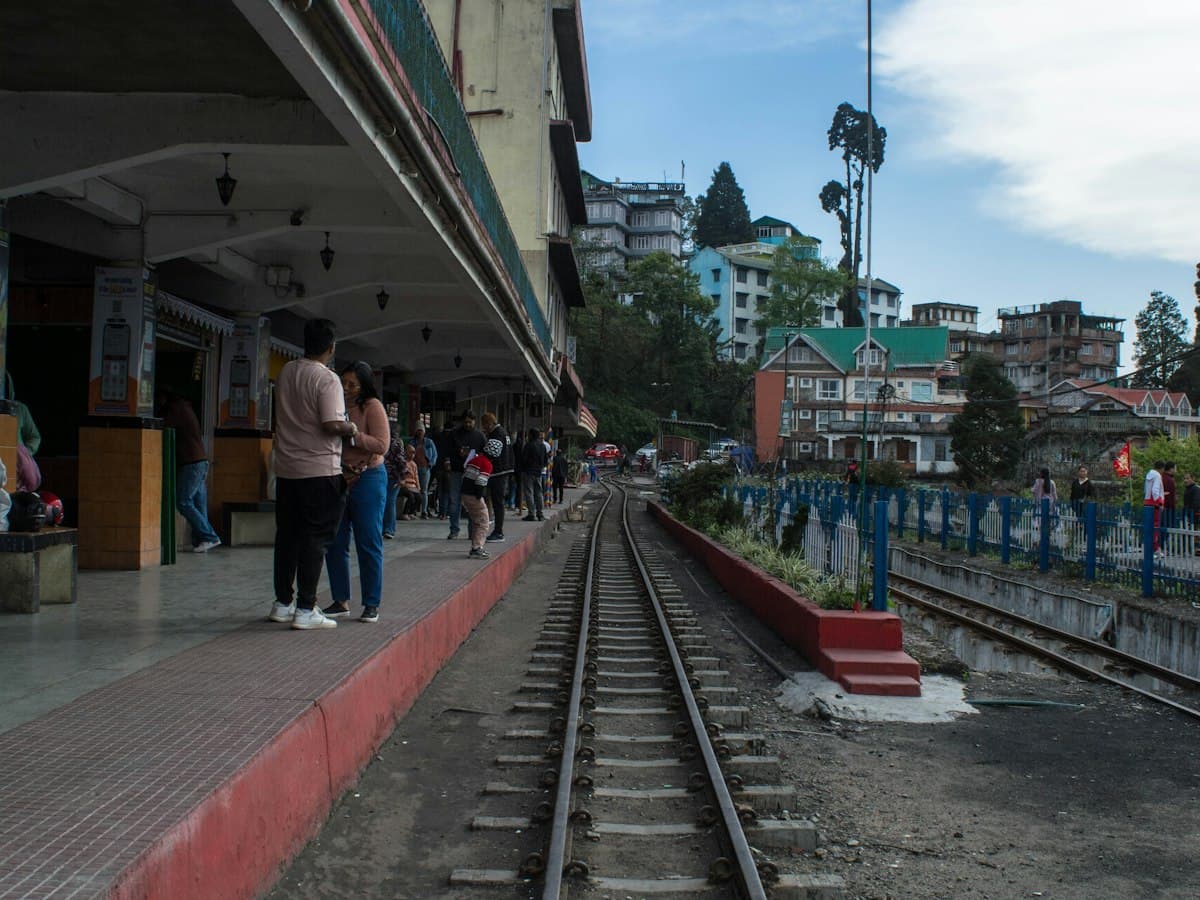
Our private trips use trains only where they clearly help. Heritage lines can be a highlight, such as the narrow-gauge toy trains of the hills. Those are short scenic rides, not a way of covering long distances.
Private car with driver: the flexible option
For most of our guests, a private car and driver is the backbone of the trip. It is not the cheapest option, but it is the most flexible.
Good for: - Short and medium distances between cities, forts and villages - Stopping when you like, for photographs, tea or a temple - Families and older travellers, who need comfort and rest - Reaching places trains and planes don't, such as remote palaces or safari lodges
Watch for: - Long days. A day of driving is tiring. Plan a stop every couple of hours. - Road conditions. In hills and during the monsoon, journeys can take longer. - Choose an experienced driver. Skill and calm matter more than speed.
A good driver also acts as a guide, translator and problem-solver. It is much easier to be relaxed in India when someone knows the roads.
Mixing modes: the best answer
The most sensible plans combine all three. A typical journey might fly into Delhi, drive the Golden Triangle, take a domestic flight to Kerala, and finish with a short drive between beaches and backwaters.
For a first trip, the mix could look like this:
Within a region: private car and driver
Between regions: a domestic flight
Special leg: a train ride, if it adds something you want
Our advice on the wider trip is in the first-trip planning checklist, and our comparison of private and group tours explains why flexibility matters so much.
Regional notes
Rajasthan: distances between cities are moderate, and roads are generally good. A car and driver is ideal. See our Rajasthan city-order guide.
Golden Triangle: the classic route is well suited to car travel, with a train an option between Delhi and Agra.
Kerala: roads wind and are slow. A car with driver suits the hills, and short boat legs suit the backwaters.
Andamans: ferries and short flights are the only options, as our guide to how many days in the Andamans explains.
The Himalaya: roads are slow and weather-dependent. Allow buffer days.
Practical tips for any journey
Keep luggage light. Domestic flights and trains reward small bags.
Carry water and snacks. Journeys are long, and stops can be far apart.
Start early. Roads are quieter in the morning.
Build in slack. Delays happen, and a spare day protects long-haul flights.
Tell your guide about motion sickness or back trouble. Routes and stops can be adjusted.
A sample first-trip route, and how it moves
To make this concrete, here is how one ten-day first trip might move.
Delhi to Agra: private car, around four hours, with a stop for lunch. See our two-day Delhi guide for the start.
Agra to Jaipur: private car, with a stop at Fatehpur Sikri on the way.
Jaipur to Udaipur: a longer day by car, or a short domestic flight if time is tight.
Udaipur to Kerala: a domestic flight, since the distance is far too long for a road trip.
Within Kerala: car for the hills, a short boat for the backwaters.
Kerala to home: a flight from Kochi.
Notice how the mix follows the distances. Nothing here is forced. Each leg uses the mode that saves the most time or adds the most comfort.
Comfort on the road
Long drives are easier with a few habits. Sit in the front if you tend to feel car-sick. Break the day with a proper stop, not just a quick roadside halt. Keep a light layer for air conditioning. And use the time. A long drive is often when you see rural India best: fields, festivals, roadside temples and markets you would never have found on a map.
Good drivers are proud of their craft. They know when to stop for tea, where the clean toilets are and how to keep a car cool. Treat yours as part of the team, and the journey improves.
What about self-driving or public buses?
We don't recommend self-driving for visitors. Traffic is unpredictable, road rules are followed loosely and breakdown help can be slow. Public buses are cheap and connect nearly everywhere, but they are crowded, slow and hard to navigate as a first-timer. A driver-plus-car is safer and easier, and a train or flight is better for long legs.
Frequently asked questions
Is it safe to travel by train in India?
Generally yes, in reserved premium classes, with usual care of your belongings. Your planner can advise on the best services for your route.
Should I book domestic flights myself?
You can, but a planner can time flights around your itinerary and hotel check-ins, which avoids costly mismatches.
Is a private driver expensive?
It costs more per person than public transport, but it is often good value for couples and families, thanks to the time it saves.
Can I mix a train and a car in one trip?
Yes. Many of our itineraries do exactly that.
Start planning
Tell us where you want to go, and we'll plan the transport around your pace. Talk to a trip designer and we'll build a route that suits you.
Read Next
All Stories →
Private Tour or Group Tour in India? An Honest Comparison
Eating Well in India Without Getting Ill: A Practical Guide