Places to Visit in Kerala: Backwaters, Hills, Coast and the Food Between
The best places to visit in Kerala: Kochi, backwaters, Munnar, Thekkady, Wayanad and the beaches, with who each suits, markets and food.
Kerala is a narrow strip of land between the Western Ghats and the Arabian Sea. In a few hours you can drive from tea hills to backwater lagoons to a beach. That compact geography is the whole appeal, and also the planning problem. There is so much within reach that it is easy to build a trip that is all driving and no stillness.
This guide walks Kerala from north to south, the way most journeys run. For each place you get what it is, who it suits, and what to do when you get there. After the places come the markets and the food, because in Kerala those are not extras.
Detailed guides for each major stop will follow in this Journal. We link the ones that already exist.
How to use this guide
Each stop carries a Best for note. Think of it as a nudge, not a rule.
Honeymooners and couples will want backwaters, a hill estate and a quiet beach.
Families do better with fewer, longer stays and a houseboat that moves slowly.
Wildlife and nature lovers should lean on Periyar, Wayanad and the Munnar highlands.
Culture and history readers will want Fort Kochi and its layered port.
Wellness travellers should pair a stay with an Ayurveda retreat, not a spa add-on.
If you are unsure when to travel, our month-by-month Kerala guide will settle it before you choose anything else.
Kochi and Fort Kochi: where Kerala meets the world
Most journeys begin in Kochi, and it rewards at least two nights. For a full plan, read our guide to two days in Fort Kochi.
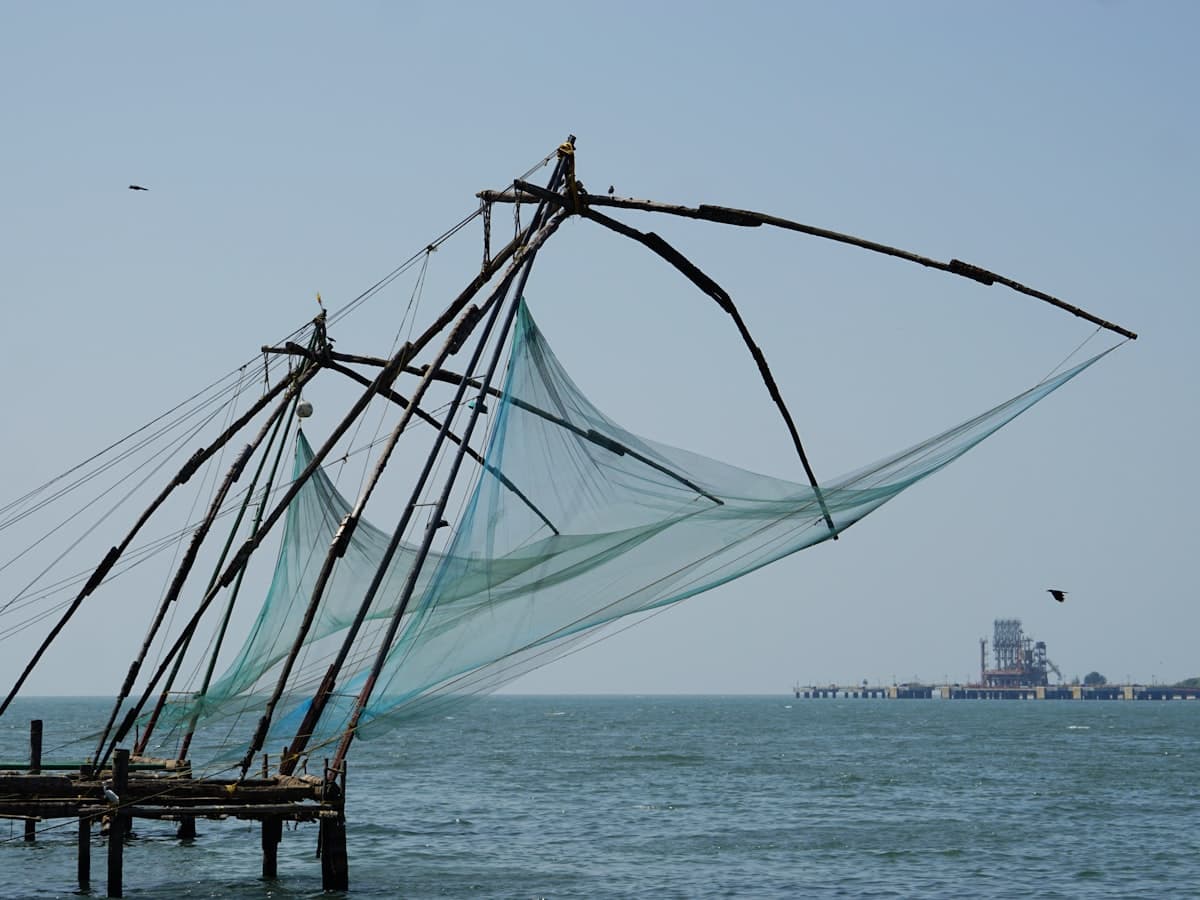
The Chinese fishing nets
The nets are enormous. They are timber frames the size of a small crane, counterweighted with rocks, dipped into the channel and hauled up by four men. They arrived through Kochi's old trade routes and they still work, though the catch is thin now. Come at high tide, when the crews are active. Ask before photographing closely, as some will want a tip, which is fair.
Best for: photographers, first-time visitors, families.
Mattancherry Palace and Jew Town
The Portuguese built Mattancherry Palace for the Raja of Kochi in the 1500s, and the Dutch remodelled it later, hence its other name, the Dutch Palace. From outside it is low, tiled and plain. Inside are the murals, and they are the reason to come. Ramayana scenes cover whole walls in earth pigments, still bright. Photography is banned in the mural rooms. Allow an hour.
A short walk away, Jew Town has spice warehouses, antique shops and the Paradesi Synagogue, one of the oldest in the Commonwealth. Santa Cruz Basilica and St Francis Church, nearby in Fort Kochi, add the Portuguese and early European layers.
Best for: culture and history readers, couples, anyone who likes to walk.
A Kathakali evening
Kathakali is Kerala's classical dance-drama, with elaborate make-up, costume and mime. Several centres in Fort Kochi let you watch the make-up being applied before the performance. It is a good introduction, and worth an evening.
Best for: first-time visitors, families with older children.
The backwaters: Alleppey, Kumarakom and Vembanad
The backwaters are a web of canals, rivers and lagoons that run behind the coast. They are the picture most people have of Kerala, and they live up to it.
Alleppey and Vembanad Lake
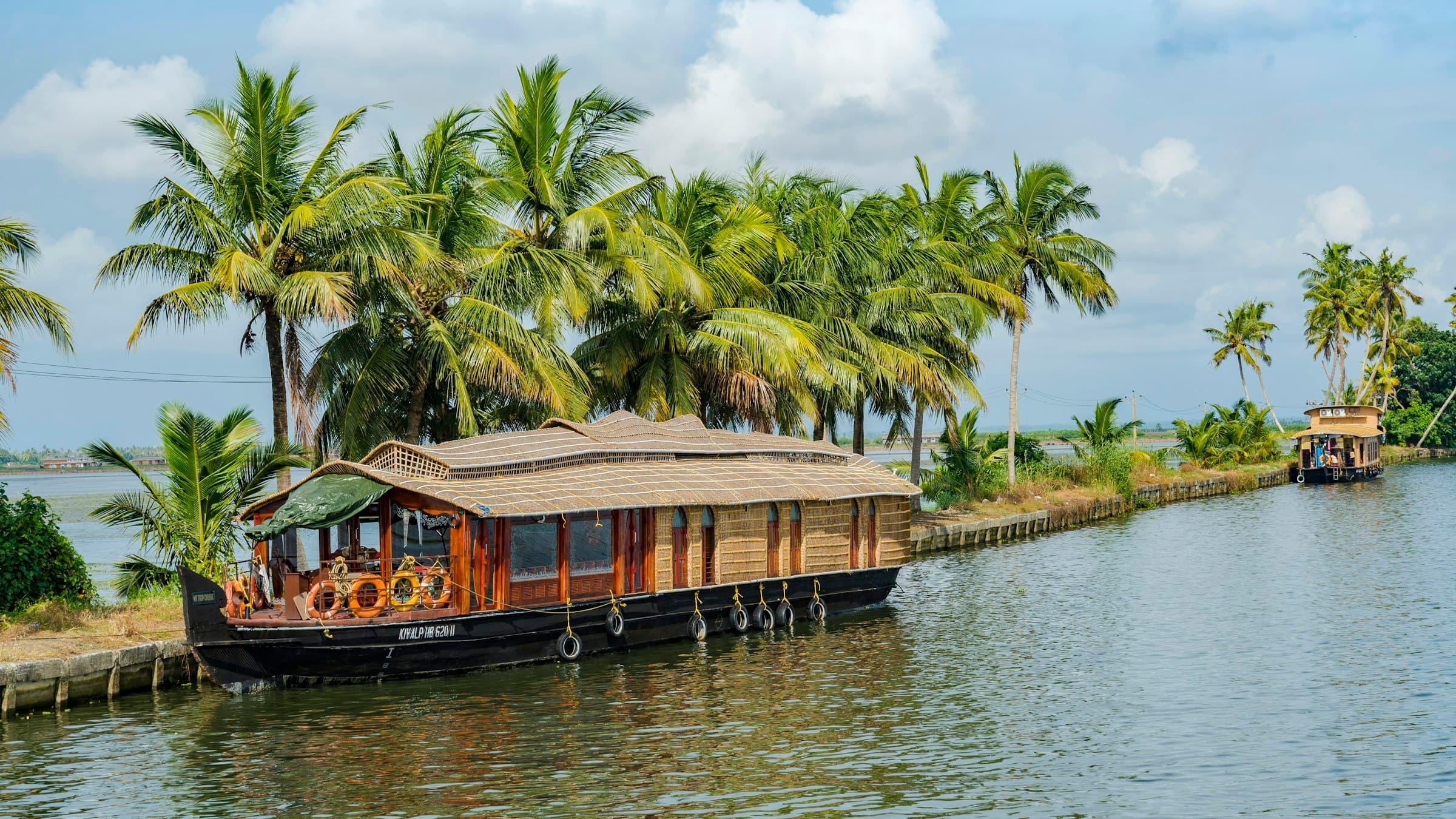
Vembanad runs about ninety kilometres down the coast, and every canal in the backwaters eventually meets it. It is brackish where it opens to the sea and fresh further in. Houseboats cross it, fishermen work it, and duck farmers move flocks along its edges. Late afternoon on open water is the best of it.
In Alleppey town, the beach is where locals go in the evening. A ruined pier from the 1860s runs out into the sea, and food carts line the sand. Swimming is not the point, as the surf can be rough. Come for sunset and the cheerful crowd.
Our guide to a night on a Kerala houseboat explains what the experience is really like and how to choose a boat.
Best for: couples, honeymooners, families, everyone.
Kumarakom Bird Sanctuary
The sanctuary was a rubber and coconut plantation before it was protected. It covers roughly fourteen acres on the lake shore. Egrets, night herons, darters and cormorants nest in the tangled trees. From November to March, migratory ducks and waders add to the count. A raised path and watchtowers keep visitors clear of the nests. Early morning is the time to come, before the heat sends the birds into the shade.
Kumarakom is also quieter and more resort-led than Alleppey, a good base if you want the backwaters without the traffic of boats.
Best for: birders, couples, travellers who prefer calm to crowds.
Munnar: tea hills and high grassland
Munnar sits at altitude, in a landscape of rolling tea estates, mist and cool air. It is a welcome change of temperature after the coast.
Eravikulam National Park
Eravikulam sits above 2,000 metres on rolling grassland broken by pockets of shola forest. The Nilgiri tahr lives here. It is a mountain goat found nowhere else, and unusually unbothered by people. Anamudi, the highest peak in south India, is inside the park. Buses run visitors up to the Rajamalai zone. The park shuts for calving, usually February to March, so check before you plan around it.
Best for: nature lovers, walkers, photographers.
Mattupetty Dam and the tea estates
Mattupetty holds back a narrow lake between hills planted with tea. Boats run on it, from pedal boats to slow government launches. Elephants sometimes come down to drink on the far side, though you need luck and an early start. The best of Munnar, though, is a stay on a working estate, where the day is walks, tea and quiet.
Our guide to staying on a Munnar tea estate covers how to choose one. Other viewpoints and a tea museum round out a day or two.
Best for: couples, families, anyone who wants cool air and slow mornings.
Thekkady: Periyar and the spice hills
Thekkady is the gateway to Periyar and the Cardamom Hills, the heart of Kerala's spice country.
Periyar Tiger Reserve
Periyar is built around a reservoir made in 1895, which drowned a valley of forest. The dead trunks still stand in the water, and that is what makes the place look like nowhere else. Elephants, gaur, sambar and wild dog are common. Tigers are here and rarely seen. Options range from a lake boat to a guided trek led by a former poacher, part of the reserve's own conservation scheme.
Our guide to Periyar by boat, trek or both helps you choose.
Best for: wildlife lovers, families, walkers.
Kumily spice market and plantation walks
Kumily is where the spice from the surrounding hills is bought and sold. You will find cardamom, pepper, clove, nutmeg, cinnamon bark and vanilla pods. Shops let you smell and taste before you buy, and the good ones tell you which grade you are looking at. Prices are far below city rates. Buy whole, not ground, since ground spice is often cut with something cheaper. A guided plantation walk shows you each plant growing.
Best for: food lovers, families, shoppers.
Wayanad: forest, peaks and a quiet north
Wayanad is the part of Kerala most visitors miss. It is green, high and much less crowded than Munnar.
Wayanad Wildlife Sanctuary
The sanctuary was set aside in 1973. It has two gates for visitors, Muthanga in the south and Tholpetty in the north. It runs straight into Nagarhole and Bandipur across the state line, so animals move across a very large block of protected land. Elephant, gaur, sambar and spotted deer are the usual sightings. Tigers and leopards are here but rarely seen. Jeep safaris run in the early morning and late afternoon, in small numbers, and must be booked through the forest department.
Best for: wildlife lovers, photographers.
Chembra Peak and Banasura Sagar
Chembra is the tallest point in Wayanad, a little over 2,100 metres. The walk starts from a tea estate near Meppadi, and about halfway up is a small heart-shaped tarn that the trail is named for. The forest department caps the number of climbers each day and requires a local guide, and the summit is often closed in the monsoon and fire season.
Banasura Sagar is the largest earthen dam in India. When the reservoir filled, it drowned the lower ground and left the hilltops standing as islands. Boats run out among them. The setting, not the engineering, is the reason to come.
Edakkal Caves, with their ancient rock carvings, are another good half-day.
Best for: active travellers, nature lovers, travellers on a second Kerala trip.
The coast: Varkala and Kovalam
Kerala ends well, with a beach. The two main choices feel quite different, and our guide to Varkala or Kovalam helps you pick.
Varkala Cliff
The cliff runs for about two kilometres above the beach. It is red laterite, layered and crumbling, and it has been declared a National Geological Monument. Fresh water seeps from the rock and runs down onto the sand. A paved path follows the cliff edge, lined with cafes and shops, and stairways drop to the beach. Sunset is the busy hour up top. The beach below, Papanasam, is used both for swimming and for funeral rites, so a stretch of it stays quiet by custom.
Best for: couples, younger travellers, slow beach days.
Kovalam
Lighthouse Beach is the busiest of Kovalam's three coves and the easiest to swim. The lighthouse above is open to climb most afternoons, and the view takes in the whole coastline. Cafes line the sand, and lifeguards are on duty in season. The rip is real, so swim between the flags.
Just inland, the Vizhinjam rock-cut cave temple is one of the oldest things in the area. It was carved directly out of a single granite outcrop in the 8th century. It is small, plain and quiet, and fifteen minutes is enough.
Best for: families, first-time beach visitors, anyone wanting an easy stay.
More stops worth knowing
If you have extra days, these add range.
Athirappilly Falls, in Thrissur district, is Kerala's best-known waterfall, most dramatic just after the monsoon.
Thrissur Pooram, held around April and May, is a huge temple festival with decorated elephants. Check dates each year.
Ashtamudi Lake, near Kollam, is a quieter backwater alternative to Alleppey.
Bekal Fort, in the far north, is a coastal fort with a beach below.
Padmanabhaswamy Temple, in Thiruvananthapuram, is one of the great Vishnu temples. It has a strict dress code and is open to Hindus only, so it is a stop to admire from the outside for many visitors.
Where to shop
Kerala is a good place to buy spices, tea, textiles and crafts.
Jew Town and the Mattancherry spice market, Kochi are the classic spice and antique stops. Some of the older trade has thinned, but the lanes remain atmospheric.
Broadway Market, Kochi is a busy wholesale market for spices and dry fruit.
Kumily, Thekkady is the best place to buy farm-direct spices, close to where they grow.
Chalai Bazaar, Thiruvananthapuram is a busy local market for produce and textiles.
Look for: Kerala's cream-and-gold kasavu cotton, Aranmula metal mirrors, coir products, coconut-shell craft, Wayanad coffee and Munnar tea.
Buy spices whole and from reputable shops. Ask your host for a trusted seller.
What to eat
Kerala's food rests on coconut, rice, fish and spice, with Syrian Christian, Muslim, Hindu and Portuguese traditions all in the mix.
Appam and stew: a lacy fermented rice pancake with a mild coconut stew. A classic Fort Kochi breakfast.
Karimeen pollichathu: pearl spot fish marinated in spices, then wrapped in banana leaf and cooked slowly. An Alleppey signature.
Sadya: the vegetarian feast served on a banana leaf, with two dozen or more dishes, traditionally at Onam.
Puttu and kadala curry: steamed rice and coconut cylinders with a black chickpea curry, a common breakfast.
Malabar biryani: a fragrant, lighter biryani from the north of the state.
Kappa and meen curry: tapioca with spicy fish curry, an honest backwater meal.
Payasam: a sweet milk-and-jaggery pudding, served at feasts.
Fort Kochi cafes and homestays are good places for appam and stew. In Alleppey, a houseboat kitchen often serves the best fish you will eat. In Munnar, the food is lighter and more vegetable-led. Kayees in Mattancherry is a well-known name for biryani, and Dhe Puttu in Kochi is known for its puttu menu. Confirm opening hours and current standards before you go, and your trip designer will recommend current favourites for your route.
Kerala is also the home of Ayurveda. If that interests you, read what a real Ayurveda retreat involves before booking.
When to go
October to March is the main season, with dry weather and clear skies. April and May are hot and humid. The monsoon, June to September, is a legitimate choice: the landscape is vivid green, Ayurveda treatments are traditionally given then, and prices are lower. Some boat and trek activities close in heavy rain, so plan with local advice.
How to put it together
Five to six days: Kochi, Munnar and Alleppey. The classic compact trip.
Seven to nine days: Add Thekkady and a beach stay at Varkala or Kovalam.
Ten days or more: Add Wayanad and a longer Ayurveda stay.
Travel times in Kerala are longer than the map suggests. Roads wind, and hill routes are slow. A private driver and a planned pace make a real difference. For route ideas, see Kerala Hills and Spice, Kerala Backwaters and Beaches and Kerala Backwaters and Ayurveda.
Frequently asked questions
What are the best places to visit in Kerala?
Kochi, the Alleppey backwaters, Munnar and Thekkady form the core. Varkala or Kovalam add a beach, and Wayanad adds forest and quiet.
How many days do I need in Kerala?
Six to eight days gives a well-paced first trip. A week is the practical minimum for backwaters, hills and a beach without feeling rushed.
Is Kerala good for honeymoons?
Yes. A houseboat night, a hill estate and a quiet beach make an easy, romantic trip.
Which is better, Alleppey or Kumarakom?
Alleppey has the classic houseboat scene and more traffic. Kumarakom is quieter and more resort-based, with the bird sanctuary on its doorstep.
Is Kerala good for vegetarians?
Very. Sadya, vegetable stews and many dosa and puttu dishes are vegetarian. Fish and meat are also common, so say clearly what you want.
When is the best time to visit Kerala?
October to March for the driest, clearest weather. The monsoon suits Ayurveda and quiet travel.
Plan your Kerala journey
Start with the Kerala destination page. For a ready route, try the Kerala Classic Highlights or Kerala Backwater Houseboat Journey packages. Or talk to a trip designer, and we will shape the trip around the stops you care about.
Read Next
All Stories →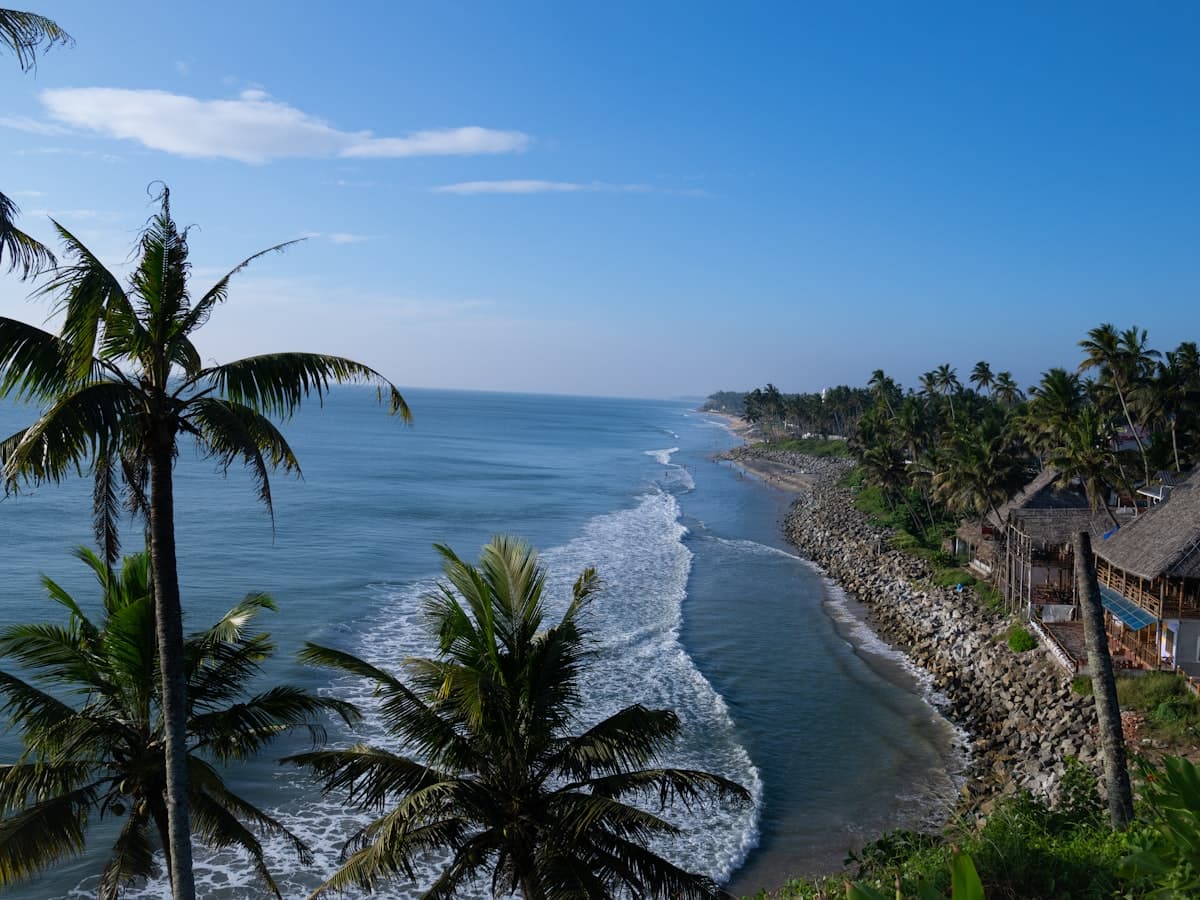
Varkala or Kovalam? Choosing Your Kerala Beach
Two Days in Fort Kochi: A Slow Guide to Kerala's Layered Port