Varkala or Kovalam? Choosing Your Kerala Beach
Varkala vs Kovalam explained: red cliffs and cafés against crescent bays and resorts. Which Kerala beach fits your trip, season and pace.
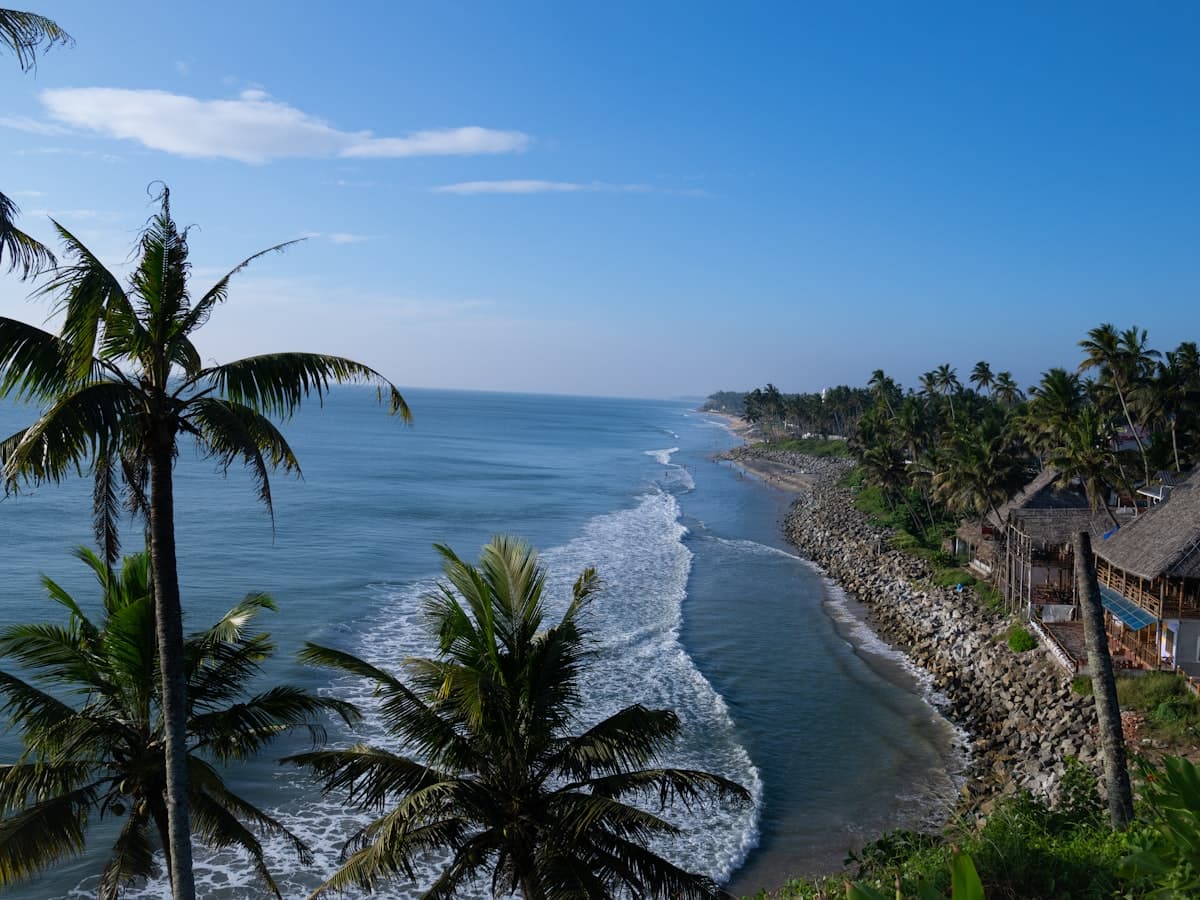
Varkala vs Kovalam is the question almost everyone asks when they add a beach to a Kerala trip. Both sit near Thiruvananthapuram in the far south. Both have warm water and palm-lined shores. But they feel completely different. Varkala is a cliff-top village with a bohemian, walkable edge. Kovalam is a string of sheltered crescent bays with a resort-first character. Pick the wrong one and you'll spend the week wishing you had picked the other.
Most guests come to the coast after the backwaters or hills. Here is how to choose, and how to pace it.
The short answer
Choose Varkala if you want dramatic scenery, cliff-top walks, yoga, Ayurveda and a relaxed, low-key atmosphere.
Choose Kovalam if you want calm swimming bays, full-service resorts and easy access to the airport and city.
Choose both if you have eight days or more and enjoy contrasts.
Varkala: the cliff
Varkala is unusual for Kerala. A high red laterite cliff runs along the coast, with the Arabian Sea directly below. Paths along the edge link cafés, small shops, yoga studios and guesthouses. Steps lead down to the sand.
It is a pilgrimage town as well as a beach. The Janardhana Swamy temple, nearby, is an old Vishnu shrine, and the beach below is a traditional place for ancestral rites. That mix of the sacred and the relaxed gives Varkala its character.
Reasons to choose it:
The cliff walk. Late afternoon along the edge, with the sea glowing, is the reason people come.
Wellness. Yoga classes and Ayurvedic treatments are easy to find and often excellent. Our guide to what to expect at a Kerala Ayurveda retreat explains how to choose a good one.
Atmosphere. It's informal and unhurried.
Fewer big resorts, which keeps the cliff feeling intimate.
Things to know: - Swimming needs care. Currents can be strong, and lifeguards mark safe stretches. Follow their flags. - Steps. The cliff and beach access involve stairs, which may not suit guests with limited mobility. - Monsoon: rough seas make it unsuitable for swimming, though the mood is dramatic.

For a stay, Gateway Varkala sits on a headland with sea views, offering full comfort close to the cliff.
Kovalam: the crescent bays
Kovalam has been Kerala's best-known beach resort for decades. Rocky headlands divide the coast into a series of sheltered crescent bays. The most famous is Lighthouse Beach, named for the striped lighthouse above it, with a lively strip of restaurants and shops.
Reasons to choose it:
Calmer swimming. The bays are more sheltered than most open-coast beaches, so swimming is easier in good conditions.
Full resorts. Kovalam is set up for comfort, with pools, spas and beachfront dining.
Convenience. It's only around 15 kilometres from Thiruvananthapuram, so transfers are short.
Family-friendly. The gentler water and resort facilities suit children.
Things to know: - It's busier and more commercial at the main beach fronts. - Beach vendors can be persistent in the busiest areas. A polite, firm "no thank you" usually works.
Taj Green Cove Resort & Spa sits on a quieter stretch on a cliff above the sea, with terraced grounds and a pool that seems to spill into the water.
Side by side
Scenery: Varkala is more dramatic. Kovalam is prettier and gentler.
Swimming: Kovalam's bays are easier. Varkala needs more care.
Atmosphere: Varkala is informal and wellness-minded. Kovalam is polished and resort-led.
Access: Kovalam is closer to the airport. Varkala is about an hour's drive further north.
Best for: Varkala suits couples and independent travellers. Kovalam suits families and those who want comfort.
When to go
Both beaches are at their best from November to March, with calm seas and dry weather. April and May are hot and humid. The monsoon, from June to September, brings heavy rain and rough water. Beaches are off limits for swimming, though Ayurveda retreats are popular then. Our month-by-month guide to Kerala explains the year in detail.
How many nights?
Three nights is a comfortable minimum for a beach stay after a busy journey. Four or five lets you settle in. If you want both, two nights each with a scenic drive between them works well, but avoid rushing. Each transfer costs half a day.
Building the trip
Beaches work best as the last chapter of a Kerala trip, after the busier parts. A classic sequence starts in Kochi (our two-day Fort Kochi guide shows how), continues to the hills and backwaters, and ends by the sea.
Our Kerala backwaters and beaches itinerary follows this rhythm, and the backwaters and beaches package adds private transfers and carefully chosen stays. For couples, the Kerala romantic honeymoon leans into slower days and private dinners.
A day at each beach
A Varkala day starts slowly. Rise for the sunrise walk along the cliff path, when the sea is pale and the cafés are only just opening. Breakfast is fresh fruit, curd and honey. Mid-morning is a yoga class or an Ayurvedic massage. Lunch is fish and rice at a small café, followed by a long rest. In the late afternoon, walk down to the sand for a paddle, then climb back for sunset drinks on the cliff.
A Kovalam day is more resort-led. Start with breakfast by the pool, then a swim in the calm bay while the water is smooth. Lunch is at the beach or in your hotel. Spend the afternoon at the spa, or take a short trip to the fishing harbour at nearby Vizhinjam to watch boats come in. Dinner is grilled seafood on the sand, with the lighthouse lit above.
Both days are about doing little well. Don't add an excursion unless you want one.
Beyond the beach
Both bases have real sights nearby, which makes them more than sand stops. From Varkala, a short drive reaches quiet backwater lagoons, where a paddle on still water is a gentle contrast to the surf. From Kovalam, Thiruvananthapuram is close, with its Padmanabhaswamy Temple, the royal palace museums and a busy old market. The temple has strict entry rules, so check with your guide before planning to go in.
A half-day boat trip along a quiet canal, a visit to a coir-making village or a cookery class in a local home adds texture to a beach week.
Practical notes
Sun and water: the tropical sun is strong. Use reef-friendly sunscreen and a hat, and drink plenty of water.
Dress: beachwear is fine at the beach and pool, but cover up in the villages and towns.
Currents: always swim where a lifeguard is present and follow the flags.
Walking at night: paths along Varkala's cliff are uneven and dimly lit. Carry a torch, or use your phone light.
Cash: small cafés and shops may prefer cash, and ATMs can be limited.
Frequently asked questions
Is Varkala or Kovalam better for swimming?
Kovalam, in general. Its sheltered bays are calmer. At Varkala, swim only where lifeguards allow.
Is Varkala suitable for families?
Yes, for older children. The cliff and steps need supervision for small ones. Kovalam is easier with very young children.
Which is closer to the airport?
Kovalam. It's about a half-hour drive from Thiruvananthapuram airport. Varkala is roughly an hour and a half.
Can I visit either in the monsoon?
You can, but swimming is unsafe. Many guests choose the monsoon for Ayurveda and quiet, not beach days.
Start planning
Read our Kerala destination guide, or talk to a trip designer about which coast fits the end of your journey.
Read Next
All Stories →
Two Days in Fort Kochi: A Slow Guide to Kerala's Layered Port
A Night on a Kerala Houseboat: What It Is Really Like