Jantar Mantar Jaipur: Timings, Tickets and How to Read the Instruments
Jantar Mantar in Jaipur: opening hours, ticket prices, the main instruments explained, why a guide helps and how long to allow.
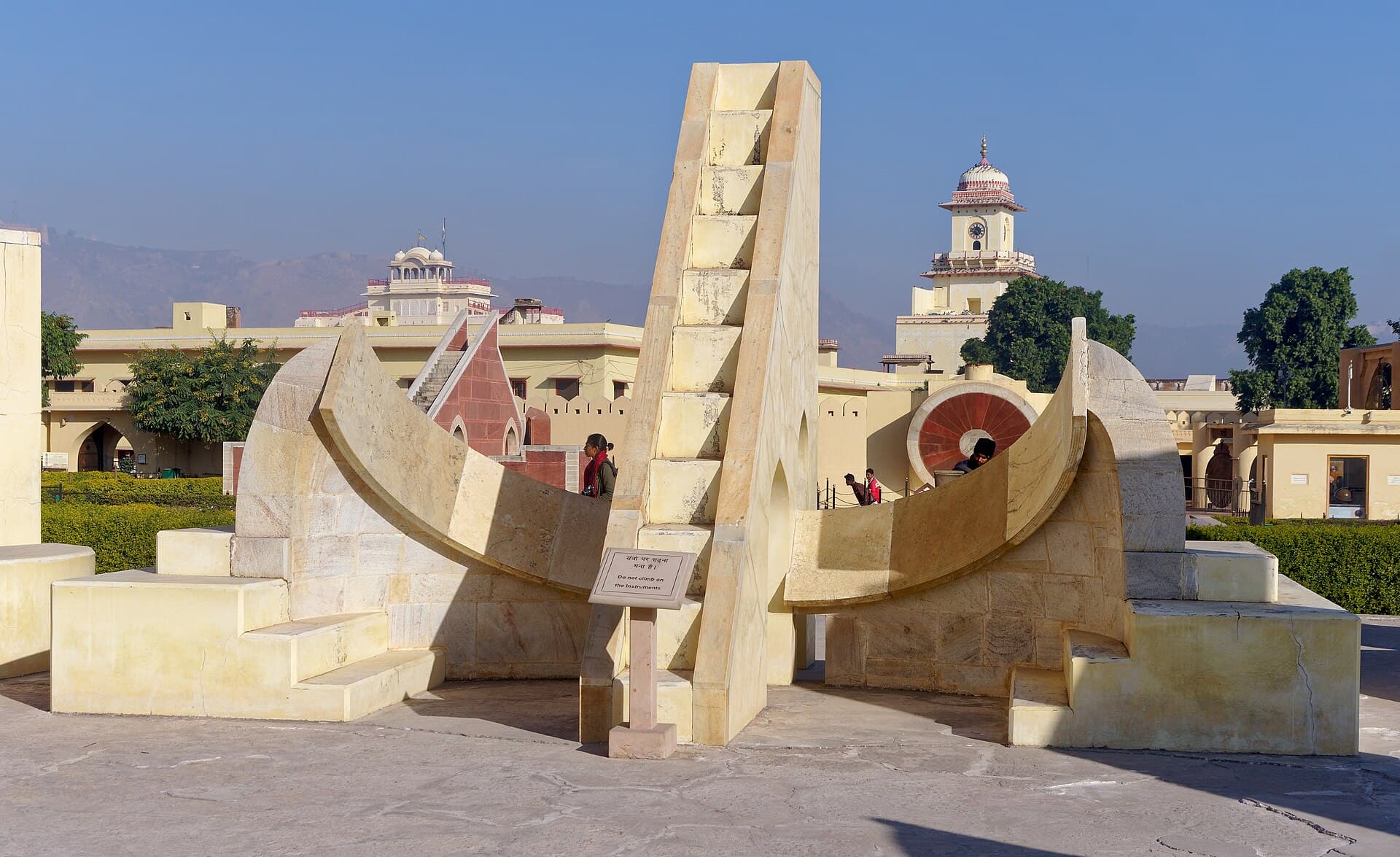
Jantar Mantar is an open-air observatory built in the early 18th century by Maharaja Sawai Jai Singh II, the founder of Jaipur. It is a UNESCO World Heritage site, and it looks like a sculpture garden, though every shape is a working scientific instrument.
This guide explains what you are looking at, because the site is much more interesting with a little context.

The great sundial and instruments.
At a glance | |
|---|---|
Where | Next to the City Palace in the old city |
Built | 1720s to 1730s |
Status | UNESCO World Heritage site |
Hours | Usually from about 9 am to 4:30 or 5 pm |
Tickets | Separate rates for Indian and foreign visitors; combined tickets sometimes available |
Time needed | 45 to 90 minutes |
What it is
Jai Singh built five observatories across northern India, and the Jaipur one is the largest and best preserved. It contains about 19 instruments, made of stone and marble, for measuring time, tracking the sun and stars, and predicting eclipses.
The instruments are accurate. The largest sundial can tell the time to within about two seconds, according to the monument's own description.
The instruments to look for
Samrat Yantra: the great sundial, about 27 metres tall. Its shadow moves visibly across the curved quadrant in a few minutes.
Jai Prakash Yantra: a pair of bowl-shaped hemispheres that map the sky from the inside.
Rashivalaya Yantras: twelve instruments, one for each zodiac sign, that measure the position of a sign as it rises.
Narivalaya Yantra: a small sundial that shows local time.
Why a guide helps
The instruments have no obvious labels for a first-time visitor, and the shapes look abstract. A guide can show you how to read the shadows and explain the zodiac instruments. Audio guides are often available, and a licensed guide is a better choice than a hawker at the gate.
Timings and tickets
The site opens in the morning and closes in the late afternoon. Entry has a ticket for Indian and a higher rate for foreign visitors, plus camera charges. Combined tickets with other Jaipur monuments have been offered in the past. Check the current offer at the counter.
Visit around midday, when the shadows are short and the sundial is easy to read, but bring a hat. The stone gets hot.

An instrument at Jantar Mantar.
How to fit it in
Jantar Mantar is beside the City Palace and a short walk from the Hawa Mahal, so the three sights go together. See the Hawa Mahal guide, and for a longer day see Amber Fort.
Frequently asked questions
What are the Jantar Mantar timings?
Usually about 9 am to late afternoon. Check on the day.
How long does it take?
45 to 90 minutes, longer with a guide.
Is it worth visiting?
Yes, especially with a guide. It is one of Jaipur's most unusual sights.
What is the Samrat Yantra?
The great sundial, the tallest instrument on the site.
Is there an entry fee?
Yes, with different rates for Indian and foreign visitors.
Plan your Jaipur days with us
We pair the observatory with the City Palace and a guide who explains it. Explore the Rajasthan destination page or talk to a trip designer.
Photo credits
Both photos: Jakub Hałun, CC BY-SA 4.0, via Wikimedia Commons.
Journeys for this trip
Plan your Rajasthan trip


Read Next
All Stories →
Udaipur with Kids: A Family Guide to the City of Lakes
Udaipur to Jodhpur: Distance, Time by Road and Train