First, 5 nights in Leh
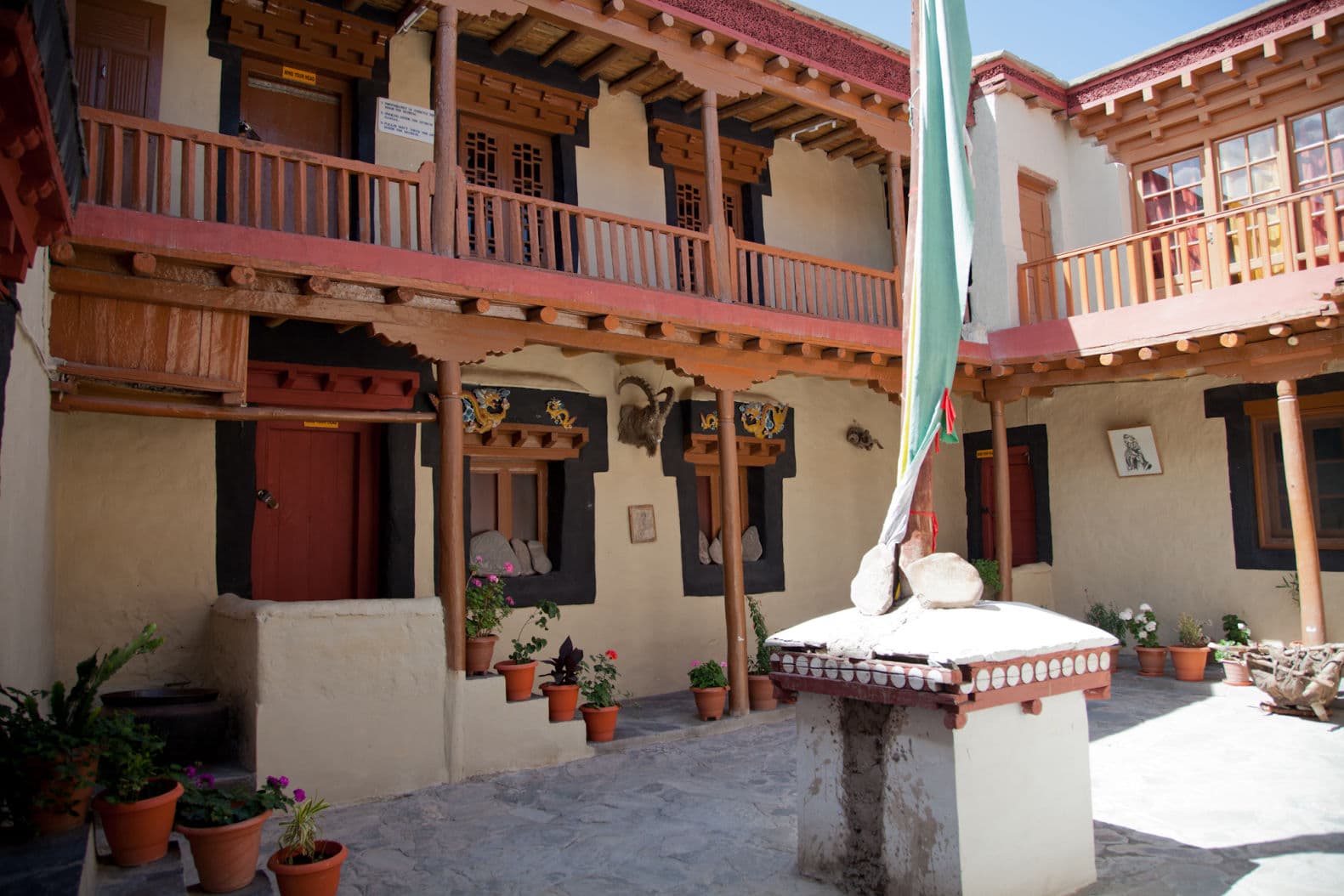
Stok Palace Heritage
Leh · Hotel · Premium★★★★
A handful of antique-furnished rooms in the Ladakhi royal family's 1820 palace at Stok, above the Indus valley. The premium heritage Leh stay.
5 nightsStop 1 of 5
Leh → Sham Valley → Nubra Valley → Pangong Lake → Tso Moriri
Chapter Two — Where You'll Stay
Handpicked along your own route — not a hotel chain repeated city to city.
First, 5 nights in Leh
A handful of antique-furnished rooms in the Ladakhi royal family's 1820 palace at Stok, above the Indus valley. The premium heritage Leh stay.
Next, 2 nights in Sham Valley
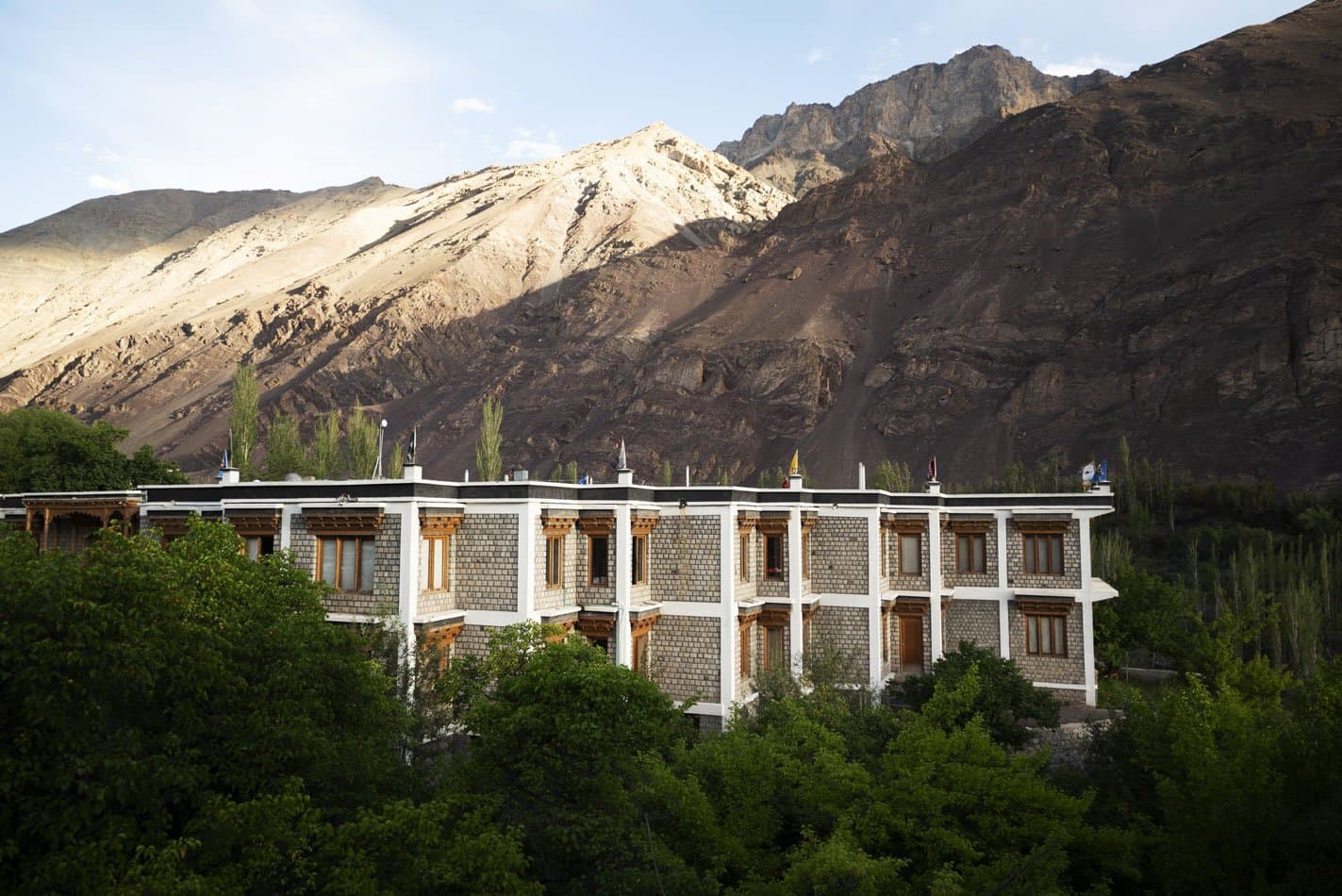
A heated Ladakhi-style hotel above the Indus at Nurla, between Alchi and Lamayuru. The premium Sham Valley stay.
Next, 3 nights in Nubra Valley
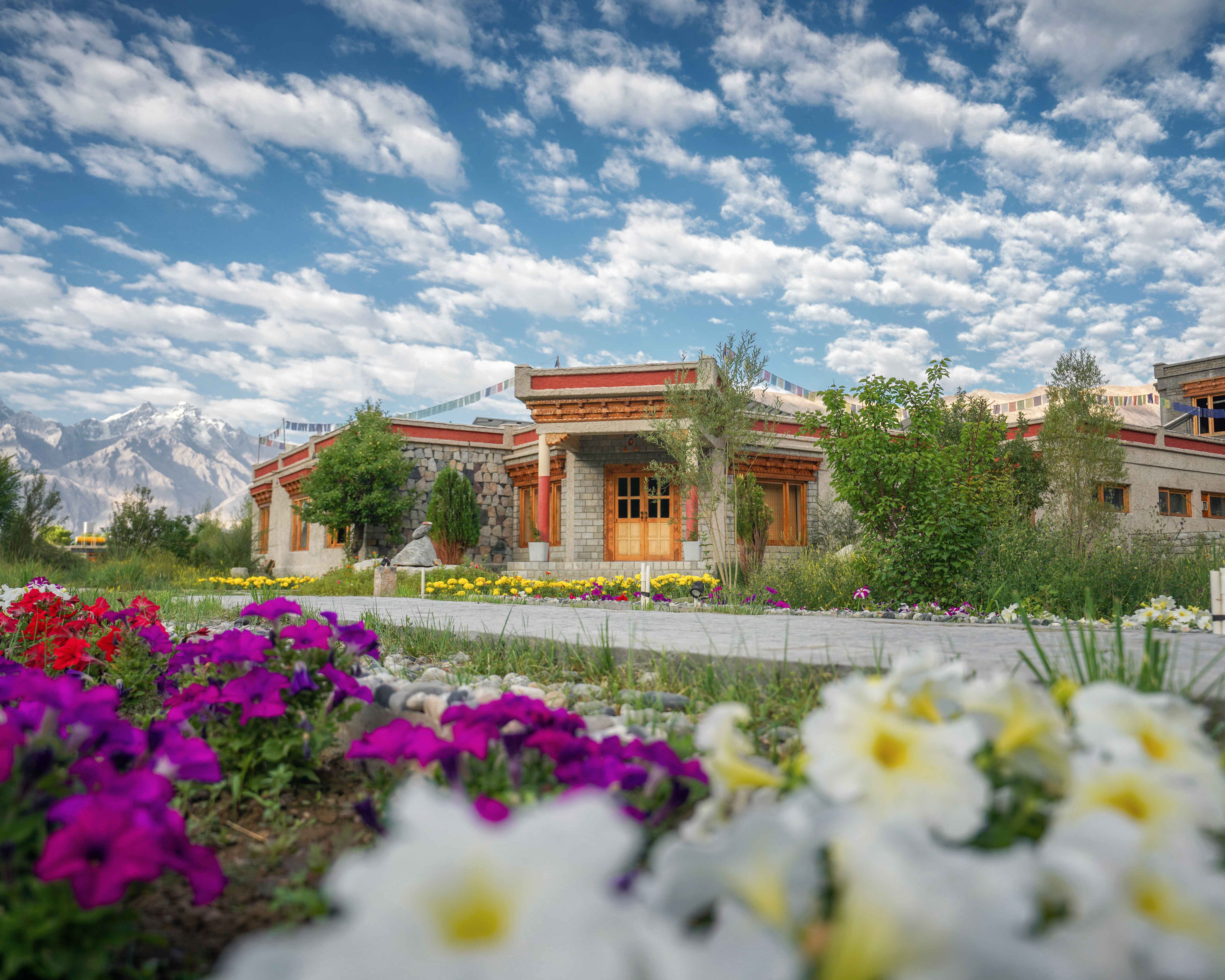
An SLH member on the Nubra riverbank near Sumur — 17 solar-powered mud-and-poplar cottages in a poplar garden. The luxury Nubra stay.
Next, 2 nights in Pangong Lake
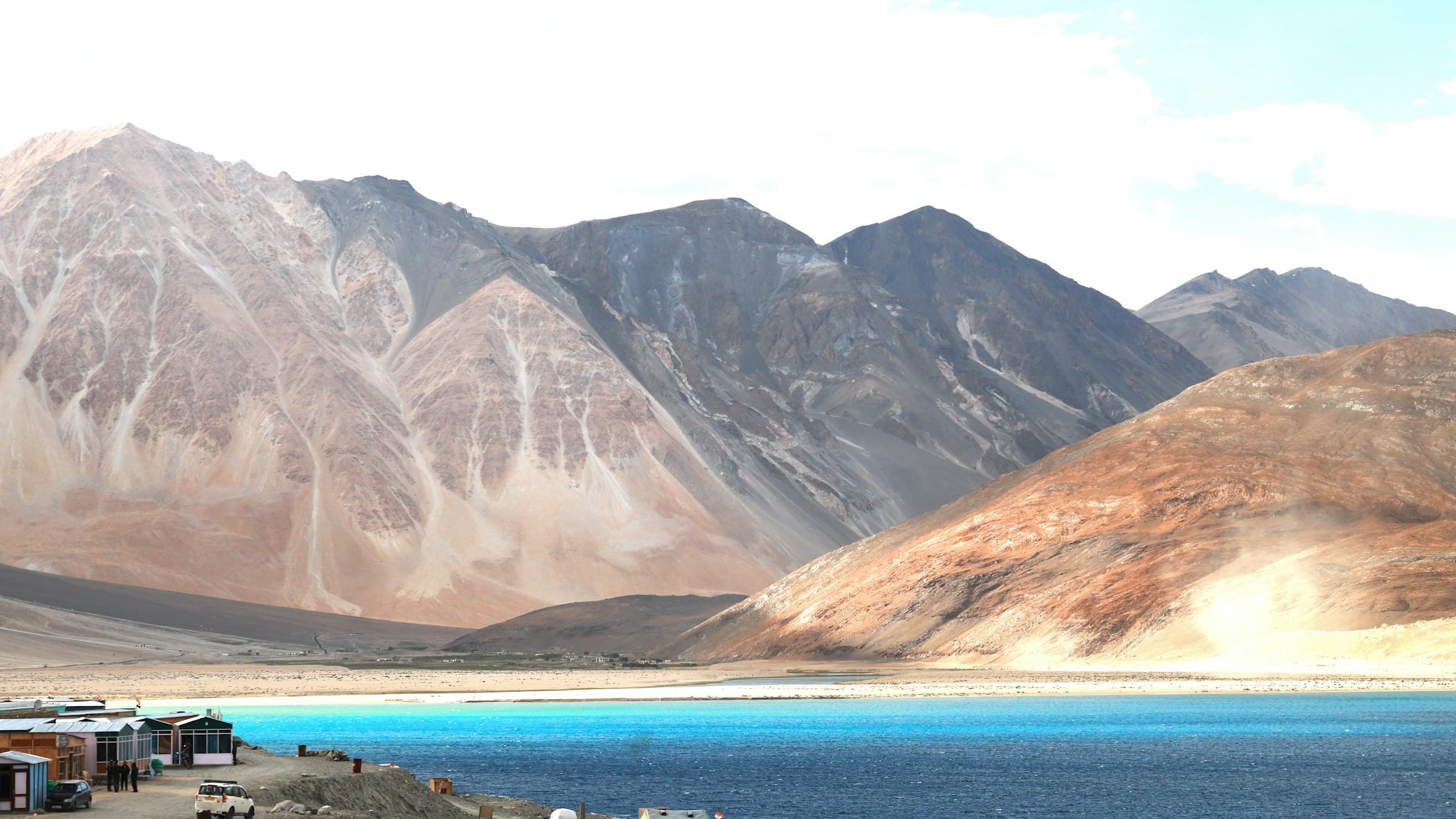
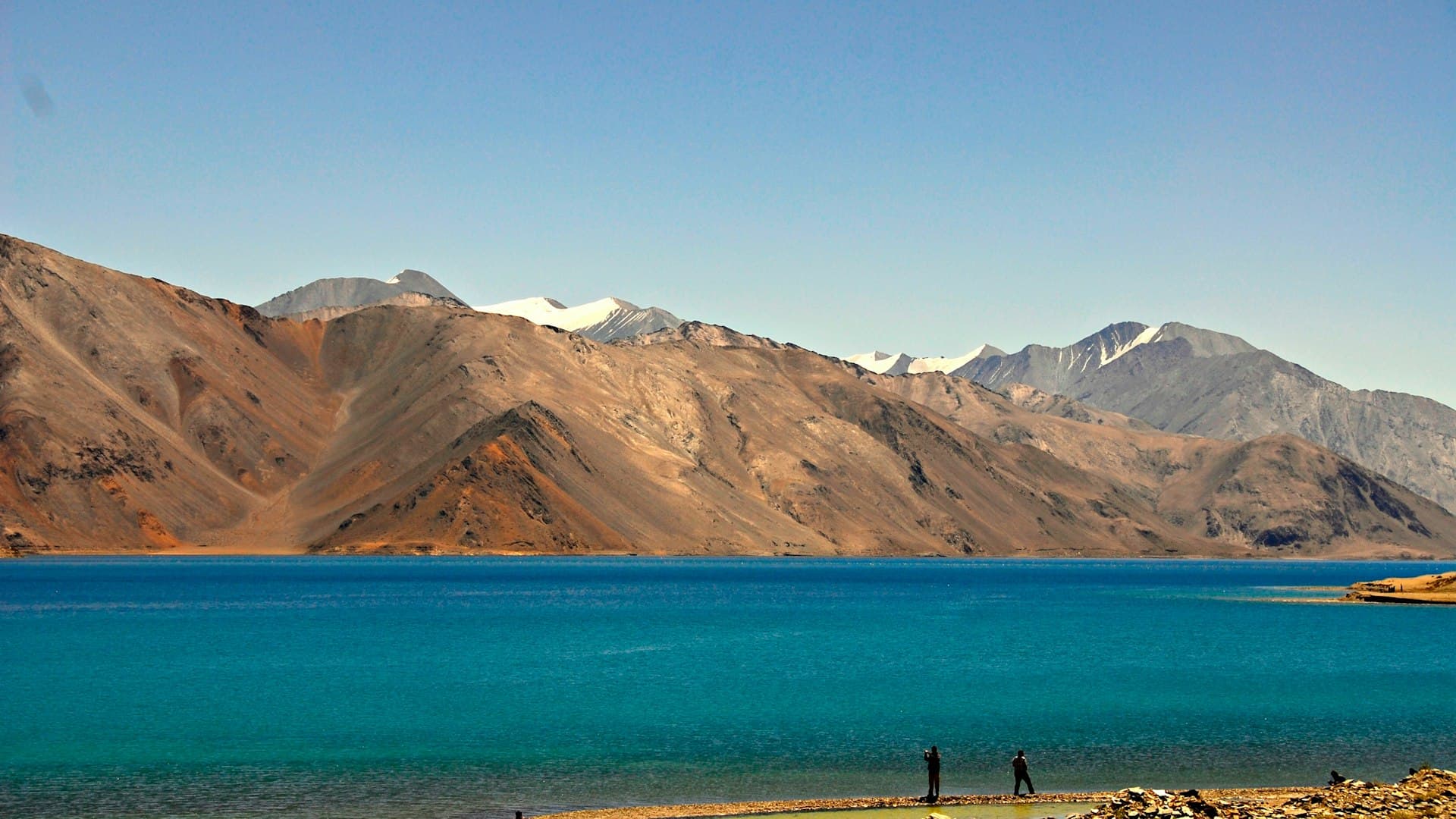
The most comfortable stay on Pangong Lake — yurt-style tents with hot showers and electric blankets on the Spangmik shore, at 4,300 metres.
Finally, one night in Tso Moriri
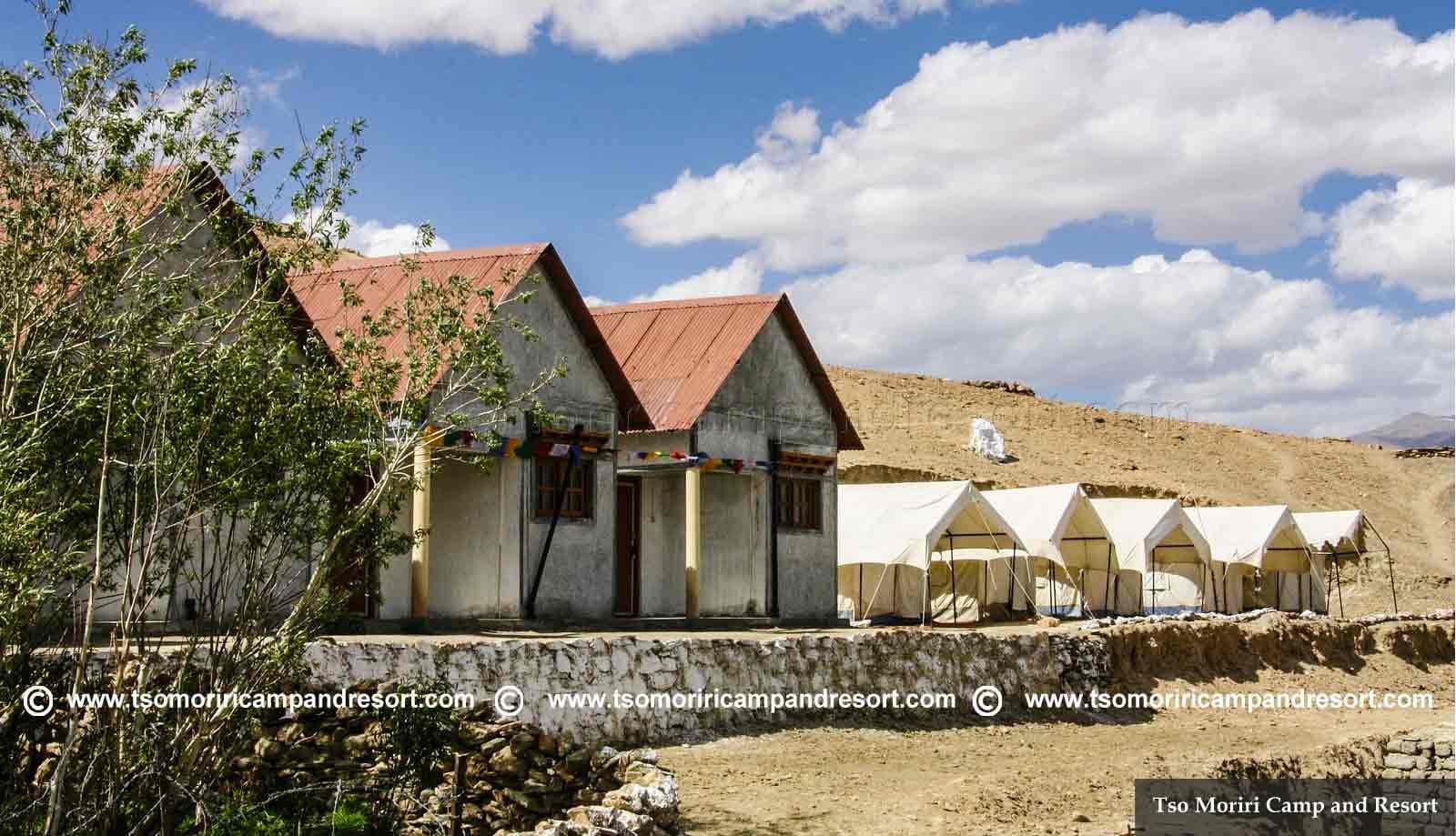
The most comfortable stay on Tso Moriri — tents and rooms with hot showers and electric blankets at Korzok, at 4,500 metres.
Chapter Three — Activities & Sightseeing
12 of your 14days — the full day-by-day plan follows below.
Day 2 · Leh
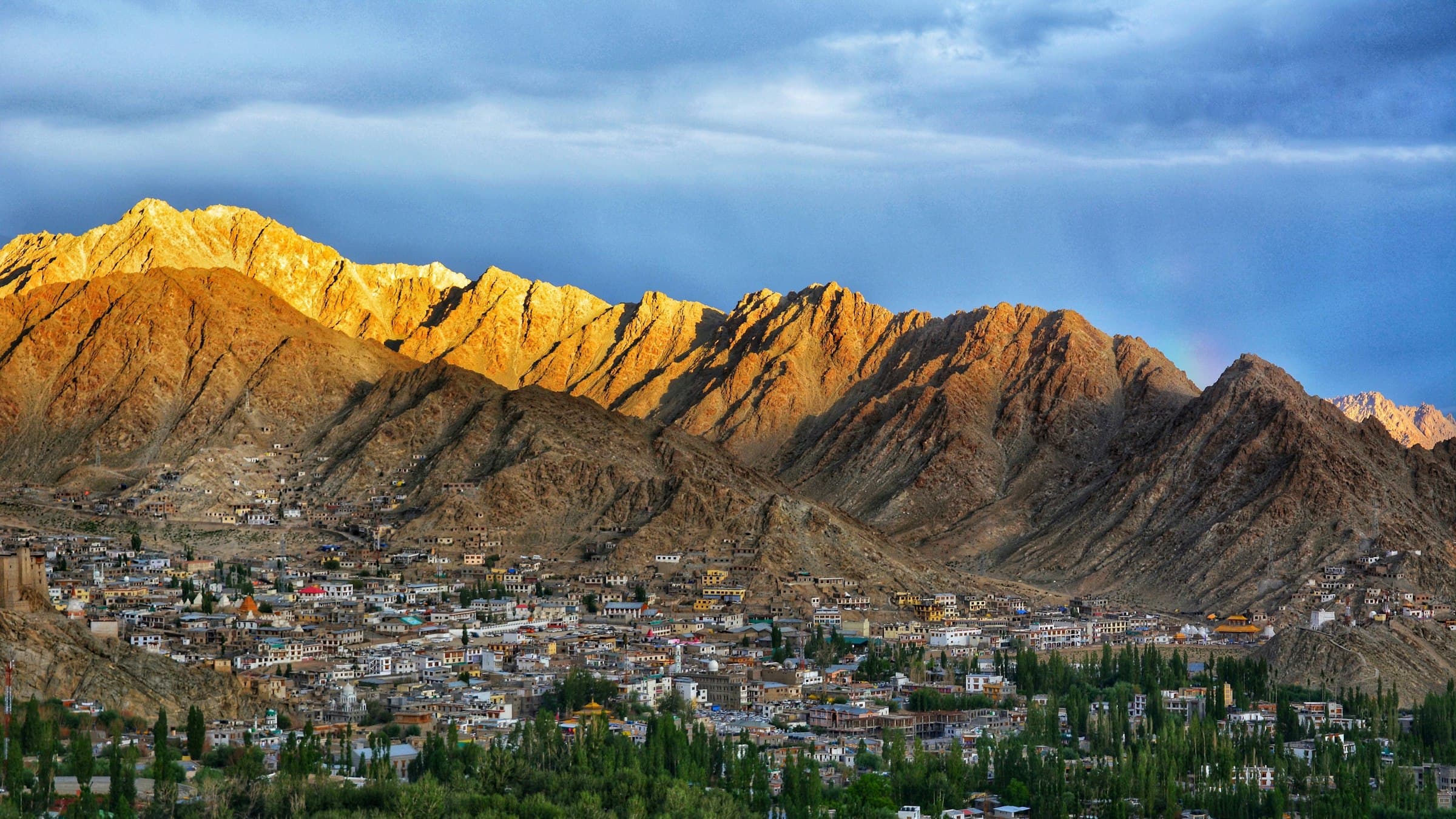
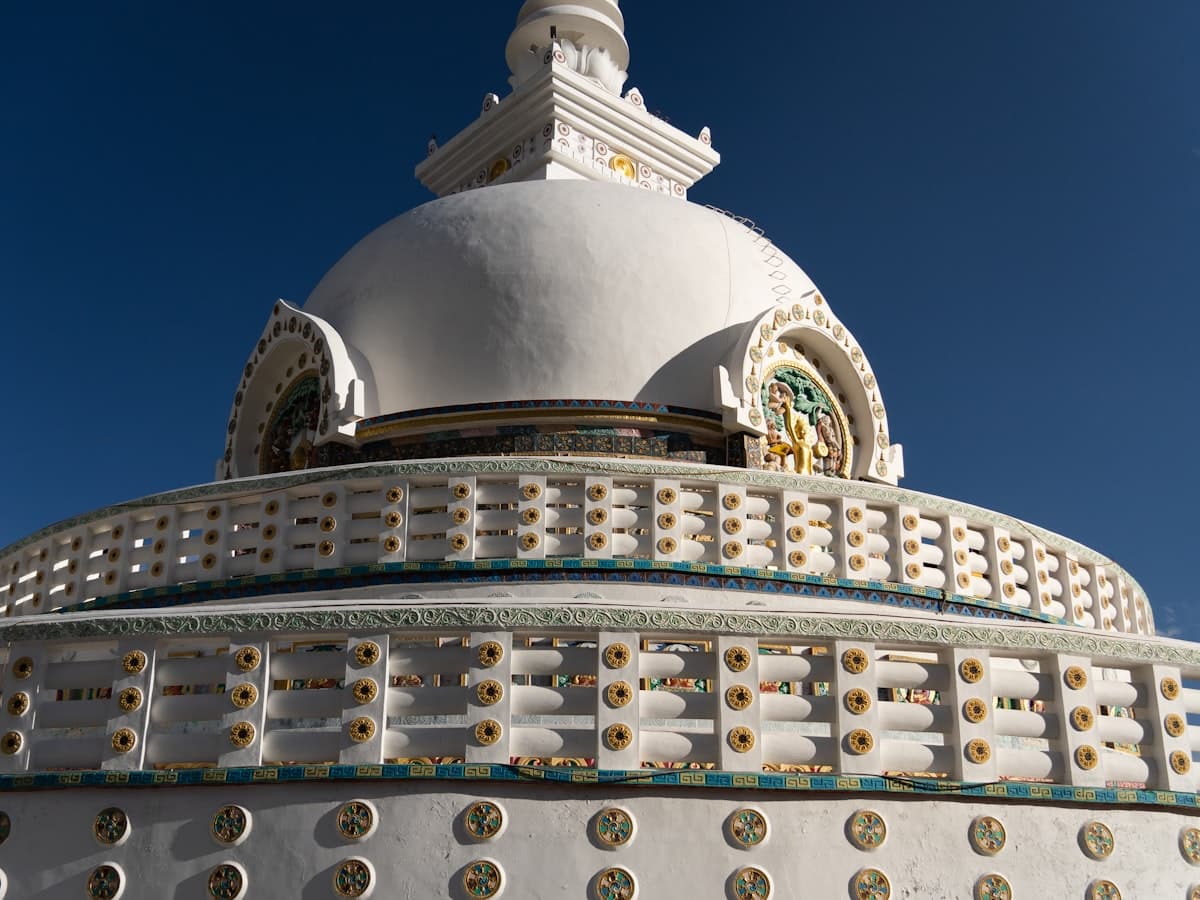
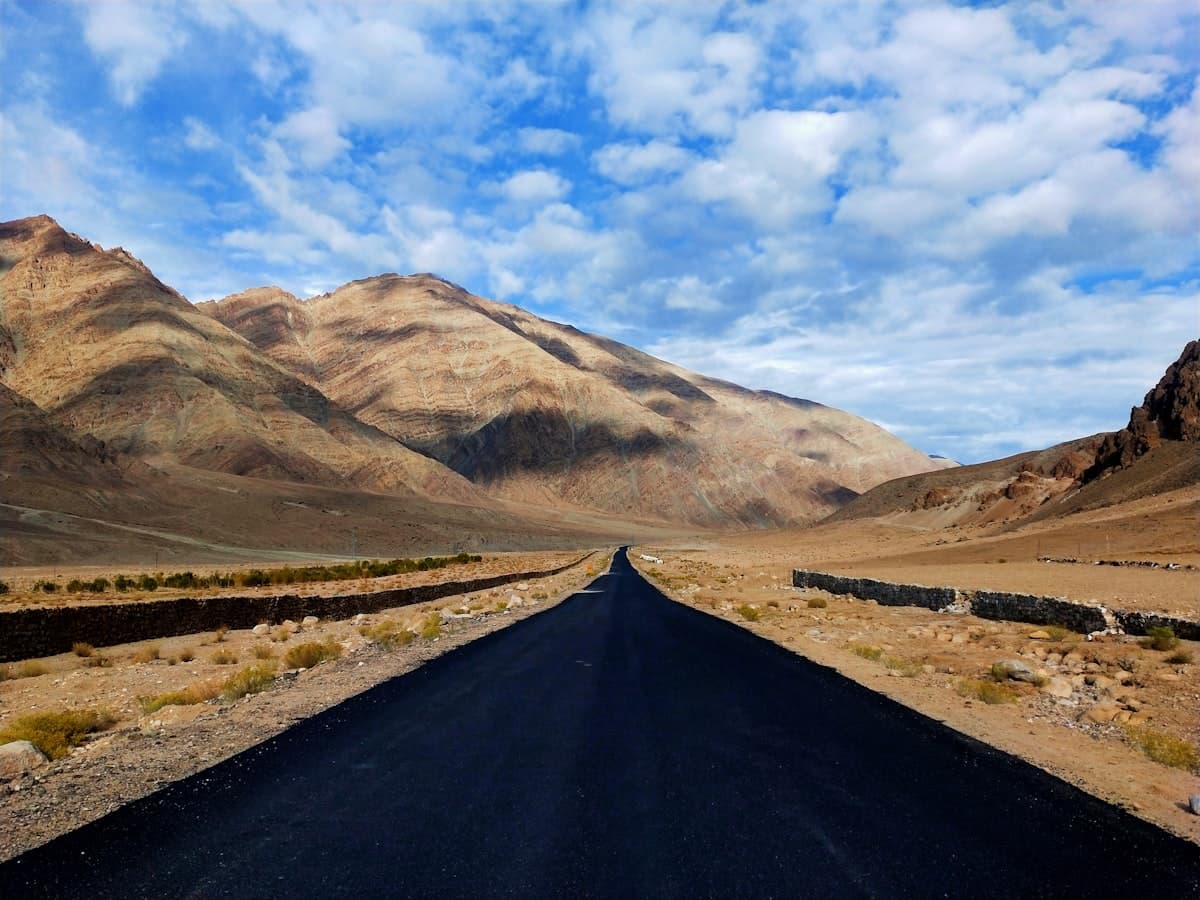
A gentle first full day, still close to the hotel. The morning is Leh's old town: the bazaar, the mosque, and the nine-storey palace above it. The climb through the palace floors is slow but short. In the afternoon, drive up to Shanti Stupa for the view over the valley. Sankar Monastery, a working gompa a short way from the centre, fills any spare time. An early night before tomorrow's monastery run.
Day 3 · Leh → Sham Valley
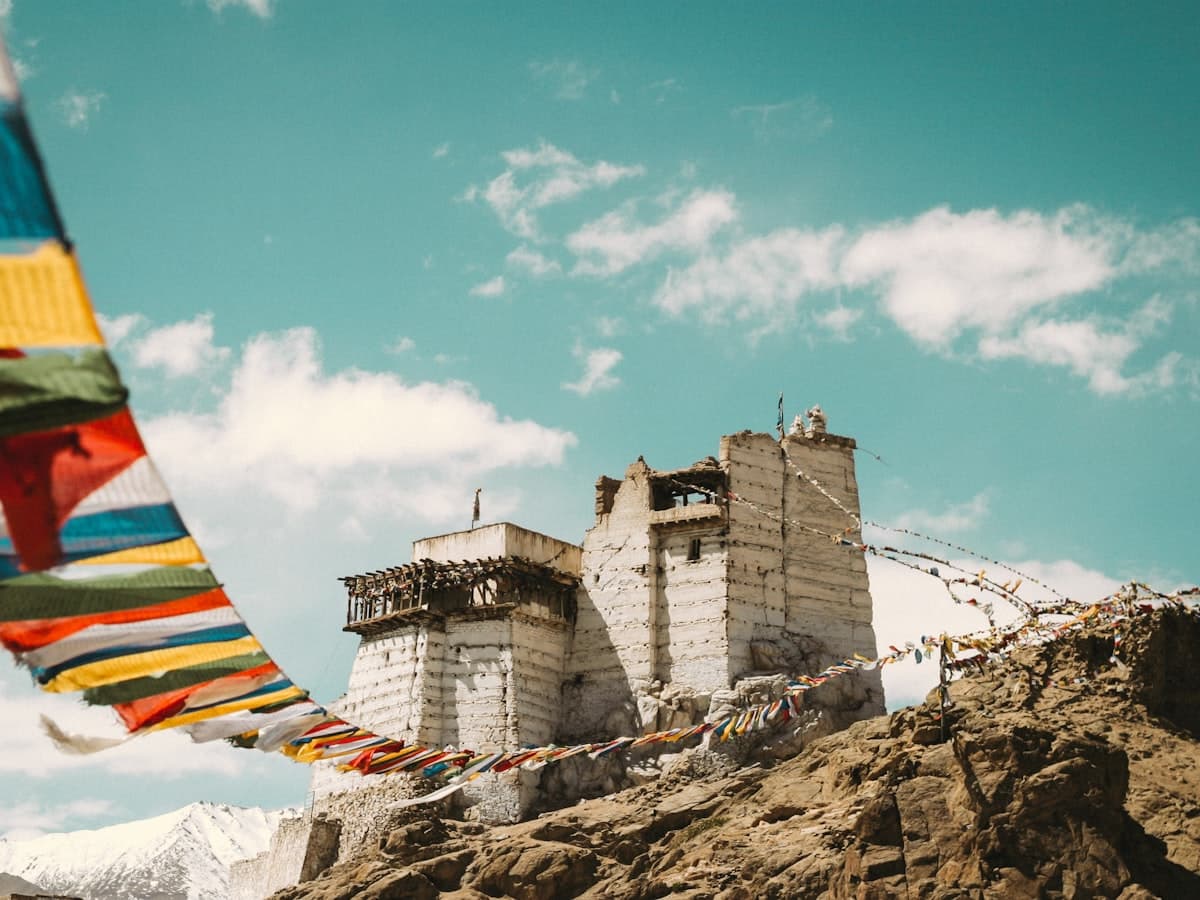
A drive west down the Indus, dropping in altitude the whole way, which helps. First stop is Basgo, a ruined mud-brick fort and its Maitreya temples on a wind-carved ridge. Then Likir, with its huge open-air gilded Buddha and, if you want it, a short turn at a village potter's wheel. The main visit is Alchi, the eleventh-century monastery on the river flats, with wall paintings found nowhere else in Ladakh. You reach your hotel at Nimmu or Nurla by late afternoon.
Day 4 · Sham Valley
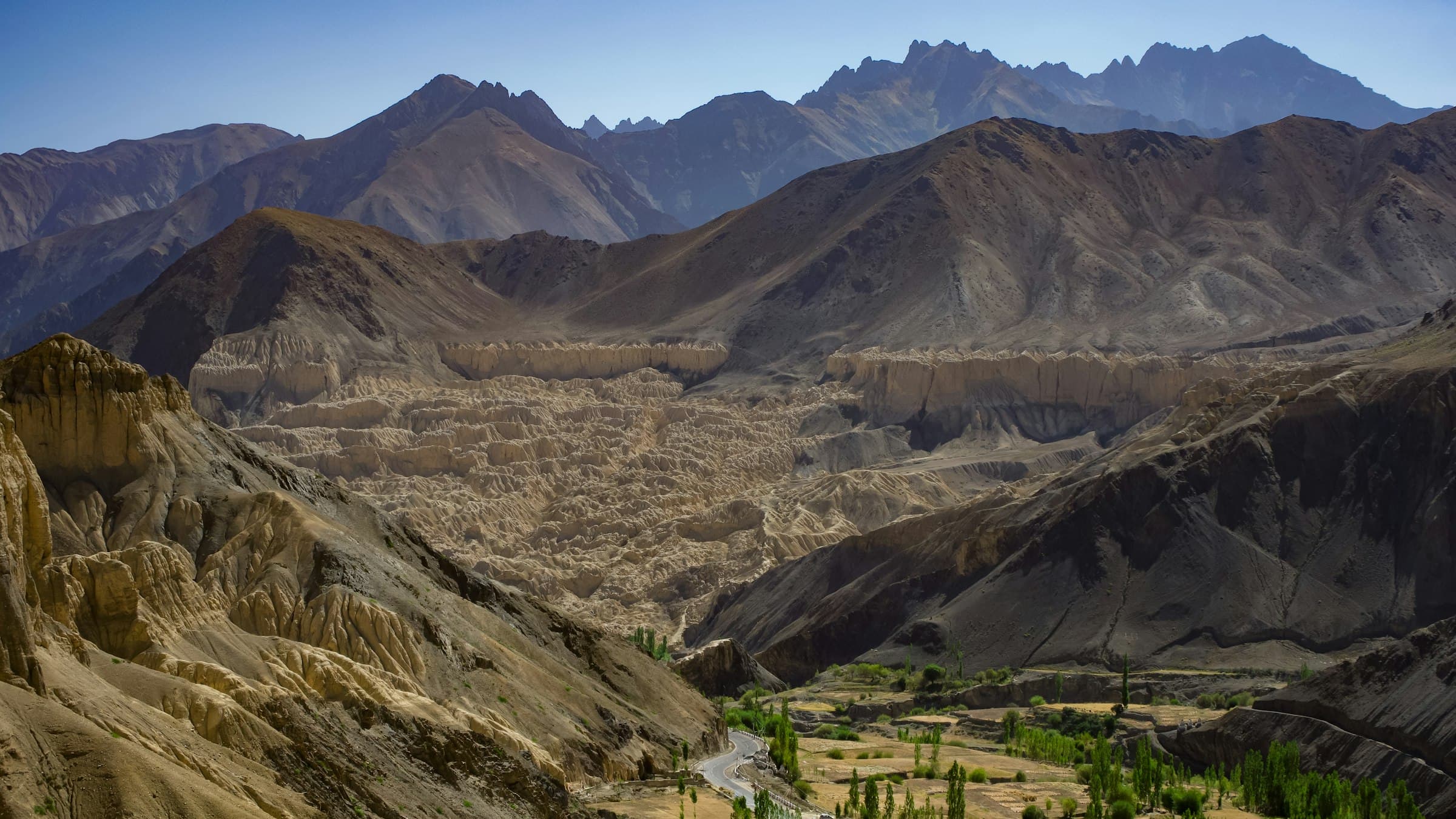
A day further west into the oldest corner of Ladakh. The road climbs over the Fotu La pass to Lamayuru, one of the oldest monasteries in the region, set on a crag above pale, folded hills that guides call moonland. There is time to walk the monastery and its old cave rooms. The village below has a teahouse for lunch. On the way back, a stop at Wanla or Rizong, a strict monastery reached on foot up a side valley. Back at the hotel for the night.
Day 5 · Sham Valley → Leh
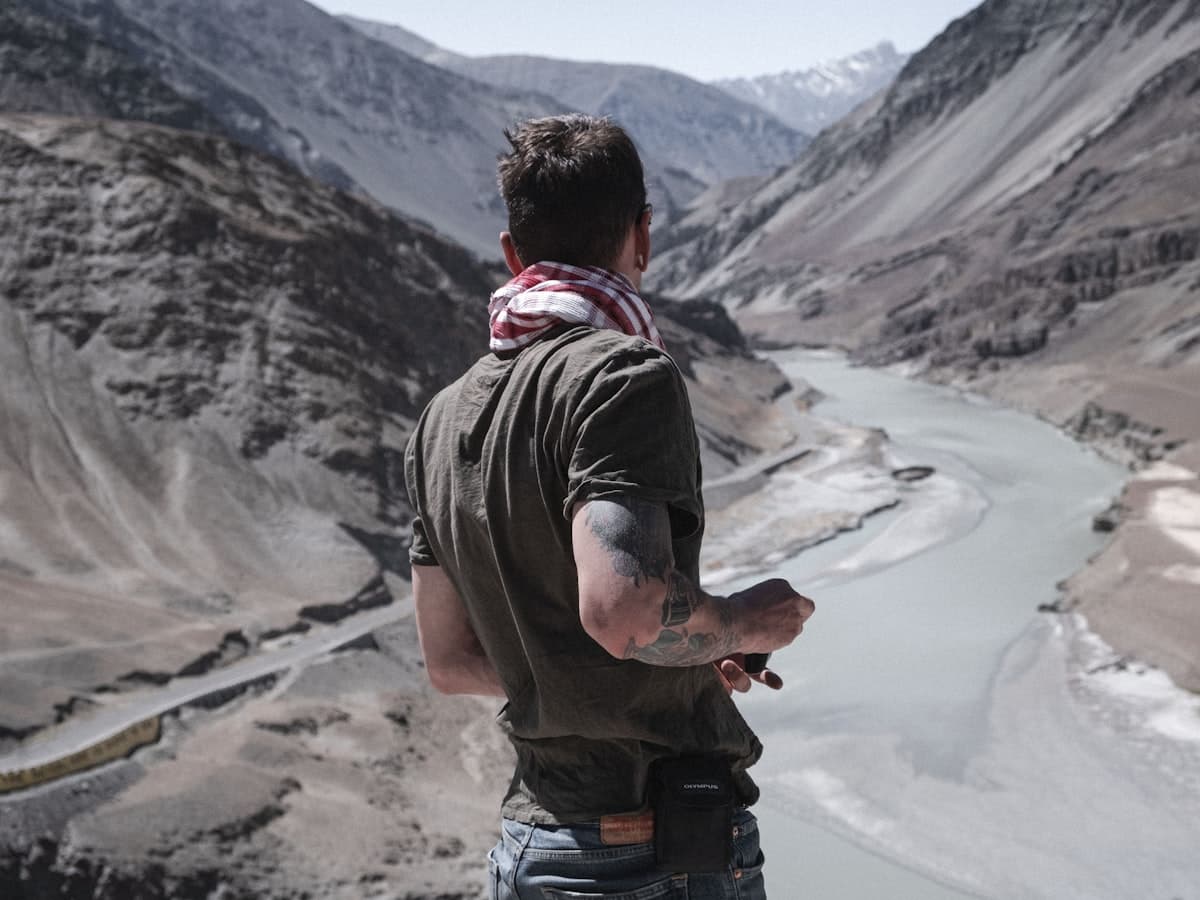
An easy drive back up the valley to Leh, with the classic Sham stops on the way. The Indus-Zanskar confluence, where the clear green river meets the grey one. Magnetic Hill, a quick stop where the road plays a trick on the eye. The Gurudwara Pathar Sahib, a Sikh shrine built around a boulder. Closer to town, the Hall of Fame, the army's museum of the region's mountain wars. You are back in Leh, at a higher but now familiar altitude, by early afternoon.
Day 6 · Leh
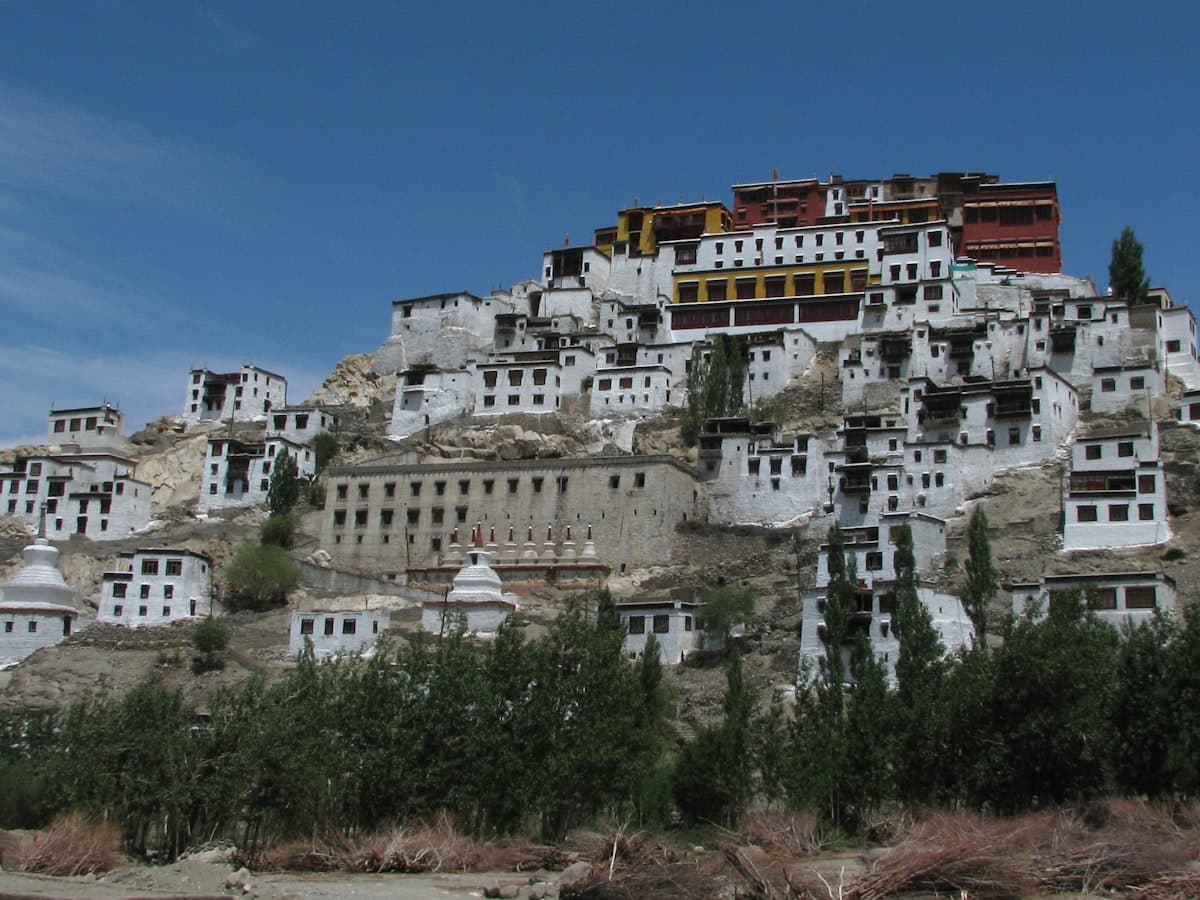
A full day among the great monasteries south-east of Leh. Start early at Thiksey, a twelve-storey monastery on a hill, for the dawn prayers if you are up to it. Then Hemis, the largest and richest in Ladakh, hidden in a side gorge. Shey, the old royal palace with its giant seated Buddha, and Stok are on the way back. It is a lot of driving, but the roads are good and the valley is beautiful. Back in Leh by evening.
Day 7 · Leh → Nubra Valley
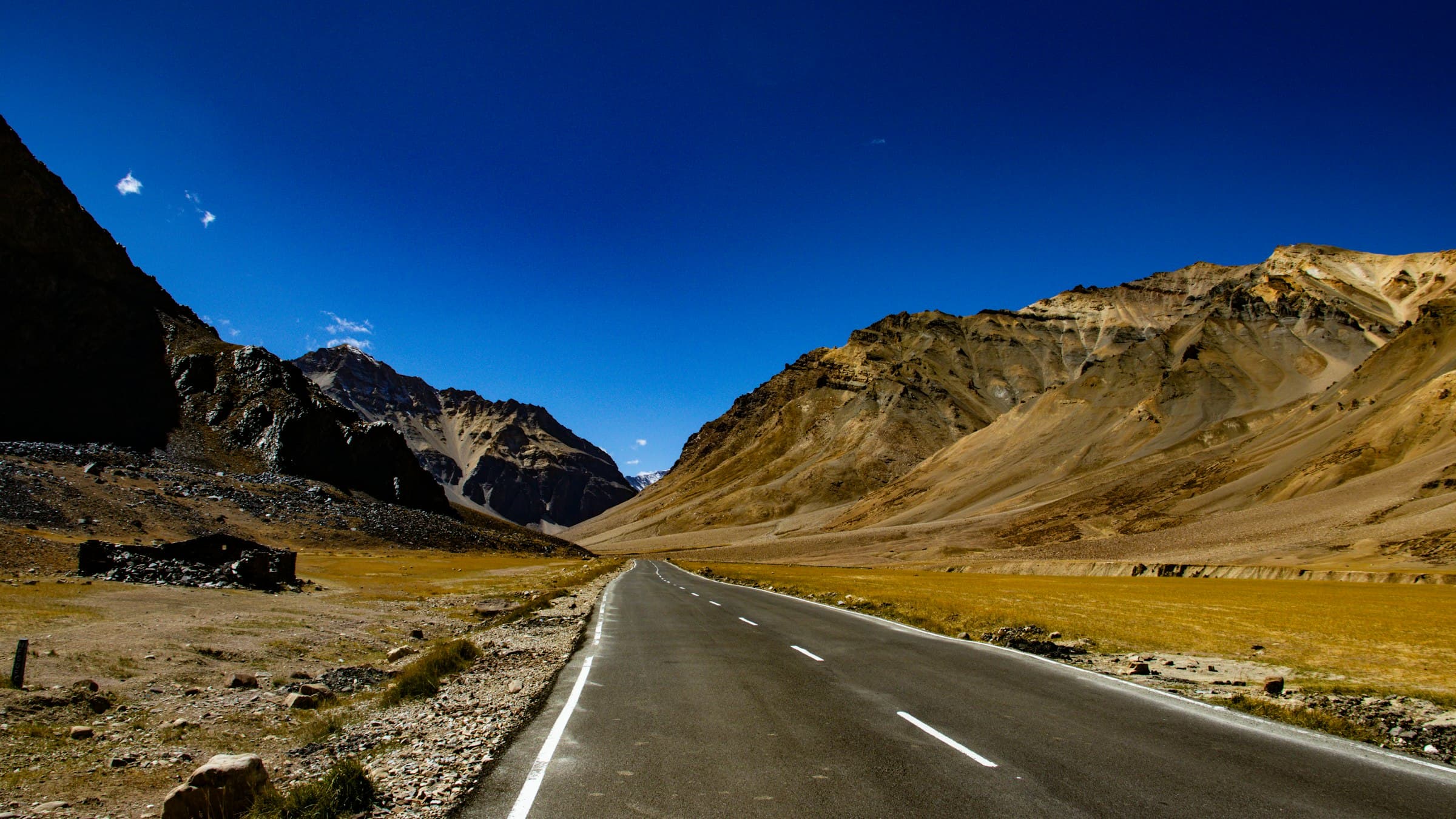
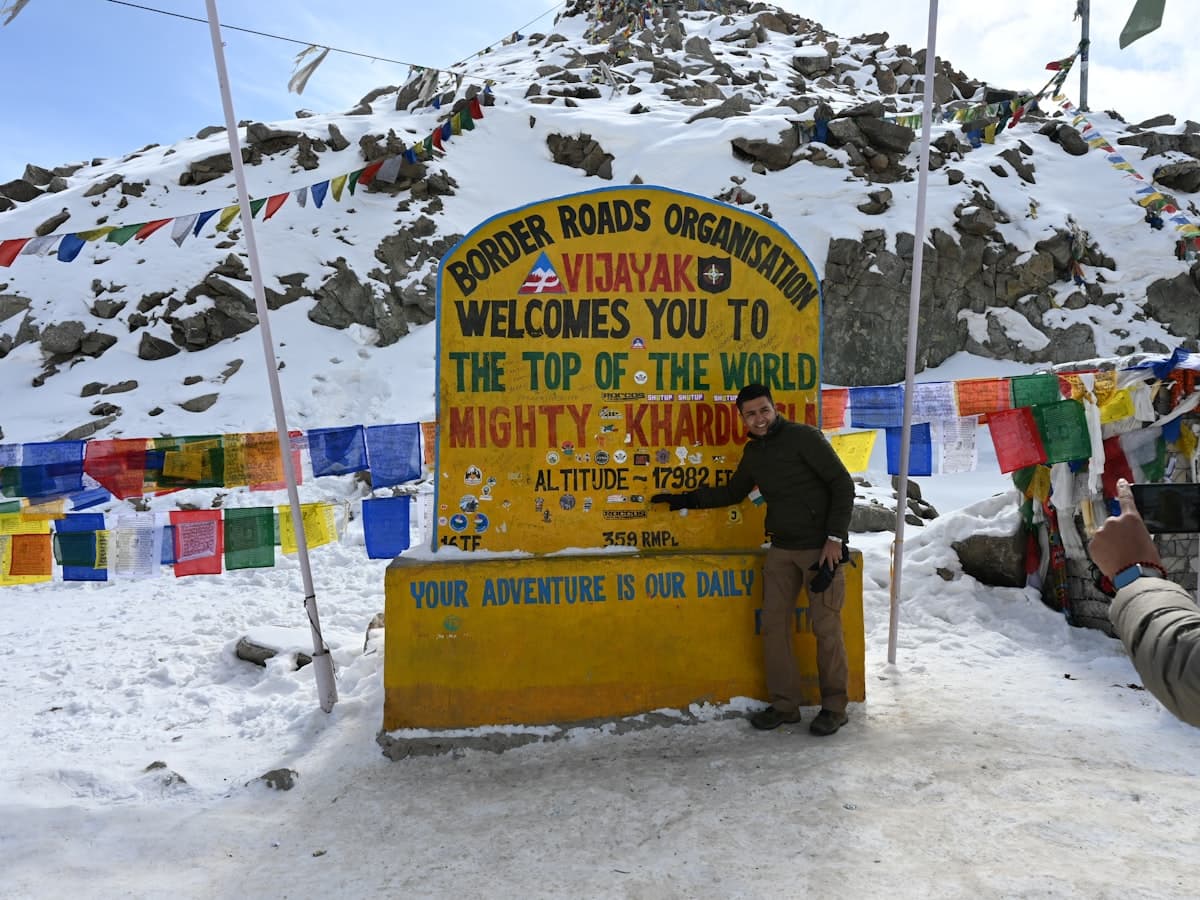
The drive to Nubra crosses Khardung La, at about 5,360 metres one of the highest motorable passes in the world. You stop briefly at the top for photos and tea, but not long, because of the altitude. The road then drops a long way into the Nubra valley, green and wide after the bare passes. You reach your Nubra hotel by mid-afternoon. The rest of the day is at rest by the river. The full drive takes five to six hours with stops.
Day 8 · Nubra Valley
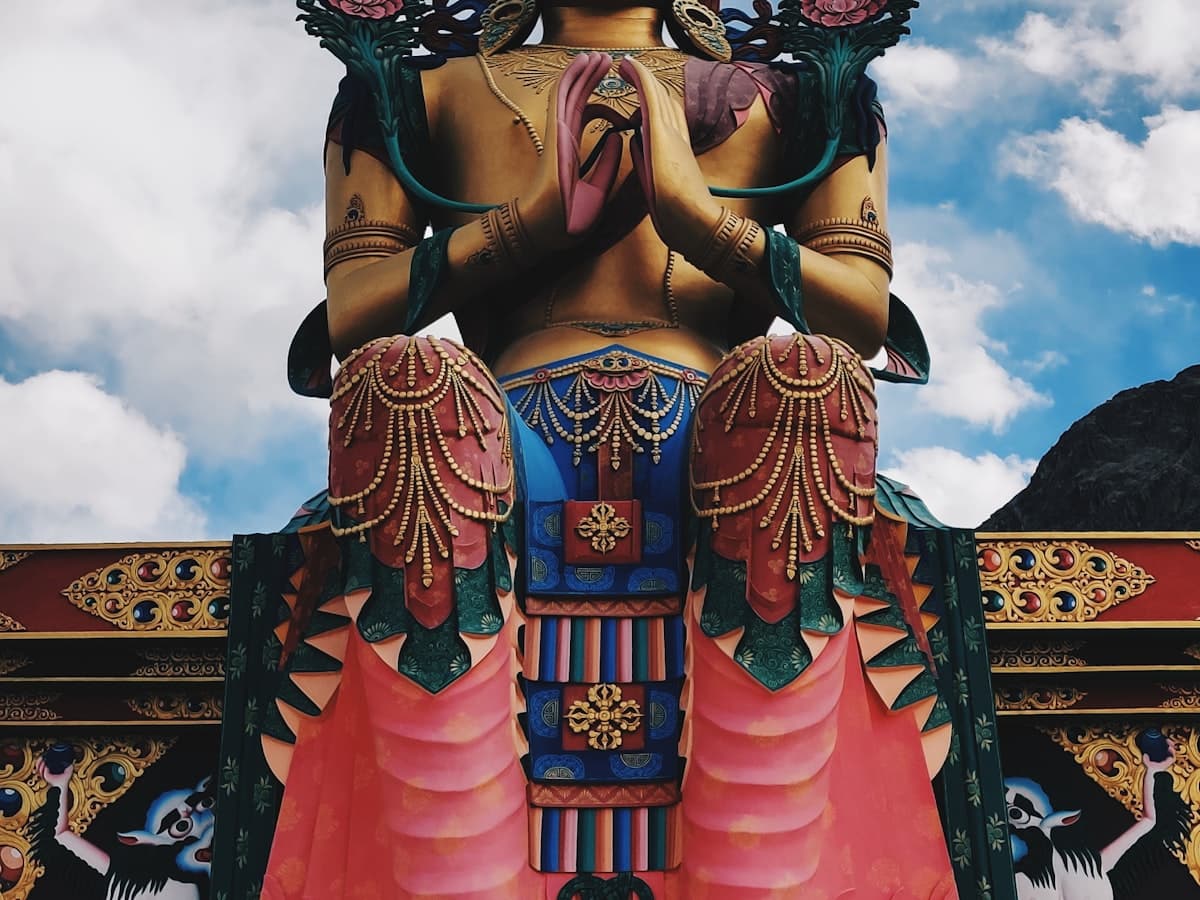
A full day in the Nubra valley. The morning is Diskit Monastery and its 32-metre Maitreya statue, which looks down the valley towards Pakistan. In the afternoon, the white sand dunes at Hunder, with their two-humped Bactrian camels. A short camel ride runs in the last hour of light, when the dunes turn gold. Turtuk, a Balti village near the border that only opened to visitors in 2010, is an option for those with the time. A second night in Nubra.
Day 9 · Nubra Valley
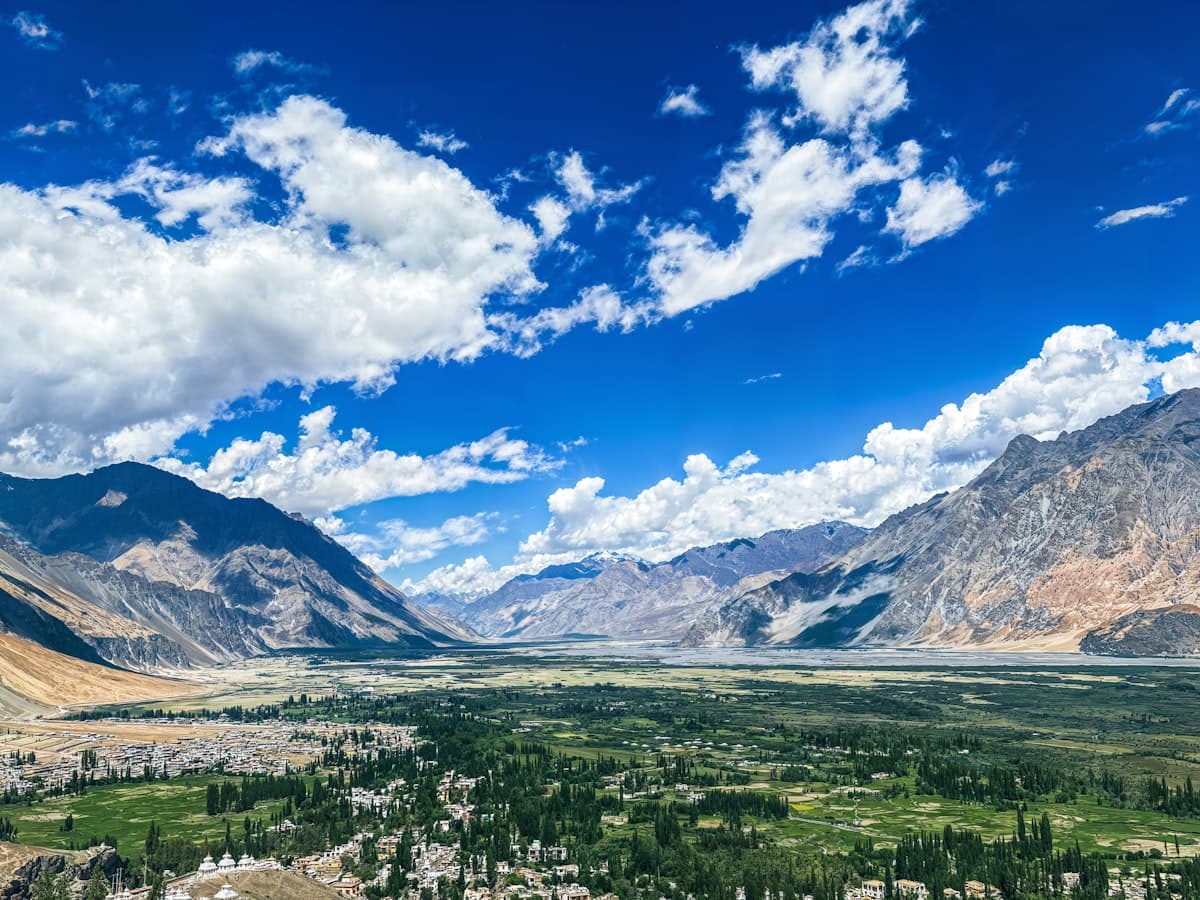
A day trip down the Shyok valley to Turtuk, one of the last villages before the line with Pakistan. Turtuk is Balti, not Ladakhi, Muslim and Urdu and Balti-speaking, and it only opened to visitors in 2010. It is a green terraced village of apricot orchards and stone lanes, with old water mills and a small museum in a former royal house. The drive down and back takes most of the day, about three hours each way from the Hunder area. It is the most different place in Ladakh.
Day 10 · Nubra Valley → Pangong Lake
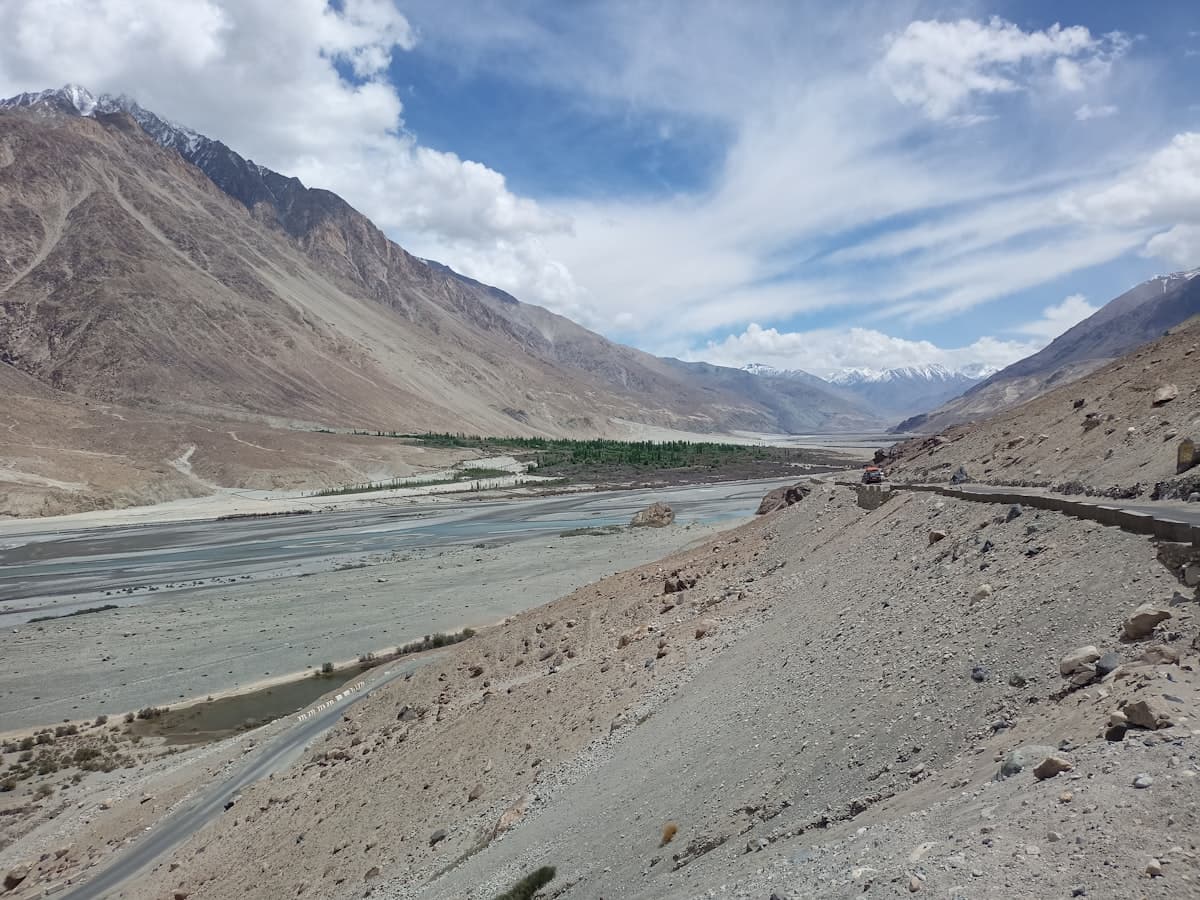
A long, rough and spectacular drive that avoids going back over Khardung La. The road follows the Shyok river east, through a wide, empty valley of braided river channels and bare rock. Parts of it are unpaved and slow. There are no towns and few people for hours. You reach Pangong from the north in the late afternoon, with the lake opening up ahead. Plan on seven to eight hours on the road. It is worth it.
Day 11 · Pangong Lake
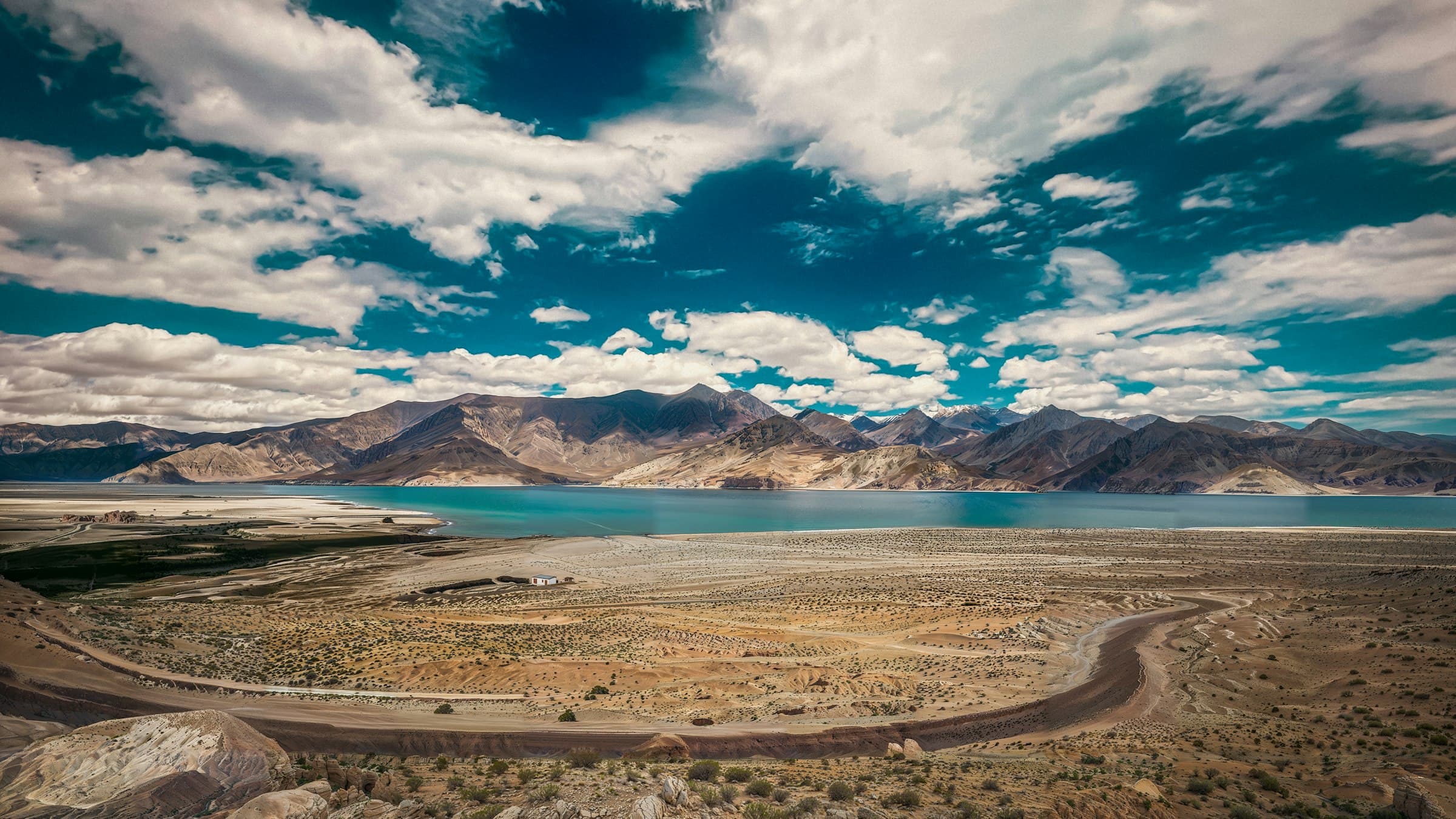
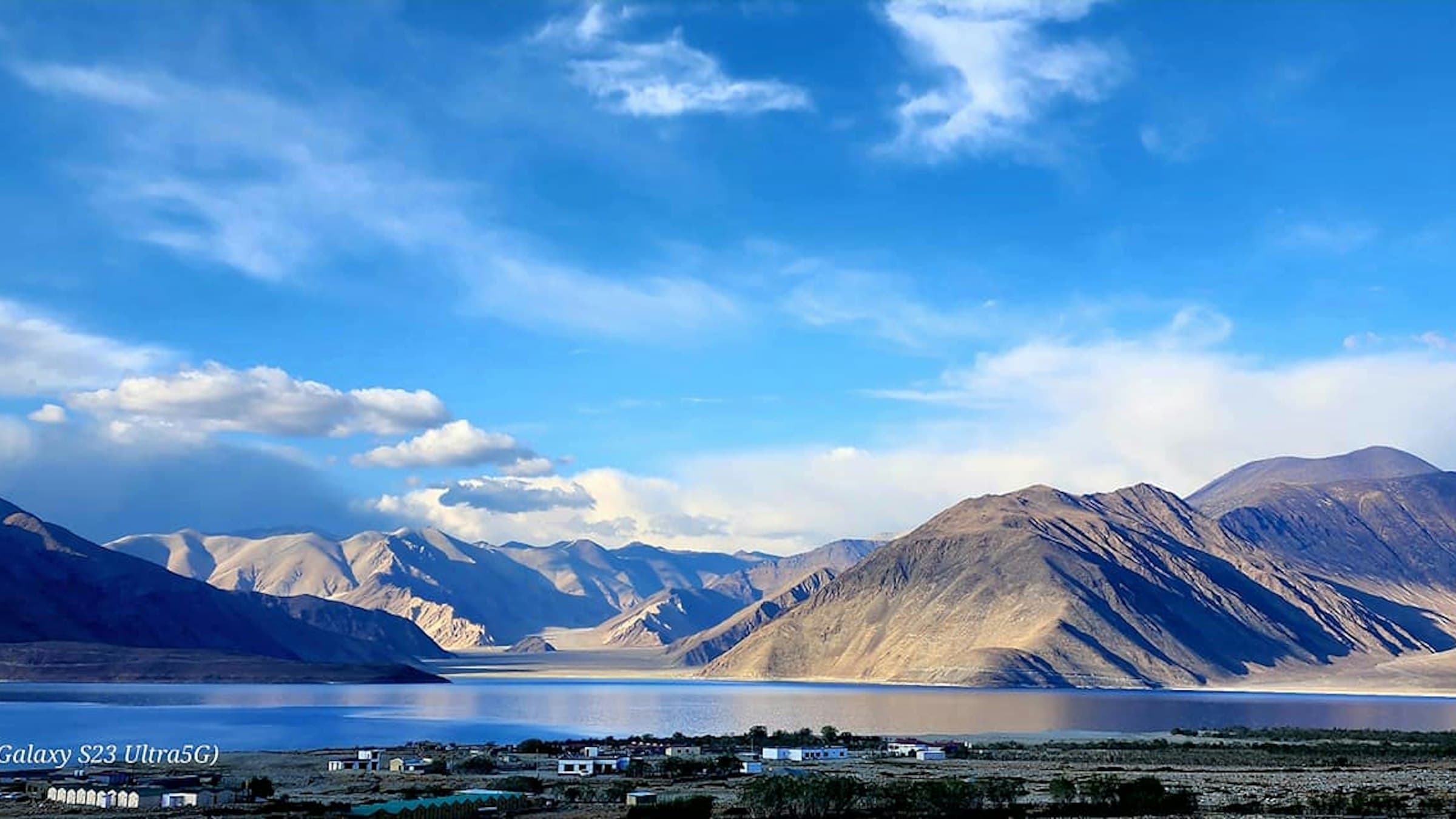
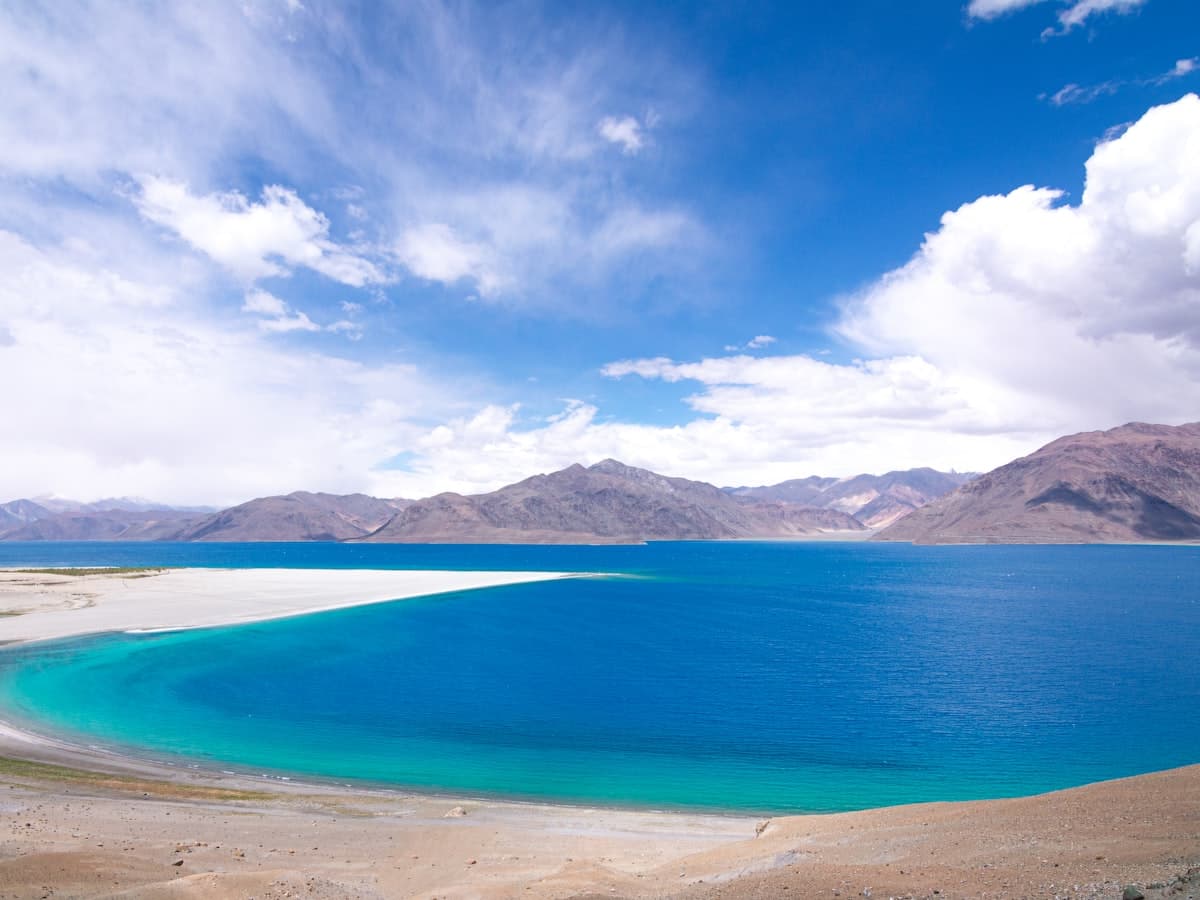
A slow day by the lake, which is the point of coming this far. The water changes colour through the day, so it rewards sitting still and watching. A short drive along the shore towards the villages of Man and Merak gets you away from the day-trip crowds at Spangmik. The altitude here is 4,350 metres, so walking is slow and naps are normal. After dark, the sky fills with stars. A second night on the shore.
Day 12 · Pangong Lake → Leh
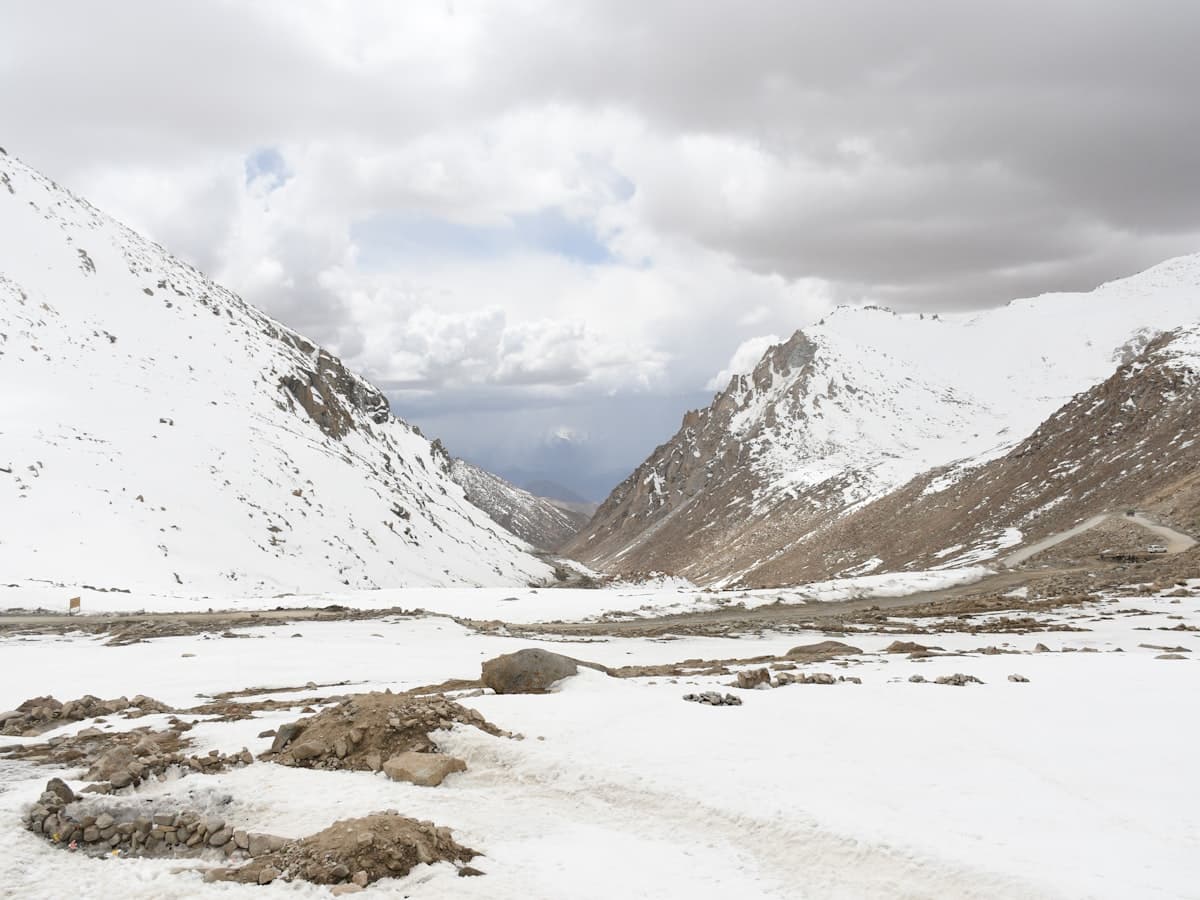
An early start to be over Chang La before the afternoon wind. The pass is at about 5,360 metres and often holds snow even in summer. Below it the road runs down past Hemis and Thiksey, so there is a chance to stop at either if you missed them. You are back in Leh by mid-afternoon, at a lower and easier altitude. The last evening is free for the market and for packing. The drive is five to six hours in all.
Day 13 · Leh → Tso Moriri
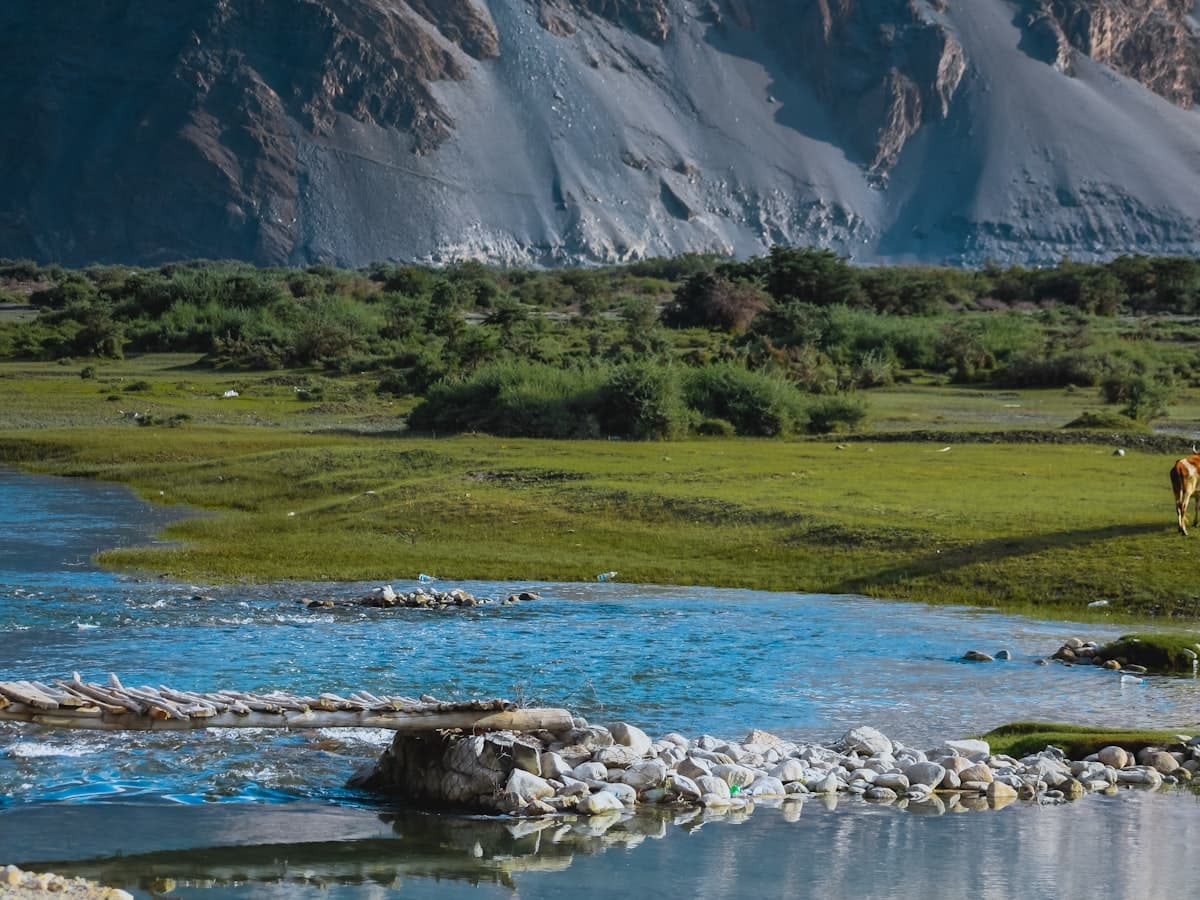
A long, remote drive south-east into the Changthang plateau, about two hundred and twenty kilometres and seven hours. The road follows the Indus upstream through Upshi and Chumathang, where hot springs steam by the river. Past Mahe the land opens into wide, empty, high pasture, and the first kiang, the wild ass of the plateau, appear. The last stretch runs beside a smaller lake, Kyagar Tso, before Tso Moriri itself comes into view. You reach the camp at Korzok in the late afternoon.
Chapter Four — Day by Day
Every day, start to finish — including the transfers the sightseeing chapter above skipped.
Leh
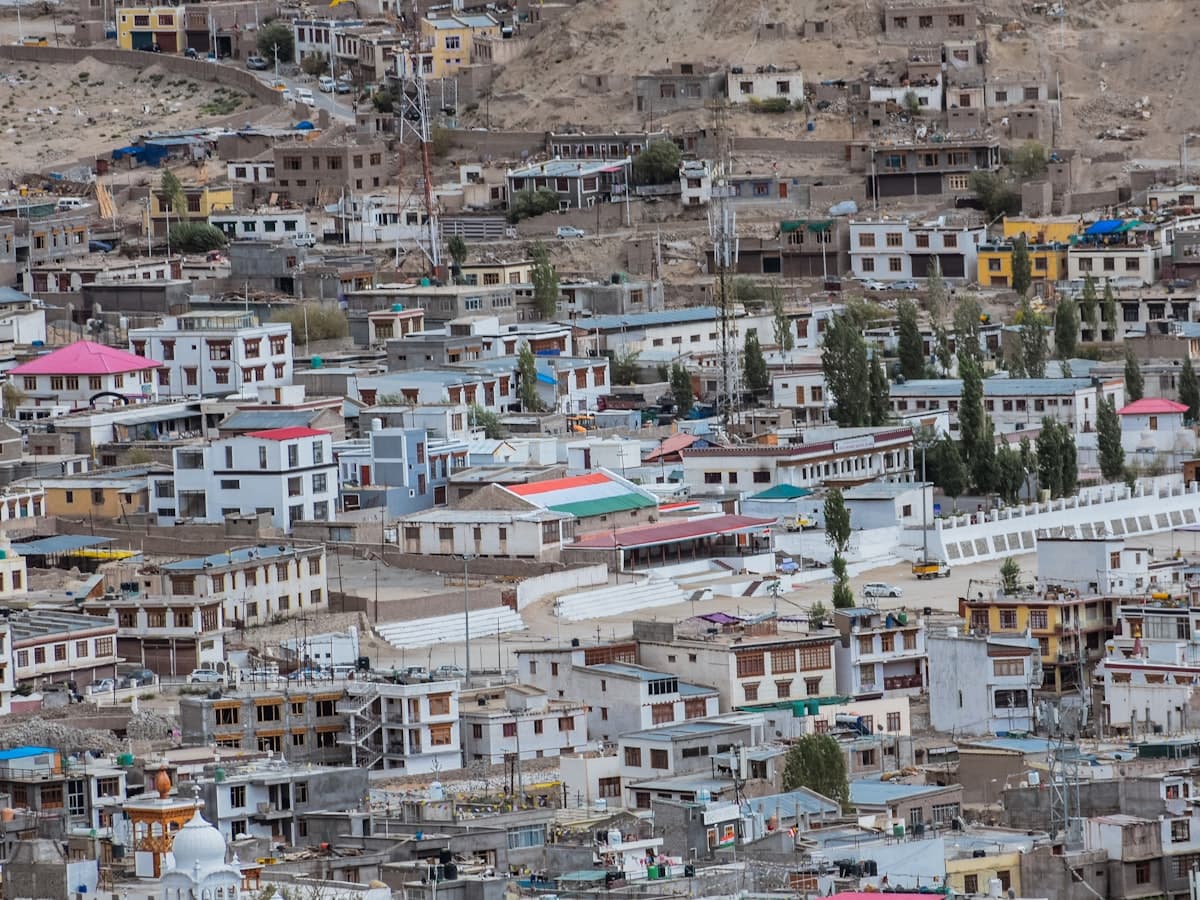
You fly into Leh in the early morning, over the main Himalayan range. The airport sits at 3,500 metres, so the first day is a rest day, and this is not optional. Your guide checks you in and asks you to do very little. Drink water, eat lightly, sleep if you can. A short, slow walk to Leh market in the afternoon is as much as you should do. Giving the body a full day here now prevents altitude sickness later.
Leh
A gentle first full day, still close to the hotel. The morning is Leh's old town: the bazaar, the mosque, and the nine-storey palace above it. The climb through the palace floors is slow but short. In the afternoon, drive up to Shanti Stupa for the view over the valley. Sankar Monastery, a working gompa a short way from the centre, fills any spare time. An early night before tomorrow's monastery run.
Leh → Sham Valley
A drive west down the Indus, dropping in altitude the whole way, which helps. First stop is Basgo, a ruined mud-brick fort and its Maitreya temples on a wind-carved ridge. Then Likir, with its huge open-air gilded Buddha and, if you want it, a short turn at a village potter's wheel. The main visit is Alchi, the eleventh-century monastery on the river flats, with wall paintings found nowhere else in Ladakh. You reach your hotel at Nimmu or Nurla by late afternoon.
Sham Valley
A day further west into the oldest corner of Ladakh. The road climbs over the Fotu La pass to Lamayuru, one of the oldest monasteries in the region, set on a crag above pale, folded hills that guides call moonland. There is time to walk the monastery and its old cave rooms. The village below has a teahouse for lunch. On the way back, a stop at Wanla or Rizong, a strict monastery reached on foot up a side valley. Back at the hotel for the night.
Sham Valley → Leh
An easy drive back up the valley to Leh, with the classic Sham stops on the way. The Indus-Zanskar confluence, where the clear green river meets the grey one. Magnetic Hill, a quick stop where the road plays a trick on the eye. The Gurudwara Pathar Sahib, a Sikh shrine built around a boulder. Closer to town, the Hall of Fame, the army's museum of the region's mountain wars. You are back in Leh, at a higher but now familiar altitude, by early afternoon.
Leh
A full day among the great monasteries south-east of Leh. Start early at Thiksey, a twelve-storey monastery on a hill, for the dawn prayers if you are up to it. Then Hemis, the largest and richest in Ladakh, hidden in a side gorge. Shey, the old royal palace with its giant seated Buddha, and Stok are on the way back. It is a lot of driving, but the roads are good and the valley is beautiful. Back in Leh by evening.
Leh → Nubra Valley
The drive to Nubra crosses Khardung La, at about 5,360 metres one of the highest motorable passes in the world. You stop briefly at the top for photos and tea, but not long, because of the altitude. The road then drops a long way into the Nubra valley, green and wide after the bare passes. You reach your Nubra hotel by mid-afternoon. The rest of the day is at rest by the river. The full drive takes five to six hours with stops.
Nubra Valley
A full day in the Nubra valley. The morning is Diskit Monastery and its 32-metre Maitreya statue, which looks down the valley towards Pakistan. In the afternoon, the white sand dunes at Hunder, with their two-humped Bactrian camels. A short camel ride runs in the last hour of light, when the dunes turn gold. Turtuk, a Balti village near the border that only opened to visitors in 2010, is an option for those with the time. A second night in Nubra.
Nubra Valley
A day trip down the Shyok valley to Turtuk, one of the last villages before the line with Pakistan. Turtuk is Balti, not Ladakhi, Muslim and Urdu and Balti-speaking, and it only opened to visitors in 2010. It is a green terraced village of apricot orchards and stone lanes, with old water mills and a small museum in a former royal house. The drive down and back takes most of the day, about three hours each way from the Hunder area. It is the most different place in Ladakh.
Nubra Valley → Pangong Lake
A long, rough and spectacular drive that avoids going back over Khardung La. The road follows the Shyok river east, through a wide, empty valley of braided river channels and bare rock. Parts of it are unpaved and slow. There are no towns and few people for hours. You reach Pangong from the north in the late afternoon, with the lake opening up ahead. Plan on seven to eight hours on the road. It is worth it.
Pangong Lake
A slow day by the lake, which is the point of coming this far. The water changes colour through the day, so it rewards sitting still and watching. A short drive along the shore towards the villages of Man and Merak gets you away from the day-trip crowds at Spangmik. The altitude here is 4,350 metres, so walking is slow and naps are normal. After dark, the sky fills with stars. A second night on the shore.
Pangong Lake → Leh
An early start to be over Chang La before the afternoon wind. The pass is at about 5,360 metres and often holds snow even in summer. Below it the road runs down past Hemis and Thiksey, so there is a chance to stop at either if you missed them. You are back in Leh by mid-afternoon, at a lower and easier altitude. The last evening is free for the market and for packing. The drive is five to six hours in all.
Leh → Tso Moriri
A long, remote drive south-east into the Changthang plateau, about two hundred and twenty kilometres and seven hours. The road follows the Indus upstream through Upshi and Chumathang, where hot springs steam by the river. Past Mahe the land opens into wide, empty, high pasture, and the first kiang, the wild ass of the plateau, appear. The last stretch runs beside a smaller lake, Kyagar Tso, before Tso Moriri itself comes into view. You reach the camp at Korzok in the late afternoon.
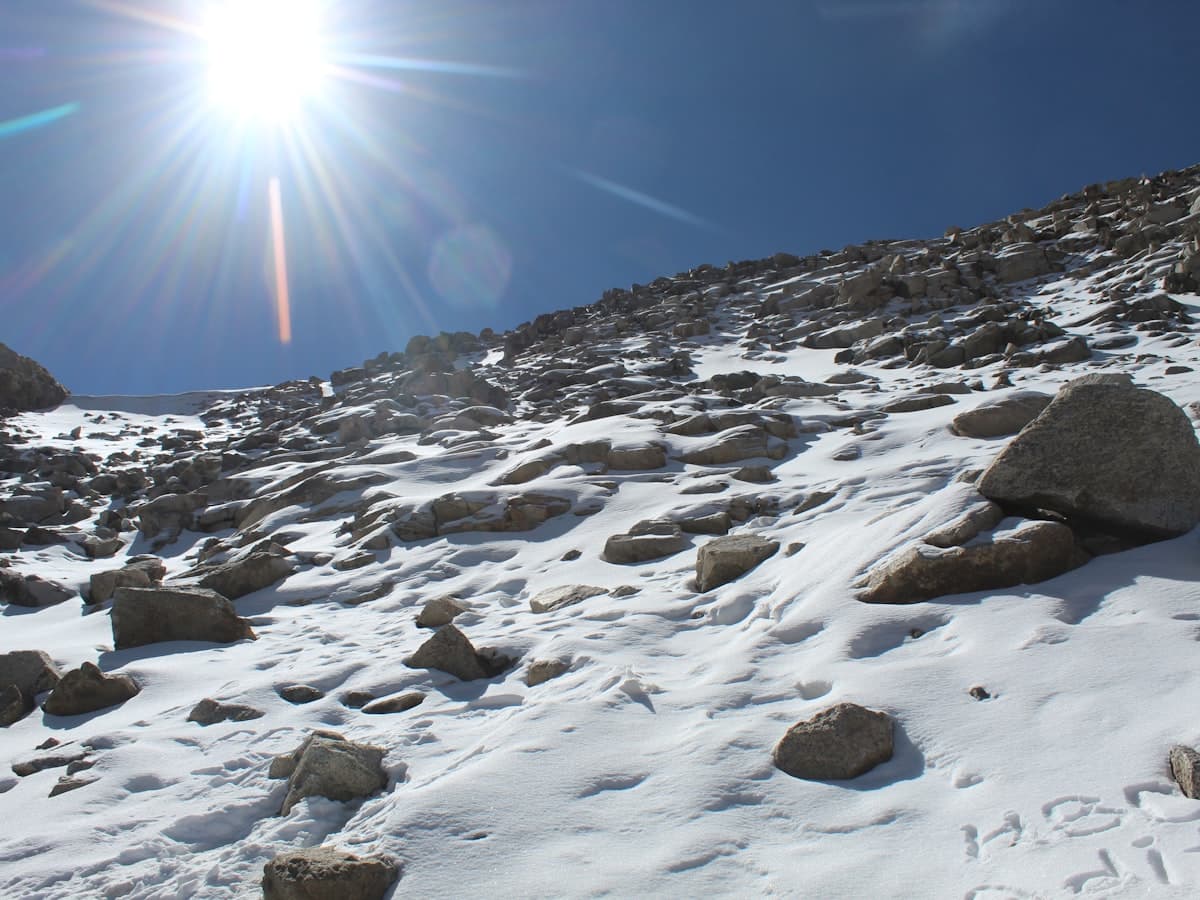
Tso Moriri → Leh
The drive back to Leh by the western road, over the Rupshu plateau. First stop is Tso Kar, the white salt lake, where kiang graze the shore and the old salt-scraping village of Thukje sits below a small monastery. The road then joins the Leh-Manali highway and climbs the Tanglang La, one of the highest passes in the world at about 5,300 metres. From the top it is a long descent down the Indus valley, past Upshi, into Leh. The full day is seven to eight hours with stops.
Chapter Five — Terms & Conditions
Cancellation windows, refund timing, and rescheduling terms for this journey follow our one sitewide policy — nothing package-specific to dig through.
Read the Return & Refund PolicyChapter Six — Similar Journeys
Why Choose Us
01
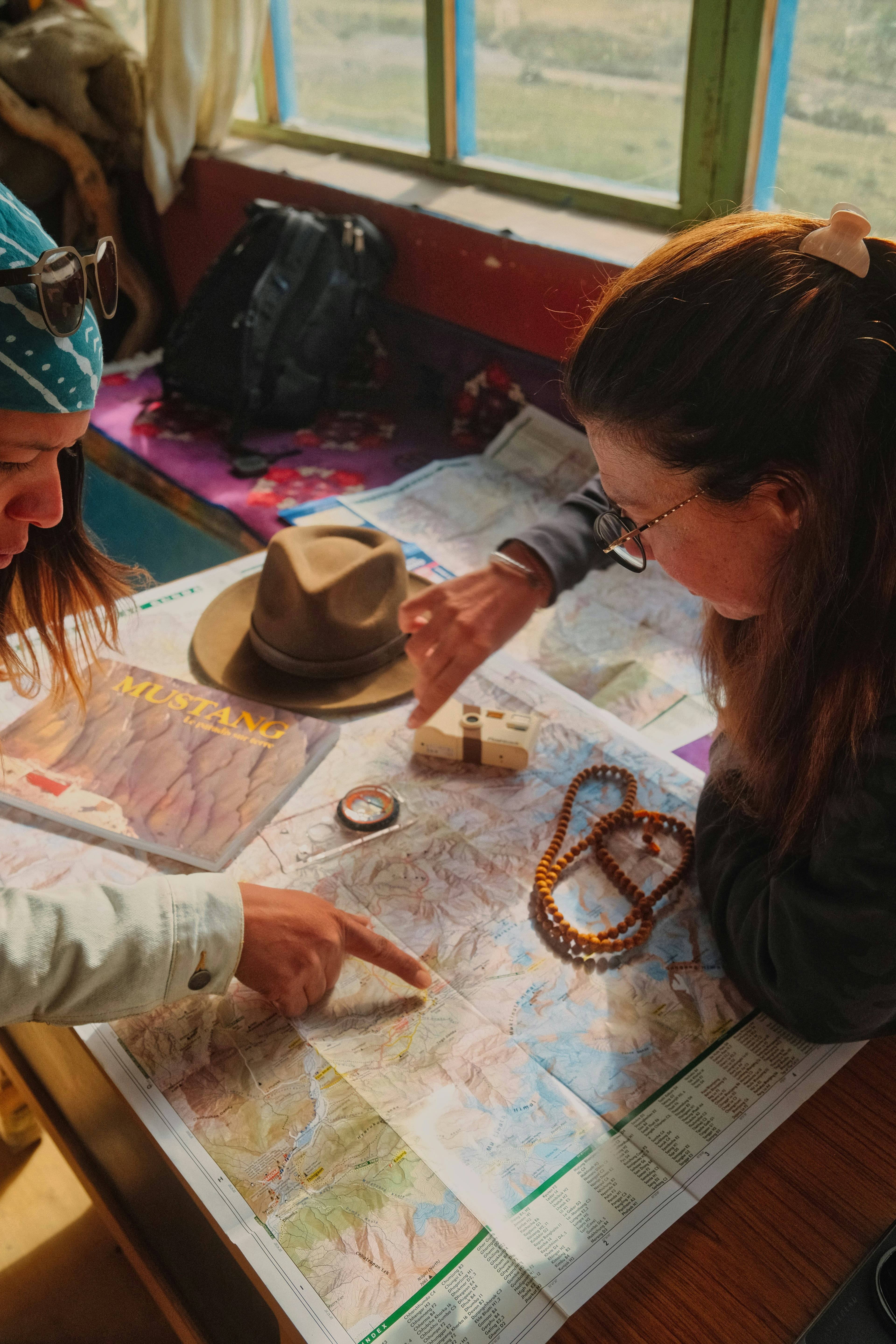
This route was shaped around Ladakh's real places, not lifted from a fixed template.
13 years — Brijesh Sharma, Bespoke Itinerary Specialist
02
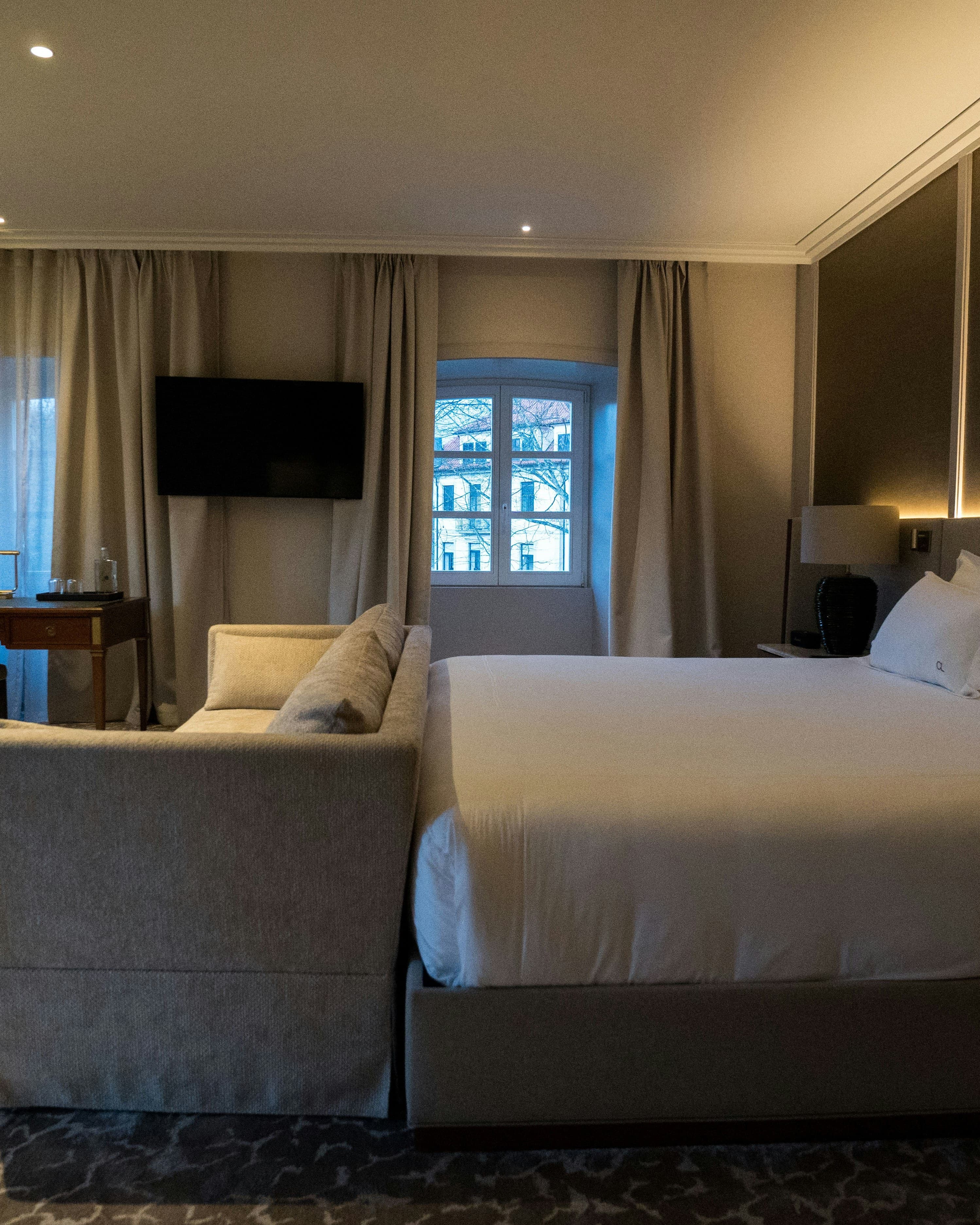
Every stay on this trip was chosen in person, not off a ratings page.
5 real stays, 3–5★
03
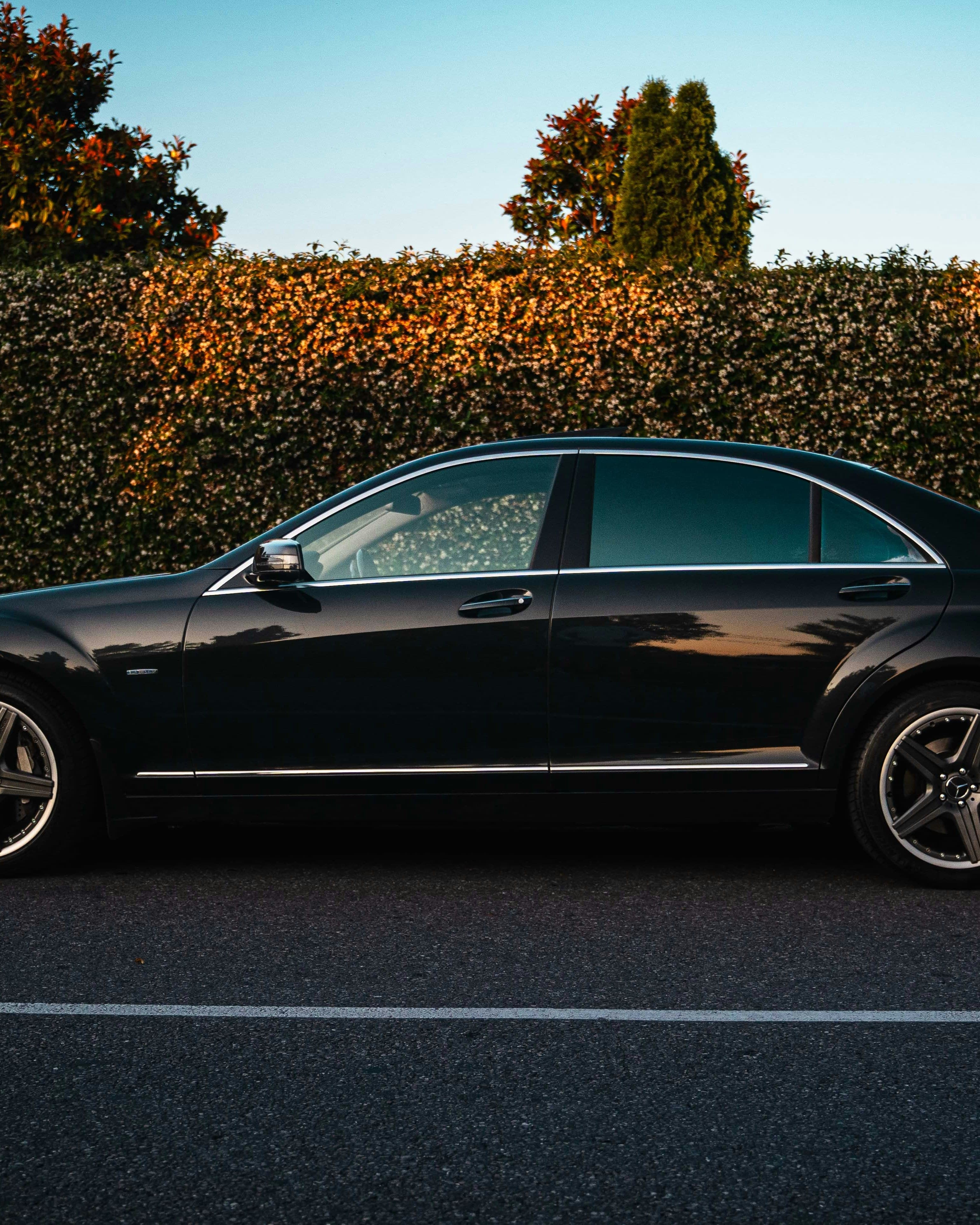
One driver, air-conditioned, for the whole route — no shared shuttle.
Premium sedans & SUVs · One driver, the whole trip

Kashmir to Kanyakumari
Get In Touch
Tell us your travel dates and group size — we'll confirm availability and refine this itinerary around you.