
Hotel Index
Luxury Hotels & Resorts, Ladakh
Every real hotel we book in Ladakh — heritage palaces, boutique retreats, and five-star privacy, chosen in person.
Kargil, Ladakh
Hotel The Kargil
★★★☆☆
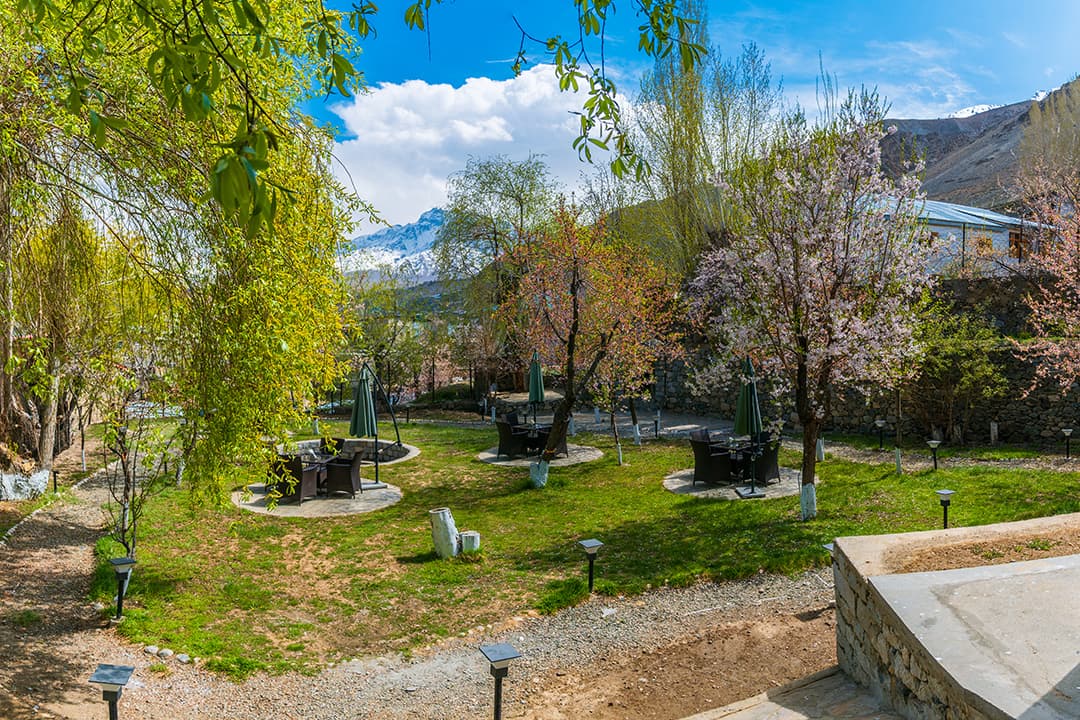
Hotel The Kargil sits in the middle of Kargil town, off the main market on Hospital Road. It opened in 2017 and was the first fully air-conditioned hotel in Kargil. There are thirty rooms and three suites, all heated, with modern bathrooms and hot water around the clock. The upper floors look out over the town and the surrounding hills. There is a restaurant serving Ladakhi, North Indian and Kashmiri food, a coffee shop and a travel desk that arranges permits and cars. Kargil has no luxury hotel. This is the best in town, and it is the property both our premium and luxury western-Ladakh trips use for the Kargil night.
Leh, Ladakh
Ladakh Sarai
★★★★★
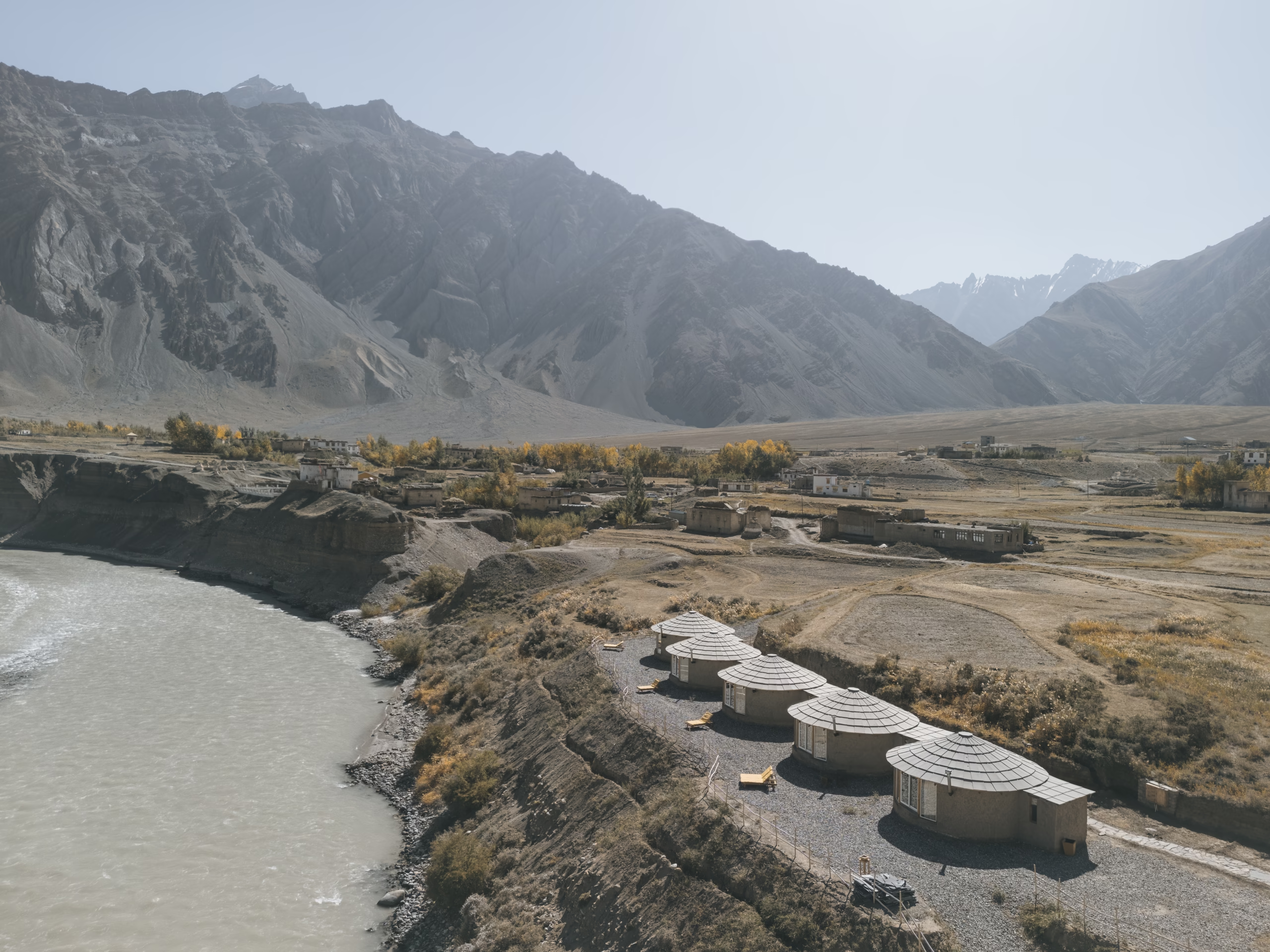
Ladakh Sarai is a small tented lodge in the hills above Saboo, a village on the edge of Leh, away from the town. The accommodation is a handful of stone cottages and yurts, furnished with Ladakhi rugs and textiles, each with a wood stove and a proper bathroom. The camp is set among barley fields and looks across the Indus valley to the Stok range. It is run by an established Himalayan operator and is built for slow days. Meals are shared, the food is local, and guided walks leave straight from the camp. It is the choice for travellers who want the Leh sights but not a hotel in the town, and it works well as a base for the first, acclimatising days.
Leh, Ladakh
The Grand Dragon Ladakh
★★★★★
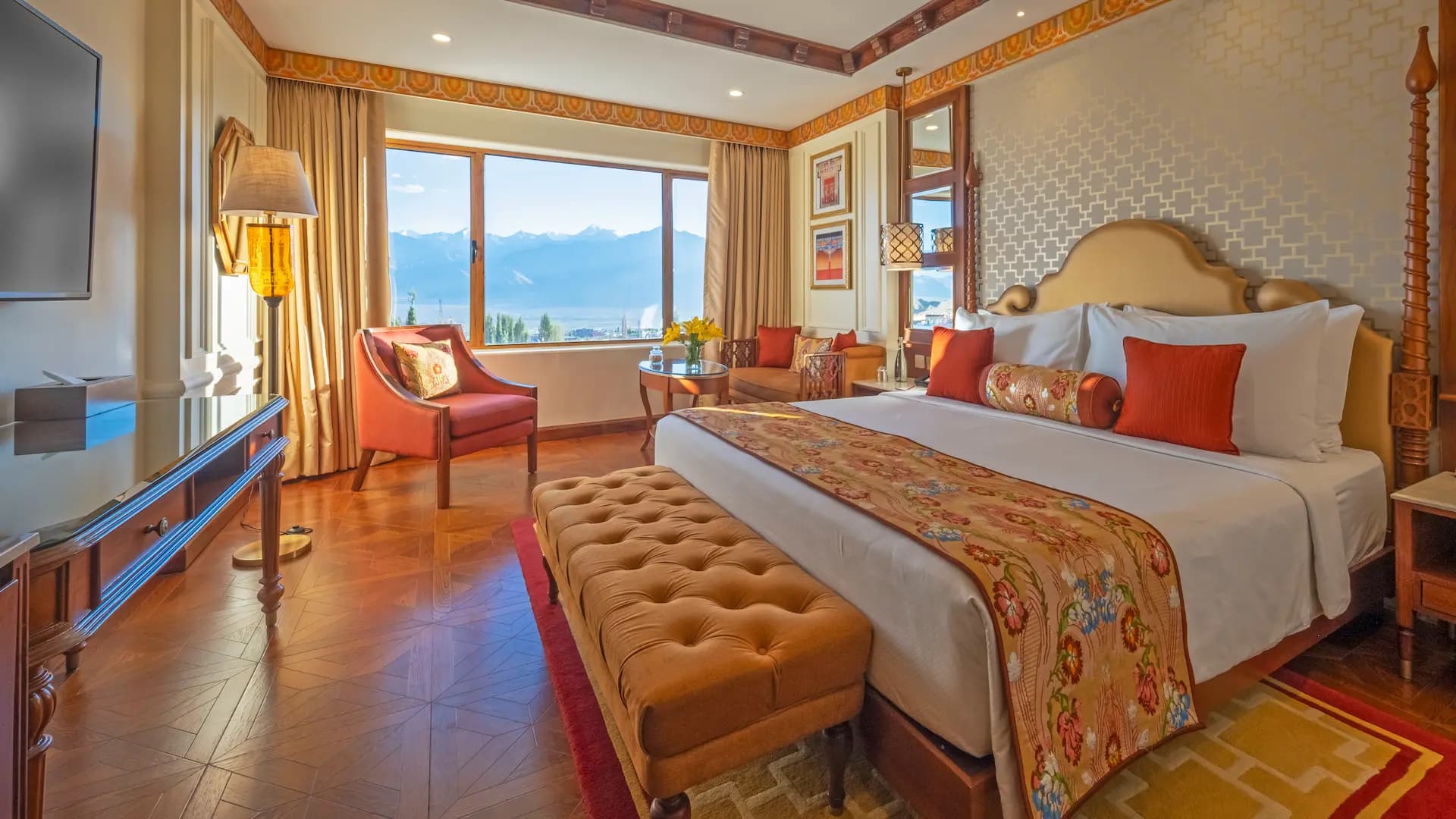
The Grand Dragon is the only certified five-star hotel in Ladakh. It stands on a rise on the edge of Leh, at about 3,500 metres, with the Stok range filling the windows. The building is run for the altitude. Rooms have a fresh-air system that raises the oxygen level, which helps guests sleep on the first nights. The heating is central and the water is hot, neither of which can be taken for granted this high up. There are 76 rooms and suites, all with mountain views, warm Ladakhi textiles and large bathrooms. The hotel has a spa, a library, a coffee shop and two restaurants, one of them serving Ladakhi food. The family that owns it has traded and hosted in Leh for generations. It is open all year, including deep winter, when most of Leh closes.
Leh, Ladakh
Stok Palace Heritage
★★★★☆
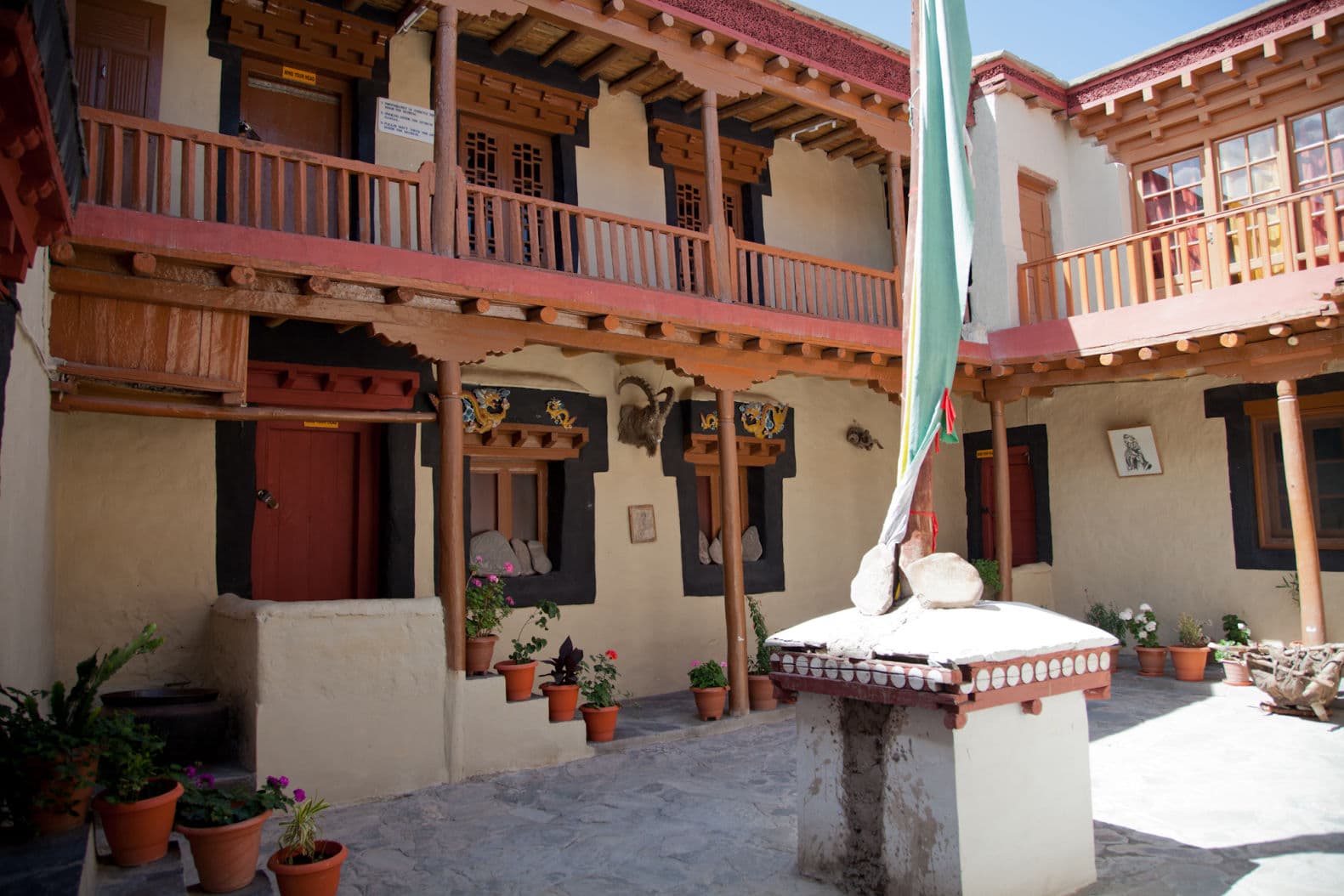
Stok Palace is the home of the Ladakhi royal family. It was built in 1820 and sits in Stok village, about 14 kilometres from Leh, on a ridge above the Indus valley. The family still lives in part of it. A few of the palace rooms are let to guests, each one furnished with old Ladakhi pieces, painted woodwork and family objects. This is a heritage stay, not a hotel. There is no television, no air conditioning and limited Wi-Fi, by choice. Meals are Ladakhi and are taken with the family or in the palace kitchen. The palace museum, one of the best collections of Ladakhi royal art and thangkas, is on the same site. Stok is quiet, rural and dark at night, a complete change from the town.
Nubra Valley, Ladakh
Lchang Nang Retreat — The House of Trees
★★★★★
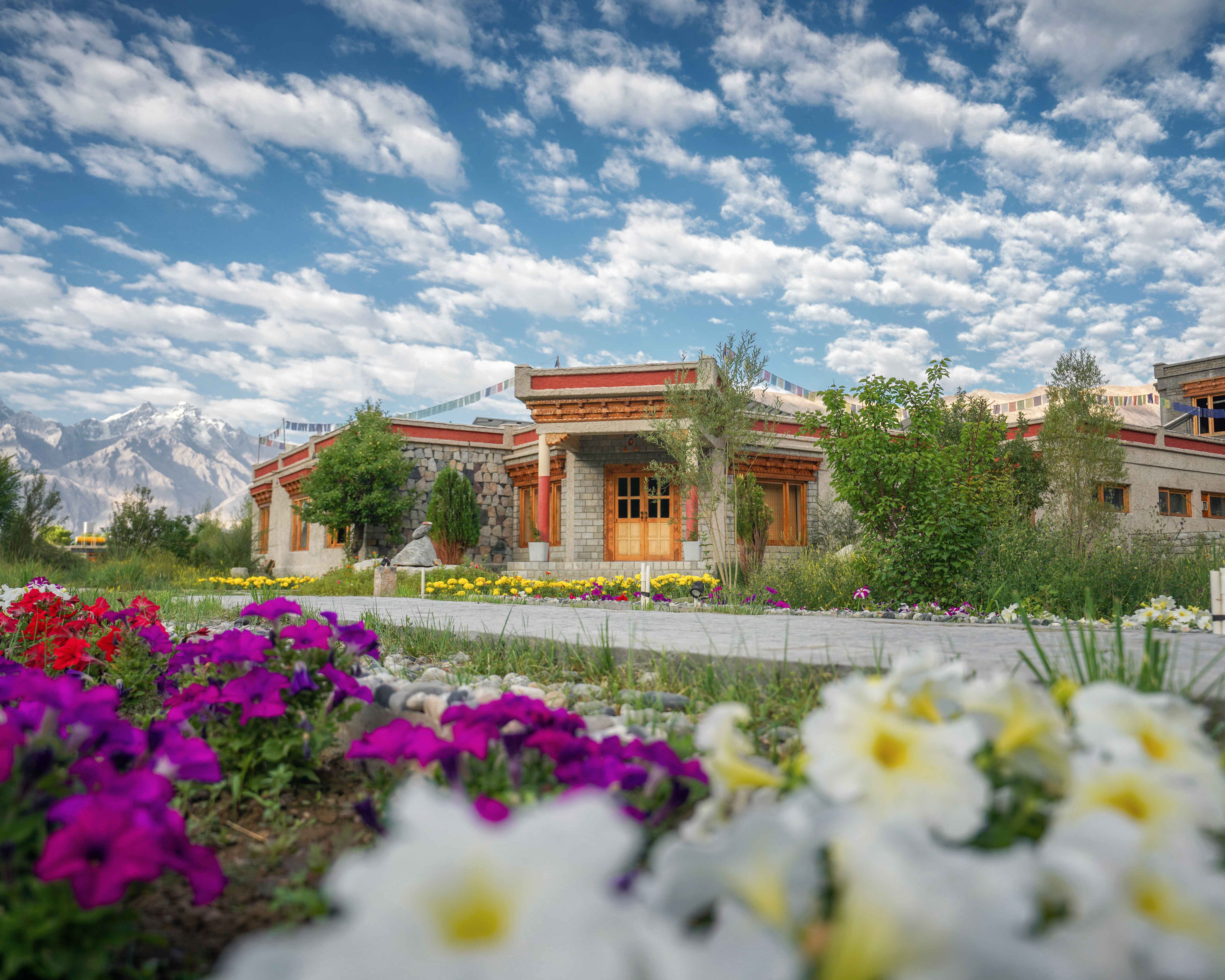
Lchang Nang means the House of Trees. It is a small retreat on the bank of the Nubra river, near Sumur, set in a garden of poplar and willow. There are 17 cottages, built by local masons from mud, stone and poplar wood, in the Ladakhi way. They are warm, simple and quiet, with wide windows onto the river and the dunes. The retreat runs on solar power for most of the year. Food comes largely from its own garden and from Nubra farms. There is no bar and no pool. The point is the setting. It is a member of Small Luxury Hotels of the World and is owned by a Nubra family. It is the natural luxury base for the Nubra leg of a Ladakh trip, and the reason to give Nubra two nights rather than one.
Pangong Lake, Ladakh
Pangong Sarai
★★★★☆
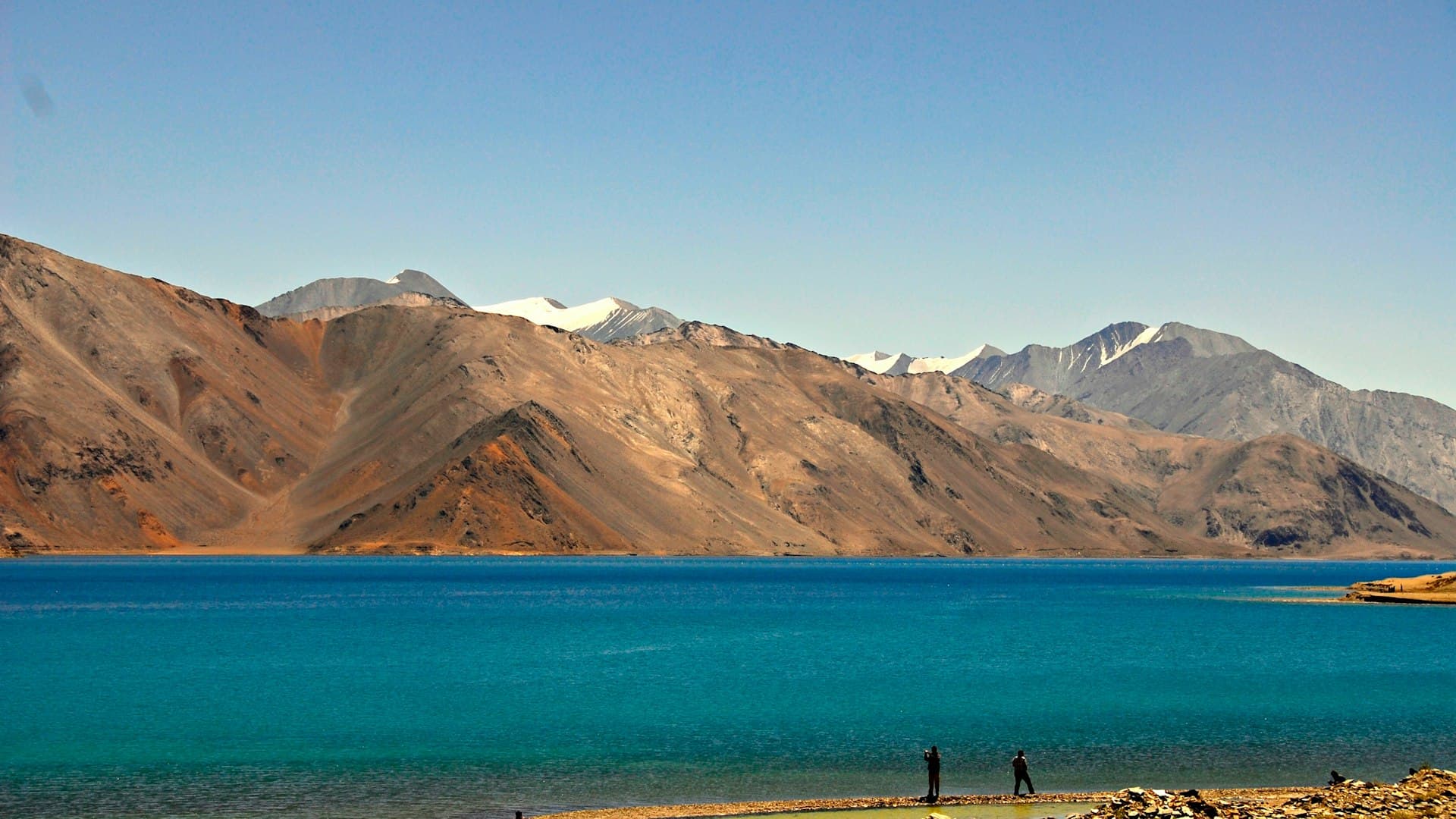
Pangong Sarai is a tented camp on the south shore of Pangong Lake, near Spangmik, at about 4,300 metres. It is the most comfortable stay on the lake, which is not a high bar, but it is a real one. The accommodation is around 30 yurt-style tents and a few mud cottages. Each tent has a proper bed, an attached bathroom with a hot shower, and an electric blanket for the cold nights. There is oxygen support on hand and a solar and generator backup for power. Meals are served in a central dining tent. The camp only runs in the short season, roughly May to September, and closes when the lake road ices over. This is the one property both our luxury and premium Ladakh trips use for the Pangong night. There is nothing else at this standard on the shore.
Sham Valley, Ladakh
Nimmu House
★★★★☆
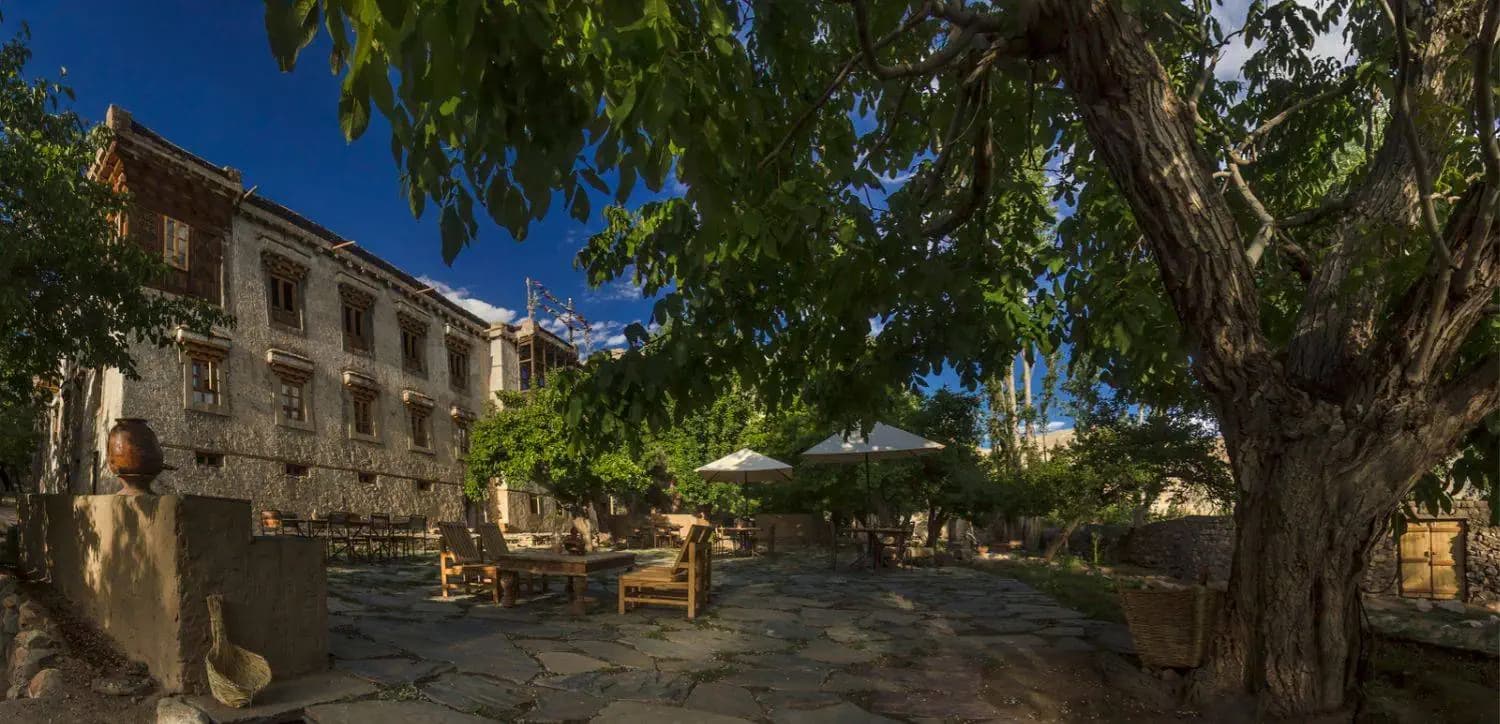
Nimmu House is a former Ladakhi noble's home in the village of Nimmu, about forty minutes west of Leh, near the meeting of the Indus and Zanskar rivers. The old house has five rooms, restored with traditional Ladakhi woodwork and furniture. In the orchard around it stand seven canvas tents, each with a proper bed, a bathroom and a wood stove. The garden runs to apricot, apple and walnut trees, and there is a small farm with yaks and dzos. It is an eco-boutique property. Power is mostly solar, water is heated by the sun, and the kitchen cooks with vegetables from the garden and Ladakhi recipes. Nimmu is lower than Leh, which helps with the altitude, and it is the natural first or last stop for the Sham valley and Alchi.
Sham Valley, Ladakh
The Apricot Tree
★★★★☆
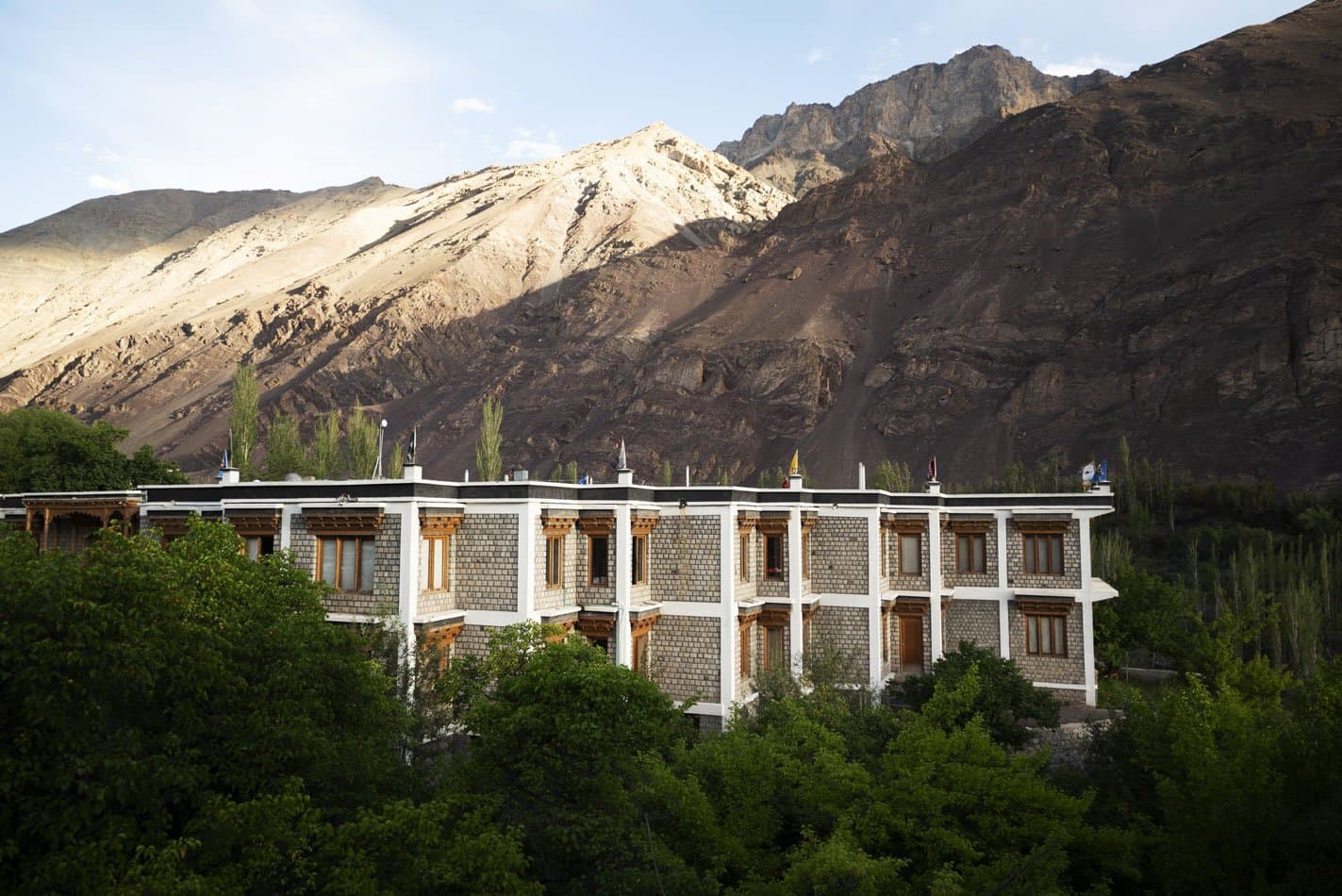
The Apricot Tree stands just outside Nurla village, on the road between Leh and Lamayuru, looking down on the Indus. It is a modern hotel built in the Ladakhi style, with carved wood, stone walls and warm interiors. The rooms are large and well heated, and most face the river and the mountains beyond it. There is a garden, a terrace restaurant and a quiet lounge. Nurla is a good base for the western Sham valley. Alchi is a short drive one way, Lamayuru the other, and the hotel sits low enough that guests sleep well. It is the sensible premium choice for a night or two in Sham, a real hotel with hot water and heating rather than a basic guesthouse.
Tso Moriri, Ladakh
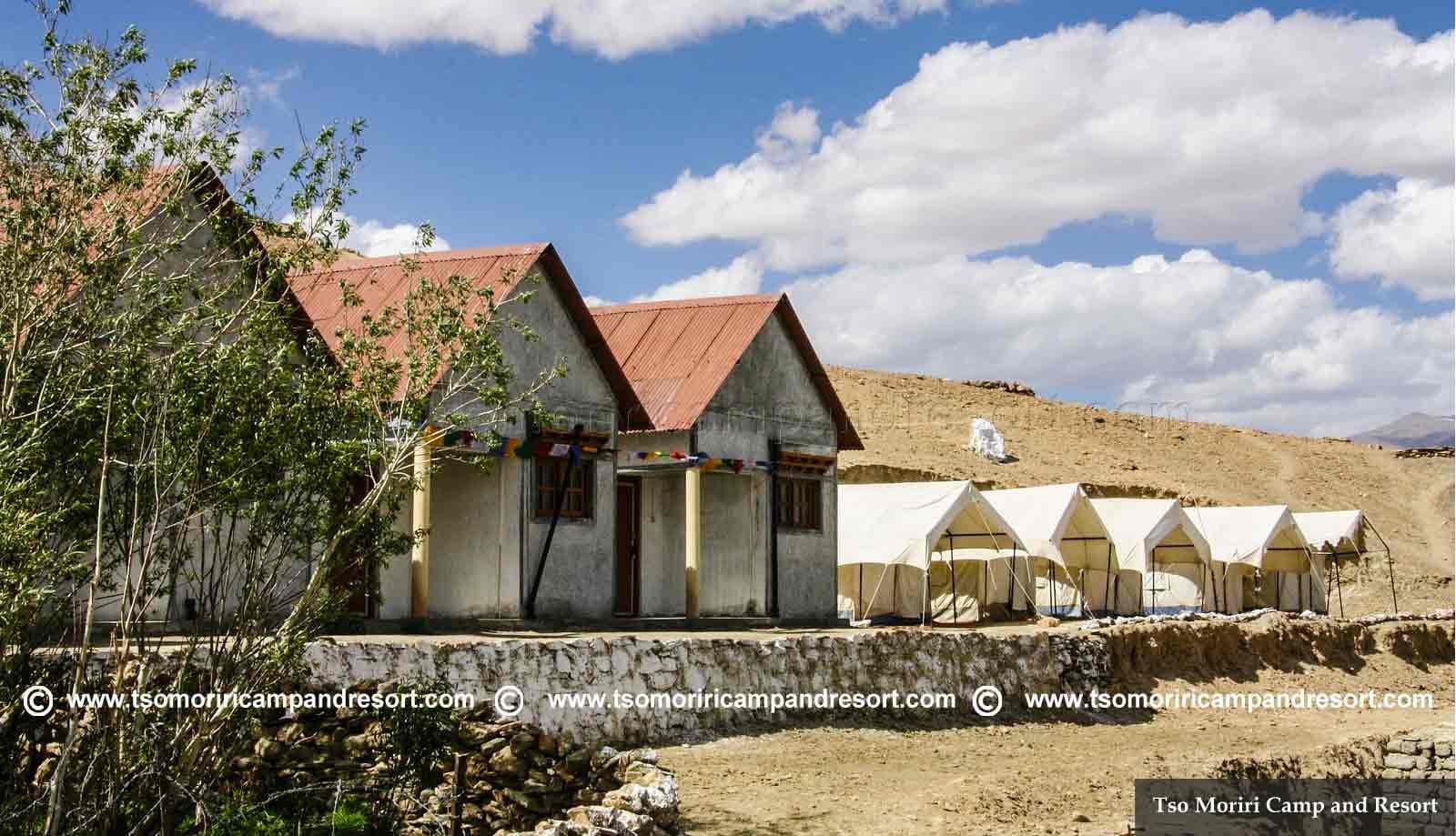
Tso Moriri Camp & Resort
★★★☆☆
Tso Moriri Camp & Resort sits at Korzok, the one village on the shore of Tso Moriri, at about 4,500 metres. It is the most comfortable place to stay on the lake, which is a low bar in the Changthang, but a real one. There are around fifteen tents and five solid rooms. Each has a bed with warm bedding, an electric blanket, and an attached bathroom with a Western toilet and a hot shower. Meals are served in a central dining tent. Power runs on solar with a generator backup, and there is oxygen support for guests who need it. The camp only opens for the short season, roughly May to September, and this is the one property both our luxury and premium Ladakh trips use for the Tso Moriri night.

Kashmir to Kanyakumari
Get In Touch
Start Planning Your Trip
Full itinerary, real pricing, one honest conversation — no sales pressure, just answers.