
Red Fort, Delhi: Timings, Tickets and a Walk Through the Lal Qila
Red Fort visitor guide: opening hours, why it is closed on Mondays, ticket prices, the light and sound show and a route from Lahori Gate to the gardens.
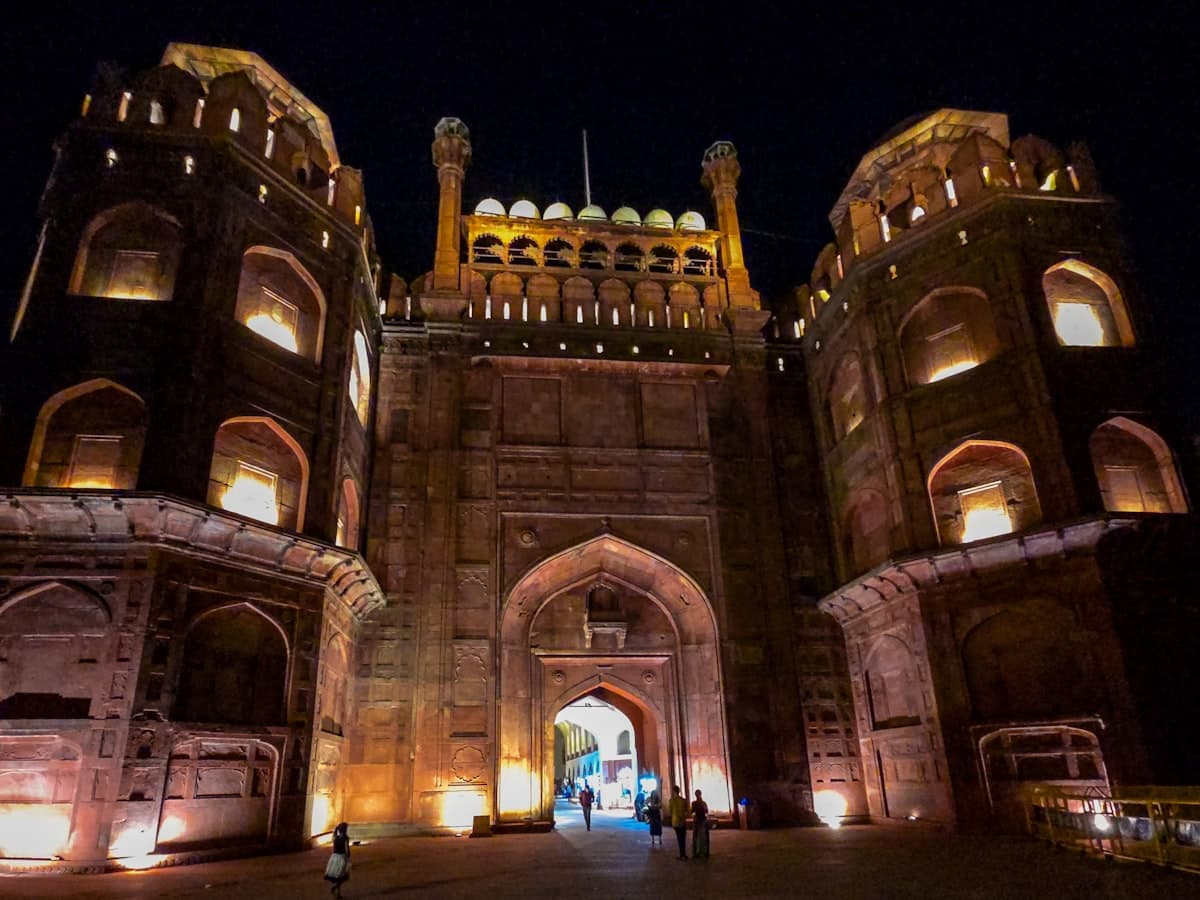
The Red Fort is where Delhi's story turns from old to imperial. Shah Jahan built it as the heart of a new capital. Two centuries later it was the centre of the 1857 rising. Every Independence Day, the Prime Minister raises the national flag from its ramparts.
It is also a fort that rewards a plan. The walls are long, the security is thorough and it is closed on Mondays. Arrive without knowing that and you waste a morning.
This guide gives you the practical facts first, then a route through the fort, then what to pair it with. Figures were checked in October 2026. Fees and show timings change, so confirm at the gate.
Red Fort at a glance
What to know | |
|---|---|
Where | Old Delhi, beside Chandni Chowk and opposite the Jama Masjid |
Hours | Tuesday to Sunday, about 9:30 am to 4:30 pm |
Weekly closing day | Monday |
Time to allow | About 2 hours for the main sights, more for the museums |
Best hour | Opening time. The red stone glows in morning light |
Best season | October to March |
Entry for visitors | Through the Lahori Gate, after a security check |
Built | Commissioned 12 May 1638, completed 6 April 1648 |
Architect | Ustad Ahmad Lahori, who is also credited with the Taj Mahal |
Heritage status | UNESCO World Heritage Site since 2007 |
A short history
Shah Jahan moved the Mughal capital from Agra to a new city, Shahjahanabad, in 1638. The Red Fort was its palace-citadel. It took ten years to build, and its walls run for about 2.4 kilometres. They rise to about 18 metres on the river side and 33 metres on the city side.
In 1739 the Persian ruler Nadir Shah sacked Delhi and carried off the Peacock Throne among other treasures. After 1857 the British took the fort, stripped many of its buildings and used it as a garrison.
Since 15 August 1947 the Prime Minister has raised the national flag at the Lahori Gate on Independence Day and addressed the nation from the ramparts.
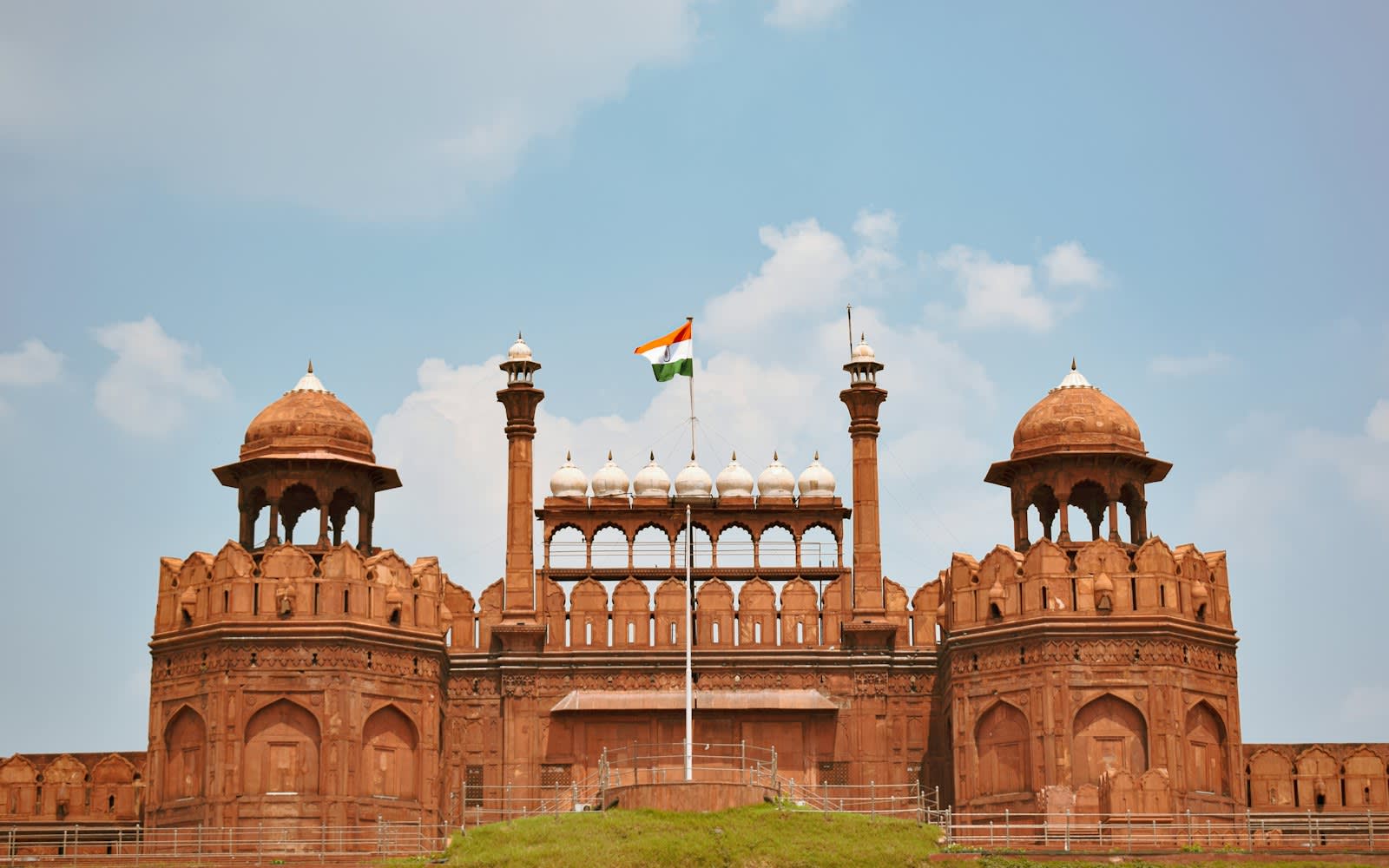
The Lahori Gate, the main entrance and the fort's best-known face.
Opening hours and tickets
Experience | Timing | Notes |
|---|---|---|
Daytime visit | Tuesday to Sunday, about 9:30 am to 4:30 pm | Closed on Mondays |
Light and sound show | Most evenings except Monday. Shows commonly start around 7:15 pm and 8:30 pm | Times shift with the season. Separate ticket |
Museums inside the fort | During daytime hours | Included with entry |
Ticket | Indian visitors | Foreign visitors |
|---|---|---|
Fort entry | About ₹35 to ₹50 | About ₹550 to ₹600 |
Children under 15 | Free | Free |
Light and sound show | A modest fee, usually under ₹100 | A modest fee, usually under ₹100 |
The Archaeological Survey of India (ASI) sets the fees and revises them from time to time. Online tickets cost a little less than cash tickets. Show tickets are sold at the fort and usually close about an hour before the show.
Expect airport-style security at the gate. Travel light, and leave large bags at your hotel.
The route through the fort
The fort is arranged as a sequence, from the public bazaar to the private palaces to the gardens. Walk it in order.
Stop | What it is | Allow |
|---|---|---|
Lahori Gate | The grand entrance, facing Lahore | 10 min |
Chhatta Chowk | A covered arcade of shops that once served the imperial household | 20 min |
Naubat Khana | The drum house, where musicians played at set hours | 10 min |
Diwan-i-Aam | The public audience hall | 15 min |
Rang Mahal | The Palace of Colours, home of the royal women | 15 min |
Mumtaz Mahal | Women's quarters, now a museum | 20 min |
Diwan-i-Khas | The private audience hall, with marble inlay | 15 min |
Hayat Baksh Bagh | The Life-Bestowing Garden, with pavilions | 20 min |
Lahori Gate and Chhatta Chowk
You enter through the Lahori Gate. The two flanking towers and the arcade above are the picture most people know. Inside, the Chhatta Chowk is a covered arcade. It was built as a market for the imperial household, and shops still line it today.
The Naubat Khana and the audience halls
Beyond the arcade, the Naubat Khana, the drum house, leads towards the inner fort. Musicians played here at set hours.
The Diwan-i-Aam was the hall where the emperor met his subjects. The Diwan-i-Khas was the private hall, with marble inlay, where he met ministers and guests.
The palaces
The Rang Mahal and the Mumtaz Mahal were part of the women's quarters. The Mumtaz Mahal is now a museum. These rooms were stripped after 1857, so you need imagination as well as eyes. A guide helps a great deal.
The Moti Masjid and the gardens
The Moti Masjid, the Pearl Mosque, was added by Aurangzeb in 1659. It is often closed to visitors, so treat it as a view rather than a stop. The Hayat Baksh Bagh, the Life-Bestowing Garden, is a pleasant place to end, with pavilions around the central pool.
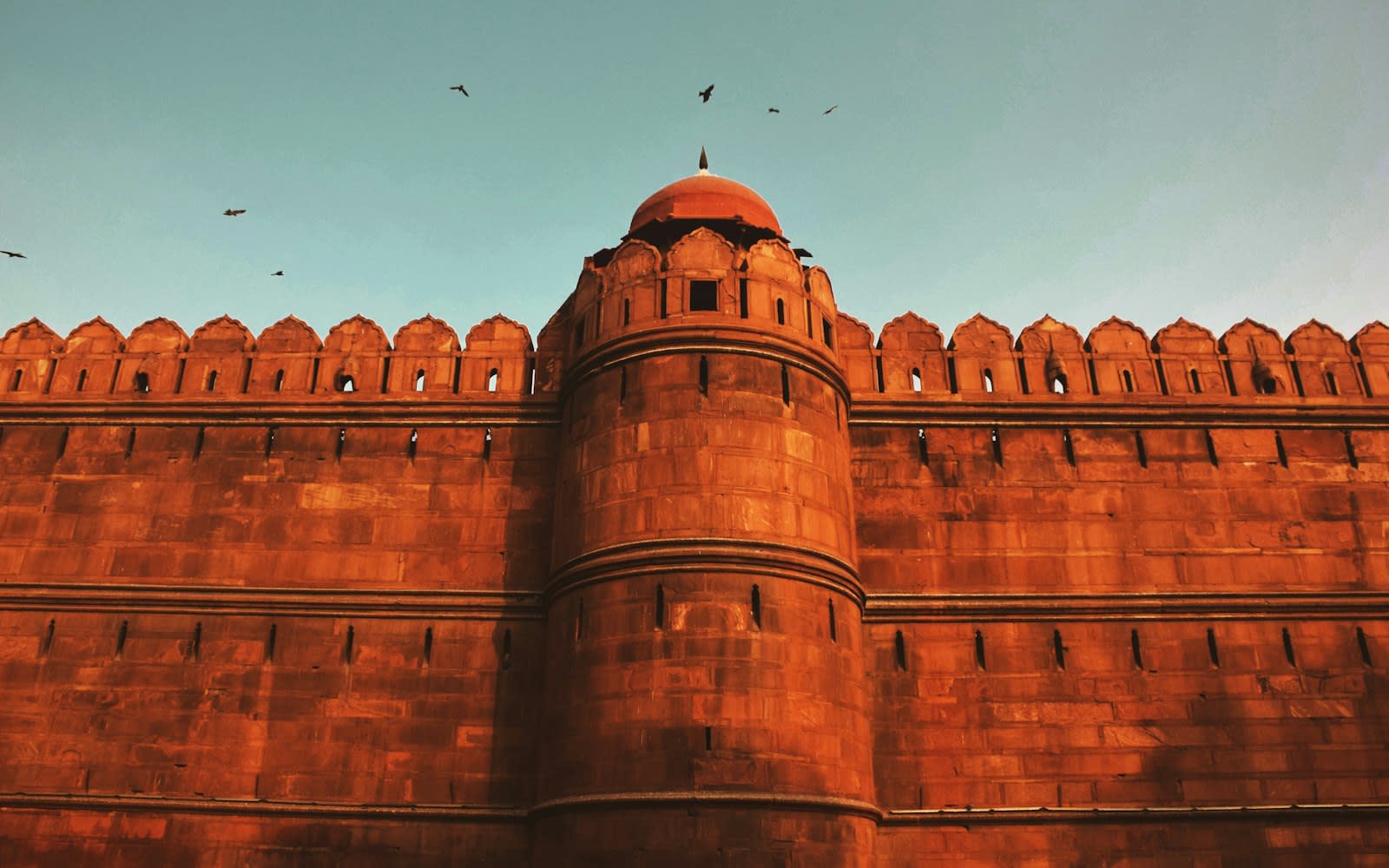
The sandstone ramparts. The fort's scale is clearest from the walls.
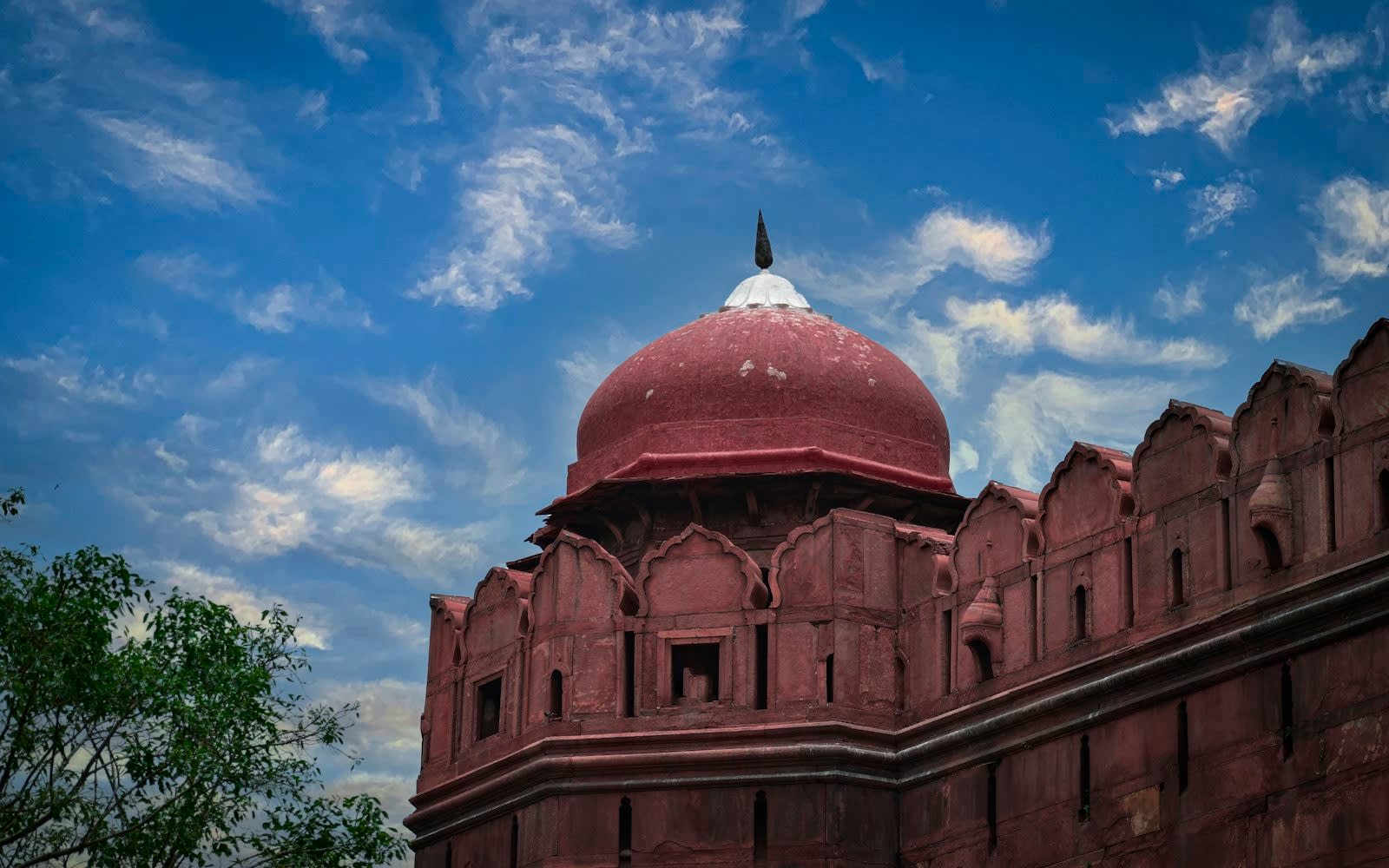
A domed pavilion above the fort wall.
Why Monday matters
The Red Fort is closed every Monday. Many Delhi monuments run on different days, so build your Old Delhi day around it. If Monday is your only free day, swap the fort for Jama Masjid and Chandni Chowk, which are open, and see the fort another day.
Who the Red Fort suits
Traveller | Why it works | Tip |
|---|---|---|
First-time visitors | The clearest introduction to Mughal Delhi | Go early on a Tuesday to Sunday |
History readers | From Shah Jahan to the 1857 rising to Independence Day | Hire a guide, as the rooms are bare |
Photographers | Red sandstone in low light, long wall lines | Shoot the gate at opening, the walls in late light |
Families | Wide lawns and a lot to look at | Keep it to two hours |
Couples | The evening light and sound show | Pair with dinner in Old Delhi |
Travellers with limited mobility | Paths are mostly level, though long | Ask about the closest drop-off |
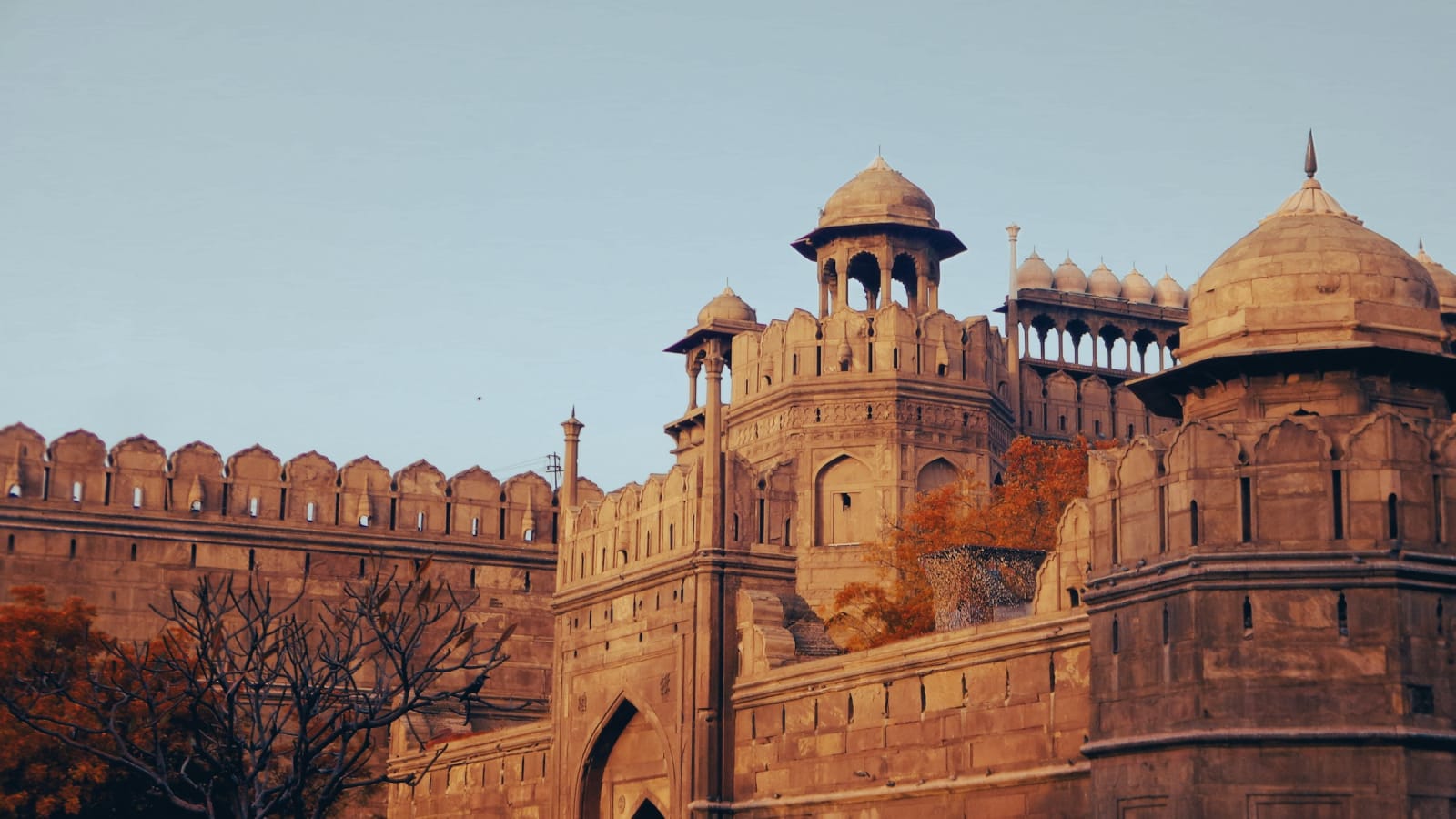
A gateway bastion at the fort's edge.
What to pair it with
The Red Fort is the centre of Old Delhi, and everything good is close by.
Jama Masjid is across the road, the largest mosque in India. Visit outside prayer times and dress modestly. See our notes in the Golden Triangle highlights guide.
Chandni Chowk is the bazaar that runs from the fort. It is loud, crowded and delicious. Our guide to Old Delhi through its food shows how to approach it.
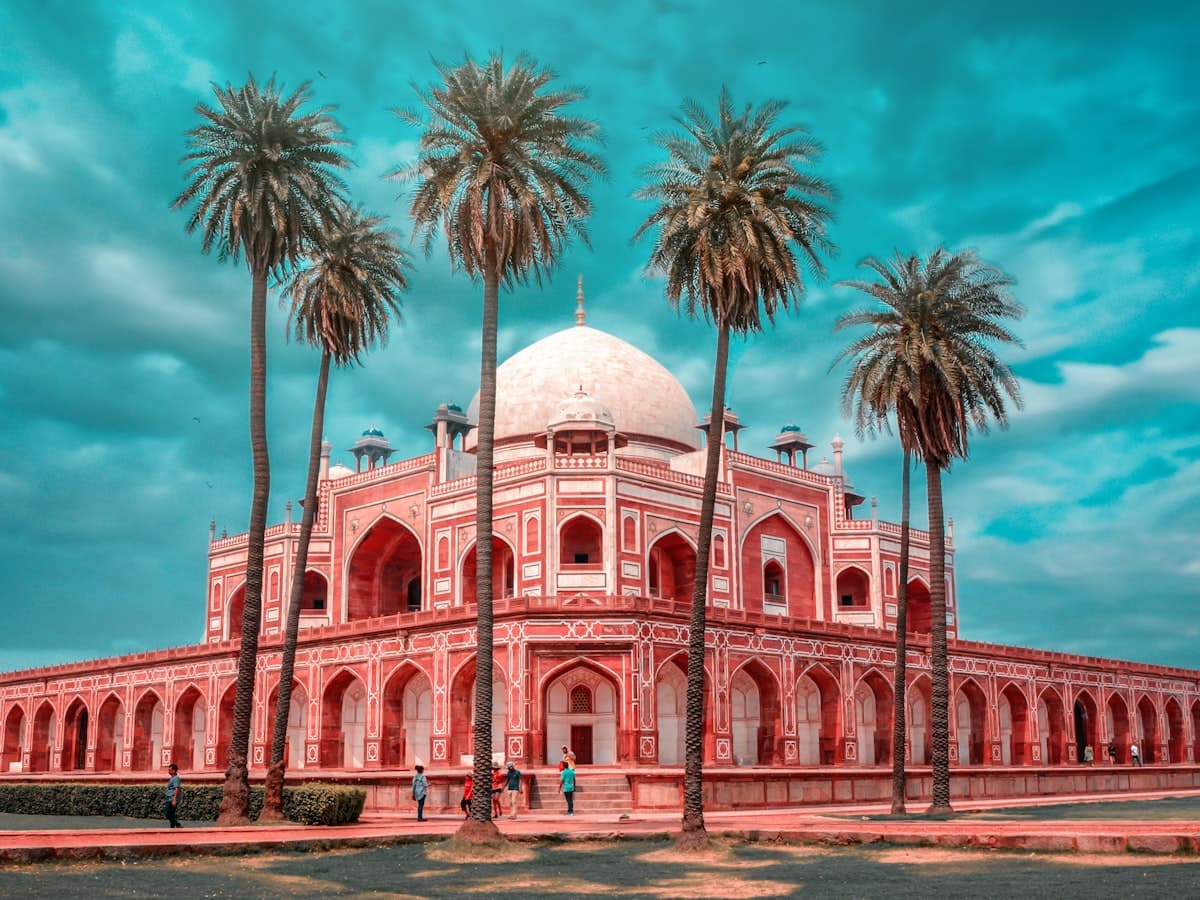
Humayun's Tomb is the opposite experience: calm, green and ordered. Read our Humayun's Tomb guide and pair the two on separate halves of a day.
How to plan your visit
Check the day. Do not plan the fort for a Monday.
Arrive at opening. The light is best and the crowds are smaller.
Travel light and expect a security check at the gate.
Hire a licensed guide at the gate, or book through us. Agree the price and route first.
Walk it in order. Lahori Gate to the gardens.
Combine with Old Delhi on foot. The fort and the bazaar belong together.
Where it fits on the Golden Triangle
The Red Fort is a standard stop on a Delhi day. Our plan for two days in Delhi shows one way to combine it with the tombs and the city's quieter side. If you are weighing how long to spend, read how many days you need for the Golden Triangle.
For a classic stay close to the old city, Haveli Dharampura is in Chandni Chowk itself, and The Imperial is in central Delhi.
See how it fits into a route in Golden Triangle Classic, 5 days or the First-Timer's Golden Triangle package.
Frequently asked questions
What are the Red Fort's opening hours?
Tuesday to Sunday, from about 9:30 am to 4:30 pm. It is closed on Mondays.
Why is the Red Fort closed on Monday?
Many Indian monuments keep a weekly closing day, and the Red Fort's is Monday. Plan around it.
How much is the Red Fort ticket?
About ₹35 to ₹50 for Indian visitors and about ₹550 to ₹600 for foreign visitors. Children under 15 enter free. Confirm the current rate at the counter.
How long does the Red Fort take?
About two hours for the main sights. Add time for the museums and the gardens.
Is the light and sound show worth it?
It is a good evening activity, especially for first-time visitors. The show runs most evenings except Monday. Check the day's timings, as they change with the season.
Who built the Red Fort?
Shah Jahan commissioned it in 1638 and it was completed in 1648. The architect was Ustad Ahmad Lahori.
Is the Red Fort better than the Agra Fort?
They are different. The Red Fort is the centre of Old Delhi's story. Agra Fort pairs with the Taj Mahal. Most Golden Triangle visitors see both.
Plan your Delhi visit with us
We build Delhi days around closing days, security queues and the right guide. Explore the Delhi destination page or talk to a trip designer.
Read Next
All Stories →
Golden Triangle Highlights: Delhi, Agra and Jaipur, Place by Place
Humayun's Tomb, Delhi: Timings, Tickets and What to Look For