
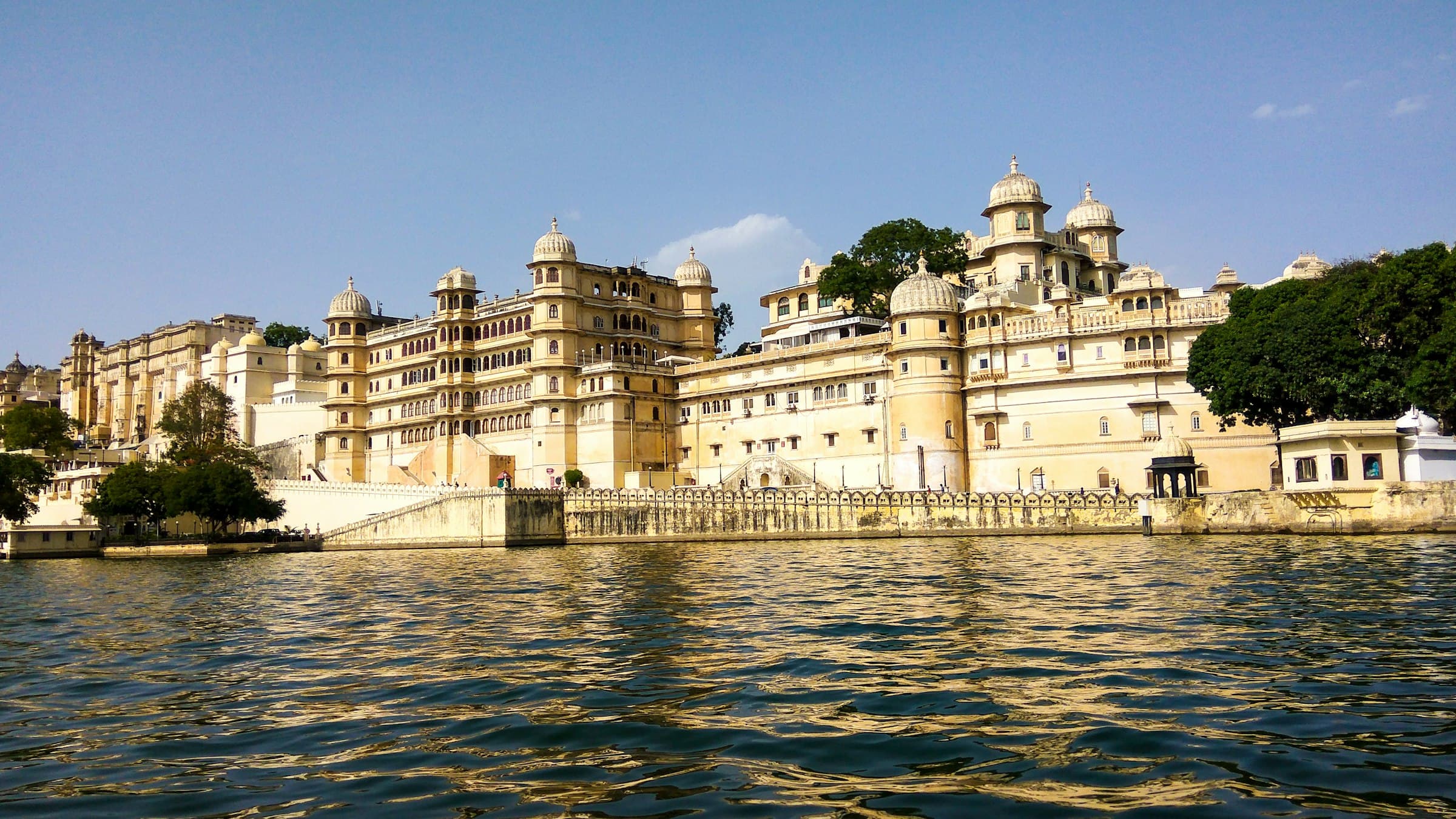
Rajasthan · 8 Days
Rajasthan Grand Palaces & Desert
Eight days across Rajasthan's full royal circuit — Jaipur, Pushkar, Jodhpur, Jaisalmer, Kumbhalgarh, and a Lake Pichola finish in Udaipur.
Day by Day
8 Days, In Full
The complete route, for travellers who want all of Rajasthan's landmark cities in one trip. The first six days follow the desert circuit above — Jaipur's forts, Pushkar's lake, Jodhpur's Mehrangarh, and Jaisalmer's dunes. From Jaisalmer, the road turns south past Ranakpur's marble Jain temple, its 1,400 carved pillars each cut differently, to Kumbhalgarh — Rana Kumbha's fifteenth-century fort, ringed by a wall nearly 36 kilometres long, second only to the Great Wall of China. The trip ends in Udaipur, arriving at Lake Pichola in time for sunset over the water.
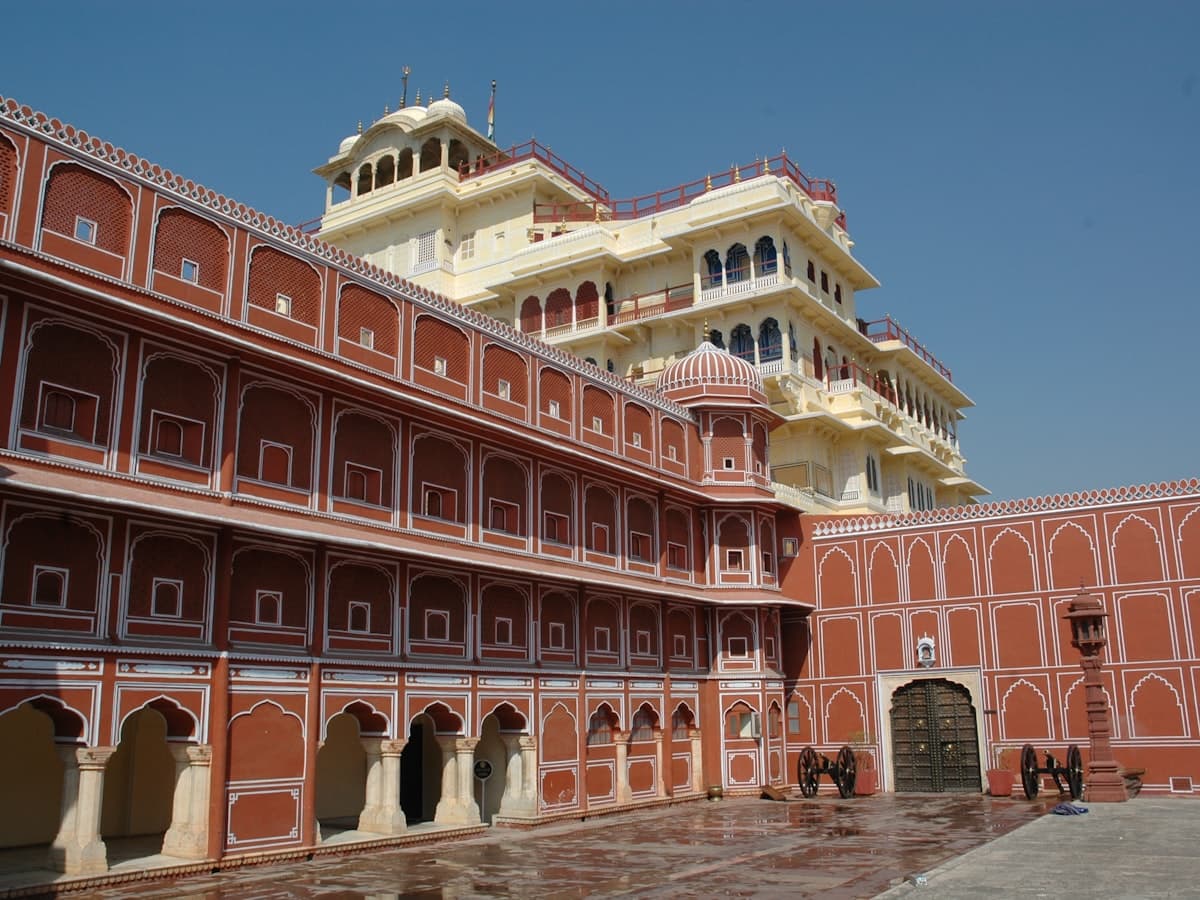
Jaipur
Arrival in Jaipur — City Palace & Hawa Mahal
Private airport pickup, then straight into Jaipur's old city. City Palace is still a home — part of it belongs to the royal family today. Its courtyards mix Rajput and Mughal design in a way few palaces manage. From there it's a short walk to Hawa Mahal. Built in 1799, its pink sandstone front holds 953 small windows. They let royal women watch the street below without being seen themselves. Evening is free for the hotel, or a walk through the old city's lanes before dinner.
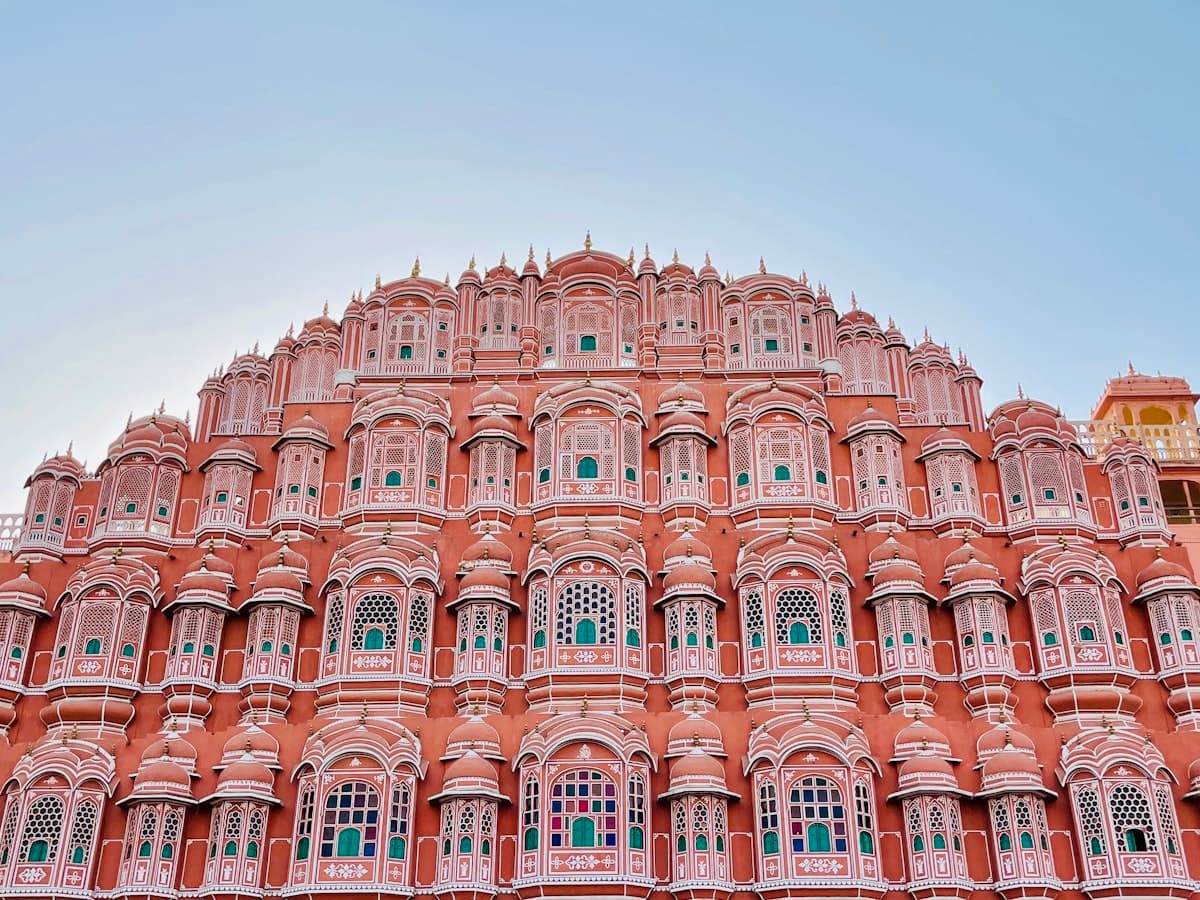
Jaipur
Amber Fort & Jaipur's Old City Bazaars
A full day built around Amber Fort. The fort sits on a hill above Maota Lake, begun in 1592 by Raja Man Singh I. Inside, Sheesh Mahal glitters — thousands of small mirror tiles set into the walls and ceiling, still catching light after four centuries. A guide walks you through Ganesh Pol, the fort's most ornate gate, before the afternoon opens up. Back in the old city, Johari Bazaar sells jewellery the way it has for generations, and Bapu Bazaar deals in block-printed textiles. Both are better explored slowly, with someone who knows which shops to trust.
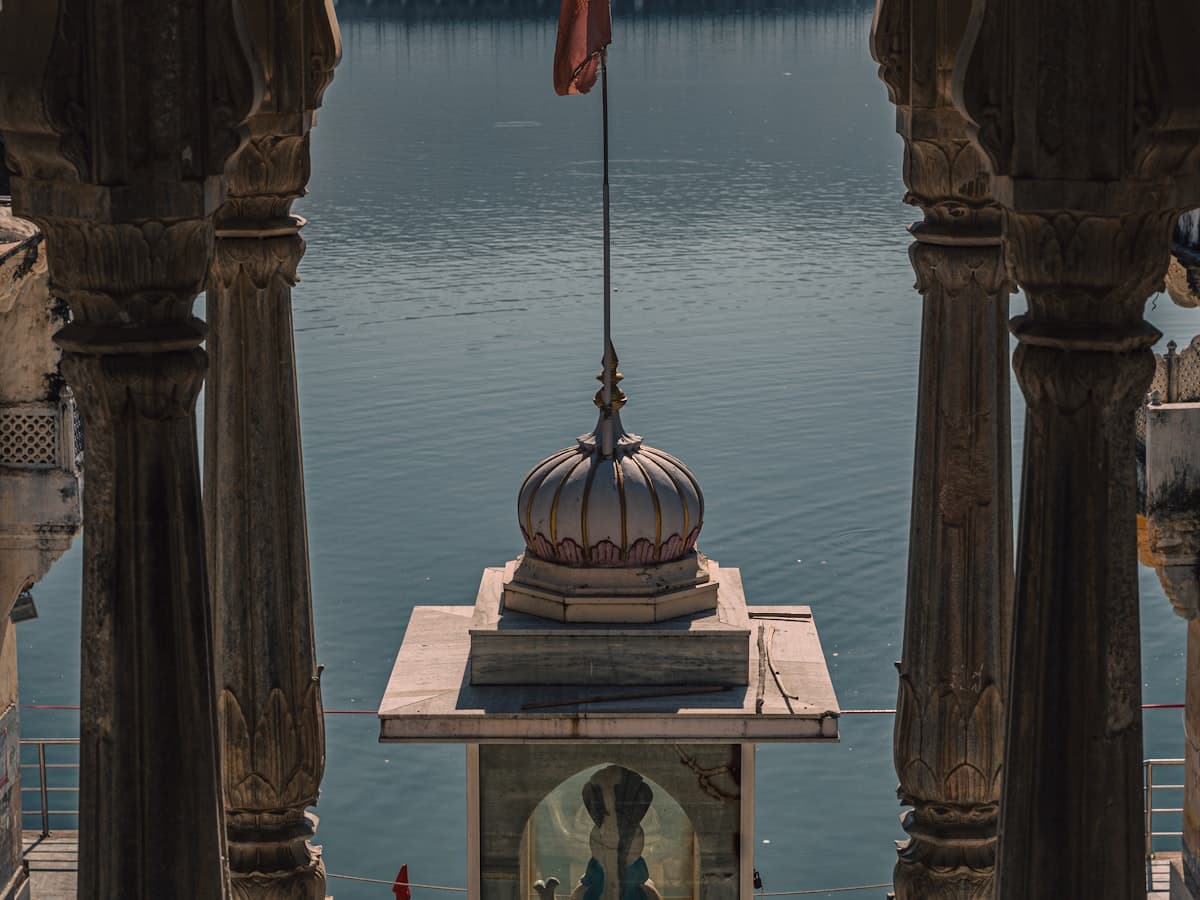
Jaipur → Pushkar
Jaipur to Pushkar — Lake & Brahma Temple
A shorter transfer, around three hours, to Pushkar — a small desert town built around a lake considered sacred in Hindu tradition. Pushkar Lake is ringed by more than fifty bathing ghats. Above them stands Brahma Temple, one of only a handful anywhere in India dedicated to Brahma, and by far the most visited. Evening brings the ghats to life with lamps and prayer, best watched from a quiet spot along the water rather than the busiest steps.
Pushkar → Jodhpur
Pushkar to Jodhpur — Mehrangarh on Arrival
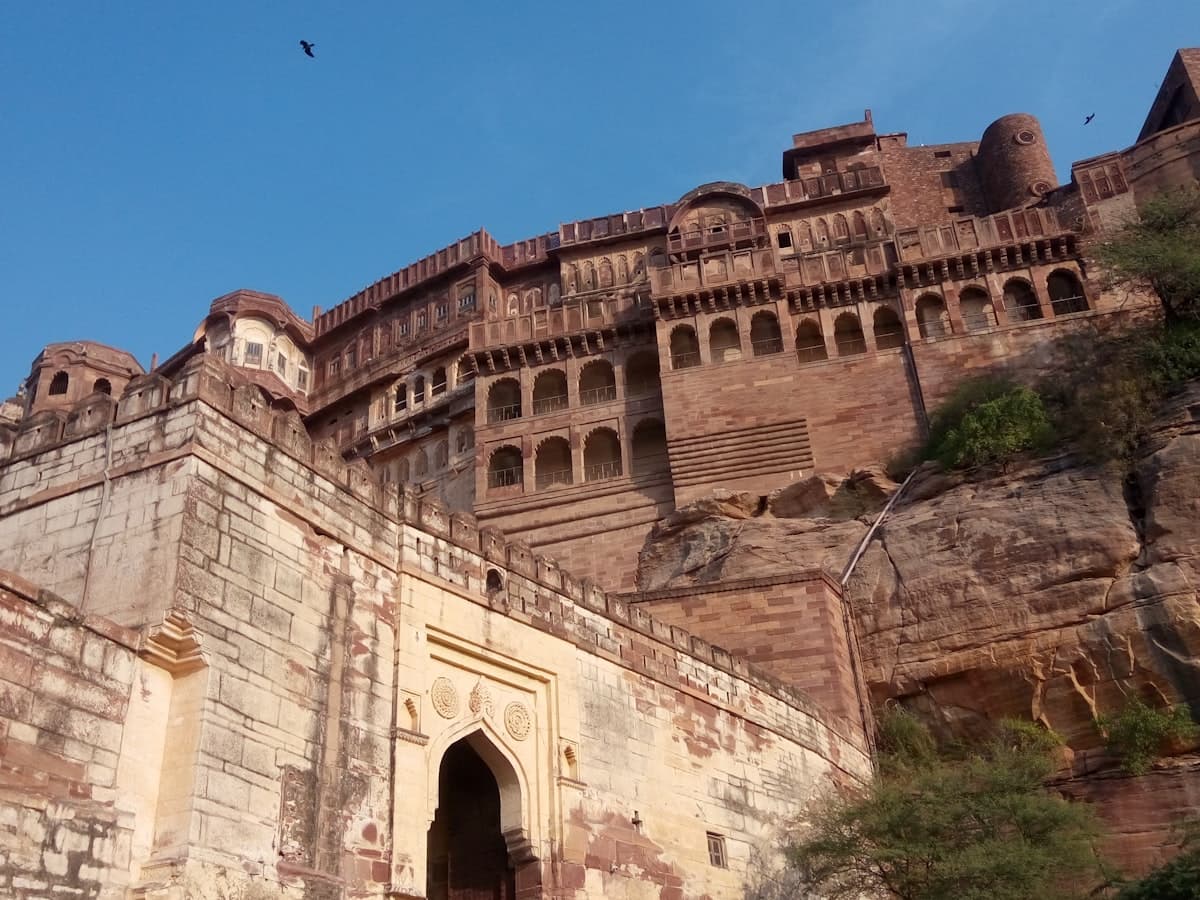
The road from Pushkar to Jodhpur takes about four hours, arriving in time for an afternoon at Mehrangarh Fort. Built in 1459 on a cliff 125 metres above the city, the fort's museum covers five centuries of Rajput rule through armour, palanquins, and painted manuscripts. The old city below is known as the Blue City for the indigo-washed houses spreading out beneath the ramparts — best seen from the fort walls just before sunset.
Jodhpur → Jaisalmer
Jodhpur to Jaisalmer — Into the Thar Desert
A five-hour drive further west, deeper into the Thar Desert. The land empties out along the way — scrub, open sky, and small villages built low against the wind. Jaisalmer announces itself from a distance: a fort of golden-yellow sandstone rising straight out of the desert floor. Check in by early evening, with the fort itself saved for tomorrow.
Jaisalmer
Jaisalmer Fort & Sam Sand Dunes at Sunset
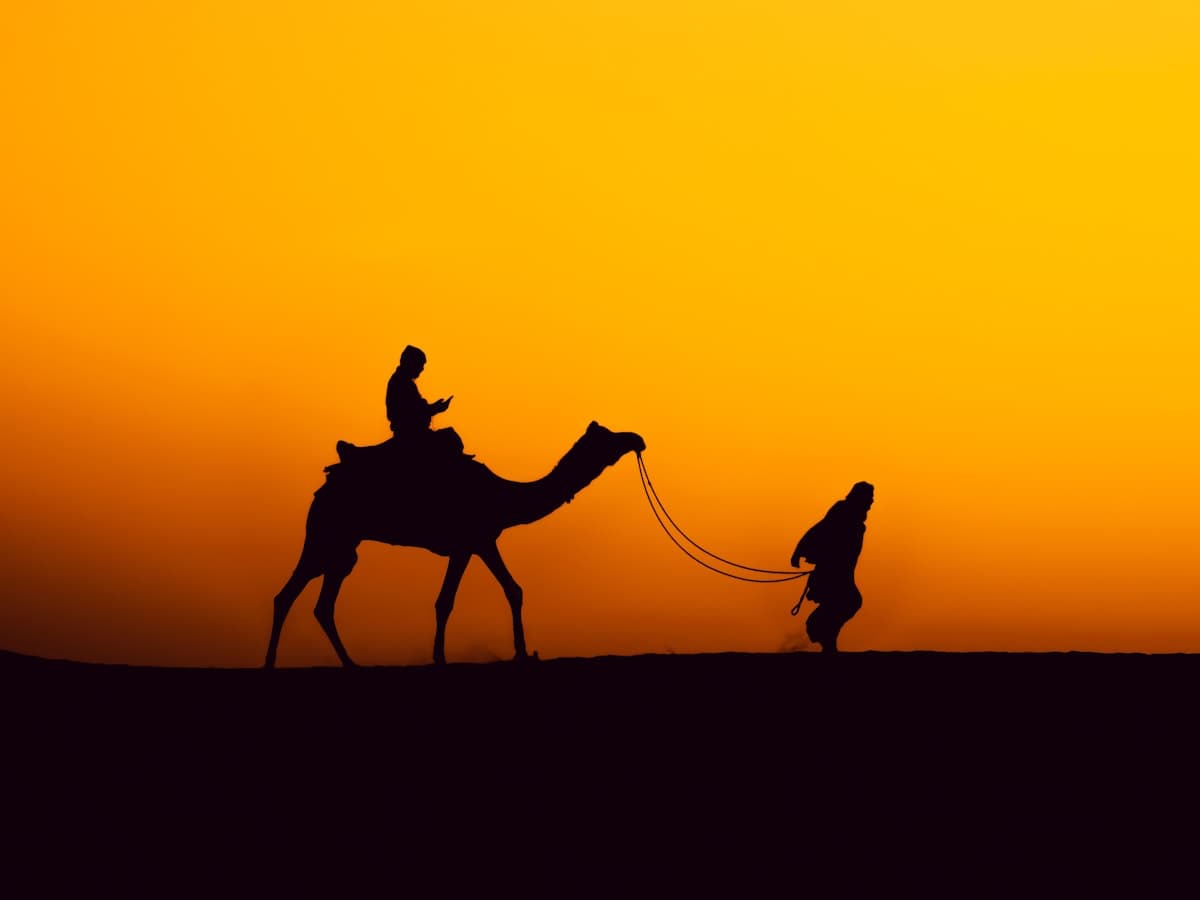
Jaisalmer Fort, built in 1156 by Rawal Jaisal, is one of the few forts left in the world that's still fully lived in — around four thousand people call it home today, running shops, hotels, and temples inside its walls. Morning is spent inside the fort and at Patwon ki Haveli, a cluster of merchant mansions with carved sandstone facades. In the afternoon, drive out to the Sam Sand Dunes, about 40 kilometres and an hour from the city. Watching the sun drop behind the dunes, the desert turns gold and then a deep orange-red — a genuinely different landscape from anything earlier in the trip.
Jaisalmer → Kumbhalgarh
Jaisalmer to Kumbhalgarh via Ranakpur
The longest drive of the trip, roughly seven hours, broken up by a stop at Ranakpur's Jain temple. Built from pale marble in the 15th century, the temple holds more than 1,400 carved pillars — no two exactly alike. From there it's a shorter final stretch to Kumbhalgarh, arriving in the evening with the fort's outline visible against the hills.
Kumbhalgarh → Udaipur
Kumbhalgarh Fort to Udaipur
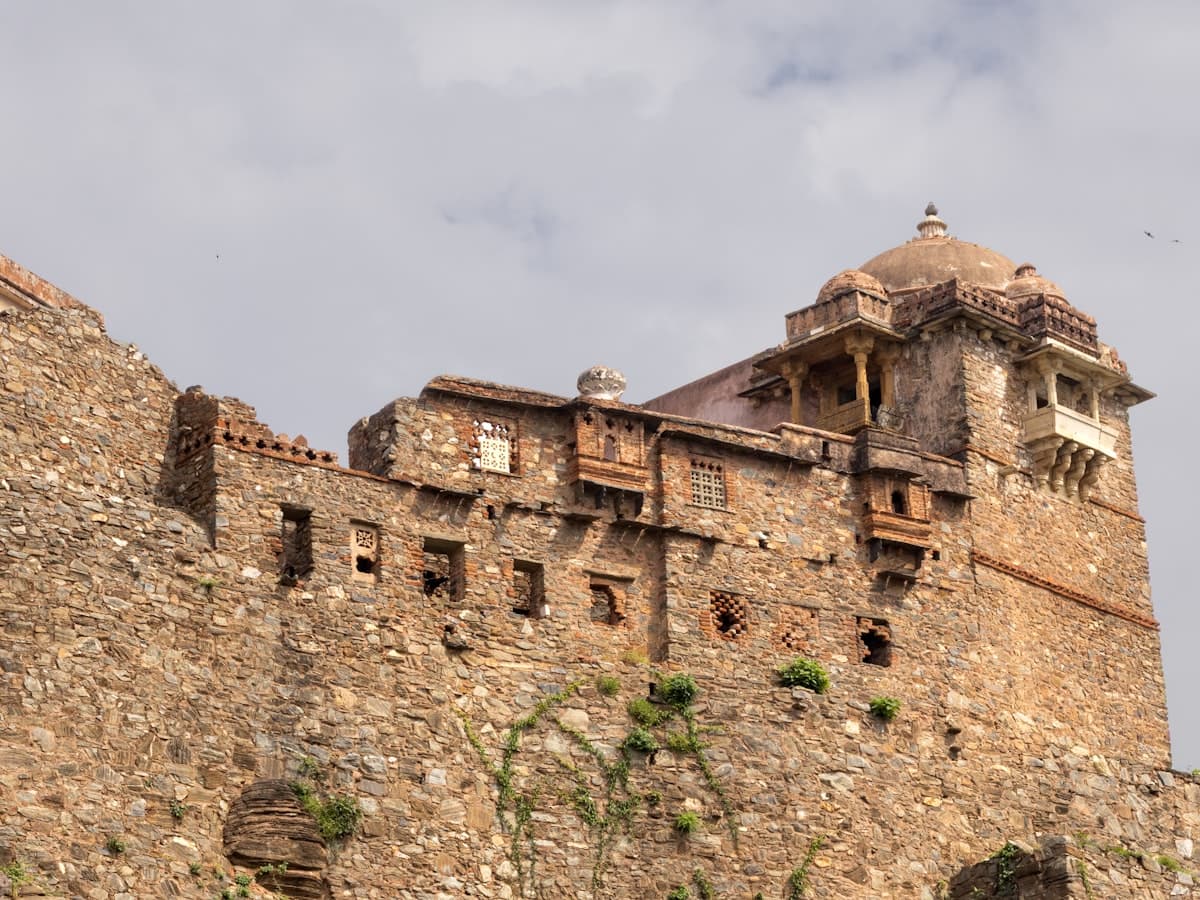
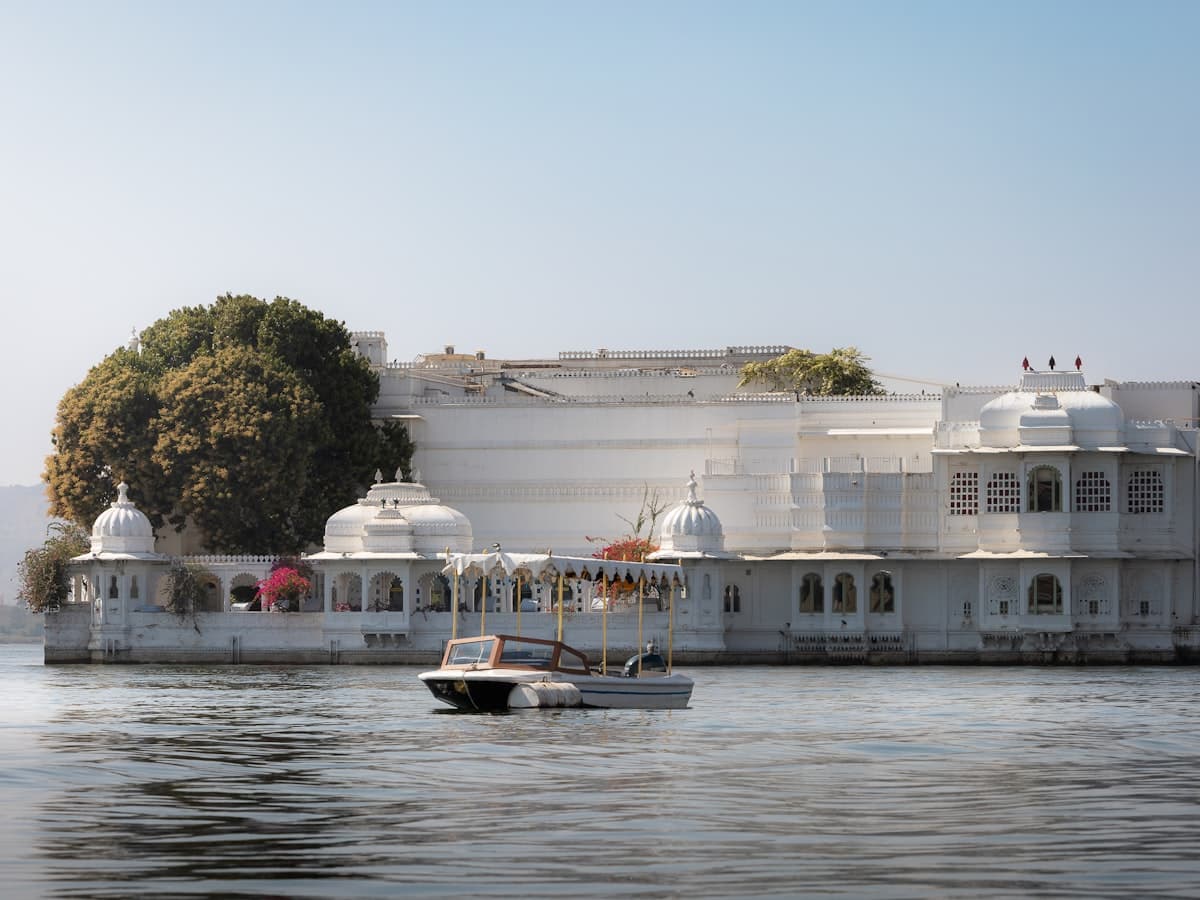
Morning at Kumbhalgarh Fort. Built in the 15th century by Rana Kumbha, it's the birthplace of Maharana Pratap. Its wall runs for nearly 36 kilometres along the hilltops. That makes it the second-longest continuous wall in the world, after the Great Wall of China. It's wide enough in places for eight horses to ride side by side. After the fort, a two-hour drive brings you into Udaipur by early evening. You'll arrive in time for a sunset view over Lake Pichola from the hotel.
Book This Itinerary
Priced Packages On This Route
This route is already built into these packages — real inclusions and pricing on each one's own page.
luxury · 7 Nights
Rajasthan Grand Palaces & Desert — Luxury
per person, twin sharing — enquire for current pricing
premium · 7 Nights
Rajasthan Grand Palaces & Desert — Premium
per person, twin sharing — enquire for current pricing
luxury · 7 Nights
Rajasthan Palace & Heritage Tour — Luxury
per person, twin sharing — enquire for current pricing
premium · 7 Nights
Rajasthan Palace & Heritage Tour — Premium
per person, twin sharing — enquire for current pricing

Kashmir to Kanyakumari
Get In Touch
Start Planning Your Trip
Full itinerary, real pricing, one honest conversation — no sales pressure, just answers.