Gujarat's Stepwells: Rani ki Vav, Adalaj and the Art of Going Down
A guide to Gujarat's stepwells: what they were, why Rani ki Vav and Adalaj are special, how to visit them and how to pair them with Modhera Sun Temple.
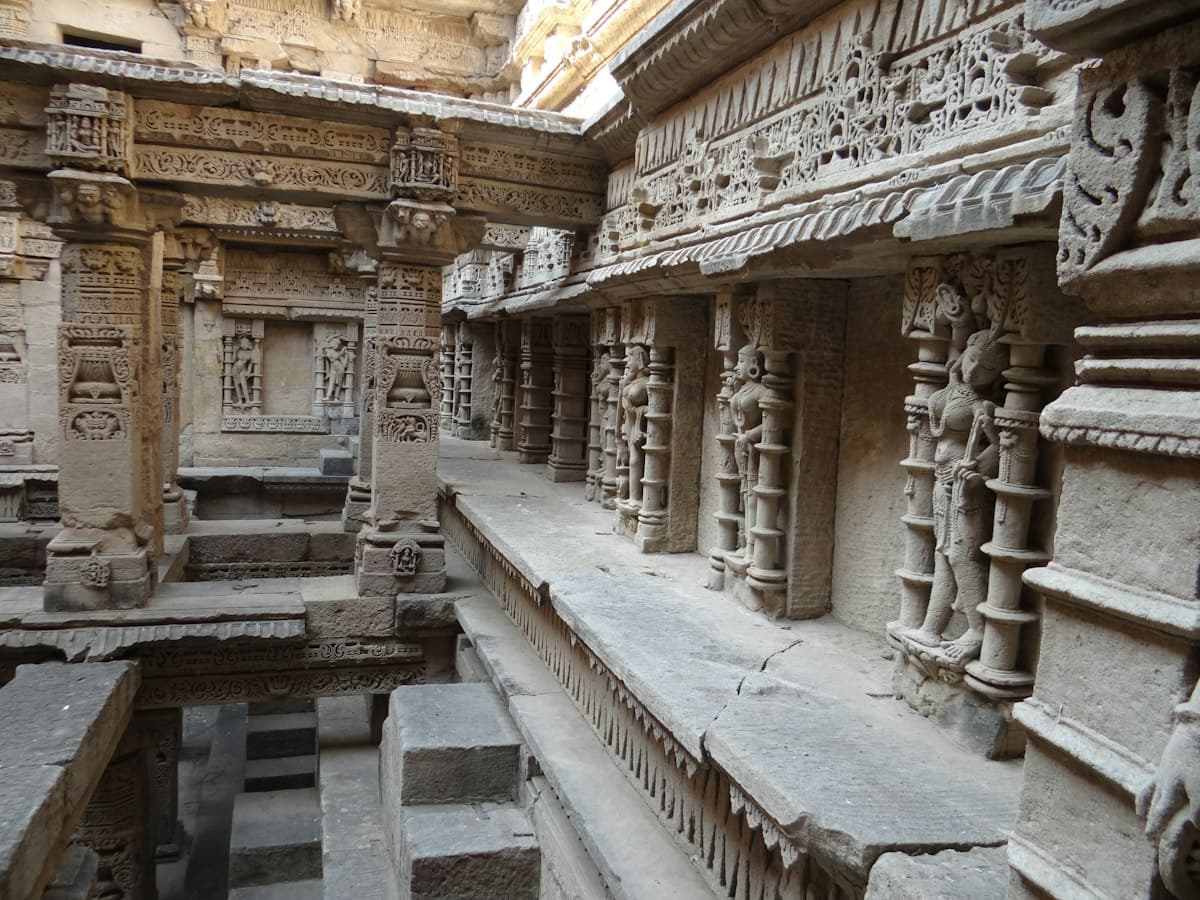
Gujarat's stepwells are among the most beautiful and least understood buildings in India. They are wells you walk down into. Stairs descend level after level, past carved pillars and shaded galleries, to a pool of cool water far below. They look like cathedrals built upside down. Few first-time visitors to India have heard of them, and few forget them.
This guide explains what a stepwell was for, which ones to see and how to fit them into a Gujarat trip.
What is a stepwell?
In dry western India, water was life. Stepwells, called vavs or vaos locally, were dug deep to reach the water table. Wide flights of steps let people walk down as the level rose and fell with the seasons.
They were more than water sources. Travellers rested in the cool shade. Women gathered there daily. Small shrines stood inside the walls. Wealthy patrons, often queens, paid for elaborate carving, seeing a stepwell as an act of piety and public service.
The temperature drops noticeably as you descend. That cool, still air is part of the pleasure.
Rani ki Vav, Patan: the masterpiece
Rani ki Vav in Patan is the finest stepwell in India and a UNESCO World Heritage Site. It was built in the 11th century under the Solanki dynasty, commonly said to have been commissioned by a queen in memory of her husband.
Its scale is staggering. Seven levels of stairs descend through pavilions, and the walls are carved with hundreds of sculptures. Vishnu in his many forms, celestial dancers and sages fill the panels, many still crisp after nearly a thousand years. The light changes as you go down, catching different details.
Give it at least an hour. Early morning is quietest, and the low light picks out the carving best.

Adalaj Stepwell: the easy one
Adalaj sits on the edge of Ahmedabad, so it is the easiest stepwell to visit. Built in the late 1400s, it blends Hindu and Islamic design, with intricately carved pillars, brackets and niches on five storeys.
It is smaller than Rani ki Vav, but it is beautifully proportioned and pleasant to explore. Visit in the late afternoon, when light slants through the openings and the stone glows. It is a lovely first introduction.
Dada Harir Stepwell, Ahmedabad
Also in Ahmedabad, this stepwell dates to the same era and was commissioned by a woman of the royal household. It is quieter than Adalaj and gives a different atmosphere, with local residents nearby and fewer tour groups.
Modhera Sun Temple: the natural pairing
Roughly an hour from Patan, the Sun Temple at Modhera is another Solanki masterpiece from the 11th century. It sits above a great rectangular tank ringed with stepped shrines, all covered in fine carving. The temple is dedicated to the sun god, and its design is said to catch the first rays of dawn at the equinoxes.
Rani ki Vav and Modhera together make a superb day out from Ahmedabad. In winter, the annual dance festival at Modhera stages classical performances against the temple, a magical setting.
How to see them well
Go early or late. Midday sun is harsh and flattens the carving.
Wear grippy shoes. Steps are stone, and can be worn or damp.
Take your time. These buildings reward slow looking.
Bring a guide. The iconography, the history of the dynasties and the stories carved in the stone are lost without one.
Be mindful of rules. Some areas are cordoned off to protect the carving.
Why so many were forgotten
Stepwells fell out of use for practical reasons. Piped water, hand pumps and modern wells replaced them in the 19th and 20th centuries, and colonial engineers considered them unhygienic. Many silted up or lay abandoned for years. Rani ki Vav itself was buried under mud from a river flood and only excavated in the last century. That burial is partly why its carvings survived so sharply.
Today, conservation work has brought a number of Gujarat's stepwells back to life, though hundreds of lesser ones remain hidden in villages. Visiting the great ones is a way to appreciate a form of architecture that barely exists anywhere else.
Reading the carving
A guide changes everything here. Look for a few recurring themes as you descend:
Vishnu's ten forms are shown in rows of carved panels at Rani ki Vav
Celestial dancers, often in elaborate poses and jewellery, line the walls
Small shrines at the water level remind you that a stepwell was a sacred place
Geometric patterns and floral scrolls cover the pillars
At Adalaj, look for the mix of styles. Hindu motifs, such as flowers and mythical scenes, sit alongside Islamic arches and geometric lattices. It is a rare, quiet record of two traditions working side by side.
Photography tips
The best pictures come from the early morning or late afternoon, when light slants down the shaft. Stand at the top and shoot down for a sense of scale. Then go down and look up. A wide lens helps, but a phone in panorama mode also works. Avoid flash, and keep tripods for permitted spaces only.
A stepwell route through Gujarat
A useful sequence starts in Ahmedabad. Explore the old city and its mosques, then visit Adalaj and Dada Harir. Next day, head north to Patan and Modhera. If you have more days, continue to the Rann of Kutch, where our guide to the White Rann and Rann Utsav explains the season and camp choices.
Our Gujarat heritage and stepwells itinerary covers this in seven days, and the Gujarat heritage and stepwells package wraps it with private guiding. For a wider journey that adds the lions of Gir, see the classic Gujarat journey, and read our Gir lion safari guide.
Where to stay
In Ahmedabad, The House of MG is a heritage mansion in the old city, atmospheric and beautifully restored. Novotel Ahmedabad is a reliable modern base for shorter stays.
When to go
Stepwells can be visited all year, but the best season is October to March, when temperatures are mild for walking. Summer is very hot, and heavy monsoon rain can make the steps slippery. Our best time to visit Gujarat guide covers the calendar in detail.
Frequently asked questions
What is the most impressive stepwell in Gujarat?
Rani ki Vav in Patan. Its scale and carving are unmatched.
Can I visit stepwells in one day?
You can visit Adalaj and Dada Harir in half a day from Ahmedabad. Rani ki Vav and Modhera together make a full day.
Are stepwells suitable for older visitors?
Yes, with care. You can look from the upper levels without going all the way down. Steps are uneven, so wear proper shoes.
Do I need a guide?
We recommend one. The carving tells stories that are hard to follow without explanation.
Start planning
Explore Gujarat, or talk to a trip designer about a heritage route that includes the stepwells.
Read Next
All Stories →The Best Time to Visit Gujarat: Rann, Gir and the Heritage Cities
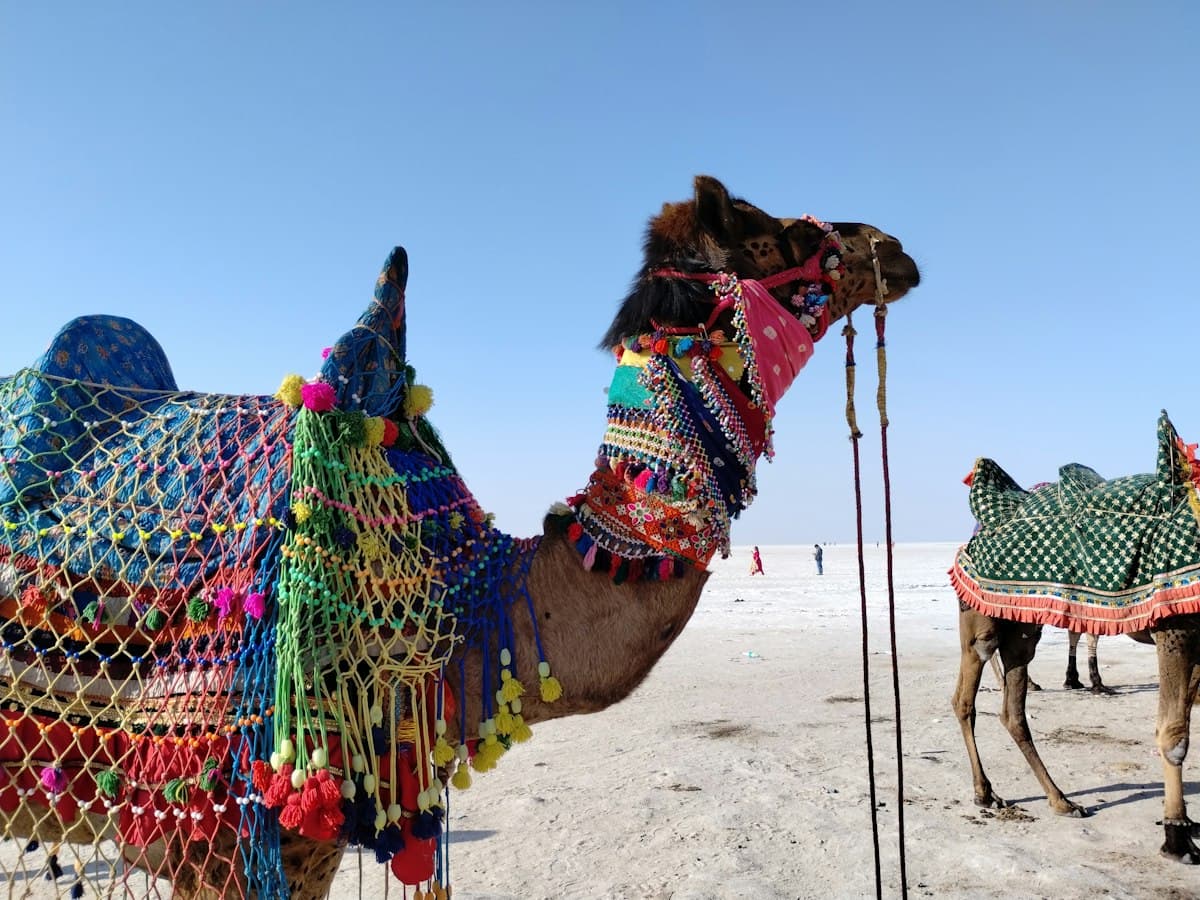
The White Rann of Kutch: When to Go and What Rann Utsav Is Really Like