PADI Open Water Course Havelock: Days, Prep and What You'll Learn
The PADI Open Water course Havelock offers, explained: days needed, eLearning, medical forms, flying rules and who should check with a doctor first.
The PADI Open Water course Havelock offers is the step beyond a first dive. A discovery dive lets you breathe underwater with an instructor beside you. The Open Water course makes you a certified diver, able to dive with a buddy and without a guide holding your hand. It takes more time, and it needs more preparation.
This guide explains how many days to allow, what you learn, what to do before you fly, and who should think twice. It does not repeat prices. For costs, see our scuba diving in Havelock cost guide. If you have never dived at all, start with the first scuba dive guide.
The course at a glance
What to know | |
|---|---|
Certification | PADI Open Water Diver, the first full certification |
Minimum age | 10 years. Ages 10 to 14 earn a Junior certification |
Swimming | You must be able to float or tread water for about 10 minutes |
Dives | Four open water dives, plus confined water training |
Typical time on Havelock | 3 to 4 days with eLearning done at home |
Depth limit | Around 18 metres for new divers |
Medical | A self-declared questionnaire, with a doctor's sign-off if you answer yes |
PADI describes the whole course as 4 to 7 days in total, because it counts the theory at home. Dive centres in the islands compress the in-water part. Course lengths are averages and depend on how quickly you learn.
The three parts of the course
Knowledge development
This is the theory. You learn how pressure affects your body, how to plan a dive, how to read a dive table or computer, and what the hand signals mean. PADI says its eLearning takes roughly 5 to 10 hours.
You can do it in two ways. You can study online before you leave home, or you can sit classroom sessions with an instructor on the island. Online study saves one holiday day. If you can, do it at home, at your own pace, and arrive with the exam done.
Confined water training
You practise the core skills in shallow, calm water. These include clearing a flooded mask, recovering your regulator, controlling your buoyancy and signalling to a buddy. At home this is done in a pool. On Havelock, instructors often use a sheltered shallow area of the sea instead.
This is where most nervous divers get comfortable. Take your time here. Nobody is graded on speed.
Open water dives
You make four dives, usually over two days. Each one builds on the last. Your instructor watches you repeat the skills from the shallow session, then you swim a short tour of the reef. When your instructor approves all four dives, you are certified.

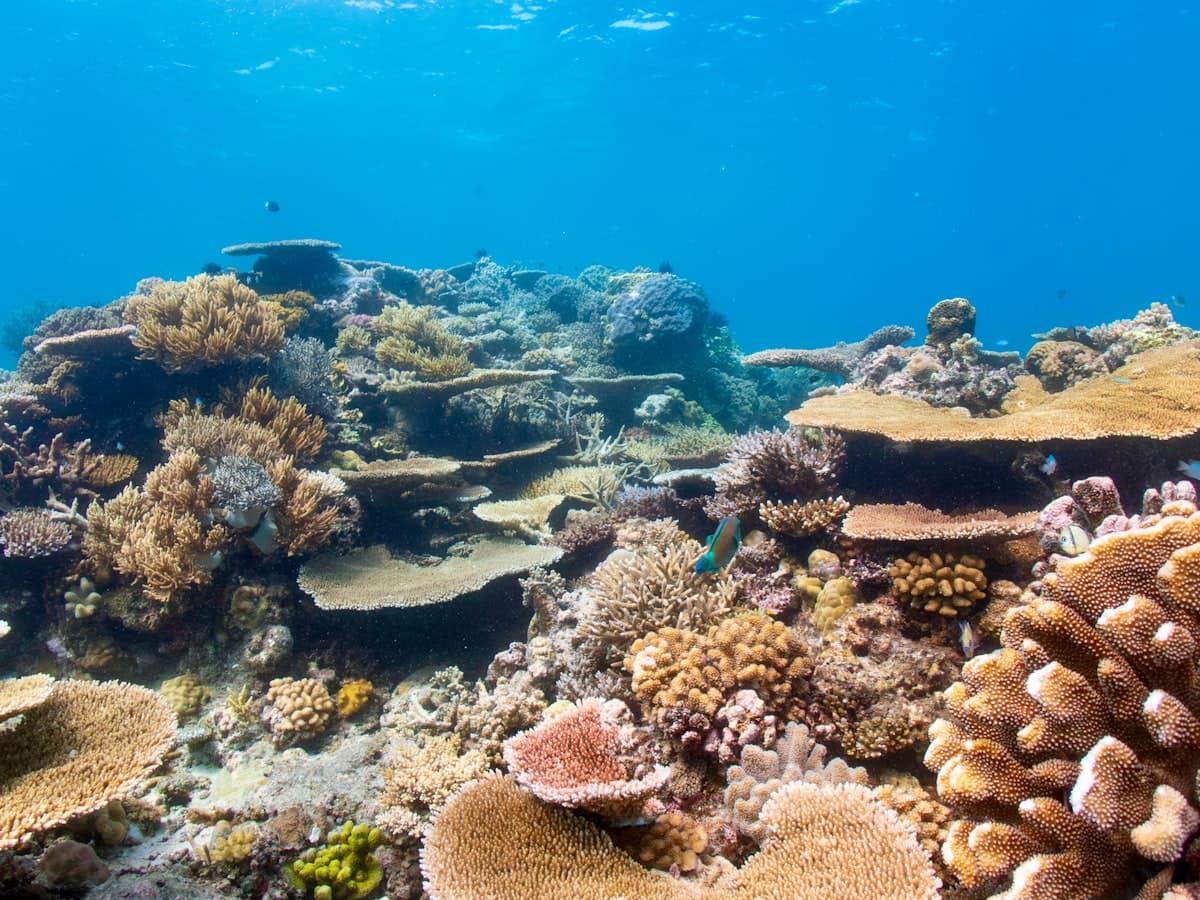
The reefs around Havelock are where most open water dives take place.
The reefs around Havelock are shallow and forgiving, which is why the island is a popular training base. Our Andaman water sports guide compares diving with snorkelling and sea walks if you are not sure which you want.
A realistic 4-day schedule
Day | Morning | Afternoon |
|---|---|---|
1 | Arrive, medical form, theory review | Confined water skills |
2 | More skills, first open water dive | Second open water dive |
3 | Third dive | Fourth dive, certification paperwork |
4 | Rest, then flying or ferry day | Free |
Schedules shift with weather and sea conditions. A rough sea can move a dive to the next morning, so we never plan a ferry or flight on the last diving day. Leave a buffer.
Before you arrive
A little preparation saves a day and removes most of the stress.
Finish the eLearning. Take the exam before you fly if you can.
Read the medical questionnaire. A "yes" does not mean you cannot dive. It means a doctor must review it before you get in the water. Instructors and dive shop staff are not doctors and cannot clear you.
Check your ears and sinuses. If you have a cold or blocked nose, tell the centre. Diving with a blocked nose can hurt.
Practise floating. Spend ten minutes in a pool treading water, just to know you can.
Bring insurance details. Many centres ask for them.
Avoid alcohol the night before.
Choosing a dive centre
Ask a few plain questions before you book:
Is the instructor currently certified with PADI, and can they show it?
How many students will be in my group?
Are the dives from a boat or from the beach?
What happens if the weather cancels a day?
Is the eLearning fee included or separate?
Smaller groups mean more attention. A group of four or fewer is easier than a group of eight. We choose centres for our guests with these points in mind.
Flying after diving
After your last dive, you must wait before flying. The usual guidance for repeated days of diving is about 18 hours, and your instructor will give you the exact rule. This matters in the Andamans, because Port Blair is the only airport. Plan your last dive for the morning of the day before you leave, not the morning of your flight. A ferry to Port Blair adds more time on top.
Who should think twice
Scuba suits most healthy people, but some should get advice first.
Anyone with asthma, heart or lung conditions, or ear problems
Anyone who is pregnant
Anyone who cannot float comfortably
Anyone who panics in enclosed or deep water
If any of these apply, speak to a doctor before you book. Nothing in this post is medical advice.
Couples, families and teenagers
Couples often take the course together, which makes the dives more fun. Do the theory side by side and swap notes. Children aged 10 to 14 can take the Junior course, with the same skills and slightly different depth limits. A parent can wait on the boat or snorkel nearby. Our Andaman for teenagers guide suggests how to fit a course around a family trip.
Best time for the course
The calmer months from about November to April give the best conditions for training dives. The monsoon months bring rougher seas and cancelled days, which is risky for a course with a fixed timetable. Our hotel and dive plans follow this window.
Our advice
Do the course if you know you will dive again, on this trip or another. If you want one good underwater hour and nothing more, a discovery dive is cheaper and shorter, and perfectly honest. If you do commit, do your eLearning at home, give the course four days, and put nothing else important on those days. The Andamans reward people who go slowly.
Our Andaman Havelock Dive Retreat builds a four-day stay around diving, with the margin for weather already included.
Frequently asked questions
How many days does the PADI Open Water course take in Havelock?
Most people need 3 to 4 days on the island if they complete the eLearning at home. Without it, plan 4 to 5 days. Weather can add a day.
What is the minimum age for the PADI Open Water course?
The minimum age is 10. Children aged 10 to 14 earn a Junior Open Water certification, which becomes a full certification at 15.
Do I need to be a strong swimmer?
You do not need to swim fast. You must be comfortable in water, and able to float or tread water for about 10 minutes. Instructors will ask you to show it.
Can I fly straight after the course?
No. You must wait before flying after diving. Many operators advise at least 18 hours after multiple days of diving. Ask your instructor for the exact rule and plan your dates around it.
Is the Open Water certification recognised elsewhere?
Yes. PADI Open Water Diver is accepted worldwide. It lets you dive with a buddy to about 18 metres.
Is it better to do the course in the Andamans or at home?
The Andamans offer warm, clear water and a relaxed pace, so many people prefer to dive here. The trade is the time and the weather risk. Doing the eLearning at home removes most of that.
Plan your Andaman dive trip with us
We plan dive trips with ferries, hotels and spare days built in. Explore the Andaman and Nicobar destination page, or talk to a trip designer about learning to dive on Havelock.
Journeys for this trip
Plan your Andaman & Nicobar trip

Read Next
All Stories →
Andaman Couple Trip 5 Days: A Relaxed Route for Two
Private Beach Stay Andaman Honeymoon: What to Ask Before Booking