
Karni Mata Temple, Deshnok: The Rat Temple Visit Guide
Karni Mata Temple at Deshnok, the rat temple near Bikaner: how to reach it, timings, the rules about footwear, what to expect and whether to go.
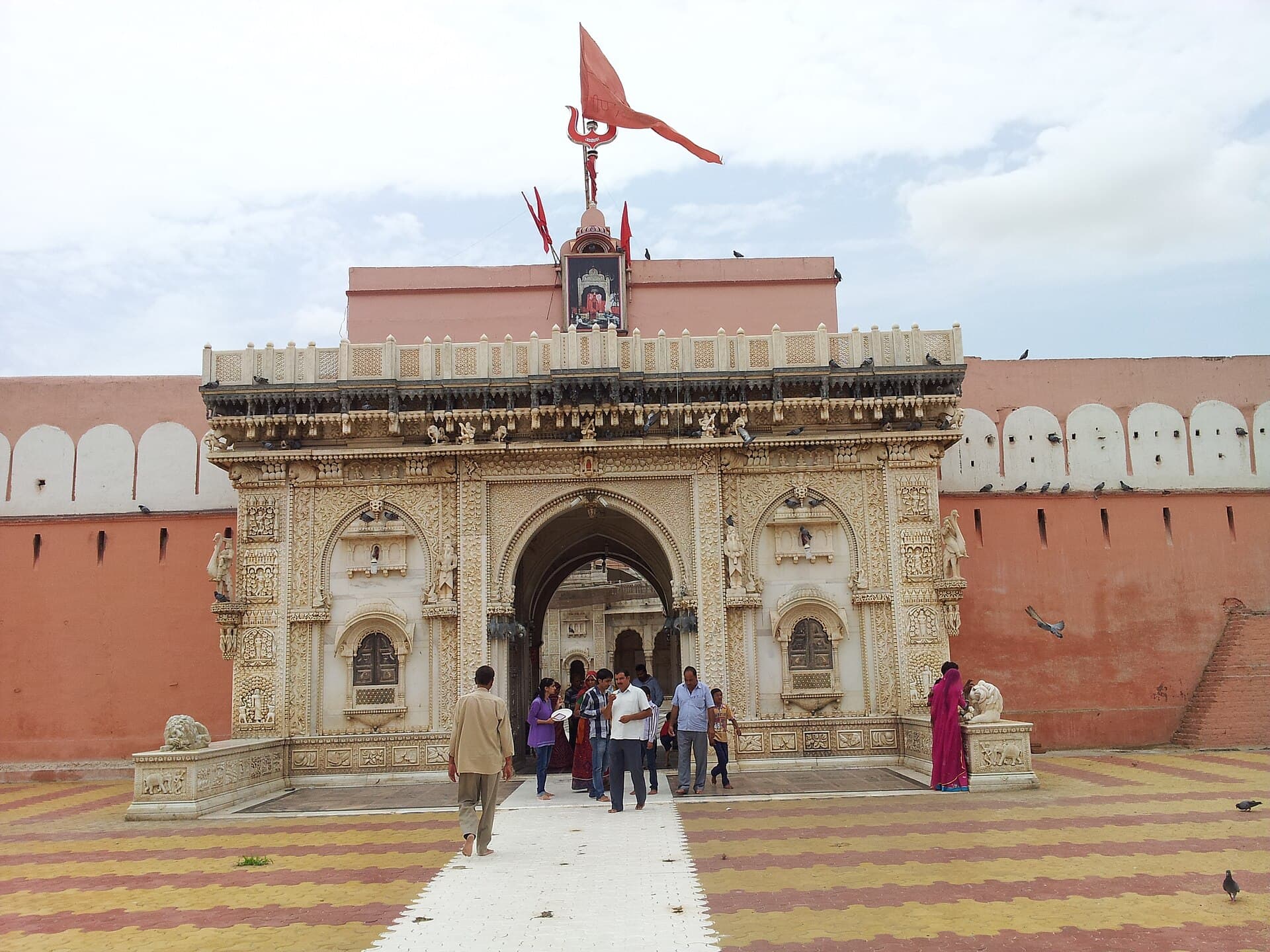
Karni Mata Temple at Deshnok is the rat temple, and it is one of the most unusual sights in Rajasthan. Thousands of rats live inside it and are treated as sacred, and visitors walk among them barefoot.
This guide explains what to expect, so you can decide whether it is for you, and how to visit with respect.

The gateway at Deshnok.
At a glance | |
|---|---|
Where | Deshnok, about 30 km south of Bikaner |
Drive from Bikaner | About 45 minutes |
Entry | Free; a small fee may apply for a camera |
Time needed | 1 to 1.5 hours |
Best time | Morning, October to March |
Dress | Modest; footwear removed |
What it is
The temple is dedicated to Karni Mata, a revered figure of the 14th and 15th centuries who is worshipped as an incarnation of the goddess Durga. Local tradition holds that the rats, called kabbas, are the souls of her followers, and that they will be reborn as holy rats. Killing one is believed to bring grave misfortune.
The main building is a carved marble structure built in the early 20th century, and it is still a place of everyday worship.
What to expect
You will see rats everywhere, in the courtyard, on the floor and around dishes of milk and sweets. They are fast, and they sometimes run over feet.
Barefoot: shoes and socks must be removed at the entrance, and the floors are rarely dry. Plan for this.
Sights and smells: it is crowded and loud, and the smell is strong.
White rats: a few white rats are said to be especially holy, and spotting one is considered auspicious.
Prasad: food offered here is shared with the rats.
If you dislike rodents, this is not the right stop for you, and there is no shame in skipping it.
Timings and practical points
The temple opens early and closes in the evening. The morning aarti is a good time to go, and the temple is busiest during the Navratri fairs. Check the times in advance.
Cameras and phones: rules vary, so ask at the gate.
Clothing: cover shoulders and knees, and keep socks for the walk to the gate.
Hygiene: wash your feet afterwards and carry sanitiser.
Respect: do not touch or chase the rats.

The marble courtyard.
How to reach Deshnok
From Bikaner: a short taxi or auto ride, about 45 minutes. Buses also run.
From Jaisalmer or Jodhpur: break the journey here on a drive towards Bikaner.
For a day in Bikaner, combine it with Junagarh Fort and a camel-breeding centre visit. See our Rajasthan city order guide.

Rats drinking offered milk.
Is it worth going?
If you are curious about folk belief and living faith, yes. It is memorable and quite unlike any other temple. If you are squeamish or travelling with very young children, skip it.
Frequently asked questions
Why are there rats in the temple?
They are believed to be the souls of Karni Mata's followers.
Do I have to go barefoot?
Yes. Footwear must be left at the entrance.
How far is Deshnok from Bikaner?
About 30 km, roughly 45 minutes.
Is it safe?
Many visitors go without trouble. Wash your feet afterwards and avoid touching the rats.
What is the best time to visit?
Mornings, October to March.
Plan your Rajasthan days with us
We include Deshnok on the Bikaner leg for guests who want it and plan the stop around the heat. Explore the Rajasthan destination page or talk to a trip designer.
Photo credits
Gateway: Rakesh bhat29, CC BY-SA 3.0. Courtyard: Pablo Nicolás Taibi Cicare, CC BY 2.0. Rats and milk: Arian Zwegers, CC BY 2.0. All via Wikimedia Commons.
Journeys for this trip
Plan your Rajasthan trip
Read Next
All Stories →
Rajasthan in December: Weather, Fog and Desert Nights
City Palace Jaipur: Tickets, Timings and What to See