Goa's Forts: Aguada, Chapora, Reis Magos and Cabo de Rama
A guide to Goa's forts: Aguada's lighthouse, Chapora's hilltop view, Reis Magos and Cabo de Rama. What each offers and how to fit them into a day.
Goa's forts are the part of the coast most beach holidays skip. That's a shame, because the forts are where the region's layered history is easiest to read. Portuguese ships came for spice and souls, local rulers fought back, and each side left walls, bastions and lighthouses on the headlands. Today they are quiet, breezy places with wide views, and they make a fine change from the sand.
This guide covers the four worth your time, what each offers and how to link them into a day.
A short history of a fortified coast
The Portuguese took Goa in the early 1500s and held it for over four centuries. They built forts at river mouths and on headlands to guard the trade routes and to defend against rivals, including Maratha and Dutch forces. Many of these forts changed hands several times.
Most are now ruins or restored ruins, with a few in better shape. What survives is impressive not because of luxury but because of location. Every one of them sits where the land meets the sea.
Fort Aguada: the lighthouse and the view
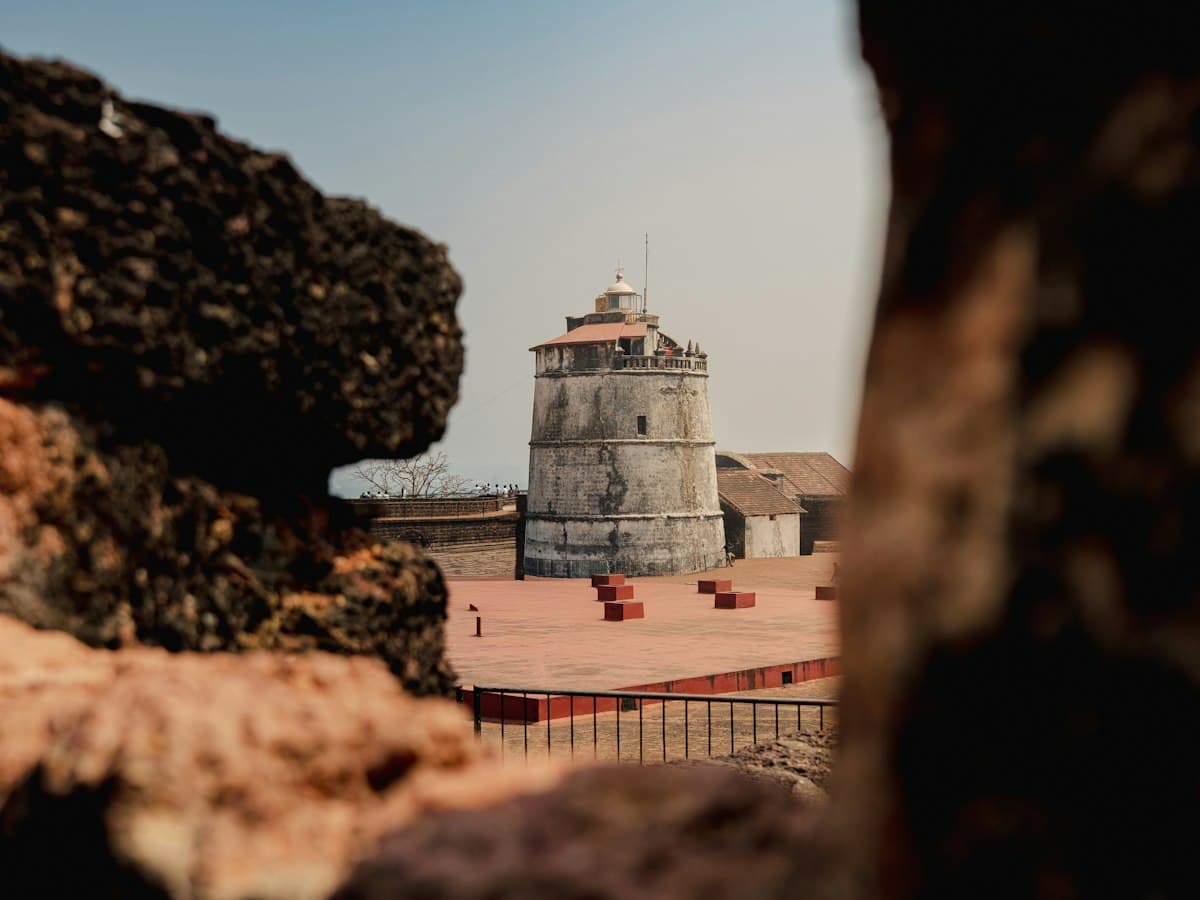
Fort Aguada is the best known, on a headland at the mouth of the Mandovi river in North Goa. It was built in the early 1600s, and its name comes from the Portuguese word for water, since it held a freshwater spring that supplied passing ships.
Highlights include: - The old lighthouse, among the oldest of its kind in Asia - Wide walls and bastions with sea views - The upper fort, which has the best outlook
The setting is dramatic, with laterite stone glowing red in low sun. Go in the late afternoon and stay for the sunset.
For a stay right beside it, Taj Fort Aguada Resort sits on the slopes below, with sea views and quiet grounds.
Chapora Fort: the hilltop view
North of Anjuna, Chapora Fort stands on a hill above the Chapora river. Its red laterite walls are ruined, but the views are marvellous, taking in the river, the beaches to the south and the coast to the north. The fort became famous with a popular Hindi film, and you'll often see young visitors there.
It's a short, steep climb. Wear proper shoes, bring water and go in the late afternoon. The wind at the top is a relief.
Reis Magos Fort: quiet and restored
Across the river from Panaji, Reis Magos Fort was built in the 1500s and restored in recent years. It's smaller and calmer than Aguada, with stout walls, a small chapel and a well-kept interior. It also holds an exhibition space.
It's a good choice if you prefer somewhere less crowded, and it fits neatly beside a visit to Panaji's old quarter. Our guide to Old Goa's churches and Fontainhas shows how to combine the two.
Cabo de Rama: South Goa's cliff fort
Far south, near Canacona, Cabo de Rama occupies a high cliff above the sea. It has a long history, and tradition ties its name to the hero Rama. It passed between Hindu rulers and the Portuguese, who took it in the 1700s.
Today it is a peaceful ruin, with old cannons, a small chapel and cliffs falling away to the water. It's a good stop on the way to Palolem or Agonda, and the views are among the best in Goa.
How to fit them into your trip
You can see the forts in two loose groups.
North Goa day: Fort Aguada in the late afternoon, with Chapora Fort at sunset if you're feeling energetic. Reis Magos can be a morning stop before crossing to Panaji.
South Goa day: Cabo de Rama, with a beach stop at Palolem or a lunch nearby. Our guide to North vs South Goa explains which coast suits your base.
Don't try to do all four in one day. The drives are long and the heat builds.
What to bring
Sun protection. Forts have little shade.
Comfortable shoes. Stone paths can be rough and slippery.
Water. Take more than you think you need.
A light layer. Sea breezes at the top can be strong.
When to visit
The cool season, November to February, is ideal for walking on exposed walls. In the monsoon, the forts turn green and dramatic, but paths can be slippery and some sites restrict access. Our best time to visit Goa guide explains the seasons in detail.
Combining forts with a wider trip
The forts pair well with food, churches and beaches. Our Goa heritage and Portuguese quarter itinerary puts them together, and the heritage package adds private guides and thoughtful stays. For a general first visit, the classic Goa journey balances history and beach time. If food is part of your plan, read our Goan food guide.
Reading a fort: what to look for
A ruined fort can look like a heap of stones until someone points out the details. A few things to notice as you walk:
The laterite. Goa's forts are built from a red, porous stone that is cut from the ground itself. Its soft texture makes it easy to carve, but it weathers quickly, which is why so many walls have crumbled.
Bastions and gun platforms. Every fort is angled to give crossfire over the approaches. Follow the walls and you can see the lines of fire.
Water sources. Springs, wells and cisterns tell you how a garrison survived a siege.
Chapels. Portuguese forts often include a small chapel inside, a reminder that these were religious as well as military outposts.
Views. Notice how far you can see. Sea-facing forts were built to spot ships early.
Ask your guide about the sieges and the handovers, because each fort has a colourful story of its own.
Sunsets, photography and quiet
Forts are among Goa's best places for photography, because the light on red stone at the end of the day is glorious. Go in the last two hours before sunset, and take a wide lens if you have one. Cloudy skies in the monsoon give a moody, dramatic feel.
Crowds vary. Aguada and Chapora can be busy around sunset, especially in the high season. Reis Magos and Cabo de Rama stay quiet. If you prefer stillness, choose the second pair, and go on a weekday.
Pairing forts with food and beaches
A fort visit slots neatly into a beach day. After Aguada, have a late lunch at a seafood place nearby, and swim at Candolim before dinner. After Cabo de Rama, continue to a quiet beach in the south for the sunset. In each case the fort is a two-hour pause in a longer, easy day, not the whole plan.
Frequently asked questions
Which Goa fort is best?
Fort Aguada for its lighthouse and sunset views. Cabo de Rama for peace and scenery. Chapora for a view and a little climb.
Are the forts free to enter?
Some are free and some charge a small fee. Your guide will confirm at the time.
How long does each visit take?
An hour is usually enough for each. Aguada and Cabo de Rama reward a longer stay.
Are the forts suitable for children?
Yes, with supervision. Walls can be high and edges unfenced.
Start planning
Explore Goa, or talk to a trip designer about adding history to your beach days.
Read Next
All Stories →
A Goan Food Guide: What to Eat Beyond the Beach Shack
The Best Time to Visit Goa: A Month-by-Month Guide