Old Goa's Portuguese Heritage: Churches, Forts and Fontainhas in a Day
A UNESCO church, two Portuguese-era forts and Panaji's pastel Latin Quarter: how to spend one well-paced day on Goa's heritage trail.
Goa's beaches get most of the attention, but its 450 years under Portuguese rule left behind one of the most distinctive heritage circuits in India — a UNESCO World Heritage church, two coastal forts, and a pastel-painted Latin Quarter that looks more like Lisbon than the rest of the subcontinent. A single well-paced day covers the essentials without feeling rushed, and it's a genuinely different register from the beach half of a Goa trip.
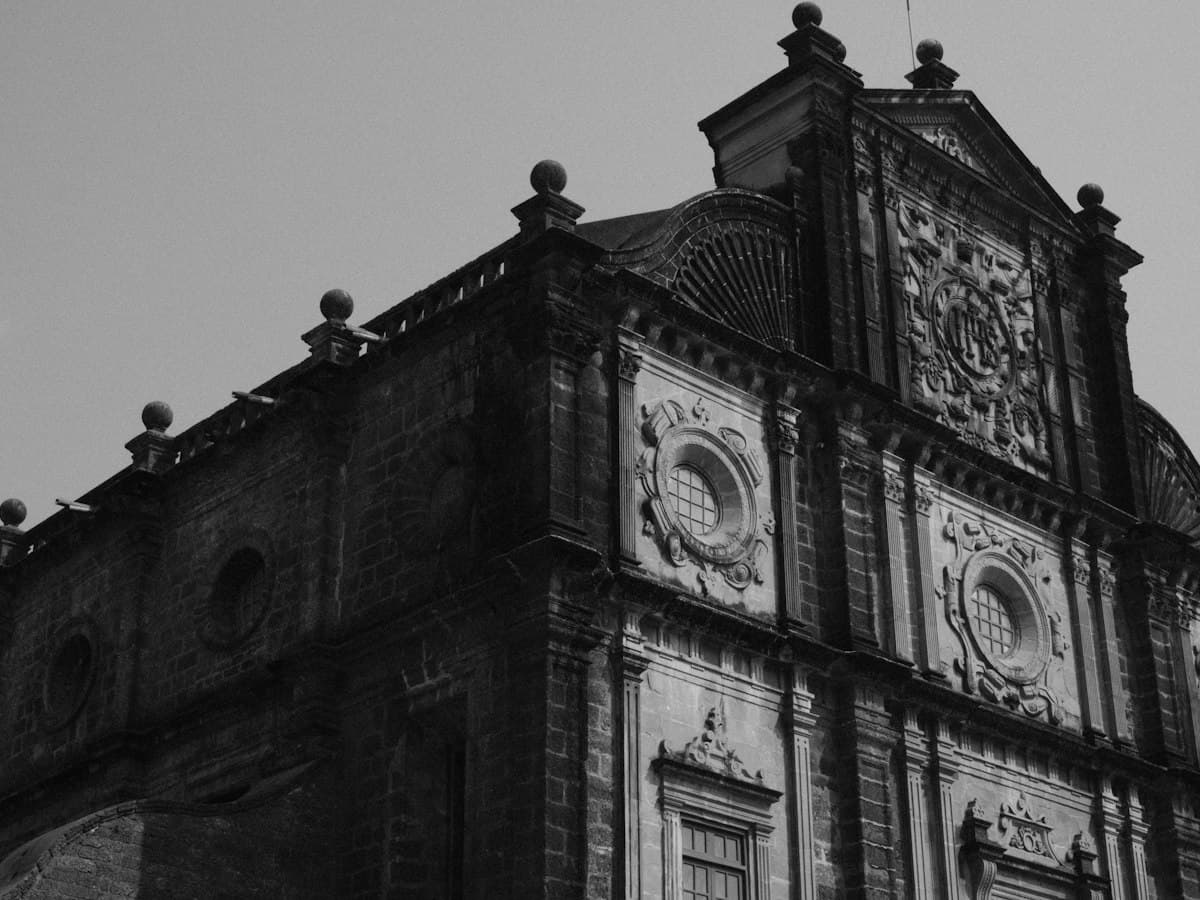
The Basilica of Bom Jesus and Old Goa's church cluster
The Basilica of Bom Jesus, a UNESCO World Heritage Site since 1986, holds the remains of St. Francis Xavier and is the centrepiece of Old Goa's remarkable cluster of 16th- and 17th-century churches, built when this was the capital of Portuguese India and one of the wealthiest cities in Asia. The nearby Sé Cathedral, one of the largest churches in Asia, and the Church of St. Francis of Assisi round out a walkable cluster that's best visited in the morning, before the afternoon heat and tour-bus crowds build.

Fort Aguada and Reis Magos: Portuguese coastal defence
From Old Goa, the coastal forts tell the military side of the same story. Fort Aguada, built in 1612 to guard against Dutch and Maratha incursions, sits above the Sinquerim coastline with one of the best sunset viewpoints in North Goa built into its ramparts. Reis Magos Fort, smaller and beautifully restored, sits closer to Panaji and pairs naturally with a stop in Fontainhas afterward given the short drive between them.
Fontainhas: Panaji's Latin Quarter
Fontainhas is Panaji's old Latin Quarter — narrow lanes, ochre and blue-washed houses, wrought-iron balconies, and a scale that rewards walking rather than driving through. It's the single best place in Goa to understand what "Portuguese Goa" actually looked like as a lived-in neighbourhood rather than a monument, and it's dense with small cafés and heritage guesthouses worth a slow lunch stop. The Church of Our Lady of the Immaculate Conception anchors the quarter's main square and is worth timing a visit around if a service or festival is on.
How to sequence the day
A comfortable order: Old Goa's churches first thing in the morning (cooler, quieter), lunch in or near Fontainhas, the Latin Quarter's lanes through early afternoon, then Fort Aguada or Reis Magos toward evening to catch the light. This keeps the heaviest walking in the cooler morning hours and ends the day at a sunset viewpoint rather than a parking lot. Our Goa Heritage & Portuguese Quarter itinerary builds this exact day into a fuller Goa trip alongside beach time.
A note on visiting respectfully
Old Goa's churches remain active places of worship, not just monuments — modest dress (shoulders and knees covered) is expected, and it's worth checking whether a mass or service is scheduled before planning a visit around photography, since access during services is understandably limited. The Feast of St. Francis Xavier in early December draws large pilgrim crowds to the Basilica specifically; a visitor purely interested in the architecture and history is generally better served visiting outside that week.
Getting there and getting around
Old Goa sits inland, roughly 30–40 minutes from either coast depending on traffic, making it an easy half-day or full-day detour regardless of which beach base you've chosen. Panaji, home to Fontainhas, is a similar distance and often paired with Old Goa in the same day given the short drive between them. A car and driver, arranged in advance rather than negotiated on the day, is the most comfortable way to cover all three stops — Old Goa, Fontainhas and a fort — without the day feeling rushed between transfers.
Where this fits into a wider Goa trip
Most visitors treat heritage sightseeing as a single day slotted into a beach-focused trip, and that's the right call for most travellers — see our North vs South Goa guide for how the two halves of a Goa trip usually split. For travellers who want heritage as the main focus rather than a day trip, our Goa Heritage & Portuguese Quarter package builds the whole itinerary around it, with a heritage-property stay to match — Taj Cidade de Goa Heritage is a period property built specifically in this register.
Frequently asked questions
How much time do you need for Old Goa?
Two to three hours covers the main church cluster comfortably; a full day lets you add Fontainhas and at least one fort without rushing.
Is the Basilica of Bom Jesus worth visiting?
Yes — as a UNESCO World Heritage Site holding the remains of St. Francis Xavier, it's the single most significant heritage site in Goa and worth prioritising even on a beach-focused trip.
What is Fontainhas known for?
Fontainhas is Panaji's Portuguese-era Latin Quarter, known for its pastel-coloured colonial houses, narrow lanes, and heritage cafés — one of the best-preserved old neighbourhoods on India's west coast.
Can you combine Old Goa's heritage sites with beach time?
Easily — most itineraries treat heritage sightseeing as one dedicated day within a longer, beach-focused Goa trip, given how compact the state is to drive across.
Start planning
See our Goa Heritage & Portuguese Quarter itinerary in full, or talk to a trip designer about building a heritage day into your Goa trip.
Read Next
All Stories →
The Best Time to Visit Goa: A Month-by-Month Guide
North Goa or South Goa? Choosing Your Coast