
Assam & Meghalaya · 11 Days
Assam & Meghalaya — the Grand Northeast
The unhurried northeast — Guwahati and Pobitora, three days of Kaziranga across its ranges, then the full Khasi Hills with the Nongriat root bridge trek.
Day by Day
11 Days, In Full
The complete Assam-and-Meghalaya circuit, with room in each half. Two nights in Guwahati, with a day at the Pobitora rhino sanctuary. Three nights at Kaziranga for the dawn elephant safari and jeep safaris across the ranges. Then the Khasi Hills: a night in Shillong, and three in Cherrapunji for the falls and caves, the hard trek down to the Nongriat double-decker root bridge, and the loop to Mawlynnong and the clear river at Dawki. Eleven days, and nothing of the northeast's two best regions left out.
Guwahati
Arrive in Guwahati — the Brahmaputra at Dusk
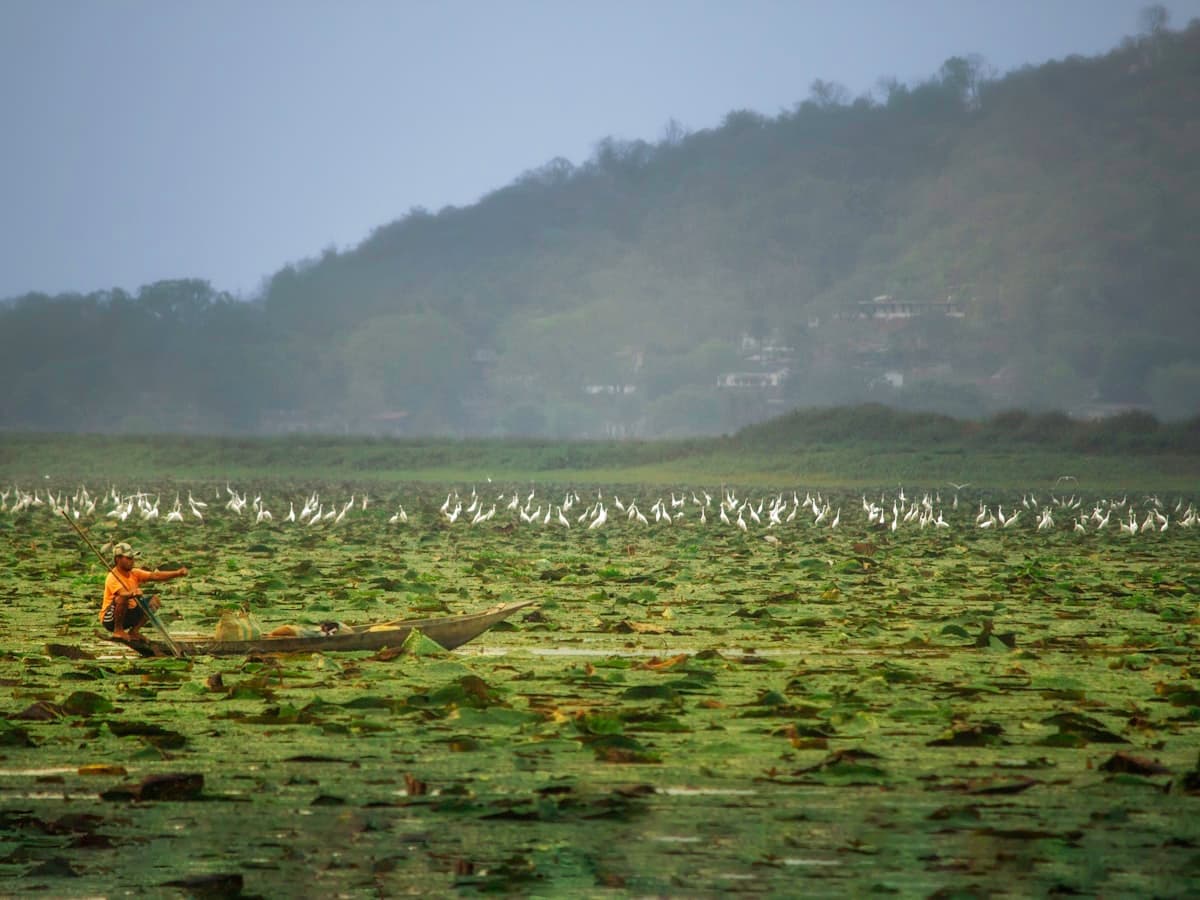
You land at Guwahati, the hub for the whole northeast. The city sits where the Brahmaputra narrows between hills, and the river is the thing to see first. In the late afternoon a cruise boat runs out onto the water for the sunset, past Umananda island and under the temple hill, usually with tea or a meal and a short set of Assamese music. It is an easy way to arrive and get the shape of the place.
Guwahati
Day Trip to Pobitora — Rhinos an Hour from the City
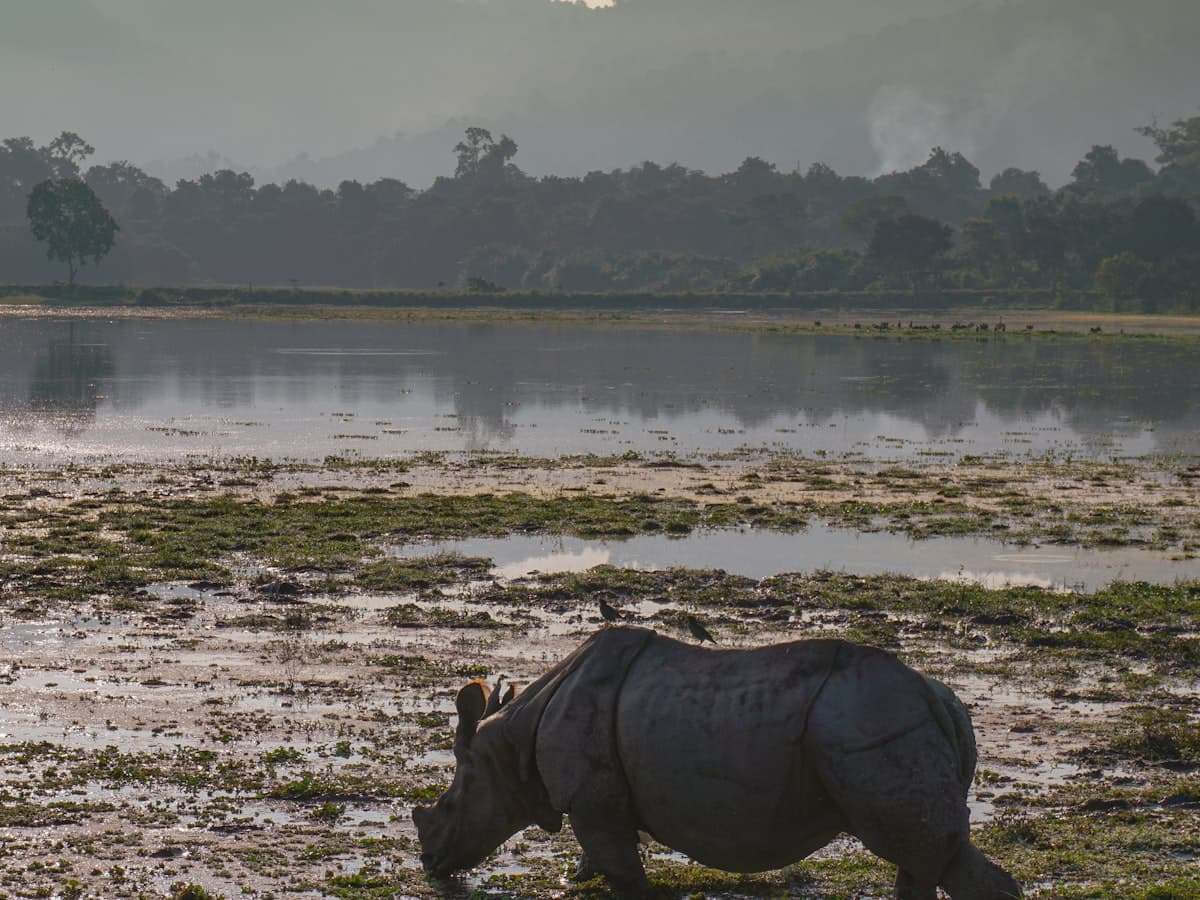
An early start east from Guwahati, about ninety minutes, to the Pobitora sanctuary. It is small, under forty square kilometres, and it has the densest one-horned rhino population in the world. A jeep safari of an hour or two on the grassland tracks almost always finds several rhinos in the open, along with wild buffalo and a great many water birds. Back in Guwahati by early afternoon, with time for the river or the museum. It is a strong rhino day for anyone not going on to Kaziranga.
Guwahati → Kaziranga
Guwahati to Kaziranga — East Along the Brahmaputra
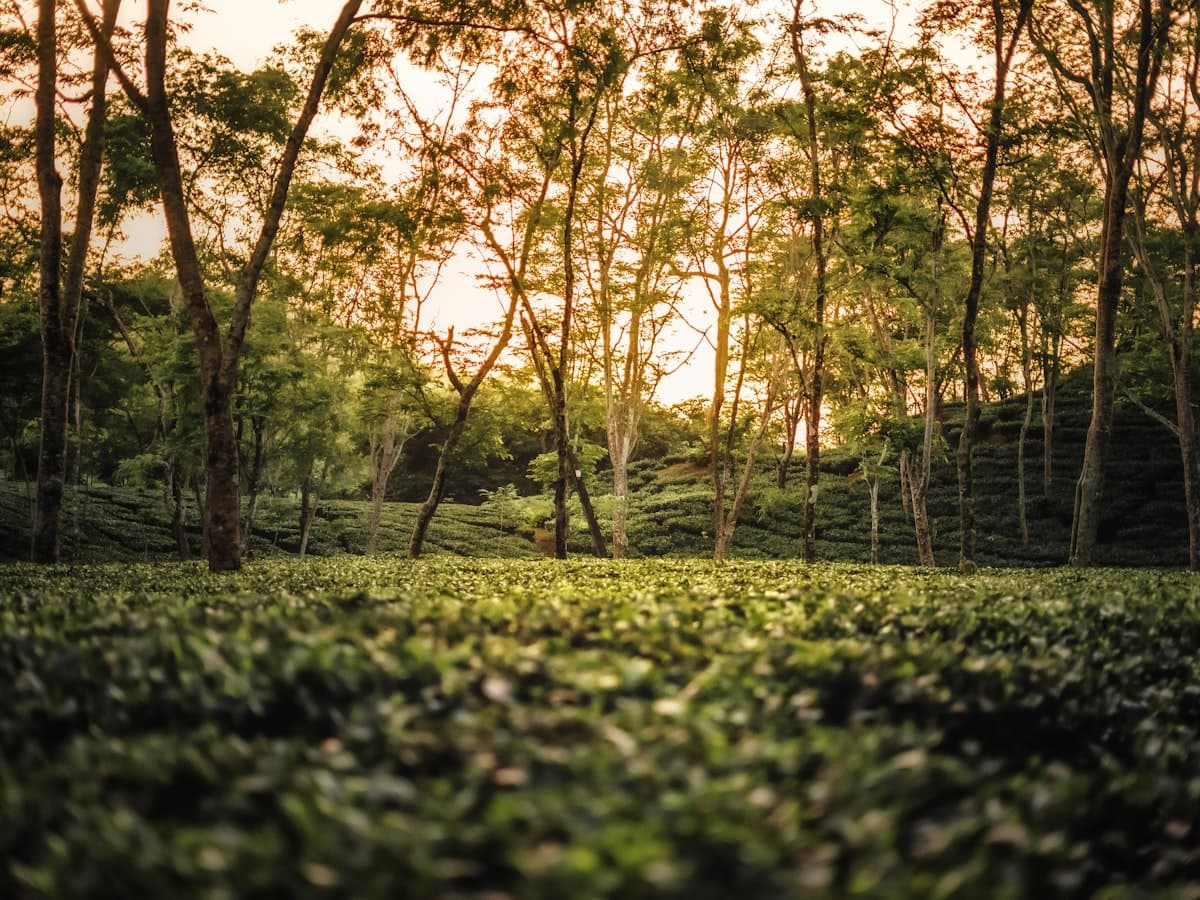
The drive east follows the south bank of the Brahmaputra for about two hundred kilometres and five hours, through paddy fields, tea gardens and small towns, with the hills of Meghalaya away to the south. There are stops for tea and for lunch on the way. You reach the lodges at Kohora, just outside the park's Central Range gate, in the afternoon, with time to settle in and meet the naturalist before dark.
Kaziranga
Kaziranga — Elephant Safari at Dawn, Jeep in the Afternoon
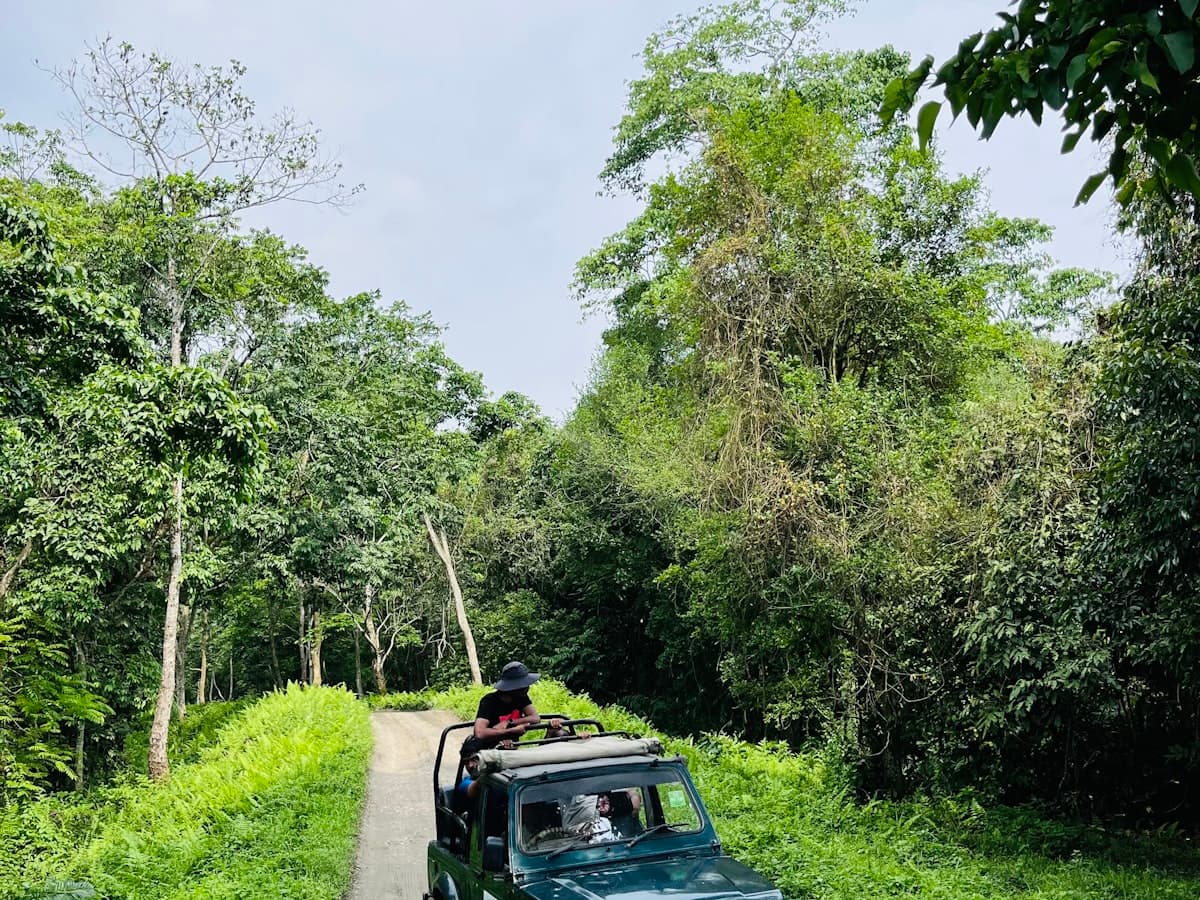
The elephant safari goes out at first light from Kohora or Bagori, for about an hour, walking through grass that is often higher than a jeep. This is where the rhinos feed, so it is the closest you will get to one. The mist lifts during the ride. Back for breakfast, then a slow middle of the day. The afternoon is a jeep safari of about three hours through the Central Range, for rhino, wild elephant, swamp deer and buffalo, and the chance of a tiger in the grass.
Kaziranga
Kaziranga — A Full Day Across Two Ranges
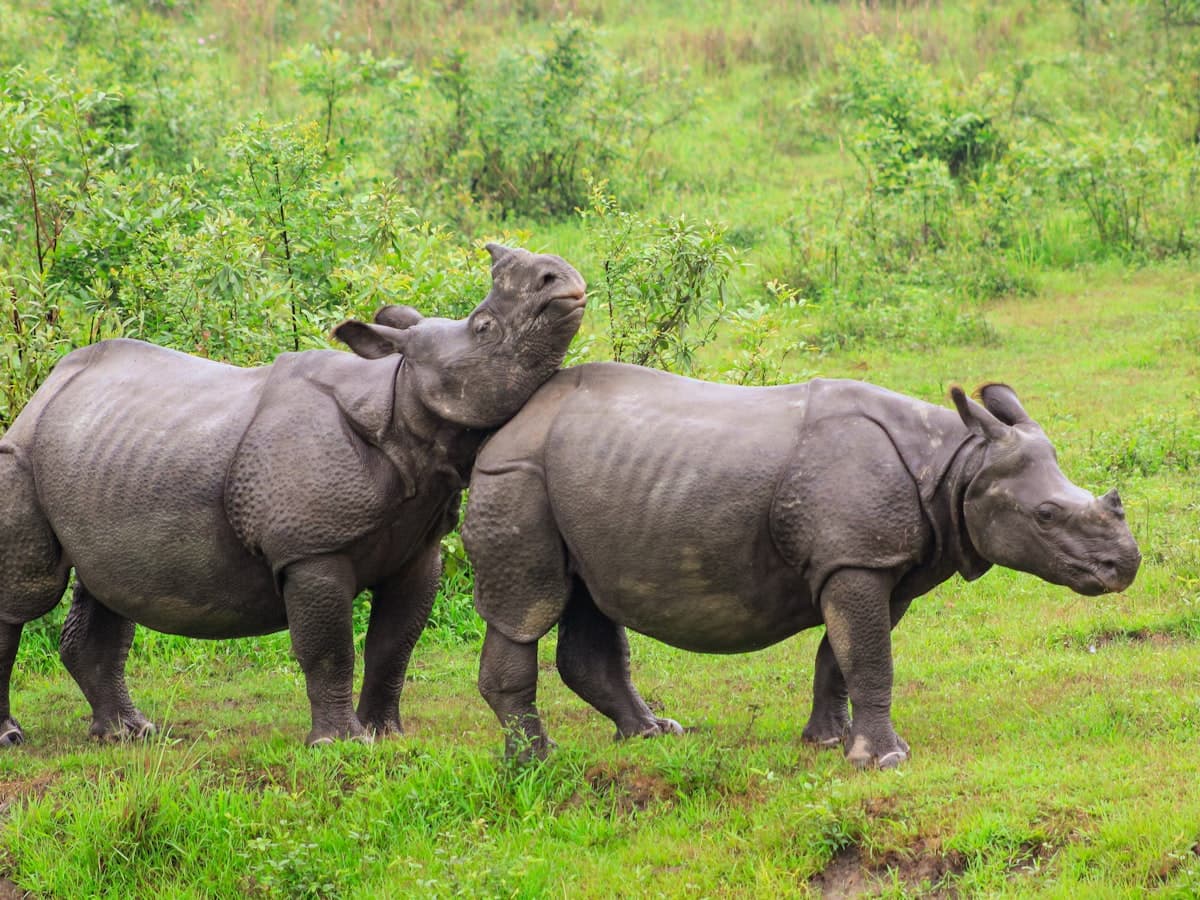
A deeper day in the park, for travellers with the time. A morning jeep safari in the Western Range at Bagori, which has open country and high rhino numbers. The middle of the day at the orchid park, which grows hundreds of the region's orchid species and puts on Assamese folk dance. An afternoon safari in the Eastern Range at Agaratoli, the quietest range, with more water, more birds and a good chance of otters and fishing eagles. Two ranges in a day shows how different parts of the same park can be.
Kaziranga → Shillong
Kaziranga to Shillong — Into the Khasi Hills
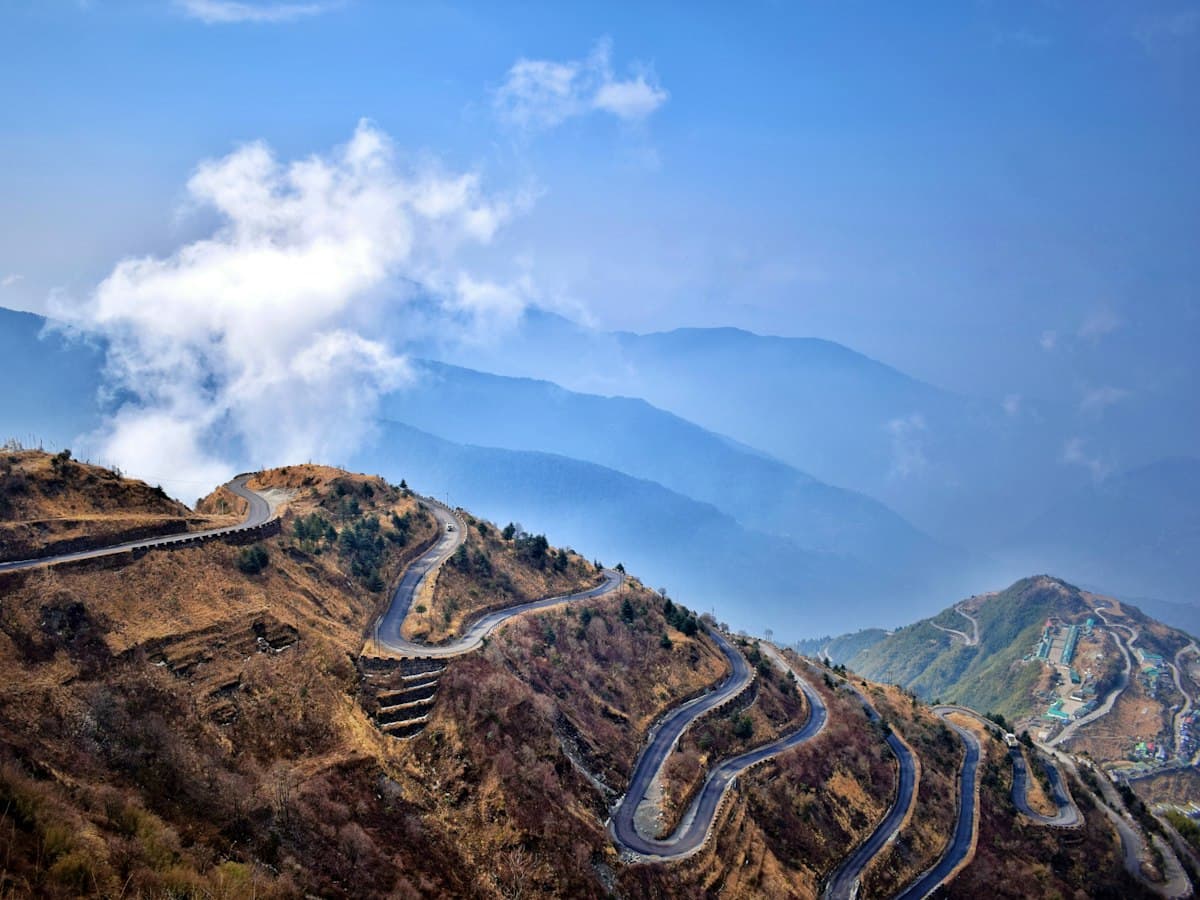
A drive of about six hours, first back west along the Brahmaputra plain, then south and up into the Khasi Hills. The land changes as the road climbs, from paddy and tea to pine forest and cloud. The last stretch runs along Umiam Lake, a wide reservoir in a bowl of hills, with a viewpoint to stop at. Shillong, the old British hill capital, is cool enough for a jacket in the evening. You arrive in the late afternoon, with time for the cafes around Police Bazar.
Shillong
Shillong — the City, the Peak and Elephant Falls
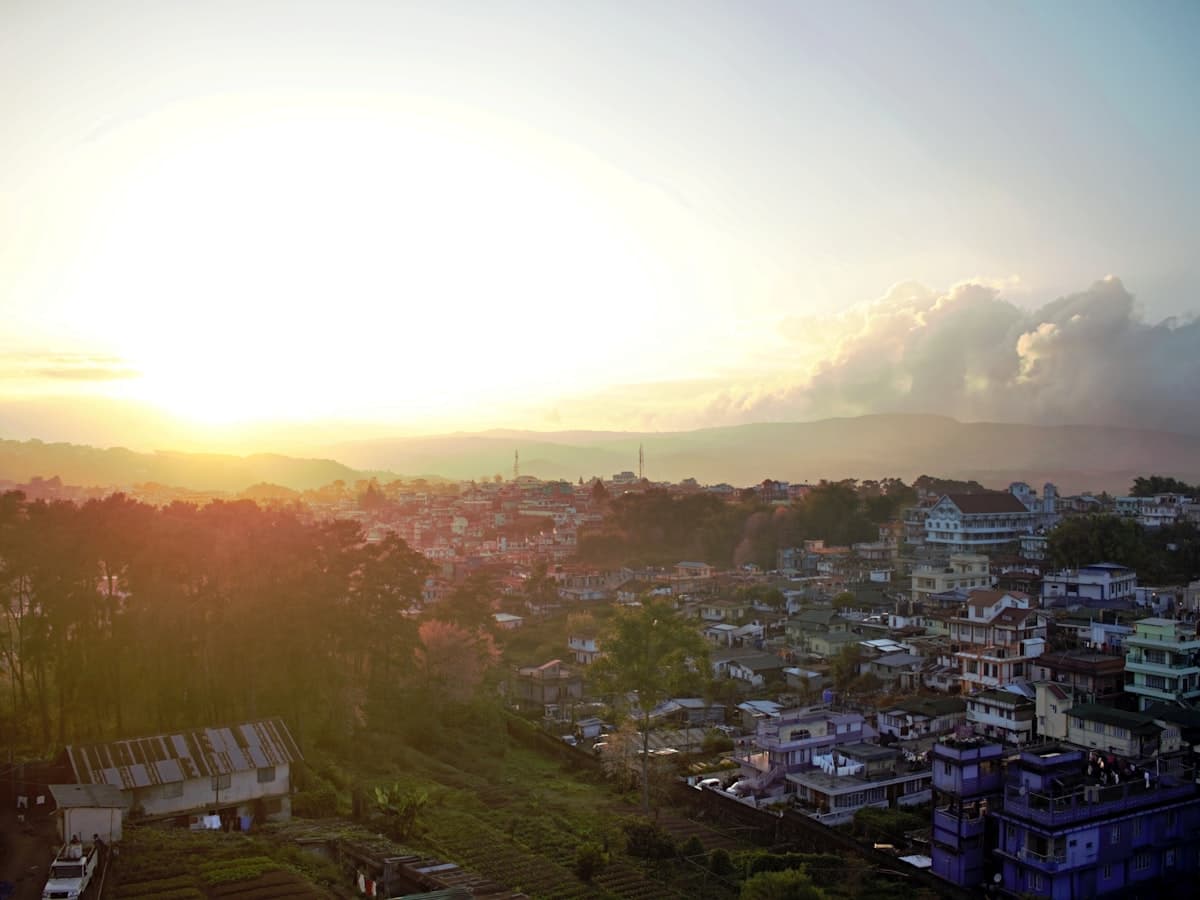
A full day around the capital. Elephant Falls first, a short walk down through the trees to a three-tier cascade. Then Shillong Peak, the highest point, for the view over the whole city and the hills. The Don Bosco museum lays out the cultures of all seven Northeast states across seven floors, and ends on a rooftop walkway. The afternoon is for Ward's Lake, the cathedral, and the lanes of Police Bazar and Laitumkhrah, where the city's coffee culture lives.
Shillong → Cherrapunji
Shillong to Cherrapunji via the Mawkdok Canyon
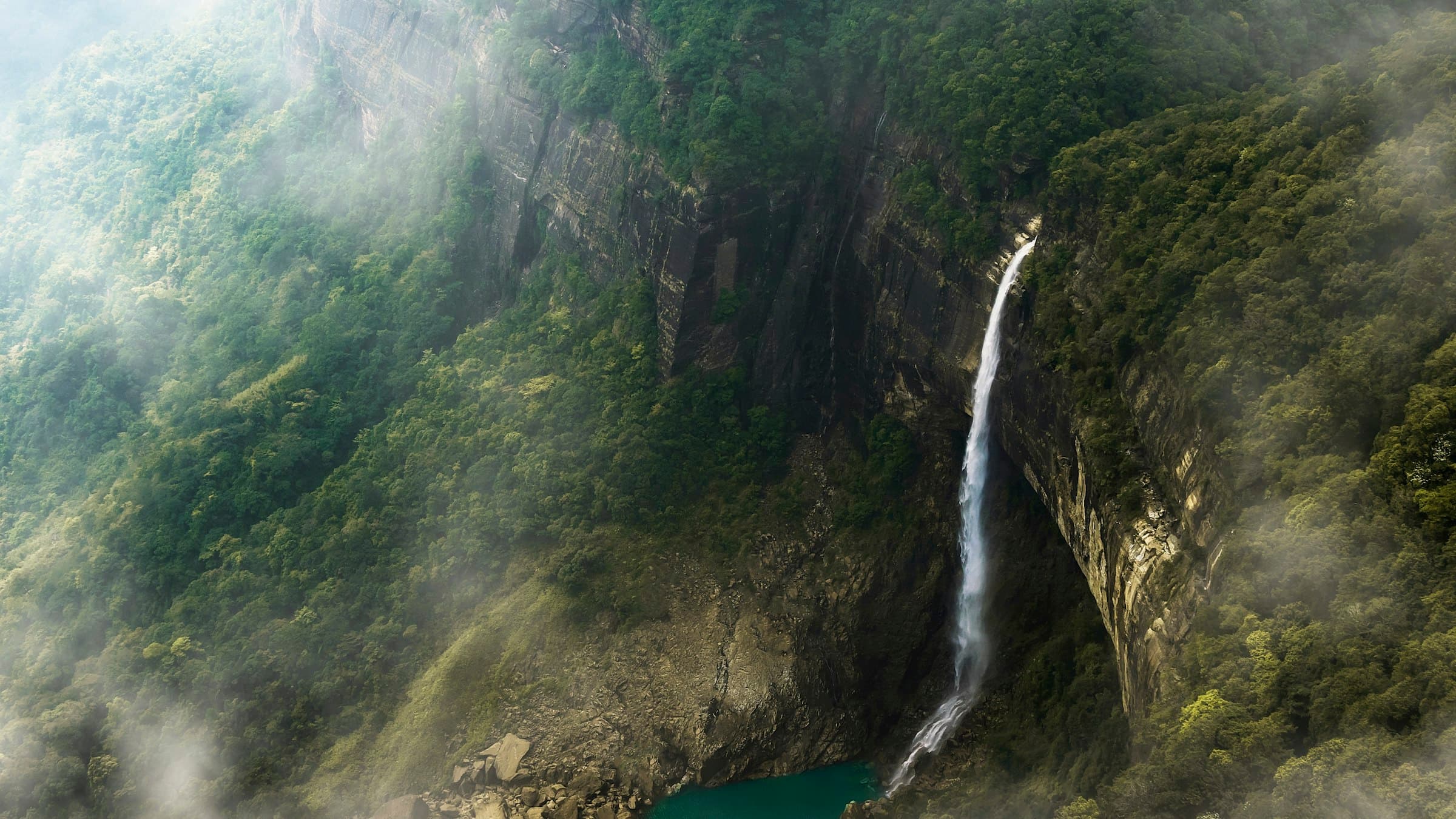
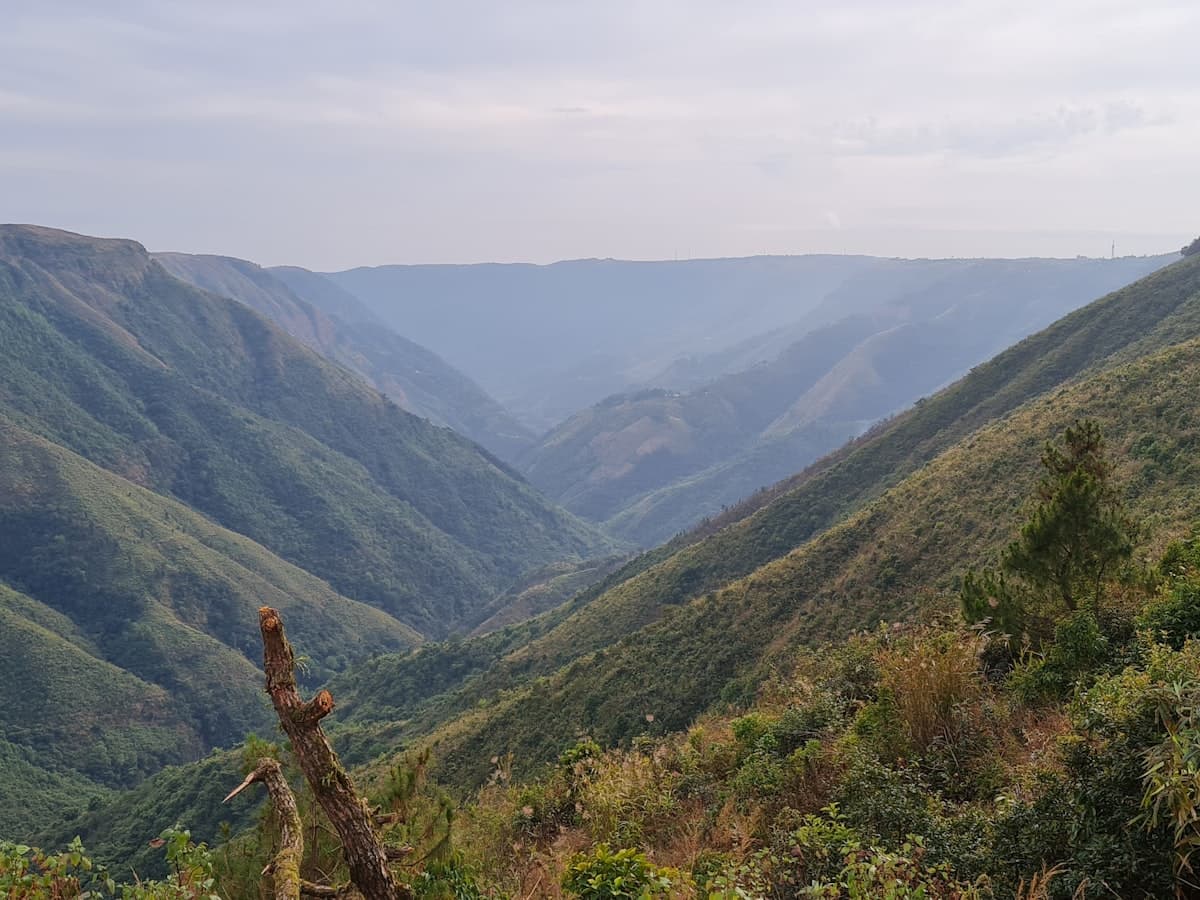
The road south to Sohra runs across a high, open plateau that gets barer and windier as you go. The Mawkdok Dympep viewpoint, about halfway, looks down a deep V-shaped gorge and has a zipline for anyone who wants it. You reach Cherrapunji by early afternoon. Nohkalikai Falls, India's tallest plunge waterfall, is the first stop: a short walk to a viewpoint over a three-hundred-and-forty-metre drop into a blue-green pool. Check in on the canyon rim for the evening.
Cherrapunji
Cherrapunji — the Waterfalls and the Caves
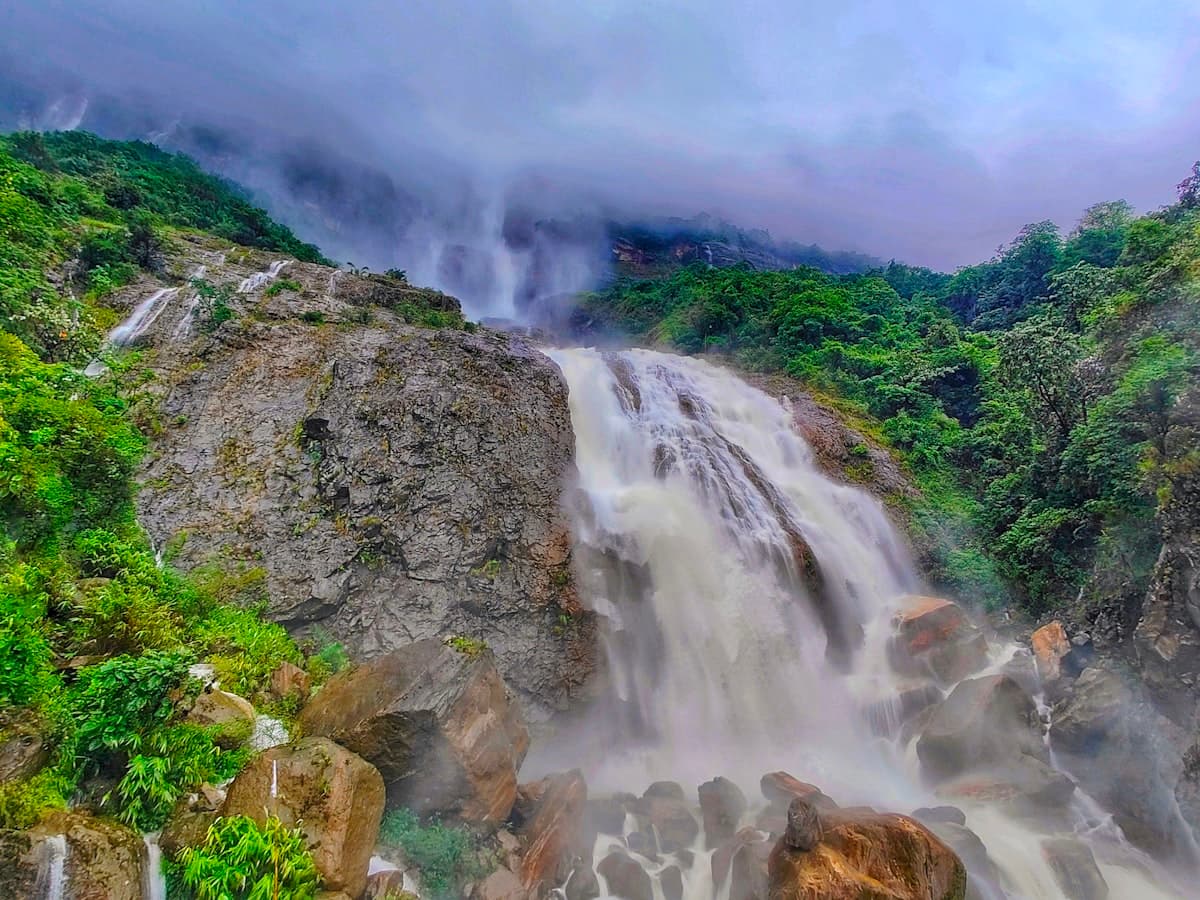
Cherrapunji is one of the wettest places on earth, and the landscape is all water and limestone. The Seven Sisters Falls pour off the cliffs near Mawsmai, best after rain. Mawsmai Cave is a short lit walk through the rock, past flowstone and narrow squeezes, with the longer Arwah cave nearby for anyone who wants more. The day can also take in the Nohsngithiang viewpoint, the Eco Park on the plateau edge, and Thangkharang Park, where on a clear day you can see into Bangladesh.
Cherrapunji
The Double-Decker Root Bridge Trek at Nongriat
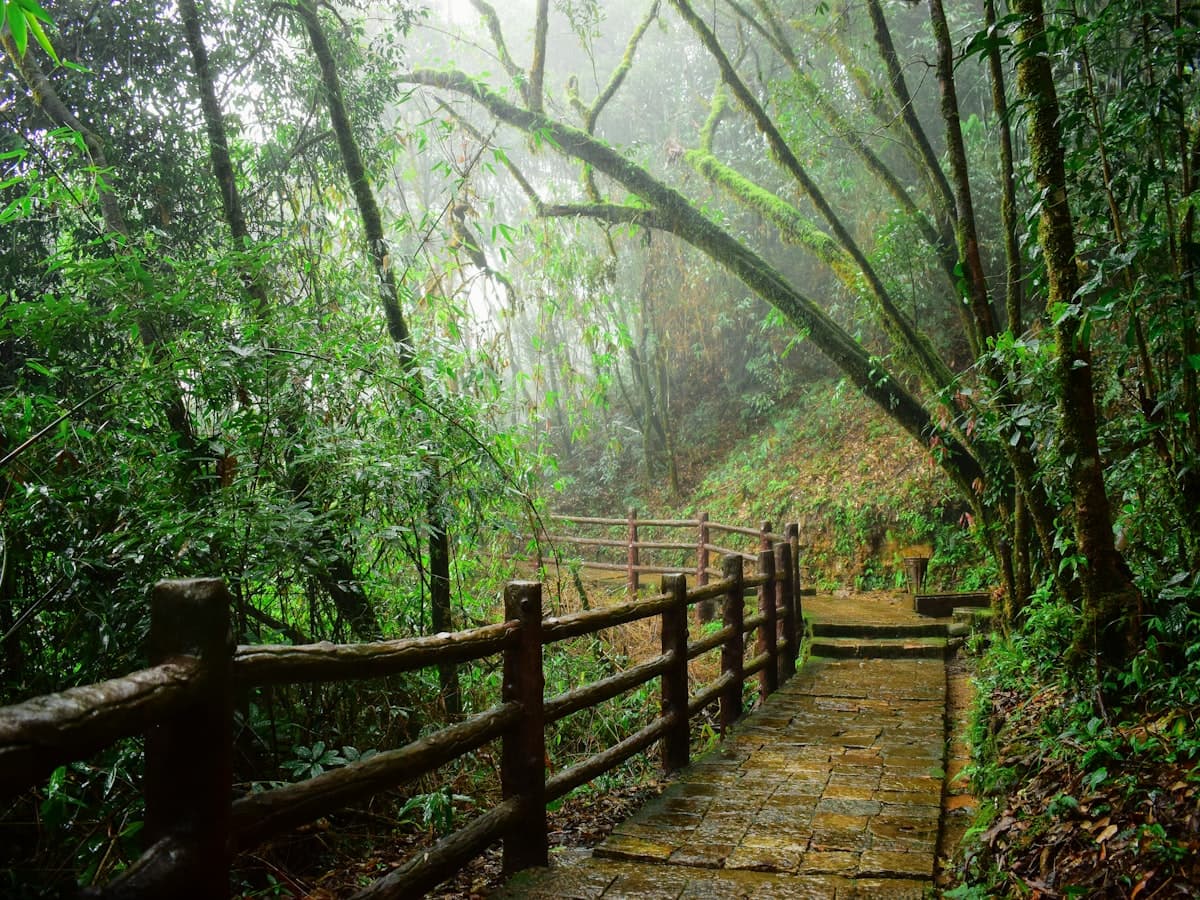
The big walk of the trip, and a hard one. From Tyrna village a stone staircase of about three thousand five hundred steps drops into the gorge, over two long steel footbridges, to the hamlet of Nongriat and its double-decker living root bridge, two woven spans stacked over the same stream. Strong walkers carry on to Rainbow Falls and its blue pool. The climb back out is the real effort. Start at first light, carry water, take a guide, and keep the rest of the day clear.
Cherrapunji
Mawlynnong, the Riwai Root Bridge and the River at Dawki
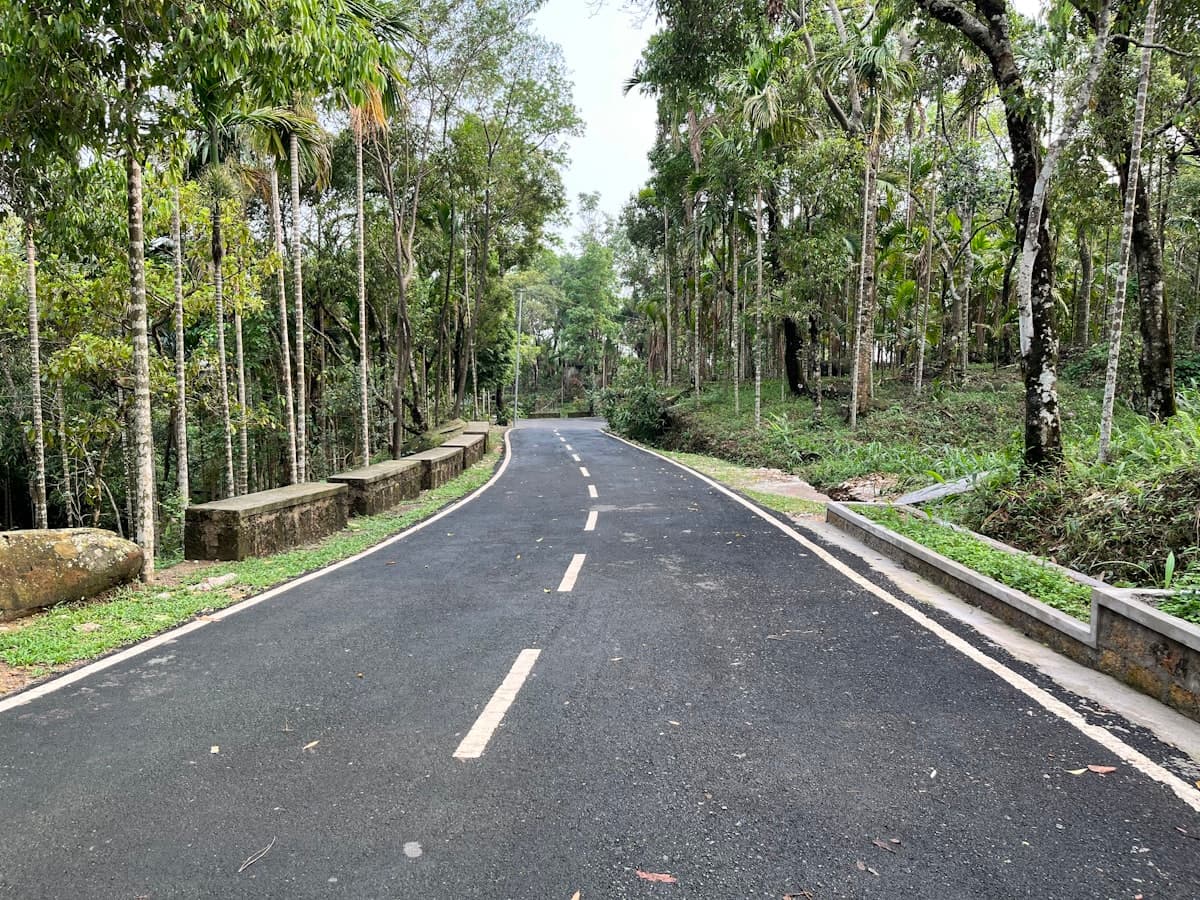
A long, rewarding loop from Cherrapunji toward the border. Riwai first, where a single-span root bridge crosses a clear stream a short walk from the road. Then Mawlynnong, the village called the cleanest in Asia, for a slow walk through swept lanes and flower gardens and a climb up the bamboo sky-view tower. Dawki is last: a wooden-boat ride on the Umngot, so clear in the dry season that the boat seems to float on air. Back to the plateau by evening.
Book This Itinerary
Priced Packages On This Route
This route is already built into these packages — real inclusions and pricing on each one's own page.

Kashmir to Kanyakumari
Get In Touch
Start Planning Your Trip
Full itinerary, real pricing, one honest conversation — no sales pressure, just answers.